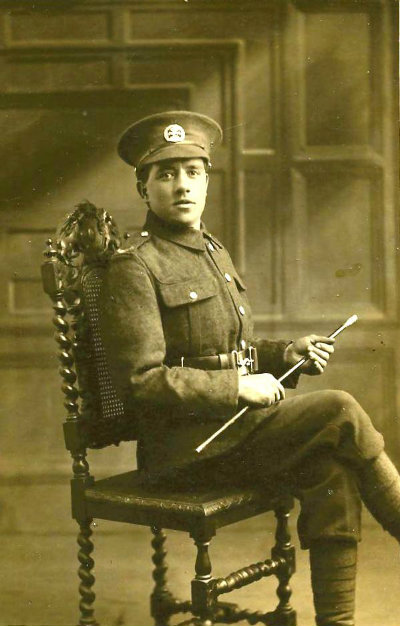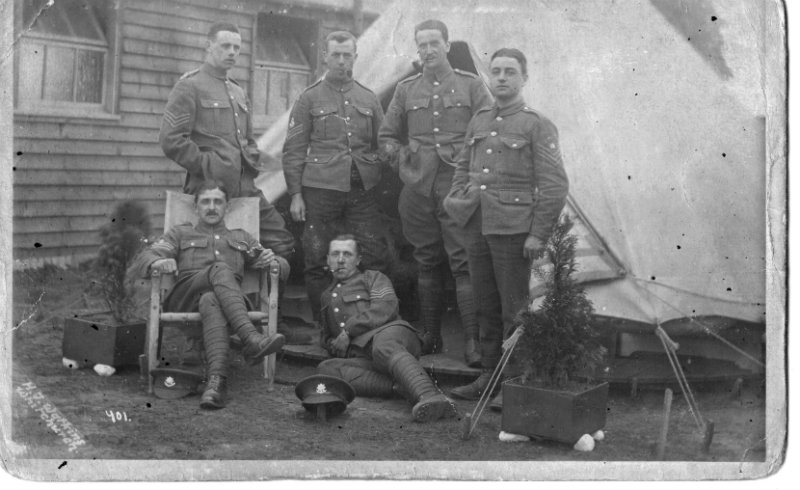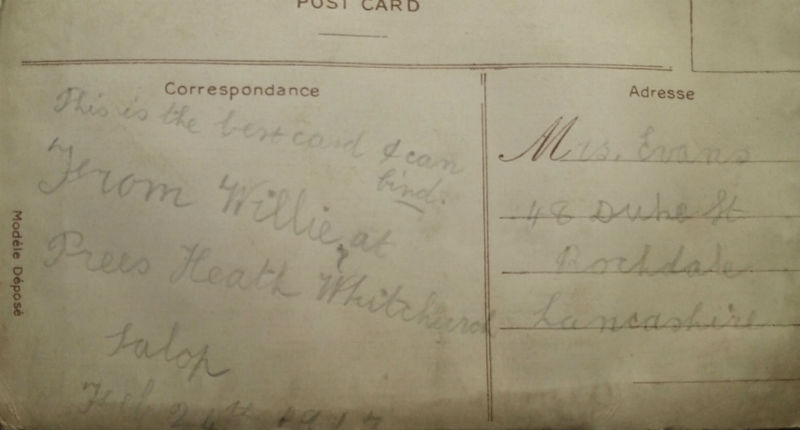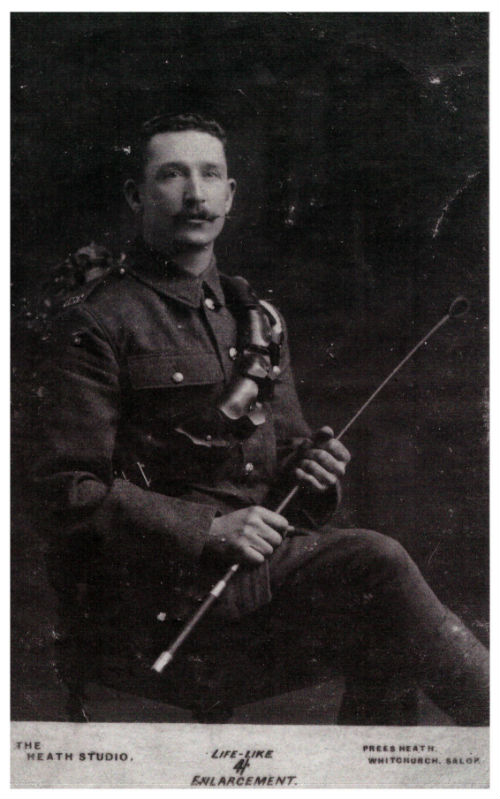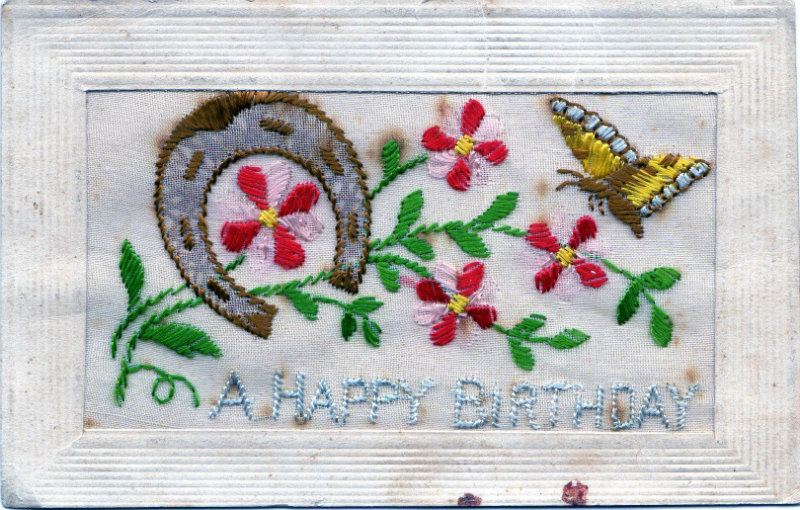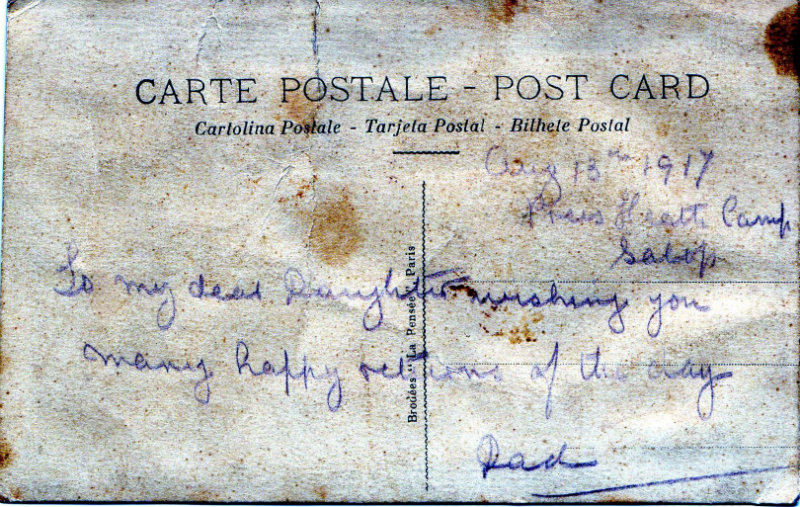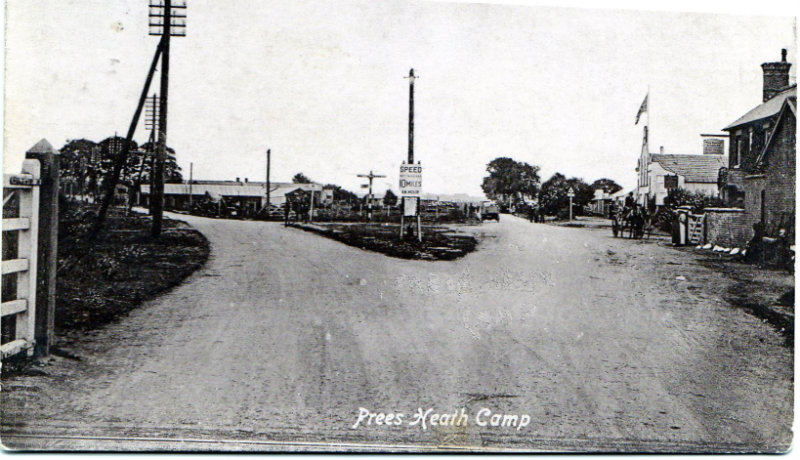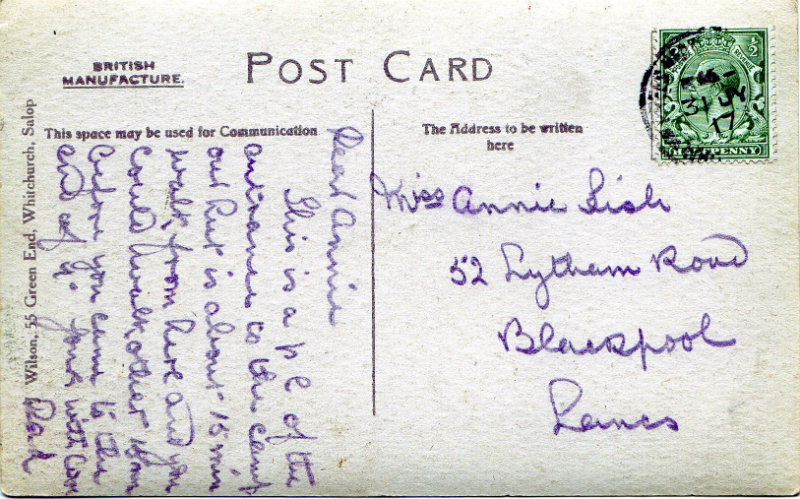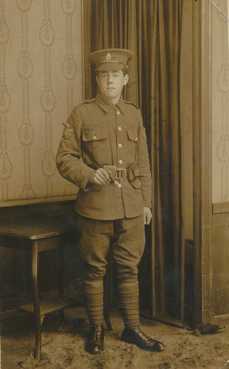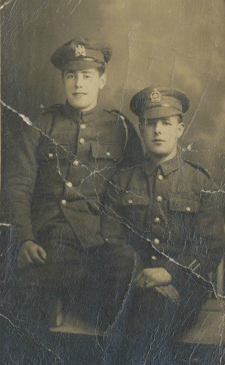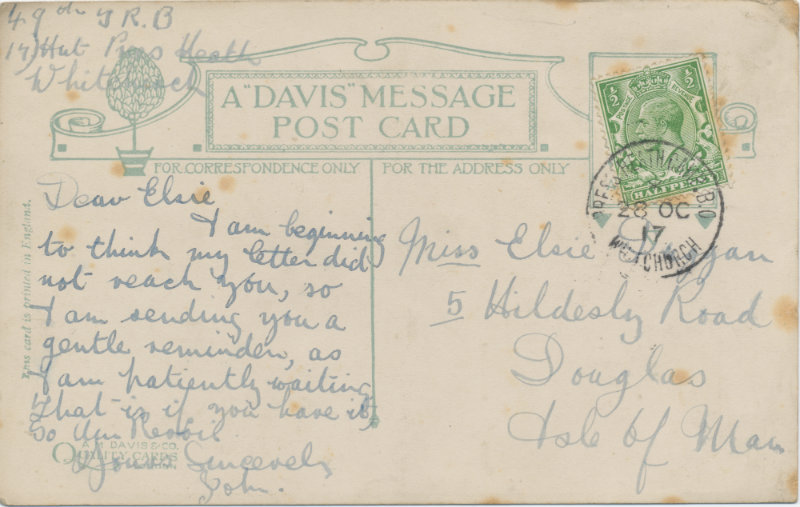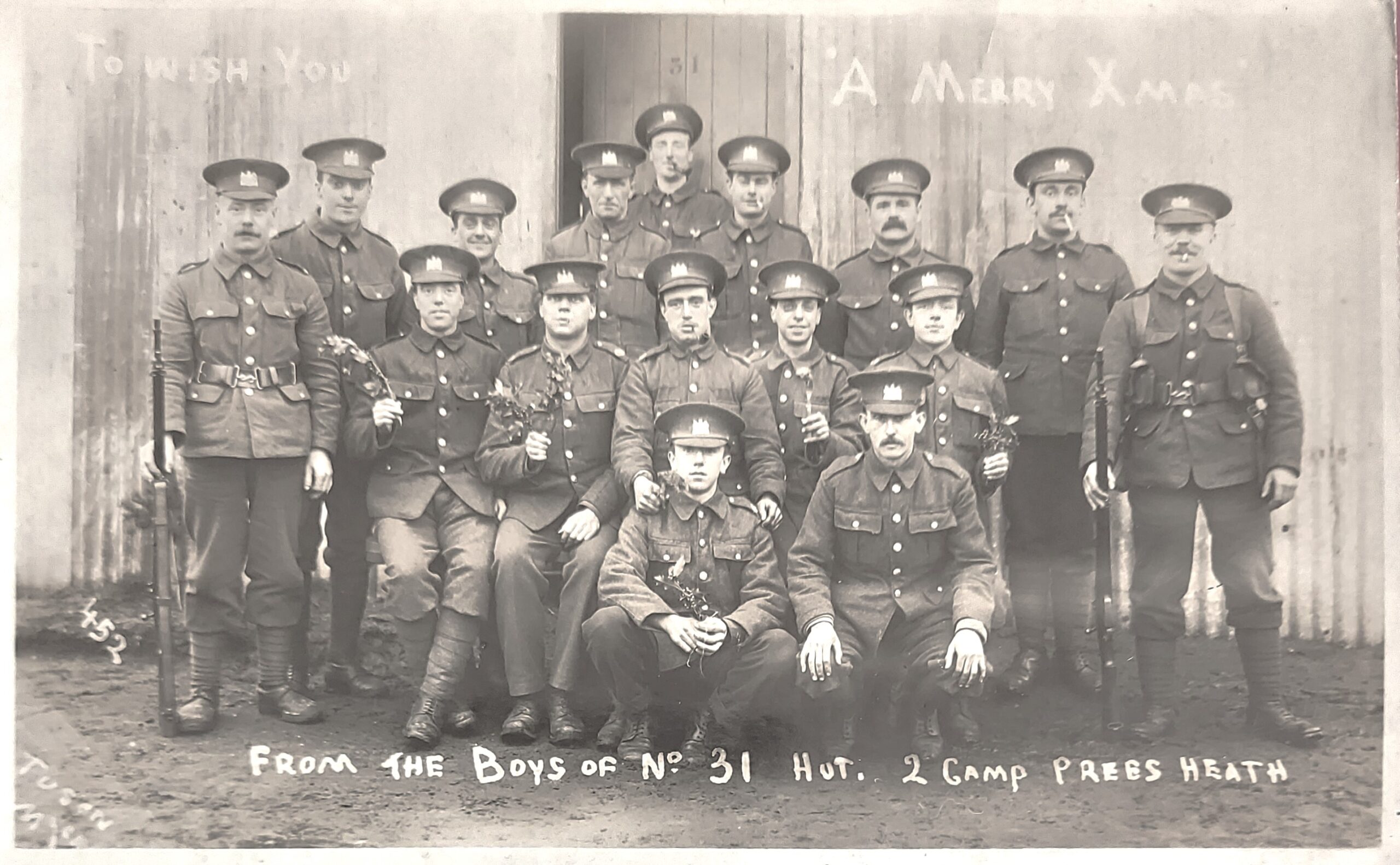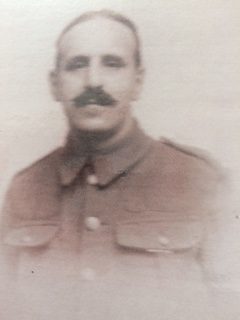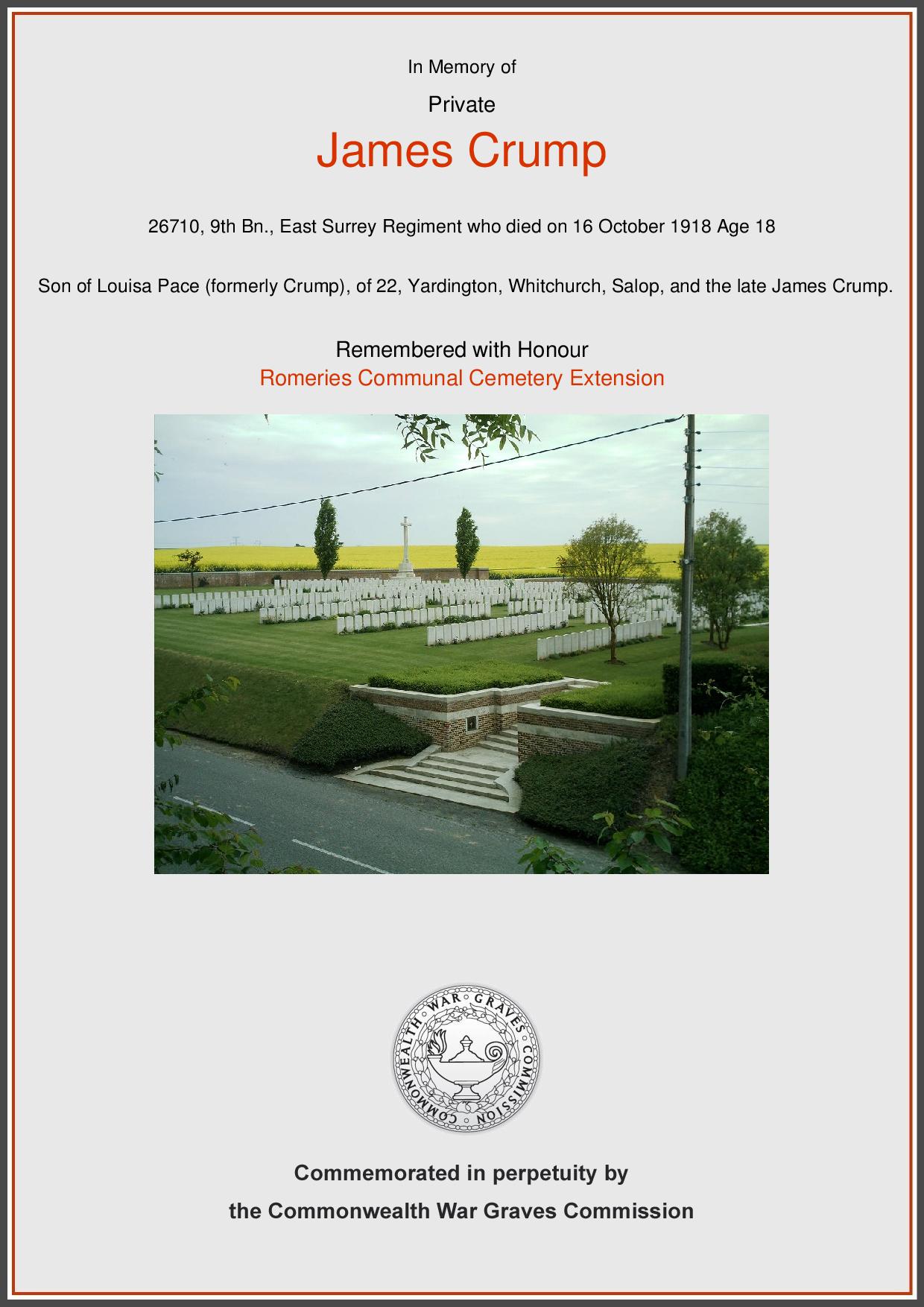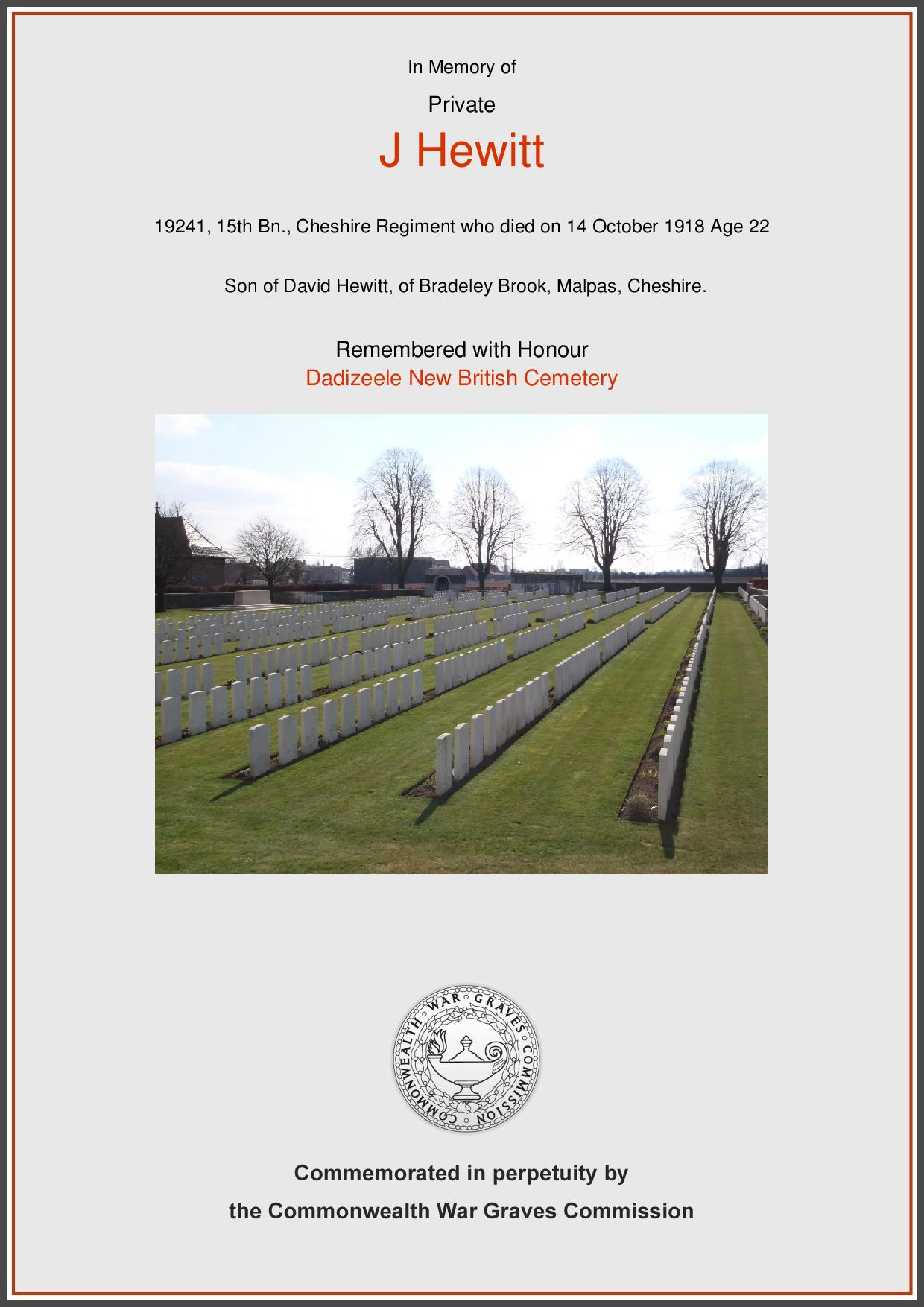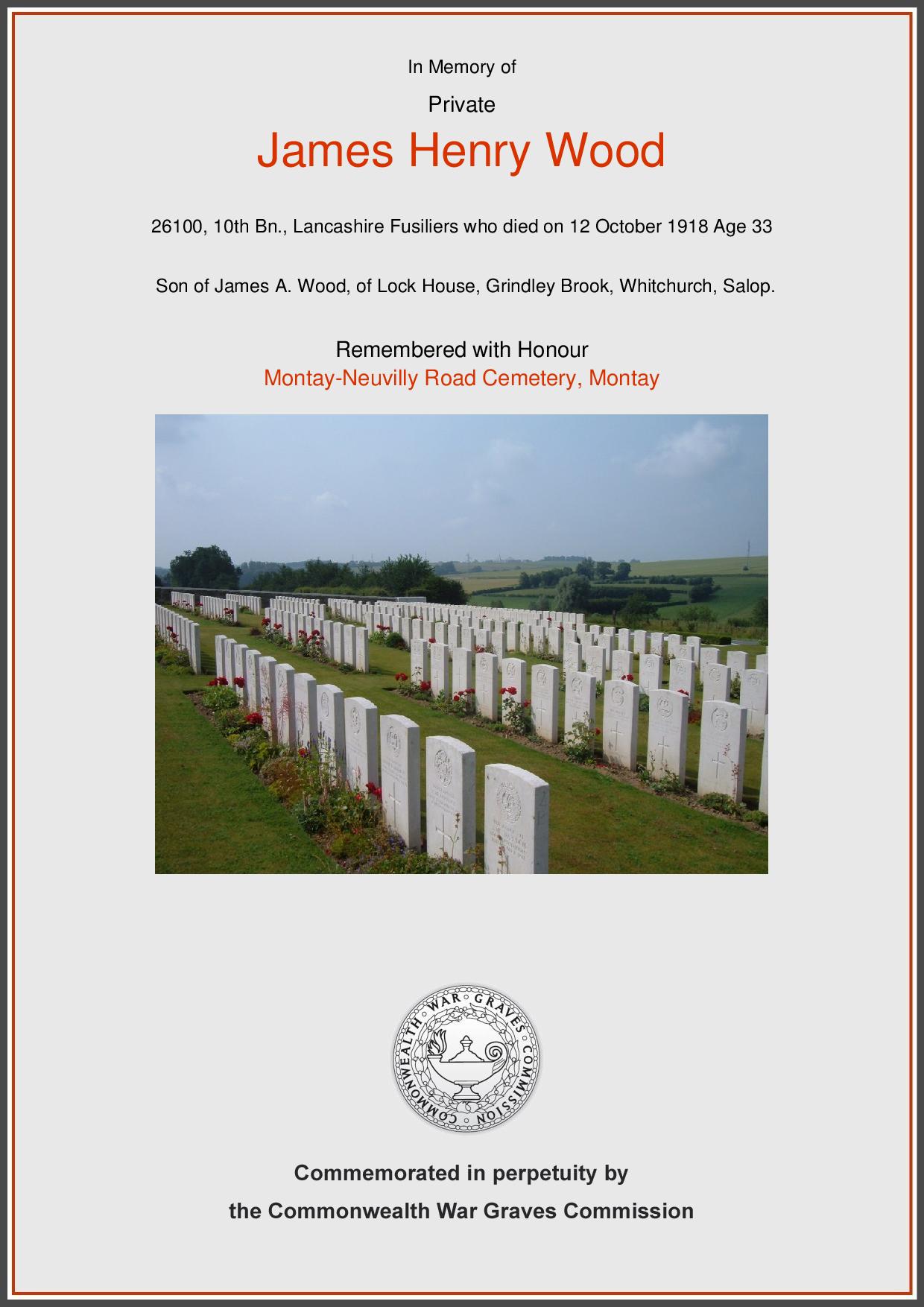
George Fisher

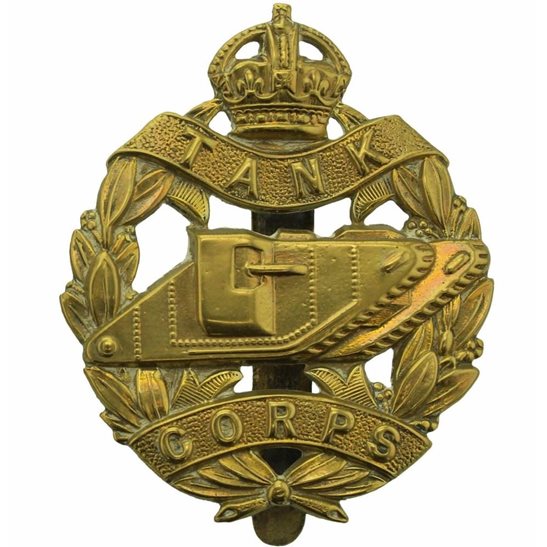
Tank Corps

Personal Details

Born: 1897

Family: The second son of George and Mary Anne Fisher of 4 Venables Yard, High Street, Whitchurch, Shropshire.

Civilian Occupation: George was employed as a labourer before enlisting in 1915.

Residence: For a while after the war he lived at 13 William Street, Prestwich, Manchester but returned to Baileys Yard, Whitchurch, Shropshire in 1922.  


Military Details

Regiment: Tank Corps (previously King’s Shropshire Light Infantry)

Rank: Private

Service Number: 318281 (previously 4206)

Date of Enlistment: 10 October 1915

Date of Discharge: 13 March 1919

Reason for Discharge: Demobilisation

Other Information: He was posted to Hong Kong in April 1916 and to France from July 1917 to November 1917 when he was admitted to hospital, being discharged in April 1918. 

Medals and Awards

George was awarded the Campaign Medals (British War Medal, and Victory Medal).
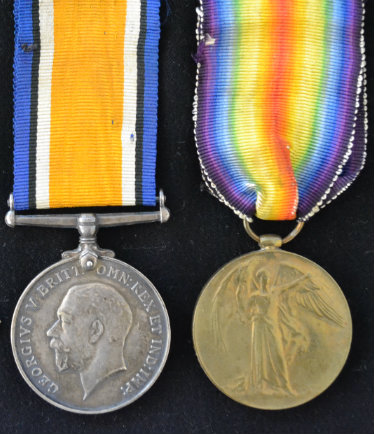
Campaign Medals

Great War History Hub Whitchurch Shropshire Medals Front Image

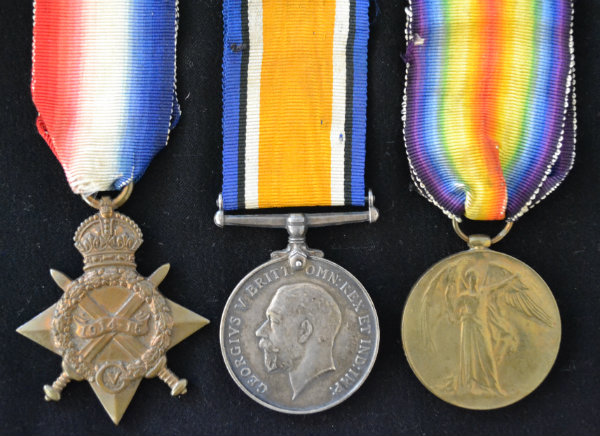
The British War Medal (also known as 'Squeak') was a silver or bronze medal awarded to officers and men of the British and Imperial Forces who either entered a theatre of war or entered service overseas between 5th August 1914 and 11th November 1918 inclusive. This was later extended to services in Russia, Siberia and some other areas in 1919 and 1920. Approximately 6.5 million British War Medals were issued. Approximately 6.4 million of these were the silver versions of this medal. Around 110,000 of a bronze version were issued mainly to Chinese, Maltese and Indian Labour Corps. The front (obv or obverse) of the medal depicts the head of George V. The recipient's service number, rank, name and unit was impressed on the rim.

The Allied Victory Medal (also known as 'Wilfred') was issued by each of the allies. It was decided that each of the allies should each issue their own bronze victory medal with a similar design, similar equivalent wording and identical ribbon. The British medal was designed by W. McMillan. The front depicts a winged classical figure representing victory. Approximately 5.7 million victory medals were issued. Interestingly, eligibility for this medal was more restrictive and not everyone who received the British War Medal ('Squeak') also received the Victory Medal ('Wilfred'). However, in general, all recipients of 'Wilfred' also received 'Squeak' and all recipients of The 1914 Star or The 1914/1915 Star (also known as 'Pip') also received both 'Squeak' and 'Wilfred'. The recipient's service number, rank, name and unit was impressed on the rim.
Leonard James Elson

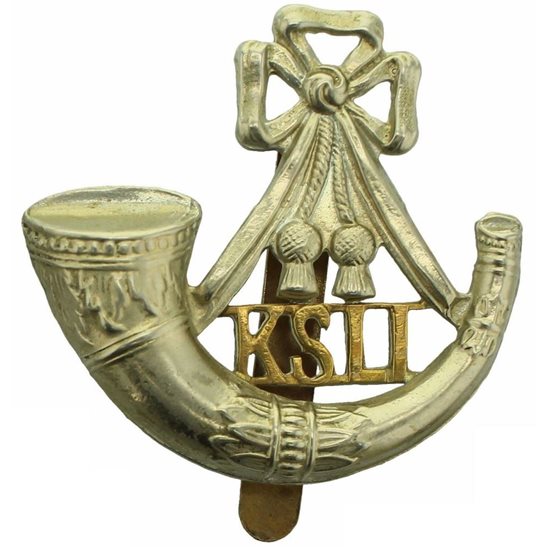
King's Shropshire Light Infantry

Personal Details

Born: 18 January 1896

Family: The fourth child of James and Sarah Elson of Moorhead Cottage, Willeymoor, Tushingham, Cheshire. Leonard married Abigail Mary Paddington in 1924 and together they had one daughter, Sheila. His surname was sometimes spelt Ellson.

Civilian Occupation: He was a gardener by trade.

Residence: In 1939 he was living in Egerton Road, Whitchurch, Shropshire.

Died: In 1977 aged 81.

Military Details

Regiment: King’s Shropshire Light Infantry

Rank: Private

Service Number: 13630

Date of Enlistment: 11 September 1914

Date of Discharge: 9 April 1919

Reason for Discharge: Demobilisation

Medals and Awards

Leonard was awarded the Campaign Medals (1914/15 Star, British War Medal, and Victory Medal).

Campaign Medals

Great War History Hub Whitchurch Shropshire Medals Front Image

The 1914 Star (also known as 'Pip') was authorised under Special Army Order no. 350 in November 1917 and by an Admiralty Fleet Order in 1918, for award to officers and men of the British and Indian Expeditionary Forces who served in France or Belgium between 5 August and midnight of 22–23 November 1914. The former date is the day after Britain's declaration of war against the Central Powers, and the closing date marks the end of the First Battle of Ypres.

The 1914–15 Star (also known as 'Pip') was instituted in December 1918 and was awarded to officers and men of British and Imperial forces who served against the Central European Powers in any theatre of the Great War between 5 August 1914 and 31 December 1915. The period of eligibility was prior to the introduction of the Military Service Act 1916, which instituted conscription in Britain.

The British War Medal (also known as 'Squeak') was a silver or bronze medal awarded to officers and men of the British and Imperial Forces who either entered a theatre of war or entered service overseas between 5th August 1914 and 11th November 1918 inclusive. This was later extended to services in Russia, Siberia and some other areas in 1919 and 1920. Approximately 6.5 million British War Medals were issued. Approximately 6.4 million of these were the silver versions of this medal. Around 110,000 of a bronze version were issued mainly to Chinese, Maltese and Indian Labour Corps. The front (obv or obverse) of the medal depicts the head of George V. The recipient's service number, rank, name and unit was impressed on the rim.

The Allied Victory Medal (also known as 'Wilfred') was issued by each of the allies. It was decided that each of the allies should each issue their own bronze victory medal with a similar design, similar equivalent wording and identical ribbon. The British medal was designed by W. McMillan. The front depicts a winged classical figure representing victory. Approximately 5.7 million victory medals were issued. Interestingly, eligibility for this medal was more restrictive and not everyone who received the British War Medal ('Squeak') also received the Victory Medal ('Wilfred'). However, in general, all recipients of 'Wilfred' also received 'Squeak' and all recipients of The 1914 Star or The 1914/1915 Star (also known as 'Pip') also received both 'Squeak' and 'Wilfred'. The recipient's service number, rank, name and unit was impressed on the rim.
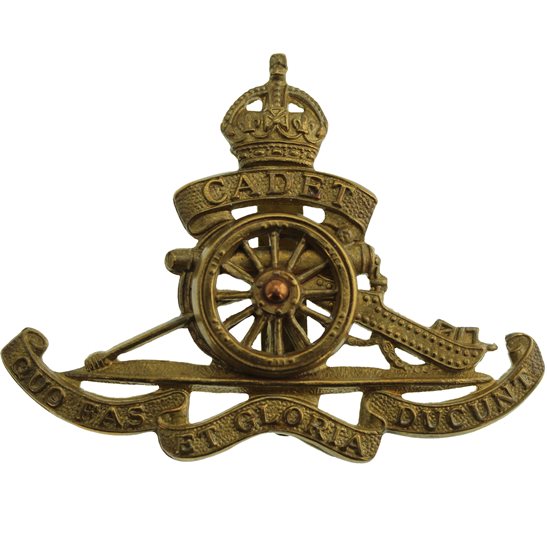


George Allport Elliott

Royal Navy

Personal Details

Born: 3 February 1899

Family: The fourth child of John Reece and Matilda Elliott of 7 Waymills, Whitchurch, Shropshire. George married Annie Mary Elizabeth Grateley on the 7 September 1920 and together they had 4 children – Thomas, John, Annie and Kathleen.

Civilian Occupation: After leaving school he worked as a farm boy before joining the Royal Navy. He was invalided out of the Navy due to a heart disease. In 1939 he was working for the Royal Air Force.

Residence: In 1939 he was living at Atcham.

Died: On 8 March 1970 aged 71


Military Details

Regiment: Royal Navy

Rank: Seaman

Service Number: J31442

Date of Enlistment: 3 February 1917

Date of Discharge: 7 August 1919

Reason for Discharge: Invalided out

Medals and Awards

George was awarded the Campaign Medals (1914/15 Star, British War Medal, and Victory Medal).

Campaign Medals

Great War History Hub Whitchurch Shropshire Medals Front Image

The 1914 Star (also known as 'Pip') was authorised under Special Army Order no. 350 in November 1917 and by an Admiralty Fleet Order in 1918, for award to officers and men of the British and Indian Expeditionary Forces who served in France or Belgium between 5 August and midnight of 22–23 November 1914. The former date is the day after Britain's declaration of war against the Central Powers, and the closing date marks the end of the First Battle of Ypres.

The 1914–15 Star (also known as 'Pip') was instituted in December 1918 and was awarded to officers and men of British and Imperial forces who served against the Central European Powers in any theatre of the Great War between 5 August 1914 and 31 December 1915. The period of eligibility was prior to the introduction of the Military Service Act 1916, which instituted conscription in Britain.

The British War Medal (also known as 'Squeak') was a silver or bronze medal awarded to officers and men of the British and Imperial Forces who either entered a theatre of war or entered service overseas between 5th August 1914 and 11th November 1918 inclusive. This was later extended to services in Russia, Siberia and some other areas in 1919 and 1920. Approximately 6.5 million British War Medals were issued. Approximately 6.4 million of these were the silver versions of this medal. Around 110,000 of a bronze version were issued mainly to Chinese, Maltese and Indian Labour Corps. The front (obv or obverse) of the medal depicts the head of George V. The recipient's service number, rank, name and unit was impressed on the rim.

The Allied Victory Medal (also known as 'Wilfred') was issued by each of the allies. It was decided that each of the allies should each issue their own bronze victory medal with a similar design, similar equivalent wording and identical ribbon. The British medal was designed by W. McMillan. The front depicts a winged classical figure representing victory. Approximately 5.7 million victory medals were issued. Interestingly, eligibility for this medal was more restrictive and not everyone who received the British War Medal ('Squeak') also received the Victory Medal ('Wilfred'). However, in general, all recipients of 'Wilfred' also received 'Squeak' and all recipients of The 1914 Star or The 1914/1915 Star (also known as 'Pip') also received both 'Squeak' and 'Wilfred'. The recipient's service number, rank, name and unit was impressed on the rim.
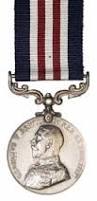


William Arthur Edwards

Royal Air Force

Personal Details

Born: 20 June 1898.

Family: The third child of Robert David and Emily Edwards of Sandhurst, Wrexham Road, Whitchurch, Shropshire.


Military Details

Regiment: Royal Air Force

Rank: Mechanic

Service Number: 253953

Date of Enlistment: 30 March 1918

Date of Discharge: 11 June 1919

Reason for Discharge: Demobilisation

Other Information: He joined the Royal Navy Air Service but was transferred to the Royal Air Force as an air mechanic.

Medals and Awards

William was awarded the Campaign Medals (British War Medal, and Victory Medal).

Campaign Medals

Great War History Hub Whitchurch Shropshire Medals Front Image

The British War Medal (also known as 'Squeak') was a silver or bronze medal awarded to officers and men of the British and Imperial Forces who either entered a theatre of war or entered service overseas between 5th August 1914 and 11th November 1918 inclusive. This was later extended to services in Russia, Siberia and some other areas in 1919 and 1920. Approximately 6.5 million British War Medals were issued. Approximately 6.4 million of these were the silver versions of this medal. Around 110,000 of a bronze version were issued mainly to Chinese, Maltese and Indian Labour Corps. The front (obv or obverse) of the medal depicts the head of George V. The recipient's service number, rank, name and unit was impressed on the rim.

The Allied Victory Medal (also known as 'Wilfred') was issued by each of the allies. It was decided that each of the allies should each issue their own bronze victory medal with a similar design, similar equivalent wording and identical ribbon. The British medal was designed by W. McMillan. The front depicts a winged classical figure representing victory. Approximately 5.7 million victory medals were issued. Interestingly, eligibility for this medal was more restrictive and not everyone who received the British War Medal ('Squeak') also received the Victory Medal ('Wilfred'). However, in general, all recipients of 'Wilfred' also received 'Squeak' and all recipients of The 1914 Star or The 1914/1915 Star (also known as 'Pip') also received both 'Squeak' and 'Wilfred'. The recipient's service number, rank, name and unit was impressed on the rim.
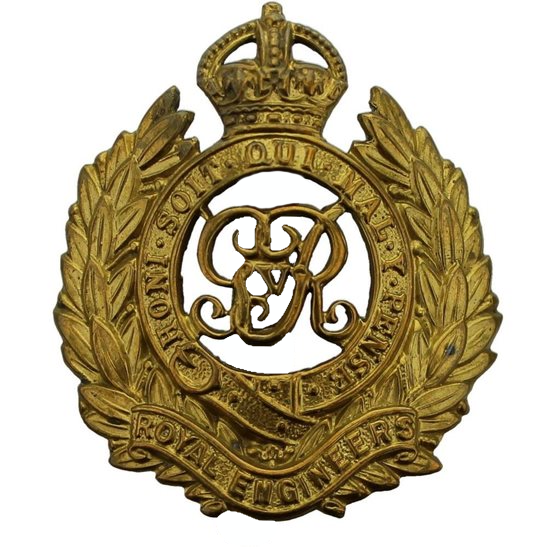


Walter Edwards

Royal Army Medical Corps

Personal Details

Born: 15 April 1896.

Family: The seventh child of Evan and Sarah Edwards. When Walter was baptised on 26 April 1896 the family were living at Fenn’s Bank Brick & Tile Works, Bronington, Flintshire. The 1901 Census shows them living at Fenn’s Brickyard, Bronington, Flintshire; by 1911, Evan had died and the family were living at 45 Claypit Street, Whitchurch, Shropshire. The military records shows his mother living at 20 Brownlow Street, Whitchurch, Shropshire some time after the 1911 Census.

Civilian Occupation: He was employed as a private servant prior to enlisting.

Died: In 1959 aged 63.

Military Details

Regiment: Royal Army Medical Corps (previously Rifle Brigade)

Rank: Private

Service Number: 133862 (previously S/2946)

Date of Enlistment: 8 August 1914

Date of Discharge: 23 March 1919

Reason for Discharge: Demobilisation

Medals and Awards

Walter was awarded the Campaign Medals (1914/15 Star, British War Medal, and Victory Medal).

Campaign Medals

Great War History Hub Whitchurch Shropshire Medals Front Image

The 1914 Star (also known as 'Pip') was authorised under Special Army Order no. 350 in November 1917 and by an Admiralty Fleet Order in 1918, for award to officers and men of the British and Indian Expeditionary Forces who served in France or Belgium between 5 August and midnight of 22–23 November 1914. The former date is the day after Britain's declaration of war against the Central Powers, and the closing date marks the end of the First Battle of Ypres.

The 1914–15 Star (also known as 'Pip') was instituted in December 1918 and was awarded to officers and men of British and Imperial forces who served against the Central European Powers in any theatre of the Great War between 5 August 1914 and 31 December 1915. The period of eligibility was prior to the introduction of the Military Service Act 1916, which instituted conscription in Britain.

The British War Medal (also known as 'Squeak') was a silver or bronze medal awarded to officers and men of the British and Imperial Forces who either entered a theatre of war or entered service overseas between 5th August 1914 and 11th November 1918 inclusive. This was later extended to services in Russia, Siberia and some other areas in 1919 and 1920. Approximately 6.5 million British War Medals were issued. Approximately 6.4 million of these were the silver versions of this medal. Around 110,000 of a bronze version were issued mainly to Chinese, Maltese and Indian Labour Corps. The front (obv or obverse) of the medal depicts the head of George V. The recipient's service number, rank, name and unit was impressed on the rim.

The Allied Victory Medal (also known as 'Wilfred') was issued by each of the allies. It was decided that each of the allies should each issue their own bronze victory medal with a similar design, similar equivalent wording and identical ribbon. The British medal was designed by W. McMillan. The front depicts a winged classical figure representing victory. Approximately 5.7 million victory medals were issued. Interestingly, eligibility for this medal was more restrictive and not everyone who received the British War Medal ('Squeak') also received the Victory Medal ('Wilfred'). However, in general, all recipients of 'Wilfred' also received 'Squeak' and all recipients of The 1914 Star or The 1914/1915 Star (also known as 'Pip') also received both 'Squeak' and 'Wilfred'. The recipient's service number, rank, name and unit was impressed on the rim.


James Edwards

Royal Navy

Personal Details

Born: 10 September 1887

Family: The fifth child of James and Hannah Edwards of Whitchurch Road, Prees, Shropshire.

Civilian Occupation: He was a farm waggoner prior to enlisting for 12 years.

Military Details

Regiment: Royal Navy

Rank: Stoker

Service Number: 309229

Date of Enlistment: 4 November 1905

Date of Discharge: 12 February 1919

Reason for Discharge: End of service engagement

Medals and Awards

James was awarded the Campaign Medals (1914/15 Star, British War Medal, and Victory Medal).

Campaign Medals

Great War History Hub Whitchurch Shropshire Medals Front Image

The 1914 Star (also known as 'Pip') was authorised under Special Army Order no. 350 in November 1917 and by an Admiralty Fleet Order in 1918, for award to officers and men of the British and Indian Expeditionary Forces who served in France or Belgium between 5 August and midnight of 22–23 November 1914. The former date is the day after Britain's declaration of war against the Central Powers, and the closing date marks the end of the First Battle of Ypres.

The 1914–15 Star (also known as 'Pip') was instituted in December 1918 and was awarded to officers and men of British and Imperial forces who served against the Central European Powers in any theatre of the Great War between 5 August 1914 and 31 December 1915. The period of eligibility was prior to the introduction of the Military Service Act 1916, which instituted conscription in Britain.

The British War Medal (also known as 'Squeak') was a silver or bronze medal awarded to officers and men of the British and Imperial Forces who either entered a theatre of war or entered service overseas between 5th August 1914 and 11th November 1918 inclusive. This was later extended to services in Russia, Siberia and some other areas in 1919 and 1920. Approximately 6.5 million British War Medals were issued. Approximately 6.4 million of these were the silver versions of this medal. Around 110,000 of a bronze version were issued mainly to Chinese, Maltese and Indian Labour Corps. The front (obv or obverse) of the medal depicts the head of George V. The recipient's service number, rank, name and unit was impressed on the rim.

The Allied Victory Medal (also known as 'Wilfred') was issued by each of the allies. It was decided that each of the allies should each issue their own bronze victory medal with a similar design, similar equivalent wording and identical ribbon. The British medal was designed by W. McMillan. The front depicts a winged classical figure representing victory. Approximately 5.7 million victory medals were issued. Interestingly, eligibility for this medal was more restrictive and not everyone who received the British War Medal ('Squeak') also received the Victory Medal ('Wilfred'). However, in general, all recipients of 'Wilfred' also received 'Squeak' and all recipients of The 1914 Star or The 1914/1915 Star (also known as 'Pip') also received both 'Squeak' and 'Wilfred'. The recipient's service number, rank, name and unit was impressed on the rim.
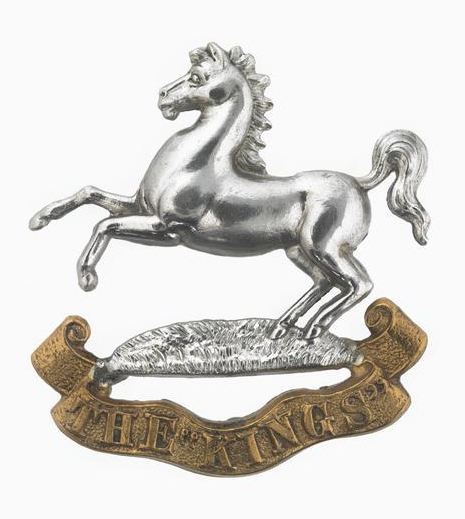


Thomas Edge

Royal Field Artillery

Personal Details

Born: 1889.

Family: The second son of Joseph and Mary Edge of Broughall, Whitchurch, Shropshire. Thomas married Ethel Warburton on 1 April 1917 and together they had 2 children – Vera and Joseph.

Civilian Occupation: He was a labourer on the railway.

Died: In 1936 aged 47.

Other Information: May be a twin with sister Martha.

Military Details

Regiment: Royal Field Artillery

Rank: Corporal

Service Number: 68661 (previously 1007556)

Date of Enlistment: 30 January 1912

Date of Discharge: 19 February 1919

Reason for Discharge: Demobilisation

Medals and Awards

Thomas was awarded the Military Medal and Campaign Medals (1914 Star, British War Medal, and Victory Medal).

Military Medal

Until 1993, the Military Medal (MM) was a military decoration awarded to personnel of the British Army and other services, and formerly also to personnel of other Commonwealth countries, below commissioned rank, for bravery in battle on land.
The medal was established on 25 March 1916. It was the other ranks' equivalent to the Military Cross (MC), which was awarded to commissioned officers and, rarely, to warrant officers, although WOs could also be awarded the MM. The MM ranked below the Distinguished Conduct Medal (DCM), which was also awarded to non-commissioned members of the Army.
Click on the tags below to see details of each recipient.


Campaign Medals

Great War History Hub Whitchurch Shropshire Medals Front Image

The 1914 Star (also known as 'Pip') was authorised under Special Army Order no. 350 in November 1917 and by an Admiralty Fleet Order in 1918, for award to officers and men of the British and Indian Expeditionary Forces who served in France or Belgium between 5 August and midnight of 22–23 November 1914. The former date is the day after Britain's declaration of war against the Central Powers, and the closing date marks the end of the First Battle of Ypres.

The 1914–15 Star (also known as 'Pip') was instituted in December 1918 and was awarded to officers and men of British and Imperial forces who served against the Central European Powers in any theatre of the Great War between 5 August 1914 and 31 December 1915. The period of eligibility was prior to the introduction of the Military Service Act 1916, which instituted conscription in Britain.

The British War Medal (also known as 'Squeak') was a silver or bronze medal awarded to officers and men of the British and Imperial Forces who either entered a theatre of war or entered service overseas between 5th August 1914 and 11th November 1918 inclusive. This was later extended to services in Russia, Siberia and some other areas in 1919 and 1920. Approximately 6.5 million British War Medals were issued. Approximately 6.4 million of these were the silver versions of this medal. Around 110,000 of a bronze version were issued mainly to Chinese, Maltese and Indian Labour Corps. The front (obv or obverse) of the medal depicts the head of George V. The recipient's service number, rank, name and unit was impressed on the rim.

The Allied Victory Medal (also known as 'Wilfred') was issued by each of the allies. It was decided that each of the allies should each issue their own bronze victory medal with a similar design, similar equivalent wording and identical ribbon. The British medal was designed by W. McMillan. The front depicts a winged classical figure representing victory. Approximately 5.7 million victory medals were issued. Interestingly, eligibility for this medal was more restrictive and not everyone who received the British War Medal ('Squeak') also received the Victory Medal ('Wilfred'). However, in general, all recipients of 'Wilfred' also received 'Squeak' and all recipients of The 1914 Star or The 1914/1915 Star (also known as 'Pip') also received both 'Squeak' and 'Wilfred'. The recipient's service number, rank, name and unit was impressed on the rim.
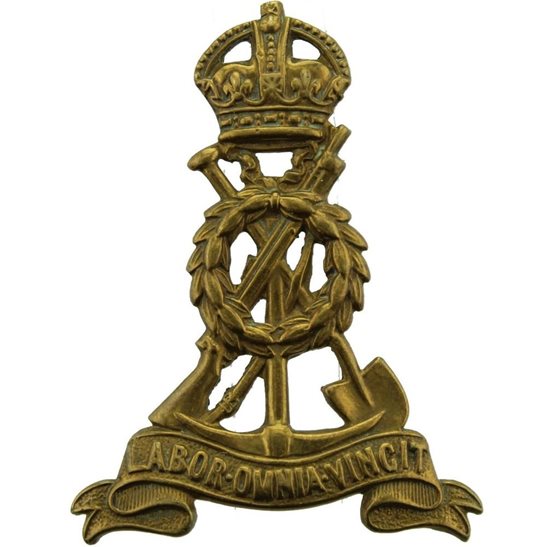


Leonard John Eaton

Royal Army Medical Corps

Personal Details

Born: 2 June 1893.

Family: The fourth child of Thomas and Agnes Susan Eaton of Ellesmere House, Whitchurch, Shropshire. Leonard married Eva Florence Oliver on the 2 September 1920 and together they had 2 children – Dorothy and Peter.

Residence: In 1901 Ernest was living with his family at 16 Richmond terrace, Station Road, Whitchurch. When he joined the army in 1914, he was living at Ellesmere House, to where he returned after demobilisation. In 1939 he and his wife were living at 29 Broad Street, Newtown and Llanwchaiarn, Montgomeryshire, Wales and when he died he was living at White Oaks, Deganwy Road, Llandudno, Gwynedd, Wales.

Civilian Occupation: After leaving school he followed in his father’s footsteps and worked in a tailor’s shop and eventually became a Master Tailor.

Died: On 28 August 1974 aged 81.

Other Information: We know Leonard visited Canada in 1957.

Military Details

Regiment: Royal Army Medical Corps

Rank: Private

Service Number: 587 (previously 50324 and 350329)

Date of Enlistment: 5 December 1914

Date of Discharge: 31 March 1920

Reason for Discharge: Demobilisation

Medals and Awards

Leonard was awarded the Campaign Medals (British War Medal, and Victory Medal).

Campaign Medals

Great War History Hub Whitchurch Shropshire Medals Front Image

The British War Medal (also known as 'Squeak') was a silver or bronze medal awarded to officers and men of the British and Imperial Forces who either entered a theatre of war or entered service overseas between 5th August 1914 and 11th November 1918 inclusive. This was later extended to services in Russia, Siberia and some other areas in 1919 and 1920. Approximately 6.5 million British War Medals were issued. Approximately 6.4 million of these were the silver versions of this medal. Around 110,000 of a bronze version were issued mainly to Chinese, Maltese and Indian Labour Corps. The front (obv or obverse) of the medal depicts the head of George V. The recipient's service number, rank, name and unit was impressed on the rim.

The Allied Victory Medal (also known as 'Wilfred') was issued by each of the allies. It was decided that each of the allies should each issue their own bronze victory medal with a similar design, similar equivalent wording and identical ribbon. The British medal was designed by W. McMillan. The front depicts a winged classical figure representing victory. Approximately 5.7 million victory medals were issued. Interestingly, eligibility for this medal was more restrictive and not everyone who received the British War Medal ('Squeak') also received the Victory Medal ('Wilfred'). However, in general, all recipients of 'Wilfred' also received 'Squeak' and all recipients of The 1914 Star or The 1914/1915 Star (also known as 'Pip') also received both 'Squeak' and 'Wilfred'. The recipient's service number, rank, name and unit was impressed on the rim.
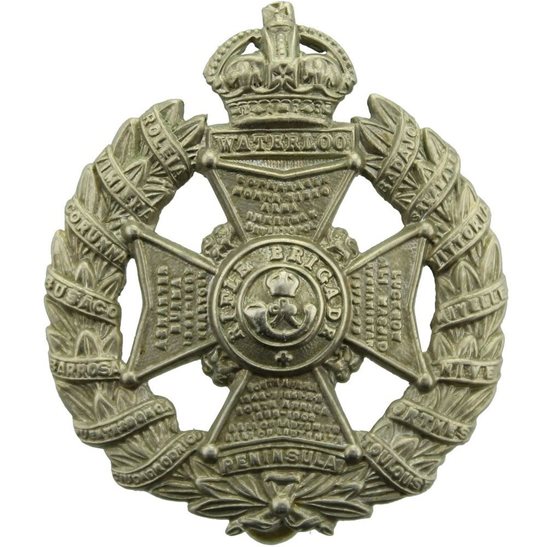


Ernest Jabez Duckers

King's Shropshire Light Infantry

Personal Details

Born: 31 March 1887

Family: The eldest son of Jabez and Catherine Duckers of 22 Newtown Street, Whitchurch, Shropshire. Ernest married Agnes Starkey in 1931; our research suggests they may have had 3 children together – Dorothy M, Gerald E and Margaret A.

Civilian Occupation: Ernest was a painter prior to his enlistment on the 1st September 1914.

Residence: Ernest lived with his family at 22 Newtown, Whitchurch until at least when he left the army. In 1939 the family was living at 3 Castle Hill, Whitchurch.

Died: In 1954 aged 67.

Military Details

Regiment: 6th Battalion King’s Shropshire Light Infantry (Labour Corps 647629)

Rank: Private

Service Number: 11641

Date of Enlistment: 1st September 1914

Date of Discharge: 4th March 1919

Reason for Discharge: Demobilisation

Medals and Awards

Ernest was awarded the Campaign Medals (1914/15 Star, British War Medal, and Victory Medal).

Campaign Medals

Great War History Hub Whitchurch Shropshire Medals Front Image

The 1914 Star (also known as 'Pip') was authorised under Special Army Order no. 350 in November 1917 and by an Admiralty Fleet Order in 1918, for award to officers and men of the British and Indian Expeditionary Forces who served in France or Belgium between 5 August and midnight of 22–23 November 1914. The former date is the day after Britain's declaration of war against the Central Powers, and the closing date marks the end of the First Battle of Ypres.

The 1914–15 Star (also known as 'Pip') was instituted in December 1918 and was awarded to officers and men of British and Imperial forces who served against the Central European Powers in any theatre of the Great War between 5 August 1914 and 31 December 1915. The period of eligibility was prior to the introduction of the Military Service Act 1916, which instituted conscription in Britain.

The British War Medal (also known as 'Squeak') was a silver or bronze medal awarded to officers and men of the British and Imperial Forces who either entered a theatre of war or entered service overseas between 5th August 1914 and 11th November 1918 inclusive. This was later extended to services in Russia, Siberia and some other areas in 1919 and 1920. Approximately 6.5 million British War Medals were issued. Approximately 6.4 million of these were the silver versions of this medal. Around 110,000 of a bronze version were issued mainly to Chinese, Maltese and Indian Labour Corps. The front (obv or obverse) of the medal depicts the head of George V. The recipient's service number, rank, name and unit was impressed on the rim.

The Allied Victory Medal (also known as 'Wilfred') was issued by each of the allies. It was decided that each of the allies should each issue their own bronze victory medal with a similar design, similar equivalent wording and identical ribbon. The British medal was designed by W. McMillan. The front depicts a winged classical figure representing victory. Approximately 5.7 million victory medals were issued. Interestingly, eligibility for this medal was more restrictive and not everyone who received the British War Medal ('Squeak') also received the Victory Medal ('Wilfred'). However, in general, all recipients of 'Wilfred' also received 'Squeak' and all recipients of The 1914 Star or The 1914/1915 Star (also known as 'Pip') also received both 'Squeak' and 'Wilfred'. The recipient's service number, rank, name and unit was impressed on the rim.
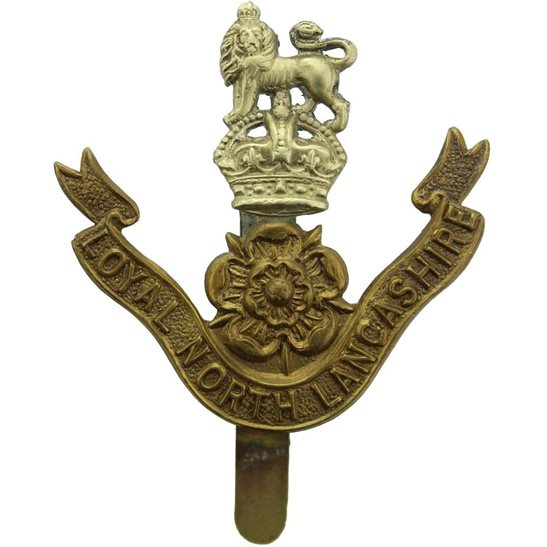


Albert Duckers

Royal Engineers

Personal Details

Born: 9 July 1883.

Family: The fourth son of Samuel and Ellen Duckers of 6 Castle Hill, Whitchurch, Shropshire. Albert married Lucy Elizabeth Hughes on the 3 July 1912 and together they had 5 children – Annie Jane (born 25/03/1909), Arthur (born 24/12/1910), Thomas (born 18/10/1912), Albert (born 16/06/1914) and MacDonald (born 09/04/1918).

Residence: Albert lived at 6 Castle Hill through his life until at least 1939.

Civilian Occupation: Albert followed in his brother’s footsteps and became a bricklayer by trade.

Died: On 22 August 1955.


Military Details

Regiment: Royal Engineers (previously King’s Shropshire Light Infantry and The Queen’s Regiment)

Rank: Private

Service Number: 619910 (previously 5261 and 205007)

Date of Enlistment: 10 December 1915

Date of Discharge: 15 October 1919

Reason for Discharge: Demobilisation

Other Information: He was wounded in action in November 1917 and was transferred back to England. He returned to Europe in August 1918. 

Medals and Awards

Albert was awarded the Campaign Medals (British War Medal, and Victory Medal).

Campaign Medals

Great War History Hub Whitchurch Shropshire Medals Front Image

The British War Medal (also known as 'Squeak') was a silver or bronze medal awarded to officers and men of the British and Imperial Forces who either entered a theatre of war or entered service overseas between 5th August 1914 and 11th November 1918 inclusive. This was later extended to services in Russia, Siberia and some other areas in 1919 and 1920. Approximately 6.5 million British War Medals were issued. Approximately 6.4 million of these were the silver versions of this medal. Around 110,000 of a bronze version were issued mainly to Chinese, Maltese and Indian Labour Corps. The front (obv or obverse) of the medal depicts the head of George V. The recipient's service number, rank, name and unit was impressed on the rim.

The Allied Victory Medal (also known as 'Wilfred') was issued by each of the allies. It was decided that each of the allies should each issue their own bronze victory medal with a similar design, similar equivalent wording and identical ribbon. The British medal was designed by W. McMillan. The front depicts a winged classical figure representing victory. Approximately 5.7 million victory medals were issued. Interestingly, eligibility for this medal was more restrictive and not everyone who received the British War Medal ('Squeak') also received the Victory Medal ('Wilfred'). However, in general, all recipients of 'Wilfred' also received 'Squeak' and all recipients of The 1914 Star or The 1914/1915 Star (also known as 'Pip') also received both 'Squeak' and 'Wilfred'. The recipient's service number, rank, name and unit was impressed on the rim.
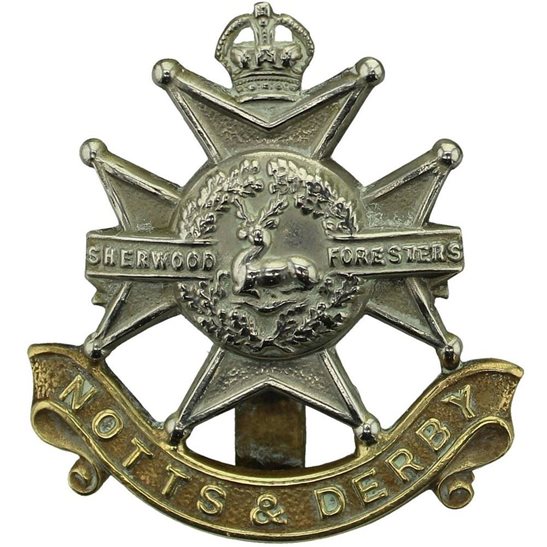


James Ernest Downward

Dorsetshire Regiment

Personal Details

Born: 6 May 1896.

Family: The only child of William and Elizabeth Downward of Whitewell Lane, Iscoyd, Flintshire. James married Elsie Bamford in June 1924 and together they had one child, Margaret.

Education: He attended Whitchurch Grammar School.

Civilian Occupation: When he enlisted in 1915, James worked in a Draper’s shop as a storeman. In 1939 he was a photographer.

Residence: In 1915 he was living at 7 Brooklands, Chester Road, Whitchurch, Shropshire. In 1939 he was at 32 Charteris Road, Wanstead and Woodford, Essex.

Died: He died in June 1970 at Ploughley, Oxfordshire aged 74.

Military Details

Regiment: Dorsetshire Regiment (previously Army Ordnance Corps)

Rank: Private

Service Number: 19930 (previously 09537)

Date of Enlistment: 31 August 1915

Date of Discharge: 9 April 1919

Reason for Discharge: Demobilisation

Medals and Awards

James was awarded the Campaign Medals (British War Medal, and Victory Medal).

Campaign Medals

Great War History Hub Whitchurch Shropshire Medals Front Image

The British War Medal (also known as 'Squeak') was a silver or bronze medal awarded to officers and men of the British and Imperial Forces who either entered a theatre of war or entered service overseas between 5th August 1914 and 11th November 1918 inclusive. This was later extended to services in Russia, Siberia and some other areas in 1919 and 1920. Approximately 6.5 million British War Medals were issued. Approximately 6.4 million of these were the silver versions of this medal. Around 110,000 of a bronze version were issued mainly to Chinese, Maltese and Indian Labour Corps. The front (obv or obverse) of the medal depicts the head of George V. The recipient's service number, rank, name and unit was impressed on the rim.

The Allied Victory Medal (also known as 'Wilfred') was issued by each of the allies. It was decided that each of the allies should each issue their own bronze victory medal with a similar design, similar equivalent wording and identical ribbon. The British medal was designed by W. McMillan. The front depicts a winged classical figure representing victory. Approximately 5.7 million victory medals were issued. Interestingly, eligibility for this medal was more restrictive and not everyone who received the British War Medal ('Squeak') also received the Victory Medal ('Wilfred'). However, in general, all recipients of 'Wilfred' also received 'Squeak' and all recipients of The 1914 Star or The 1914/1915 Star (also known as 'Pip') also received both 'Squeak' and 'Wilfred'. The recipient's service number, rank, name and unit was impressed on the rim.
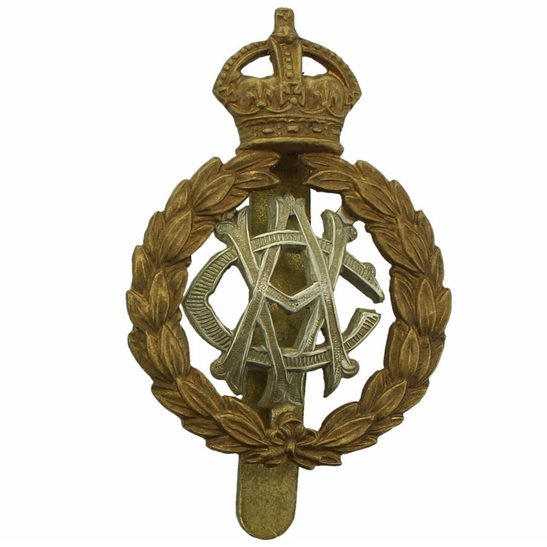


Henry Willasey Downward

Royal Airforce

Personal Details

Born: Henry was born on the 30 November 1877.

Family: The third son of John and Alice Maria Downward of Tilstock, Whitchurch, Shropshire.

Civilian Occupation: Henry was employed as a bank cashier. 

Residence: In 1901 he was living in Ladywood Rd, Edgbaston, Kings Norton. After retirement he moved back to Whitchurch and was living at 24 George Street.

Died: On 2 May 1948 aged 70.

Military Details

Regiment: Royal Air Force (previously Royal Navy)

Rank: Ordinary Seaman

Service Number: F48540 (previously Z/3991)

Date of Enlistment: 27 November 1915

Date of Discharge: 20 April 1920

Reason for Discharge: Demobilisation

Further information: Henry joined the Navy in February 1916 and served on two ships President ll and Daedalus. He transferred to the RAF on 1 April 1918.

Medals and Awards

Henry was awarded the Campaign Medals (British War Medal, and Victory Medal).

Campaign Medals

Great War History Hub Whitchurch Shropshire Medals Front Image

The British War Medal (also known as 'Squeak') was a silver or bronze medal awarded to officers and men of the British and Imperial Forces who either entered a theatre of war or entered service overseas between 5th August 1914 and 11th November 1918 inclusive. This was later extended to services in Russia, Siberia and some other areas in 1919 and 1920. Approximately 6.5 million British War Medals were issued. Approximately 6.4 million of these were the silver versions of this medal. Around 110,000 of a bronze version were issued mainly to Chinese, Maltese and Indian Labour Corps. The front (obv or obverse) of the medal depicts the head of George V. The recipient's service number, rank, name and unit was impressed on the rim.

The Allied Victory Medal (also known as 'Wilfred') was issued by each of the allies. It was decided that each of the allies should each issue their own bronze victory medal with a similar design, similar equivalent wording and identical ribbon. The British medal was designed by W. McMillan. The front depicts a winged classical figure representing victory. Approximately 5.7 million victory medals were issued. Interestingly, eligibility for this medal was more restrictive and not everyone who received the British War Medal ('Squeak') also received the Victory Medal ('Wilfred'). However, in general, all recipients of 'Wilfred' also received 'Squeak' and all recipients of The 1914 Star or The 1914/1915 Star (also known as 'Pip') also received both 'Squeak' and 'Wilfred'. The recipient's service number, rank, name and unit was impressed on the rim.


Frederick Dodd

King's Liverpool Regiment

Personal Details

Born: 9 December 1889.

Family: The third child of John and Anne Dodd of 6 Barlow’s Yard. Whitchurch, Shropshire.

Civilian Occupation: On leaving school he became a butcher’s assistant but when he enlisted he was an iron foundry labourer.

Residence: At the time of the 1939 Register Frederick was living at 31 Yardington, Whitchurch, Shropshire.

Died: In December 1951 aged 62.

Military Details

Regiment: The King’s (Liverpool Regiment) (previously King’s Shropshire Light Infantry)

Rank: Private

Service Number: 33724, (previously 19014)

Date of Enlistment: 11 October 1915

Date of Discharge: 3 March 1919

Reason for Discharge: Demobilisation

Other Information: He initially joined the King’s Shropshire Light Infantry but was subsequently transferred to The King’s (Liverpool Regiment). On the 6 March 1916 he was posted to Egypt and fought in the Middle East and the Balkans during the war. 


Medals and Awards

Frederick was awarded the Campaign Medals (British War Medal, and Victory Medal).

Campaign Medals

Great War History Hub Whitchurch Shropshire Medals Front Image

The British War Medal (also known as 'Squeak') was a silver or bronze medal awarded to officers and men of the British and Imperial Forces who either entered a theatre of war or entered service overseas between 5th August 1914 and 11th November 1918 inclusive. This was later extended to services in Russia, Siberia and some other areas in 1919 and 1920. Approximately 6.5 million British War Medals were issued. Approximately 6.4 million of these were the silver versions of this medal. Around 110,000 of a bronze version were issued mainly to Chinese, Maltese and Indian Labour Corps. The front (obv or obverse) of the medal depicts the head of George V. The recipient's service number, rank, name and unit was impressed on the rim.

The Allied Victory Medal (also known as 'Wilfred') was issued by each of the allies. It was decided that each of the allies should each issue their own bronze victory medal with a similar design, similar equivalent wording and identical ribbon. The British medal was designed by W. McMillan. The front depicts a winged classical figure representing victory. Approximately 5.7 million victory medals were issued. Interestingly, eligibility for this medal was more restrictive and not everyone who received the British War Medal ('Squeak') also received the Victory Medal ('Wilfred'). However, in general, all recipients of 'Wilfred' also received 'Squeak' and all recipients of The 1914 Star or The 1914/1915 Star (also known as 'Pip') also received both 'Squeak' and 'Wilfred'. The recipient's service number, rank, name and unit was impressed on the rim.


John Caulcott Davies

King's Shropshire Light Infantry

Personal Details

Born: 9 January 1896

Family: He was the third son of Edward and Emily Davies of Grindley Brook, Whitchurch, Shropshire. John married Edith Mary Hay in June 1922 and together they had 3 children – Peter, Jean and Betty.

Civilian Occupation: He was a farm labourer and in 1911 was working at High Ash farm, Tushingham, Cheshire. In 1939 he was employed as an Air Ministry Warder at Tern Hill RAF Flying School.

Residence: In 1939 he was living at 7 Council Houses, Wem.

Died: He died in June 1973 age 77.

Other Information: Brother of Edward George Davies (Royal Engineers, 130348) died of wounds 21/6/1917 and William Albert Davies (KSLI, 13381) killed in action 25/4/1917 both of whom are commemorated on the Tushingham Memorial.

Military Details

Regiment: King’s Shropshire Light Infantry

Rank: Corporal

Service Number: 17798

Date of Enlistment: 6 May 1915

Reason for Discharge: Demobilisation


Medals and Awards

John was awarded the Campaign Medals (1914/15 Star, British War Medal, and Victory Medal).

Campaign Medals

Great War History Hub Whitchurch Shropshire Medals Front Image

The 1914 Star (also known as 'Pip') was authorised under Special Army Order no. 350 in November 1917 and by an Admiralty Fleet Order in 1918, for award to officers and men of the British and Indian Expeditionary Forces who served in France or Belgium between 5 August and midnight of 22–23 November 1914. The former date is the day after Britain's declaration of war against the Central Powers, and the closing date marks the end of the First Battle of Ypres.

The 1914–15 Star (also known as 'Pip') was instituted in December 1918 and was awarded to officers and men of British and Imperial forces who served against the Central European Powers in any theatre of the Great War between 5 August 1914 and 31 December 1915. The period of eligibility was prior to the introduction of the Military Service Act 1916, which instituted conscription in Britain.

The British War Medal (also known as 'Squeak') was a silver or bronze medal awarded to officers and men of the British and Imperial Forces who either entered a theatre of war or entered service overseas between 5th August 1914 and 11th November 1918 inclusive. This was later extended to services in Russia, Siberia and some other areas in 1919 and 1920. Approximately 6.5 million British War Medals were issued. Approximately 6.4 million of these were the silver versions of this medal. Around 110,000 of a bronze version were issued mainly to Chinese, Maltese and Indian Labour Corps. The front (obv or obverse) of the medal depicts the head of George V. The recipient's service number, rank, name and unit was impressed on the rim.

The Allied Victory Medal (also known as 'Wilfred') was issued by each of the allies. It was decided that each of the allies should each issue their own bronze victory medal with a similar design, similar equivalent wording and identical ribbon. The British medal was designed by W. McMillan. The front depicts a winged classical figure representing victory. Approximately 5.7 million victory medals were issued. Interestingly, eligibility for this medal was more restrictive and not everyone who received the British War Medal ('Squeak') also received the Victory Medal ('Wilfred'). However, in general, all recipients of 'Wilfred' also received 'Squeak' and all recipients of The 1914 Star or The 1914/1915 Star (also known as 'Pip') also received both 'Squeak' and 'Wilfred'. The recipient's service number, rank, name and unit was impressed on the rim.


Percy Day

King's Shropshire Light Infantry

Personal Details

Born: 1877.

Family: The second son of Charles and Rhoda Day of Newtown Street, Whitchurch, Shropshire. Percy married Elizabeth Jane Bills on 19 August 1901.

Residence: In 1911 Percy and Elizabeth were living at 6 Newtown Street, Whitchurch; the 1919 Absent Voters Register shows his address as 4 Castle Hill, Whitchurch.

Civilian Occupation: At the age of 14 Percy was a baker’s apprentice. In 1911 he was employed as a warehouse labourer and when he signed up he was working for Mr Hughes of The Lodge Farm, Whitchurch.

Died: In 1935 aged 58.

Other Information: Percy was a member of the Independent Order of Oddfellows, Manchester Unity. 

Military Details

Regiment: King’s Shropshire Light Infantry

Rank: Private

Service Number: 24763

Date of Enlistment: 11 December 1915

Date of Discharge: 27 May 1919

Reason for Discharge: Demobilisation

Other Information: Percy disembarked in Salonika in November 1916 and contracted malaria in March 1917 . During 1918 was admitted to hospital on several occasions with this disease. In December 1918 he was sent to Russia until April 1919 when he returned to England. 


Medals and Awards

Percy was awarded the Campaign Medals (British War Medal, and Victory Medal).

Campaign Medals

Great War History Hub Whitchurch Shropshire Medals Front Image

The British War Medal (also known as 'Squeak') was a silver or bronze medal awarded to officers and men of the British and Imperial Forces who either entered a theatre of war or entered service overseas between 5th August 1914 and 11th November 1918 inclusive. This was later extended to services in Russia, Siberia and some other areas in 1919 and 1920. Approximately 6.5 million British War Medals were issued. Approximately 6.4 million of these were the silver versions of this medal. Around 110,000 of a bronze version were issued mainly to Chinese, Maltese and Indian Labour Corps. The front (obv or obverse) of the medal depicts the head of George V. The recipient's service number, rank, name and unit was impressed on the rim.

The Allied Victory Medal (also known as 'Wilfred') was issued by each of the allies. It was decided that each of the allies should each issue their own bronze victory medal with a similar design, similar equivalent wording and identical ribbon. The British medal was designed by W. McMillan. The front depicts a winged classical figure representing victory. Approximately 5.7 million victory medals were issued. Interestingly, eligibility for this medal was more restrictive and not everyone who received the British War Medal ('Squeak') also received the Victory Medal ('Wilfred'). However, in general, all recipients of 'Wilfred' also received 'Squeak' and all recipients of The 1914 Star or The 1914/1915 Star (also known as 'Pip') also received both 'Squeak' and 'Wilfred'. The recipient's service number, rank, name and unit was impressed on the rim.


Joseph William Dawson

Royal Artillery

Personal Details

Born: 7 January 1894. Joseph was baptised on the 3 February 1894.

Family: The first son of Herbert and Agnes Maude Dawson of 16 Station Road Whitchurch, Shropshire. In September 1928 Joseph married May Victoria Stunt and together they had 2 children – Pamela M and Sheila V.

Civilian Occupation: In 1911 he was employed as a Footman. In 1939, he worked in the transport & distribution business and retired as a Commercial Transport Manager.

Residence: In 1939 he was residing at 38 Priory Gardens, Ealing, Middlesex.

Died: On 12 January 1970 aged 76.


Military Details

Regiment: Royal Artillery

Rank: Sergeant

Service Number: 13738

Date of Enlistment: 31 August 1914

Date of Discharge: 31 March 1920

Reason for Discharge: Demobilisation


Medals and Awards

Joseph was awarded the Campaign Medals (1914/15 Star, British War Medal, and Victory Medal).

Campaign Medals

Great War History Hub Whitchurch Shropshire Medals Front Image

The 1914 Star (also known as 'Pip') was authorised under Special Army Order no. 350 in November 1917 and by an Admiralty Fleet Order in 1918, for award to officers and men of the British and Indian Expeditionary Forces who served in France or Belgium between 5 August and midnight of 22–23 November 1914. The former date is the day after Britain's declaration of war against the Central Powers, and the closing date marks the end of the First Battle of Ypres.

The 1914–15 Star (also known as 'Pip') was instituted in December 1918 and was awarded to officers and men of British and Imperial forces who served against the Central European Powers in any theatre of the Great War between 5 August 1914 and 31 December 1915. The period of eligibility was prior to the introduction of the Military Service Act 1916, which instituted conscription in Britain.

The British War Medal (also known as 'Squeak') was a silver or bronze medal awarded to officers and men of the British and Imperial Forces who either entered a theatre of war or entered service overseas between 5th August 1914 and 11th November 1918 inclusive. This was later extended to services in Russia, Siberia and some other areas in 1919 and 1920. Approximately 6.5 million British War Medals were issued. Approximately 6.4 million of these were the silver versions of this medal. Around 110,000 of a bronze version were issued mainly to Chinese, Maltese and Indian Labour Corps. The front (obv or obverse) of the medal depicts the head of George V. The recipient's service number, rank, name and unit was impressed on the rim.

The Allied Victory Medal (also known as 'Wilfred') was issued by each of the allies. It was decided that each of the allies should each issue their own bronze victory medal with a similar design, similar equivalent wording and identical ribbon. The British medal was designed by W. McMillan. The front depicts a winged classical figure representing victory. Approximately 5.7 million victory medals were issued. Interestingly, eligibility for this medal was more restrictive and not everyone who received the British War Medal ('Squeak') also received the Victory Medal ('Wilfred'). However, in general, all recipients of 'Wilfred' also received 'Squeak' and all recipients of The 1914 Star or The 1914/1915 Star (also known as 'Pip') also received both 'Squeak' and 'Wilfred'. The recipient's service number, rank, name and unit was impressed on the rim.


Edwin Dodd

Labour Corps

Personal Details

Born: July 1896

Family: The third son of Joseph and Elizabeth Dodd of Penfold, Goblins Lane, Whixall, Shropshire.

Civilian Occupation: At the outbreak of war he was employed as a labourer/tractor engineer.

Military Details

Regiment: Labour Corps

Rank: Private

Service Number: 430121

Date of Enlistment: 11 December 1915

Date of Discharge: 28 February 1919

Reason for Discharge: Demobilisation

Clarence Henry Higgins Deakin

Royal Navy

Personal Details

Born: 28 July 1896

Family: The second child of Henry Albert and Annie Deakin of Havana House, Whitchurch, Shropshire. Clarence married Ruby O’Sullivan in June 1919 in Plymouth.

Education: He attended Whitchurch Grammar School.

Civilian Occupation: In 1911 he was employed as a railway clerk. In 1939 he was employed as an assistant caretaker.

Residence: In 1939 he was living at 52 Hugh Street, City of Westminster, London.

Died: In September 1940 aged 45.

Military Details

Regiment: Royal Navy

Service Number: J22057

Date of Enlistment: 28 July 1913

Medals and Awards

Clarence was awarded the Campaign Medals (1914 Star, British War Medal, and Victory Medal).

Campaign Medals

Great War History Hub Whitchurch Shropshire Medals Front Image

The 1914 Star (also known as 'Pip') was authorised under Special Army Order no. 350 in November 1917 and by an Admiralty Fleet Order in 1918, for award to officers and men of the British and Indian Expeditionary Forces who served in France or Belgium between 5 August and midnight of 22–23 November 1914. The former date is the day after Britain's declaration of war against the Central Powers, and the closing date marks the end of the First Battle of Ypres.

The 1914–15 Star (also known as 'Pip') was instituted in December 1918 and was awarded to officers and men of British and Imperial forces who served against the Central European Powers in any theatre of the Great War between 5 August 1914 and 31 December 1915. The period of eligibility was prior to the introduction of the Military Service Act 1916, which instituted conscription in Britain.

The British War Medal (also known as 'Squeak') was a silver or bronze medal awarded to officers and men of the British and Imperial Forces who either entered a theatre of war or entered service overseas between 5th August 1914 and 11th November 1918 inclusive. This was later extended to services in Russia, Siberia and some other areas in 1919 and 1920. Approximately 6.5 million British War Medals were issued. Approximately 6.4 million of these were the silver versions of this medal. Around 110,000 of a bronze version were issued mainly to Chinese, Maltese and Indian Labour Corps. The front (obv or obverse) of the medal depicts the head of George V. The recipient's service number, rank, name and unit was impressed on the rim.
The Allied Victory Medal (also known as 'Wilfred') was issued by each of the allies. It was decided that each of the allies should each issue their own bronze victory medal with a similar design, similar equivalent wording and identical ribbon. The British medal was designed by W. McMillan. The front depicts a winged classical figure representing victory. Approximately 5.7 million victory medals were issued. Interestingly, eligibility for this medal was more restrictive and not everyone who received the British War Medal ('Squeak') also received the Victory Medal ('Wilfred'). However, in general, all recipients of 'Wilfred' also received 'Squeak' and all recipients of The 1914 Star or The 1914/1915 Star (also known as 'Pip') also received both 'Squeak' and 'Wilfred'. The recipient's service number, rank, name and unit was impressed on the rim.


William Day

Rifle Brigade (Prince Consort's Own)

Personal Details

Born: March 1865

Family: The eldest son of Edwin and Ann Day of Yardington Street, Whitchurch, Shropshire. William married Emily Brookshaw on 15 December 1889.

Residence: In 1891 William was living in Newton, Whitchurch. By 1901 he had moved back to London and was living at 10 Florence Road, Acton Green, Chiswick.

Civilian Occupation: On the 24 October 1884 he joined the Grenadier Guards, leaving the army in 1891 and becoming employed as a plasterer’s labourer. In 1901 he was employed as an engine driver and in 1911 as a laundry worker.


Military Details

Regiment: Rifle Brigade (Prince Consort’s Own) 25th (Reserve) Garrison.  18th division

Rank: Private

Service Number: 200752

Date of Enlistment: 23 September 1914

Date of Discharge: 31 January 1919

Reason for Discharge: Demobilisation

Other Information: William enlisted for the duration of the war and was stationed at home until November 1915 when he was stationed in India. In August 1918 he returned to England. We can find no record of award of campaign medals which suggests he did not see service in the Theatre of War.

George Alec Davies

Loyal North Lancashire Regiment

Personal Details

Born: 29 September 1893

Family: The only son of John and Sarah Davies of 9 Brooklands, Chester Road, Whitchurch, Shropshire. In 1919 George married Harriet Elizabeth Brown and together they had 4 children – Richard Eric, Maisie M, Derrick Alec and Doreen M.

Civilian Occupation: He was employed as a motorman before enlisting on the 10 December 1915. The 1939 Register shows him as a part time postman.

Residence: George lived at the family home of 9 Brooklands, Chester Road until at least 1919 when he left the army. At the time of the 1939 Register, the family were living at 3 Grindley Brook, Whitchurch, Shropshire.

Died: In December 1967 aged 74.


Military Details

Regiment: 1st Division Loyal North Lancashire Regiment

Rank: Private

Service Number: 34317

Date of Enlistment: 10 December 1915

Date of Discharge: 31 August 1918

Reason for Discharge: No longer physically fit.

Other Information: He was mobilised on the 16 January 1916 and posted to the 9th Division, King’s Shropshire Light Infantry. He was later transferred to the Loyal North Lancashire Regiment. On the 5 June 1917 he suffered a serious injury to his left arm and was transferred to the field hospital. He was subsequently sent to St Patrick’s, England where his left arm was amputated at the shoulder.

Medals and Awards

George was awarded the Silver War Badge and Campaign Medals (British War Medal, and Victory Medal).

Campaign Medals

Great War History Hub Whitchurch Shropshire Medals Front Image

The British War Medal (also known as 'Squeak') was a silver or bronze medal awarded to officers and men of the British and Imperial Forces who either entered a theatre of war or entered service overseas between 5th August 1914 and 11th November 1918 inclusive. This was later extended to services in Russia, Siberia and some other areas in 1919 and 1920. Approximately 6.5 million British War Medals were issued. Approximately 6.4 million of these were the silver versions of this medal. Around 110,000 of a bronze version were issued mainly to Chinese, Maltese and Indian Labour Corps. The front (obv or obverse) of the medal depicts the head of George V. The recipient's service number, rank, name and unit was impressed on the rim.
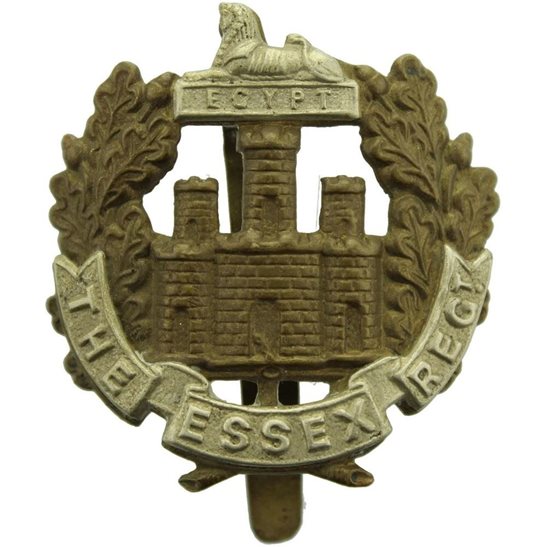
The Allied Victory Medal (also known as 'Wilfred') was issued by each of the allies. It was decided that each of the allies should each issue their own bronze victory medal with a similar design, similar equivalent wording and identical ribbon. The British medal was designed by W. McMillan. The front depicts a winged classical figure representing victory. Approximately 5.7 million victory medals were issued. Interestingly, eligibility for this medal was more restrictive and not everyone who received the British War Medal ('Squeak') also received the Victory Medal ('Wilfred'). However, in general, all recipients of 'Wilfred' also received 'Squeak' and all recipients of The 1914 Star or The 1914/1915 Star (also known as 'Pip') also received both 'Squeak' and 'Wilfred'. The recipient's service number, rank, name and unit was impressed on the rim.


Reginald Ernest Davenport

Notts & Derbyshire

Personal Details

Born: 1892

Family: The only son of Thomas and Elizabeth Davenport of South Street, Ashbourne, Derbyshire. He had four sisters, Genia, Elizabeth, Gertrude and Gladys. Reginald married Dorothy Annie Jaines in March 1918 whilst on leave.

Civilian Occupation: On leaving school he became a farm worker.

Died: In 1930 aged 38.


Military Details

Regiment: Notts & Derbyshire

Rank: Private

Service Number: 3545  (previously 241122)

Date of Enlistment: 13 November 1914

Date of Discharge: 25 May 1919

Reason for Discharge: Demobilisation

Other Information: He enlisted in Burton on the 13 November 1914 and was stationed in England until March 1916 when he embarked for France. He was awarded the Good Conduct badge in November 1916. He was wounded in action June 1917 with a gunshot wound to the left leg. 

Medals and Awards

Reginald was awarded the Campaign Medals (British War Medal, and Victory Medal).

Campaign Medals

Great War History Hub Whitchurch Shropshire Medals Front Image

The British War Medal (also known as 'Squeak') was a silver or bronze medal awarded to officers and men of the British and Imperial Forces who either entered a theatre of war or entered service overseas between 5th August 1914 and 11th November 1918 inclusive. This was later extended to services in Russia, Siberia and some other areas in 1919 and 1920. Approximately 6.5 million British War Medals were issued. Approximately 6.4 million of these were the silver versions of this medal. Around 110,000 of a bronze version were issued mainly to Chinese, Maltese and Indian Labour Corps. The front (obv or obverse) of the medal depicts the head of George V. The recipient's service number, rank, name and unit was impressed on the rim.
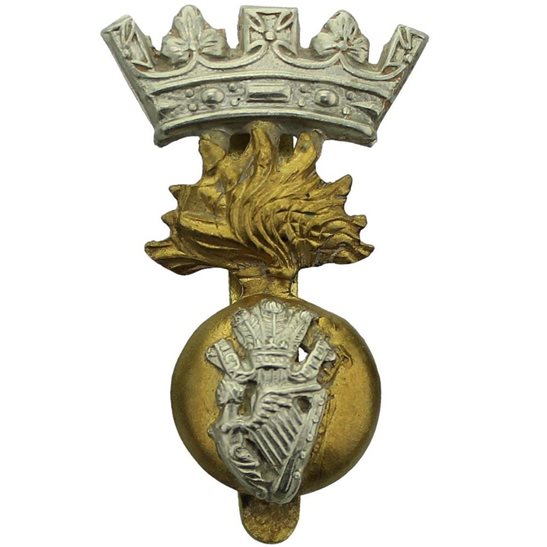
The Allied Victory Medal (also known as 'Wilfred') was issued by each of the allies. It was decided that each of the allies should each issue their own bronze victory medal with a similar design, similar equivalent wording and identical ribbon. The British medal was designed by W. McMillan. The front depicts a winged classical figure representing victory. Approximately 5.7 million victory medals were issued. Interestingly, eligibility for this medal was more restrictive and not everyone who received the British War Medal ('Squeak') also received the Victory Medal ('Wilfred'). However, in general, all recipients of 'Wilfred' also received 'Squeak' and all recipients of The 1914 Star or The 1914/1915 Star (also known as 'Pip') also received both 'Squeak' and 'Wilfred'. The recipient's service number, rank, name and unit was impressed on the rim.


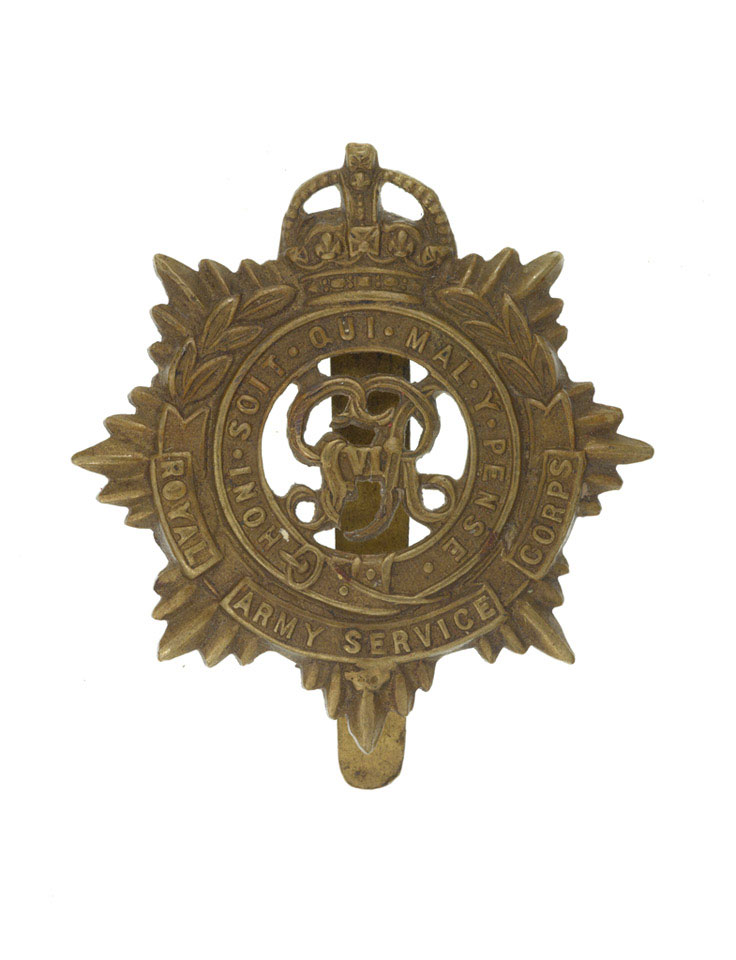
Richard Morton Darlington

Army Veterinary Corps

Personal Details

Born: 1875

Family: The third child of Richard and Emma Darlington of Hisland Farm, Oswestry, Shropshire. In 1905 Richard married Charlotte Louise Winifred Roberts who died on the 11 October 1920 in Bromley Kent.

Civilian Occupation: He followed in his father’s footsteps and became a farmer.

Residence: At the time he enlisted he was living at Alport House, Whitchurch, Shropshire. 

Military Details

Regiment: Army Veterinary Corps

Rank: Private

Service Number: 4970

Date of Enlistment: 8 March 1915

Date of Discharge: 6 July 1916

Reason for Discharge: No longer physically fit.

Medals and Awards

Richard was awarded the Silver War Medal & Campaign Medals (1914/15 Star, British War Medal, and Victory Medal).

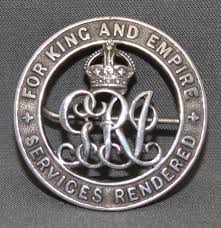
Silver War Badge

Great War History Hub Whitchurch Shropshire Medals Front Image

The Silver War Badge was issued in the United Kingdom and the British Empire to service personnel who had been honourably discharged due to wounds or sickness from military service in World War I. The badge, sometimes known as the "Discharge Badge", the "Wound Badge" or "Services Rendered Badge", was first issued in September 1916, along with an official certificate of entitlement.


Campaign Medals

Great War History Hub Whitchurch Shropshire Medals Front Image

The 1914 Star (also known as 'Pip') was authorised under Special Army Order no. 350 in November 1917 and by an Admiralty Fleet Order in 1918, for award to officers and men of the British and Indian Expeditionary Forces who served in France or Belgium between 5 August and midnight of 22–23 November 1914. The former date is the day after Britain's declaration of war against the Central Powers, and the closing date marks the end of the First Battle of Ypres.

The 1914–15 Star (also known as 'Pip') was instituted in December 1918 and was awarded to officers and men of British and Imperial forces who served against the Central European Powers in any theatre of the Great War between 5 August 1914 and 31 December 1915. The period of eligibility was prior to the introduction of the Military Service Act 1916, which instituted conscription in Britain.

The British War Medal (also known as 'Squeak') was a silver or bronze medal awarded to officers and men of the British and Imperial Forces who either entered a theatre of war or entered service overseas between 5th August 1914 and 11th November 1918 inclusive. This was later extended to services in Russia, Siberia and some other areas in 1919 and 1920. Approximately 6.5 million British War Medals were issued. Approximately 6.4 million of these were the silver versions of this medal. Around 110,000 of a bronze version were issued mainly to Chinese, Maltese and Indian Labour Corps. The front (obv or obverse) of the medal depicts the head of George V. The recipient's service number, rank, name and unit was impressed on the rim.
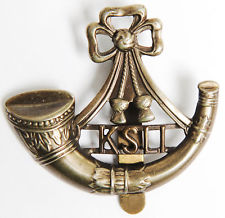
The Allied Victory Medal (also known as 'Wilfred') was issued by each of the allies. It was decided that each of the allies should each issue their own bronze victory medal with a similar design, similar equivalent wording and identical ribbon. The British medal was designed by W. McMillan. The front depicts a winged classical figure representing victory. Approximately 5.7 million victory medals were issued. Interestingly, eligibility for this medal was more restrictive and not everyone who received the British War Medal ('Squeak') also received the Victory Medal ('Wilfred'). However, in general, all recipients of 'Wilfred' also received 'Squeak' and all recipients of The 1914 Star or The 1914/1915 Star (also known as 'Pip') also received both 'Squeak' and 'Wilfred'. The recipient's service number, rank, name and unit was impressed on the rim.
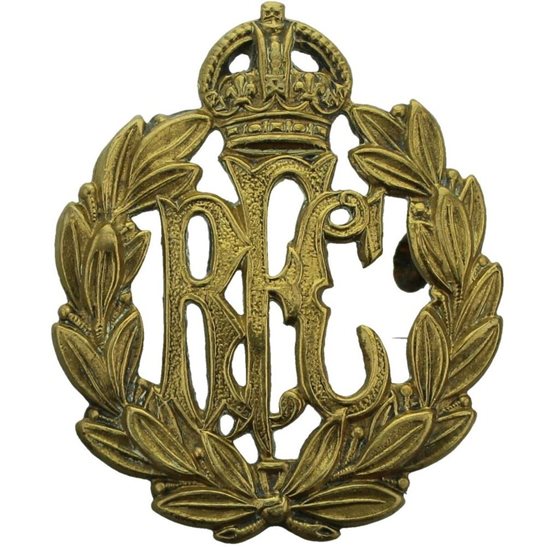


William Henry Crump

Welsh Regiment

Personal Details

Born: 7 April 1896

Family: The second son of  William and Annie Crump of Clutton Handley, Cheshire. William married Rachel E Sinclair in 1924 and together they had 4 children – William H, Raymond, Sheila M and Gillian F.

Residence: The family were living at Red Farm, Tarvin, Cheshire at the time of the 1939 Register.

Died: 13 October 1984 aged 88.

Other Information: William was a farmer at the time of enlistment. It appears that William had several attacks of malaria whilst serving abroad.

Military Details

Regiment: Welsh Regiment

Rank: Private

Service Number: 35859

Date of Enlistment: 8 May 1916

Date of Discharge: 20 November 1919

Reason for Discharge: Demobilisation

Medals and Awards

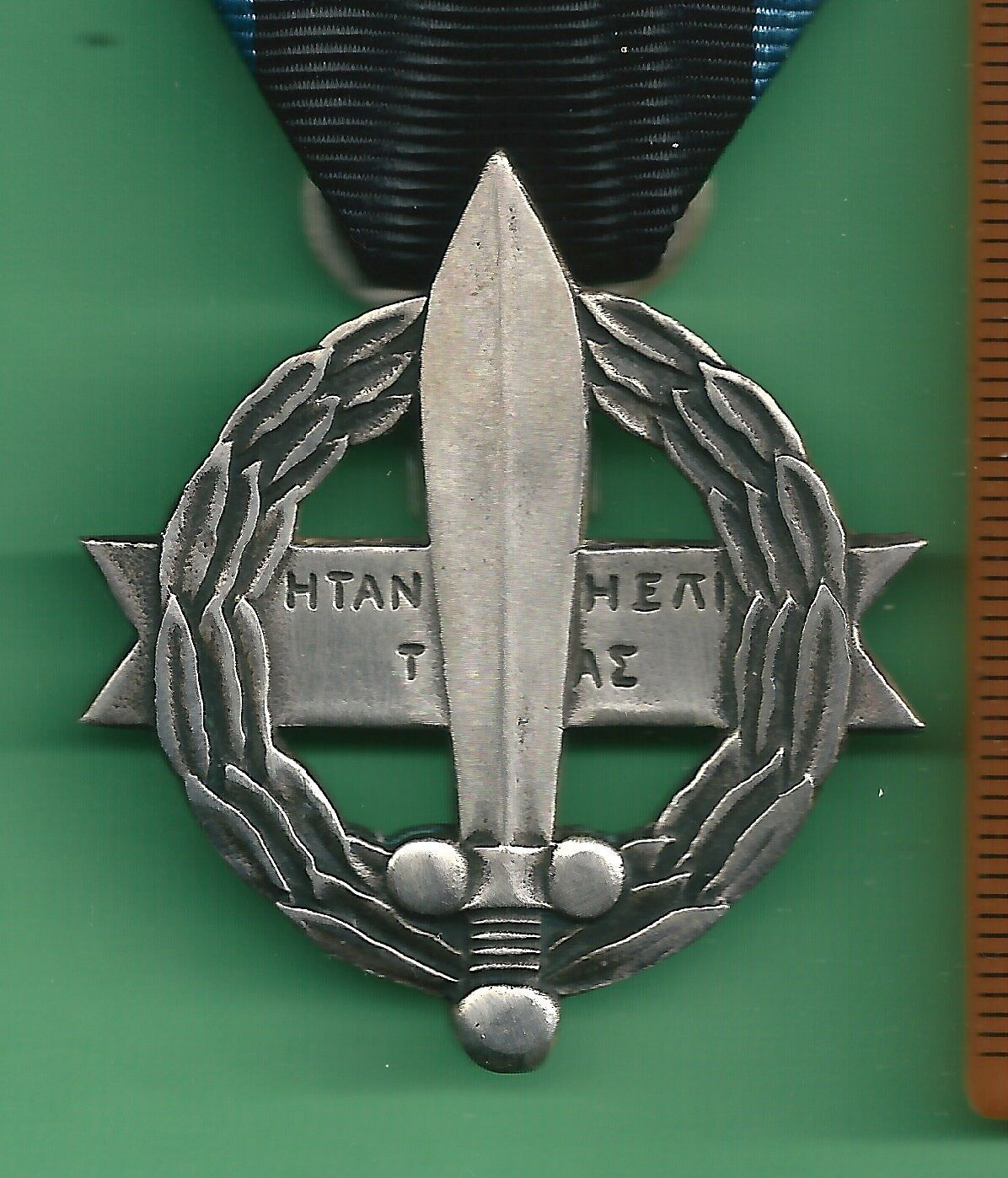
William was awarded the Greek Military Cross & Campaign Medals  (British War Medal, and Victory Medal).


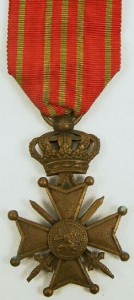
Greek Military Cross

Greek Military Cross

The War Cross (Greek: Πολεμικός Σταυρός) is a military decoration of Greece, awarded for heroism in wartime to both Greeks and foreign allies. There have been three versions of the cross, the 1917 version covering World War I, the 1940 version covering the Second World War and the Greek Civil War, and the 1974 version covering peacekeeping missions in the subsequent years.


Campaign Medals

Great War History Hub Whitchurch Shropshire Medals Front Image

The British War Medal (also known as 'Squeak') was a silver or bronze medal awarded to officers and men of the British and Imperial Forces who either entered a theatre of war or entered service overseas between 5th August 1914 and 11th November 1918 inclusive. This was later extended to services in Russia, Siberia and some other areas in 1919 and 1920. Approximately 6.5 million British War Medals were issued. Approximately 6.4 million of these were the silver versions of this medal. Around 110,000 of a bronze version were issued mainly to Chinese, Maltese and Indian Labour Corps. The front (obv or obverse) of the medal depicts the head of George V. The recipient's service number, rank, name and unit was impressed on the rim.
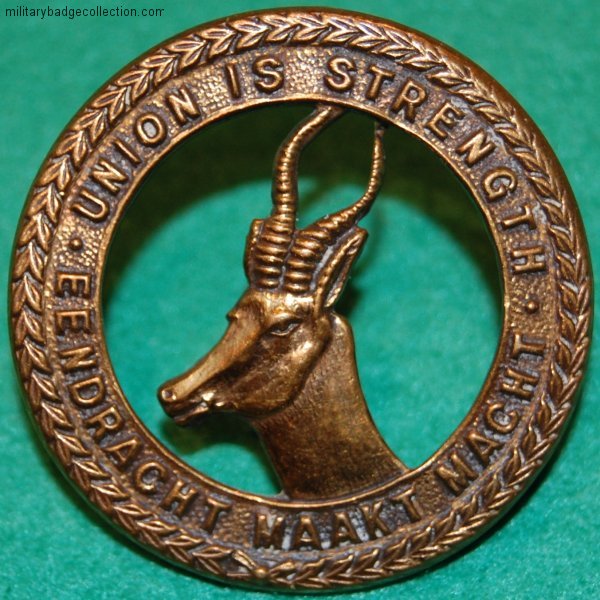
The Allied Victory Medal (also known as 'Wilfred') was issued by each of the allies. It was decided that each of the allies should each issue their own bronze victory medal with a similar design, similar equivalent wording and identical ribbon. The British medal was designed by W. McMillan. The front depicts a winged classical figure representing victory. Approximately 5.7 million victory medals were issued. Interestingly, eligibility for this medal was more restrictive and not everyone who received the British War Medal ('Squeak') also received the Victory Medal ('Wilfred'). However, in general, all recipients of 'Wilfred' also received 'Squeak' and all recipients of The 1914 Star or The 1914/1915 Star (also known as 'Pip') also received both 'Squeak' and 'Wilfred'. The recipient's service number, rank, name and unit was impressed on the rim.


John Crump

Labour Corps

Personal Details

Born: 1885

Family: The second son of George and Mary Crump of 12 Castle Hill, Whitchurch, Shropshire.

Civilian Occupation: Prior to enlisting John worked as a bricklayer’s labourer.

Other Information: John appears to have suffered with very poor eyesight.

Military Details

Regiment: Labour Corps

Rank: Private

Service Number: 137021

Date of Enlistment: 14 November 1916

Date of Discharge: 13 March 1919

Reason for Discharge: Demobilisation

William Henry Cecil Critchlow

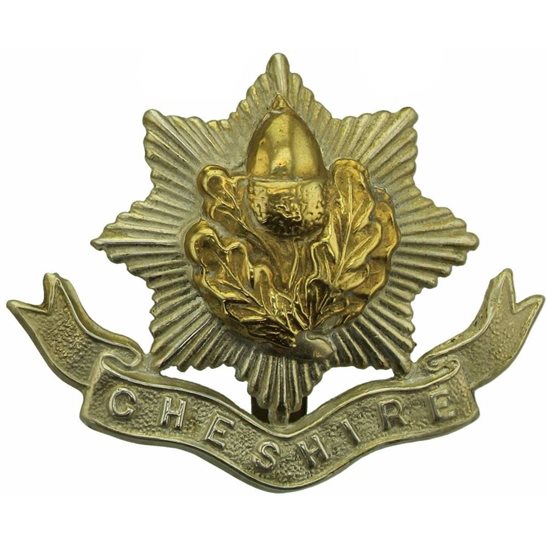
Cheshire Regiment

Personal Details

Born: 4 November 1895 in Salford Lancashire.

Family: William was sent to live with his aunt in Whitchurch, Shropshire. He married Cicely Slattery in 1922 and together they had 2 children, Patricia Rosemary and James Michael

Civilian Occupation: In 1911 he was a gardener. After the war, he worked for Crown Agents which entailed overseas travel on several occasions. William was taken as a civilian Prisoner of War by the Japanese when Singapore was overrun in 1942  and was interred in Changi prison and Sime Road prison until the surrender of the Japanese army in 1945.

Residence: Bridge Cottage, Grindley Brook, Whitchurch, Shropshire. It is probable that he lived in Singapore between 1922 and 1942. After his death the family settled in Durban, South Africa where his daughter married and his wife and 2 children died.

Died: 11 October 1948, aged 52, from pneumonia in St Stephen’s Hospital, London and was buried in Brompton Cemetery


Military Details

Regiment: Cheshire Regiment

Rank: Lance Corporal

Service Number: 9943

Date of Enlistment: 26 August 1912

Date of Discharge: 19 June 1919

Reason for Discharge: No longer fit for service

Other Information: At 18 he joined the Cheshire Regiment and served throughout the war. 

Medals and Awards

William was awarded the Military Medal & Campaign Medals  (1914/15 Star, British War Medal, and Victory Medal).

Military Medal

Until 1993, the Military Medal (MM) was a military decoration awarded to personnel of the British Army and other services, and formerly also to personnel of other Commonwealth countries, below commissioned rank, for bravery in battle on land.
The medal was established on 25 March 1916. It was the other ranks' equivalent to the Military Cross (MC), which was awarded to commissioned officers and, rarely, to warrant officers, although WOs could also be awarded the MM. The MM ranked below the Distinguished Conduct Medal (DCM), which was also awarded to non-commissioned members of the Army.
Click on the tags below to see details of each recipient.


Campaign Medals

Great War History Hub Whitchurch Shropshire Medals Front Image

The 1914 Star (also known as 'Pip') was authorised under Special Army Order no. 350 in November 1917 and by an Admiralty Fleet Order in 1918, for award to officers and men of the British and Indian Expeditionary Forces who served in France or Belgium between 5 August and midnight of 22–23 November 1914. The former date is the day after Britain's declaration of war against the Central Powers, and the closing date marks the end of the First Battle of Ypres.

The 1914–15 Star (also known as 'Pip') was instituted in December 1918 and was awarded to officers and men of British and Imperial forces who served against the Central European Powers in any theatre of the Great War between 5 August 1914 and 31 December 1915. The period of eligibility was prior to the introduction of the Military Service Act 1916, which instituted conscription in Britain.

The British War Medal (also known as 'Squeak') was a silver or bronze medal awarded to officers and men of the British and Imperial Forces who either entered a theatre of war or entered service overseas between 5th August 1914 and 11th November 1918 inclusive. This was later extended to services in Russia, Siberia and some other areas in 1919 and 1920. Approximately 6.5 million British War Medals were issued. Approximately 6.4 million of these were the silver versions of this medal. Around 110,000 of a bronze version were issued mainly to Chinese, Maltese and Indian Labour Corps. The front (obv or obverse) of the medal depicts the head of George V. The recipient's service number, rank, name and unit was impressed on the rim.
The Allied Victory Medal (also known as 'Wilfred') was issued by each of the allies. It was decided that each of the allies should each issue their own bronze victory medal with a similar design, similar equivalent wording and identical ribbon. The British medal was designed by W. McMillan. The front depicts a winged classical figure representing victory. Approximately 5.7 million victory medals were issued. Interestingly, eligibility for this medal was more restrictive and not everyone who received the British War Medal ('Squeak') also received the Victory Medal ('Wilfred'). However, in general, all recipients of 'Wilfred' also received 'Squeak' and all recipients of The 1914 Star or The 1914/1915 Star (also known as 'Pip') also received both 'Squeak' and 'Wilfred'. The recipient's service number, rank, name and unit was impressed on the rim.


George Crewe

George Crewe

Personal Details

Born: 9 January 1890 and baptised on the 30 January 1890.

Family: George was the fourth child of William and Ann Crewe of Claypit Street, Whitchurch, Shropshire. George married Lizzie after emigrating to Canada.

Civilian Occupation: He was employed as a Billiard marker.

Emigration: On the 12 January 1909 he signed up as an Army reserve however after just over a year’s service he bought his discharge and emigrated to Canada.

Occupation in Canada: He was working as an Elevator Operator when he signed up for the Canadian Overseas Expeditionary force in March 1917.

Died: 9 November 1938, aged 48.

Military Details

Regiment: Canadian Overseas Expeditionary Force

Rank: Private

Service Number: 524398

Date of Enlistment: 26 March 1917

Date of Discharge: 15 February 1918

Reason for Discharge: Poor health

Other Information: Although he was sent to England, due to poor health he did not see any action and returned to Canada in November 1917. His brothers Arthur, Harry and Thomas and his uncle Charles also served in the Canadian Expeditionary Force in WW1.


Dick Crewe

Royal Field Artillery

Personal Details

Born: 30 July 1894

Family: The fourth child of Richard and Mary Jane Crewe of 9 Smallbrook Buildings, Whitchurch, Shropshire. He married Lily E Lee in June 1919.

Civilian Occupation: At the age of 16 he was a van boy and after the war he worked as an Iron foundry labourer.

Died: In March 1973 aged 79.

Other Information: Brother to Jim Crewe who lost his life in the Great War.

He may have remarried in 1952 to Emily Furber.

Military Details

Regiment: Royal Field Artillery

Rank: Driver

Service Number: 91181

Date of Enlistment: September 1914

Reason for Discharge: Demobilisation

Medals and Awards

Dick was awarded the Campaign Medals (1914/15 Star, British War Medal, and Victory Medal).

Campaign Medals

Great War History Hub Whitchurch Shropshire Medals Front Image

The 1914 Star (also known as 'Pip') was authorised under Special Army Order no. 350 in November 1917 and by an Admiralty Fleet Order in 1918, for award to officers and men of the British and Indian Expeditionary Forces who served in France or Belgium between 5 August and midnight of 22–23 November 1914. The former date is the day after Britain's declaration of war against the Central Powers, and the closing date marks the end of the First Battle of Ypres.

The 1914–15 Star (also known as 'Pip') was instituted in December 1918 and was awarded to officers and men of British and Imperial forces who served against the Central European Powers in any theatre of the Great War between 5 August 1914 and 31 December 1915. The period of eligibility was prior to the introduction of the Military Service Act 1916, which instituted conscription in Britain.

The British War Medal (also known as 'Squeak') was a silver or bronze medal awarded to officers and men of the British and Imperial Forces who either entered a theatre of war or entered service overseas between 5th August 1914 and 11th November 1918 inclusive. This was later extended to services in Russia, Siberia and some other areas in 1919 and 1920. Approximately 6.5 million British War Medals were issued. Approximately 6.4 million of these were the silver versions of this medal. Around 110,000 of a bronze version were issued mainly to Chinese, Maltese and Indian Labour Corps. The front (obv or obverse) of the medal depicts the head of George V. The recipient's service number, rank, name and unit was impressed on the rim.

The Allied Victory Medal (also known as 'Wilfred') was issued by each of the allies. It was decided that each of the allies should each issue their own bronze victory medal with a similar design, similar equivalent wording and identical ribbon. The British medal was designed by W. McMillan. The front depicts a winged classical figure representing victory. Approximately 5.7 million victory medals were issued. Interestingly, eligibility for this medal was more restrictive and not everyone who received the British War Medal ('Squeak') also received the Victory Medal ('Wilfred'). However, in general, all recipients of 'Wilfred' also received 'Squeak' and all recipients of The 1914 Star or The 1914/1915 Star (also known as 'Pip') also received both 'Squeak' and 'Wilfred'. The recipient's service number, rank, name and unit was impressed on the rim.


Bill Crewe

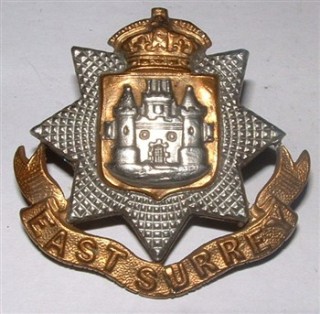
East Surrey Regiment

Personal Details

Born: On the 5 October 1898.

Family: The sixth child of Richard and Mary Jane Crewe of 5 Smallbrook Buildings, Whitchurch, Shropshire. Bill married Esther Dockerty (or Docherty) in 1921 and together they had 6 daughters – Irene, Kate, Dorothy B, Esther A, Christine M and Pamela D.

Civilian Occupation: He enlisted the day after his 18th birthday, his occupation being a baker. In 1939 he was working in the confectionery business.

Residence: In 1939 he was living at 26 Alkington Gardens.

Died: In 1977 aged 78.

Other Information: Brother of Jim Crewe who was killed in action 8 October 1917 aged 20.

Military Details

Regiment: East Surrey Regiment (previously Machine Gun Corps)

Rank: Private

Service Number: 35809 (Previously 74192)

Date of Enlistment: 6 October 1916

Date of Discharge: 23 September 1919

Reason for Discharge: Demobilisation

Medals and Awards

Bill was awarded the Campaign Medals (British War Medal, and Victory Medal).

Campaign Medals

Great War History Hub Whitchurch Shropshire Medals Front Image

The British War Medal (also known as 'Squeak') was a silver or bronze medal awarded to officers and men of the British and Imperial Forces who either entered a theatre of war or entered service overseas between 5th August 1914 and 11th November 1918 inclusive. This was later extended to services in Russia, Siberia and some other areas in 1919 and 1920. Approximately 6.5 million British War Medals were issued. Approximately 6.4 million of these were the silver versions of this medal. Around 110,000 of a bronze version were issued mainly to Chinese, Maltese and Indian Labour Corps. The front (obv or obverse) of the medal depicts the head of George V. The recipient's service number, rank, name and unit was impressed on the rim.
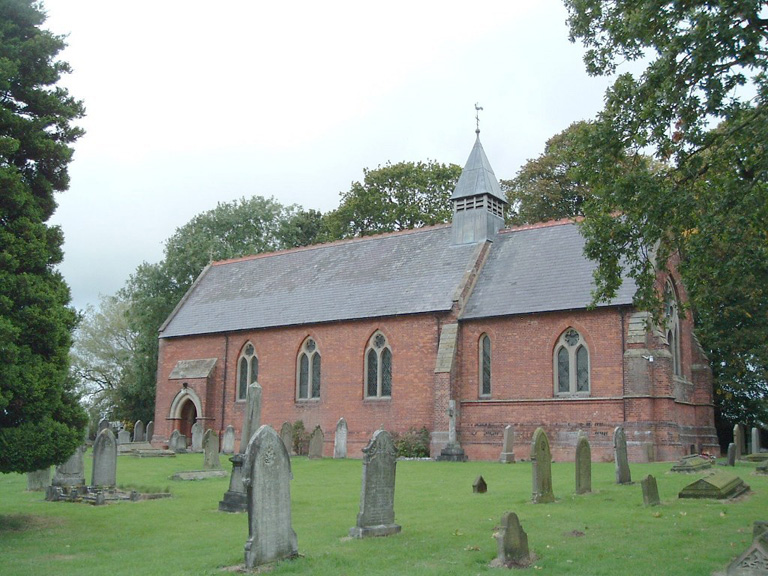
The Allied Victory Medal (also known as 'Wilfred') was issued by each of the allies. It was decided that each of the allies should each issue their own bronze victory medal with a similar design, similar equivalent wording and identical ribbon. The British medal was designed by W. McMillan. The front depicts a winged classical figure representing victory. Approximately 5.7 million victory medals were issued. Interestingly, eligibility for this medal was more restrictive and not everyone who received the British War Medal ('Squeak') also received the Victory Medal ('Wilfred'). However, in general, all recipients of 'Wilfred' also received 'Squeak' and all recipients of The 1914 Star or The 1914/1915 Star (also known as 'Pip') also received both 'Squeak' and 'Wilfred'. The recipient's service number, rank, name and unit was impressed on the rim.


George Clive

Royal Engineers

Personal Details

Born: In Bronington on the 20 December 1893 (baptised 20 January 1894).

Family: The fourth child of William and Selina Clive of Fins Wood, Bronington, Flintshire. George married Lucy Wainwright in 1922 and together they were parents to Dorothy, born 12 September 1924.

Civilian Occupation: In 1911 he was employed as a farm labourer on his brother’s farm in Ash Parva. At the time of enlisting he was a Platelayer with the London & North Western Railway Co. and was a member of the National Union of Railwaymen. He was still employed in this role in 1939. 

Residence: In 1939 he was living at Vicarage lane, Newcastle-Under-Lyme, Staffordshire.

Died: In 1952 aged 59.

Military Details

Regiment: Royal Engineers, 1st Division Railway Co.

Rank: Sapper

Service Number: 218238,  263472

Date of Enlistment: 22 January 1916

Date of Discharge: 23 November 1919

Reason for Discharge: Demobilisation

Medals and Awards

George was awarded the Campaign Medals (British War Medal, and Victory Medal).

Campaign Medals

Great War History Hub Whitchurch Shropshire Medals Front Image

The British War Medal (also known as 'Squeak') was a silver or bronze medal awarded to officers and men of the British and Imperial Forces who either entered a theatre of war or entered service overseas between 5th August 1914 and 11th November 1918 inclusive. This was later extended to services in Russia, Siberia and some other areas in 1919 and 1920. Approximately 6.5 million British War Medals were issued. Approximately 6.4 million of these were the silver versions of this medal. Around 110,000 of a bronze version were issued mainly to Chinese, Maltese and Indian Labour Corps. The front (obv or obverse) of the medal depicts the head of George V. The recipient's service number, rank, name and unit was impressed on the rim.
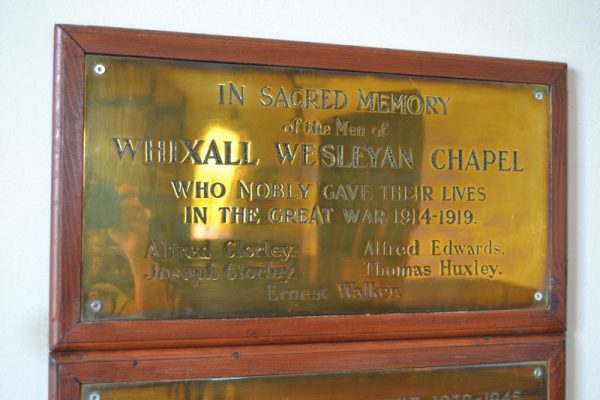
The Allied Victory Medal (also known as 'Wilfred') was issued by each of the allies. It was decided that each of the allies should each issue their own bronze victory medal with a similar design, similar equivalent wording and identical ribbon. The British medal was designed by W. McMillan. The front depicts a winged classical figure representing victory. Approximately 5.7 million victory medals were issued. Interestingly, eligibility for this medal was more restrictive and not everyone who received the British War Medal ('Squeak') also received the Victory Medal ('Wilfred'). However, in general, all recipients of 'Wilfred' also received 'Squeak' and all recipients of The 1914 Star or The 1914/1915 Star (also known as 'Pip') also received both 'Squeak' and 'Wilfred'. The recipient's service number, rank, name and unit was impressed on the rim.


John Cliff

Royal Engineers Monmouthshire

Personal Details

Born: 12 December 1885

Family: The first child of Joseph and Mary Ann Cliff of Heath Lane, Whitchurch, Shropshire. John married Alice Williams on the 3 February 1911 and together they had one son, John born 12 July 1923.

Civilian Occupation: At the age of 17 John was working as a Waggoner on a farm in Alkington.

Residence: Edgeley Cottages, Edgeley, Whitchurch. In 1939 he was the landlord of the Star public house in Watergate Street, Whitchurch, Shropshire.

Died: 21 August 1966 aged 81.


Military Details

Regiment: Monmouthshire Regiment (formerly Royal Engineers)

Rank: Private

Service Number: 4213 (previously 266580 and 360120)

Date of Enlistment: 10 December 1915

Date of Discharge: 27 September 1919

Reason for Discharge: Demobilisation

Medals and Awards

John was awarded the Campaign Medals (British War Medal, and Victory Medal).

Campaign Medals

Great War History Hub Whitchurch Shropshire Medals Front Image

The British War Medal (also known as 'Squeak') was a silver or bronze medal awarded to officers and men of the British and Imperial Forces who either entered a theatre of war or entered service overseas between 5th August 1914 and 11th November 1918 inclusive. This was later extended to services in Russia, Siberia and some other areas in 1919 and 1920. Approximately 6.5 million British War Medals were issued. Approximately 6.4 million of these were the silver versions of this medal. Around 110,000 of a bronze version were issued mainly to Chinese, Maltese and Indian Labour Corps. The front (obv or obverse) of the medal depicts the head of George V. The recipient's service number, rank, name and unit was impressed on the rim.
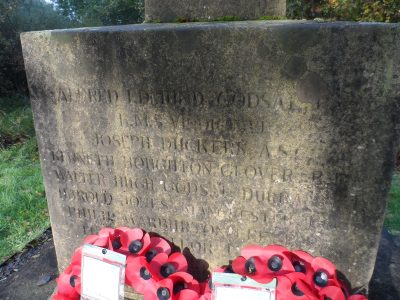
The Allied Victory Medal (also known as 'Wilfred') was issued by each of the allies. It was decided that each of the allies should each issue their own bronze victory medal with a similar design, similar equivalent wording and identical ribbon. The British medal was designed by W. McMillan. The front depicts a winged classical figure representing victory. Approximately 5.7 million victory medals were issued. Interestingly, eligibility for this medal was more restrictive and not everyone who received the British War Medal ('Squeak') also received the Victory Medal ('Wilfred'). However, in general, all recipients of 'Wilfred' also received 'Squeak' and all recipients of The 1914 Star or The 1914/1915 Star (also known as 'Pip') also received both 'Squeak' and 'Wilfred'. The recipient's service number, rank, name and unit was impressed on the rim.


John Clarke

Essex Regiment

Personal Details

Born: 1877

Family: The third child of John and Sarah Clarke of 37 Claypit Street, Whitchurch, Shropshire. John married Sarah Elizabeth Hales in 1904 and together they had 3 children – John, George and Phyllis I.

Civilian Occupation: He was employed as a postman. He continued working for the Post Office after the war and in 1939 was an Assistant Post Office Inspector.

Residence: Lived at 167 Alkington Road, Whitchurch, Shropshire at the time of the 1939 Register.

Died: In 1953 age 75.

Military Details

Regiment: Hereford, Essex Regiment (previously Suffolk Regiment and Herefordshire Regiment)

Rank: Private

Service Number: 55285 (previously 291238 and 237126)

Date of Enlistment: 8 December 1915

Date of Discharge: 26 February 1919

Reason for Discharge: Demobilisation

Joseph Chesters

King's Shropshire Light Infantry

Personal Details

Born: Woodhouses, Whitchurch, Shropshire in 1879.

Family: The son of Joseph and Elizabeth Chesters of Grange Farm, Wirswall, Whitchurch, Shropshire. We believe Joseph had a sister named Eliza born in 1860 and may have been adopted.

Civilian Occupation: He was employed as a farm labourer.

Residence: At the outbreak of the war, Joseph was living in Platt Lane, Whixall, Whitchurch.


Military Details

Regiment: King’s Shropshire Light Infantry (Labour Corps)

Rank: Private

Service Number: 16447 (437198)

Date of Enlistment: 28 December 1914

Date of Discharge: 12 April 1919

Reason for Discharge: Demobilisation

Other Information: During January 1916 he suffered from pyrexia and was eventually evacuated back to England in August 1916 and transferred to the Agricultural Co.

Medals and Awards

Joseph was awarded the Campaign Medals (1914/15 Star, British War Medal, and Victory Medal).

Campaign Medals

Great War History Hub Whitchurch Shropshire Medals Front Image

The 1914 Star (also known as 'Pip') was authorised under Special Army Order no. 350 in November 1917 and by an Admiralty Fleet Order in 1918, for award to officers and men of the British and Indian Expeditionary Forces who served in France or Belgium between 5 August and midnight of 22–23 November 1914. The former date is the day after Britain's declaration of war against the Central Powers, and the closing date marks the end of the First Battle of Ypres.

The 1914–15 Star (also known as 'Pip') was instituted in December 1918 and was awarded to officers and men of British and Imperial forces who served against the Central European Powers in any theatre of the Great War between 5 August 1914 and 31 December 1915. The period of eligibility was prior to the introduction of the Military Service Act 1916, which instituted conscription in Britain.

The British War Medal (also known as 'Squeak') was a silver or bronze medal awarded to officers and men of the British and Imperial Forces who either entered a theatre of war or entered service overseas between 5th August 1914 and 11th November 1918 inclusive. This was later extended to services in Russia, Siberia and some other areas in 1919 and 1920. Approximately 6.5 million British War Medals were issued. Approximately 6.4 million of these were the silver versions of this medal. Around 110,000 of a bronze version were issued mainly to Chinese, Maltese and Indian Labour Corps. The front (obv or obverse) of the medal depicts the head of George V. The recipient's service number, rank, name and unit was impressed on the rim.

The Allied Victory Medal (also known as 'Wilfred') was issued by each of the allies. It was decided that each of the allies should each issue their own bronze victory medal with a similar design, similar equivalent wording and identical ribbon. The British medal was designed by W. McMillan. The front depicts a winged classical figure representing victory. Approximately 5.7 million victory medals were issued. Interestingly, eligibility for this medal was more restrictive and not everyone who received the British War Medal ('Squeak') also received the Victory Medal ('Wilfred'). However, in general, all recipients of 'Wilfred' also received 'Squeak' and all recipients of The 1914 Star or The 1914/1915 Star (also known as 'Pip') also received both 'Squeak' and 'Wilfred'. The recipient's service number, rank, name and unit was impressed on the rim.
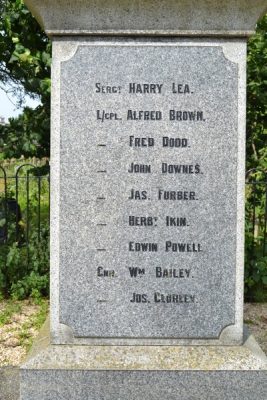


William Challinor

Royal Engineers

Personal Details

Born: 20 October 1891

Family: The first child of William and Elizabeth Challenor of 28 Claypit Street, Whitchurch, Shropshire. Brother of Frank and George Challenor, both of whom died during the war. William married Ada Clawley in September 1923 and together we believe they had 8 children – Leslie R, Margaret J, Marjorie B, Frank, Robert, Dorothy J, Daisy J and Leonard D.

Other Names: Challenor

Civilian Occupation: He was employed by the General Post Office as a linesman. 

Residence: At the time of the 1939 Register, William and Ada lived at 21 Wayland Road, Whitchurch, Shropshire.

Died: December 1963, aged 72.

Military Details

Regiment: Royal Engineers

Rank: Sapper

Service Number: 93790

Date of Enlistment: 22 May 1915

Date of Discharge: 12 March 1919

Reason for Discharge: Demobilisation

Other Information: He was gassed during the war.

Medals and Awards

William was awarded the Campaign Medals (British War Medal, and Victory Medal).

Campaign Medals

Great War History Hub Whitchurch Shropshire Medals Front Image

The British War Medal (also known as 'Squeak') was a silver or bronze medal awarded to officers and men of the British and Imperial Forces who either entered a theatre of war or entered service overseas between 5th August 1914 and 11th November 1918 inclusive. This was later extended to services in Russia, Siberia and some other areas in 1919 and 1920. Approximately 6.5 million British War Medals were issued. Approximately 6.4 million of these were the silver versions of this medal. Around 110,000 of a bronze version were issued mainly to Chinese, Maltese and Indian Labour Corps. The front (obv or obverse) of the medal depicts the head of George V. The recipient's service number, rank, name and unit was impressed on the rim.
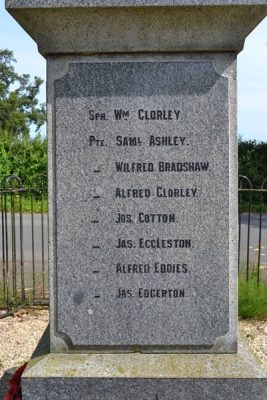
The Allied Victory Medal (also known as 'Wilfred') was issued by each of the allies. It was decided that each of the allies should each issue their own bronze victory medal with a similar design, similar equivalent wording and identical ribbon. The British medal was designed by W. McMillan. The front depicts a winged classical figure representing victory. Approximately 5.7 million victory medals were issued. Interestingly, eligibility for this medal was more restrictive and not everyone who received the British War Medal ('Squeak') also received the Victory Medal ('Wilfred'). However, in general, all recipients of 'Wilfred' also received 'Squeak' and all recipients of The 1914 Star or The 1914/1915 Star (also known as 'Pip') also received both 'Squeak' and 'Wilfred'. The recipient's service number, rank, name and unit was impressed on the rim.
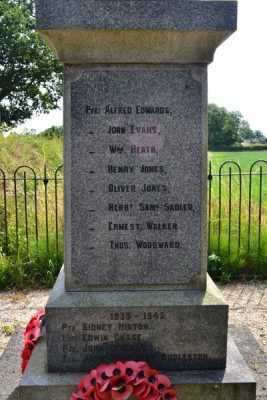


Harold Butler

King's Liverpool Regiment

Personal Details

Born: 11 September 1894 and baptised on 3 October 1894.

Family: He was the second son of John William and Cecilia Mary Butler of 4 Waymills, Whitchurch, Shropshire. Harold married Harriet Davies in 1920 and together they had 2 children – Reginald H and Doris.

Residence: At the time of enlisting, Harold was living at 34 Havelock Street, Crewe. The family were still residing there at the time of the 1939 Register. Harold acknowledged receipt of his medals from 20 Ernest Road, Sparkhill, Birmingham.

Employment: Harold was a Pawn Broker’s assistant at the time of enlisting. The 1939 Register shows him as a crane driver in a Locomotive Works.

Died: In 1964, age 69.

Military Details

Regiment: The King’s (Liverpool Regiment) (previously 48300 South Wales Borderers)

Rank: Private

Service Number: 26630

Date of Enlistment: 25 May 1915

Date of Discharge: 30 April 1919

Reason for Discharge: Demobilisation

Other Information: He enlisted in Liverpool at the age of 20. He was assigned to The King’s (Liverpool Regiment) and was posted to France in November 1915. He returned to England in 1916 but later in the year was sent to Salonika where he suffered with pyrexia and malaria. 


Medals and Awards

Harold was awarded the Campaign Medals (1914/15 Star, British War Medal, and Victory Medal).

Campaign Medals

Great War History Hub Whitchurch Shropshire Medals Front Image

The 1914 Star (also known as 'Pip') was authorised under Special Army Order no. 350 in November 1917 and by an Admiralty Fleet Order in 1918, for award to officers and men of the British and Indian Expeditionary Forces who served in France or Belgium between 5 August and midnight of 22–23 November 1914. The former date is the day after Britain's declaration of war against the Central Powers, and the closing date marks the end of the First Battle of Ypres.

The 1914–15 Star (also known as 'Pip') was instituted in December 1918 and was awarded to officers and men of British and Imperial forces who served against the Central European Powers in any theatre of the Great War between 5 August 1914 and 31 December 1915. The period of eligibility was prior to the introduction of the Military Service Act 1916, which instituted conscription in Britain.

The British War Medal (also known as 'Squeak') was a silver or bronze medal awarded to officers and men of the British and Imperial Forces who either entered a theatre of war or entered service overseas between 5th August 1914 and 11th November 1918 inclusive. This was later extended to services in Russia, Siberia and some other areas in 1919 and 1920. Approximately 6.5 million British War Medals were issued. Approximately 6.4 million of these were the silver versions of this medal. Around 110,000 of a bronze version were issued mainly to Chinese, Maltese and Indian Labour Corps. The front (obv or obverse) of the medal depicts the head of George V. The recipient's service number, rank, name and unit was impressed on the rim.
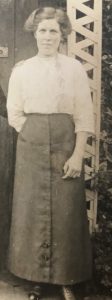
The Allied Victory Medal (also known as 'Wilfred') was issued by each of the allies. It was decided that each of the allies should each issue their own bronze victory medal with a similar design, similar equivalent wording and identical ribbon. The British medal was designed by W. McMillan. The front depicts a winged classical figure representing victory. Approximately 5.7 million victory medals were issued. Interestingly, eligibility for this medal was more restrictive and not everyone who received the British War Medal ('Squeak') also received the Victory Medal ('Wilfred'). However, in general, all recipients of 'Wilfred' also received 'Squeak' and all recipients of The 1914 Star or The 1914/1915 Star (also known as 'Pip') also received both 'Squeak' and 'Wilfred'. The recipient's service number, rank, name and unit was impressed on the rim.
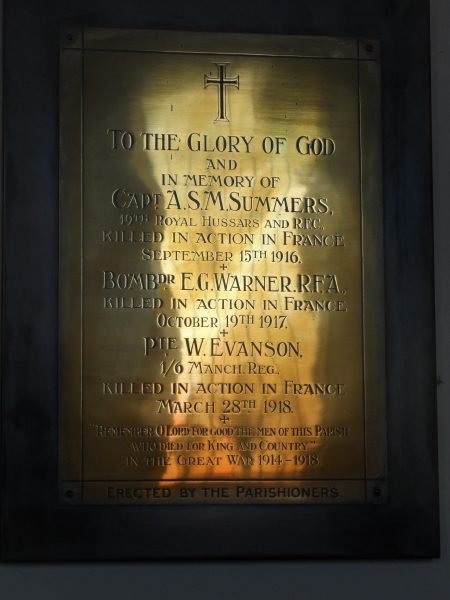


John Clifford Burgess

Royal Irish Fusiliers

Personal Details:

Born: July 1877 and baptised on 14 September 1877.

Family: The first child of Ralph Wright and Margaret Jane Burgess of Smallbrook Villa, Whitchurch, Shropshire. John married Annie Bird Berridge on 2 April 1902 and together they had 3 children – Sidney Clifford, Harry Charles and John Hursfield.

Education: In 1891 he was a boarder at St Oswalds College Ellesmere.

Residence: At the time of his enlisting in 1915, the family lived at 175 Hyde Road, West Gorton, Manchester.

Civilian Occupation: Warehouse man. 

Died: We believe John died in 1936 at Withington Workhouse, Manchester aged 59

Military Details

Regiment: Royal Irish Fusiliers (previously The King’s (Liverpool Regiment))

Rank: Private

Service Number: 28605   (85123)

Date of Enlistment: 8 December 1915

Date of Discharge: 26 March 1919

Reason for Discharge: Demobilisation

Other Information: He was posted on the 9 November whilst with The King’s (Liverpool Regiment) but was later transferred  to the Royal Irish Fusiliers. Whilst serving abroad John attended the military hospital on two occasions, for psoriasis and malaria.


Medals and Awards

John was awarded the Campaign Medals  (British War Medal and Victory Medal).

Campaign Medals

Great War History Hub Whitchurch Shropshire Medals Front Image

The British War Medal (also known as 'Squeak') was a silver or bronze medal awarded to officers and men of the British and Imperial Forces who either entered a theatre of war or entered service overseas between 5th August 1914 and 11th November 1918 inclusive. This was later extended to services in Russia, Siberia and some other areas in 1919 and 1920. Approximately 6.5 million British War Medals were issued. Approximately 6.4 million of these were the silver versions of this medal. Around 110,000 of a bronze version were issued mainly to Chinese, Maltese and Indian Labour Corps. The front (obv or obverse) of the medal depicts the head of George V. The recipient's service number, rank, name and unit was impressed on the rim.

The Allied Victory Medal (also known as 'Wilfred') was issued by each of the allies. It was decided that each of the allies should each issue their own bronze victory medal with a similar design, similar equivalent wording and identical ribbon. The British medal was designed by W. McMillan. The front depicts a winged classical figure representing victory. Approximately 5.7 million victory medals were issued. Interestingly, eligibility for this medal was more restrictive and not everyone who received the British War Medal ('Squeak') also received the Victory Medal ('Wilfred'). However, in general, all recipients of 'Wilfred' also received 'Squeak' and all recipients of The 1914 Star or The 1914/1915 Star (also known as 'Pip') also received both 'Squeak' and 'Wilfred'. The recipient's service number, rank, name and unit was impressed on the rim.
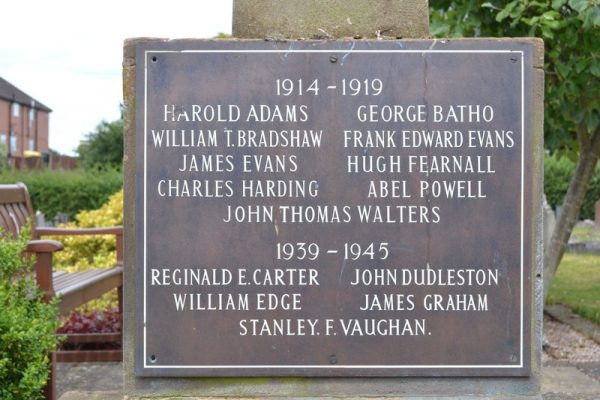


Frederick Beardsall Black

Royal Army Service Corps

Personal Details

Born: 1871

Family: The third son of William and Mary Black of Watergate Street, Whitchurch, Shropshire. Frederick married Rosina Harriet Matthews in 1892 and together they had 7 children – Elsie, Eleanor, Henry, John, Rowland, Winifred and Sybil.

Residence: At the time of enlisting he lived at 263 Broomhill Road, Fulwell, Nottingham where the family still lived at the time of the 1939 Register.

Civilian Occupation: Horseman.

Died: July 1945.

Military Details

Regiment: Royal Army Service Corps

Rank: Private

Service Number: R4/068233

Date of Enlistment: 3 April 1915

Date of Discharge: 30 April 1919

Reason for Discharge: Demobilisation


Medals and Awards

Frederick was awarded the Campaign Medals  (British War Medal and Victory Medal).

Campaign Medals

Great War History Hub Whitchurch Shropshire Medals Front Image

The British War Medal (also known as 'Squeak') was a silver or bronze medal awarded to officers and men of the British and Imperial Forces who either entered a theatre of war or entered service overseas between 5th August 1914 and 11th November 1918 inclusive. This was later extended to services in Russia, Siberia and some other areas in 1919 and 1920. Approximately 6.5 million British War Medals were issued. Approximately 6.4 million of these were the silver versions of this medal. Around 110,000 of a bronze version were issued mainly to Chinese, Maltese and Indian Labour Corps. The front (obv or obverse) of the medal depicts the head of George V. The recipient's service number, rank, name and unit was impressed on the rim.
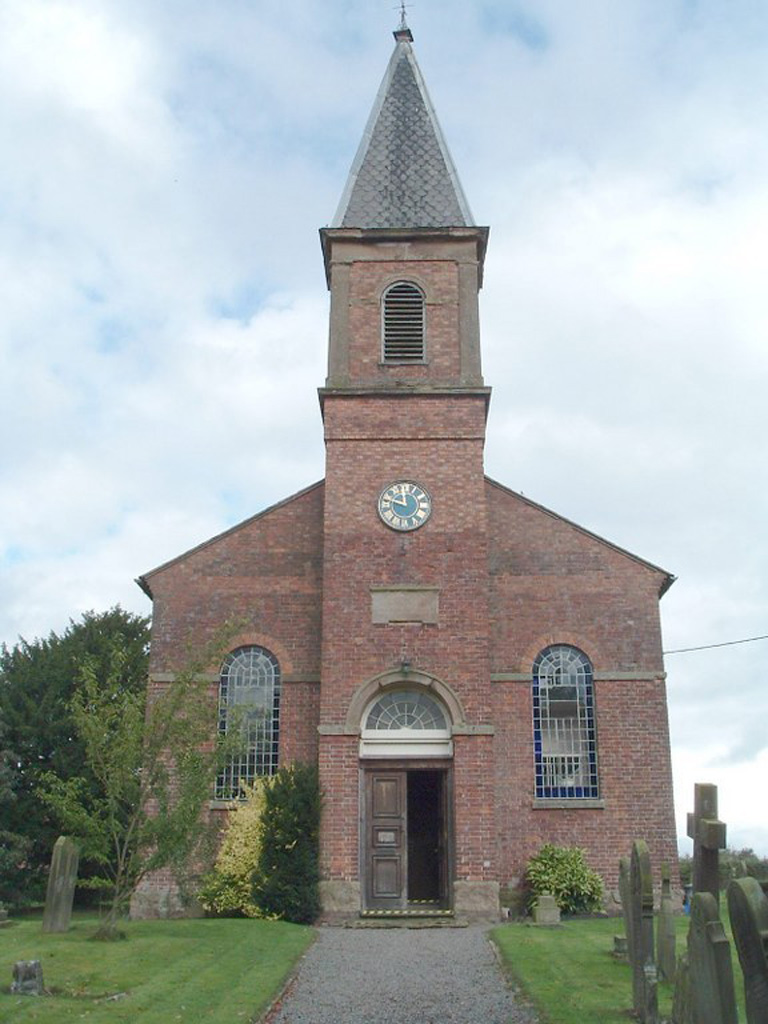
The Allied Victory Medal (also known as 'Wilfred') was issued by each of the allies. It was decided that each of the allies should each issue their own bronze victory medal with a similar design, similar equivalent wording and identical ribbon. The British medal was designed by W. McMillan. The front depicts a winged classical figure representing victory. Approximately 5.7 million victory medals were issued. Interestingly, eligibility for this medal was more restrictive and not everyone who received the British War Medal ('Squeak') also received the Victory Medal ('Wilfred'). However, in general, all recipients of 'Wilfred' also received 'Squeak' and all recipients of The 1914 Star or The 1914/1915 Star (also known as 'Pip') also received both 'Squeak' and 'Wilfred'. The recipient's service number, rank, name and unit was impressed on the rim.


George Bennion

Loyal North Lancashire Regiment

Personal Details:

Born: 11 November 1869. There is some confusion as to George’s year of birth. He was baptised on the 6 February 1870 but his army pension sheet has his 55 birthday as 11 November 1925. Therefore we believe he was born 11 November 1869.

Family: The fourth child of George and Sarah Bennion of Bevans Yard, Yardington, Whitchurch, Shropshire. George married Mary Elizabeth King on the 10 August 1898 at St Mary’s, Preston and together they had 4 children – George Thomas, William Robert, Charles and Harry.

Civilian Occupation: School caretaker.

Residence: At the outbreak of the war he was living at 1 Lady Place, Preston.

Died: 25 March 1934

Military Details:

Regiment: Loyal North Lancashire Regiment

Rank: Sergeant Major

Service Number: 3402

Date of Enlistment: 1 September 1914

Date of Discharge: 10 March 1919

Reason for Discharge: Demobilisation

Other Information: George enlisted in the King’s Shropshire Light Infantry on the 12 March 1889 and saw service in several countries: Egypt, Hong Kong, India, Malta, Barbados and South Africa before being demobilised in March 1910. 


Medals and Awards

George was awarded the Campaign Medals  (1914/15 Star, British War Medal and Victory Medal).

Campaign Medals

Great War History Hub Whitchurch Shropshire Medals Front Image

The 1914 Star (also known as 'Pip') was authorised under Special Army Order no. 350 in November 1917 and by an Admiralty Fleet Order in 1918, for award to officers and men of the British and Indian Expeditionary Forces who served in France or Belgium between 5 August and midnight of 22–23 November 1914. The former date is the day after Britain's declaration of war against the Central Powers, and the closing date marks the end of the First Battle of Ypres.

The 1914–15 Star (also known as 'Pip') was instituted in December 1918 and was awarded to officers and men of British and Imperial forces who served against the Central European Powers in any theatre of the Great War between 5 August 1914 and 31 December 1915. The period of eligibility was prior to the introduction of the Military Service Act 1916, which instituted conscription in Britain.

The British War Medal (also known as 'Squeak') was a silver or bronze medal awarded to officers and men of the British and Imperial Forces who either entered a theatre of war or entered service overseas between 5th August 1914 and 11th November 1918 inclusive. This was later extended to services in Russia, Siberia and some other areas in 1919 and 1920. Approximately 6.5 million British War Medals were issued. Approximately 6.4 million of these were the silver versions of this medal. Around 110,000 of a bronze version were issued mainly to Chinese, Maltese and Indian Labour Corps. The front (obv or obverse) of the medal depicts the head of George V. The recipient's service number, rank, name and unit was impressed on the rim.
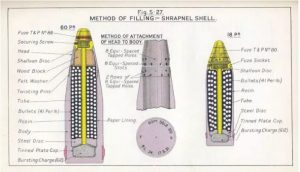
The Allied Victory Medal (also known as 'Wilfred') was issued by each of the allies. It was decided that each of the allies should each issue their own bronze victory medal with a similar design, similar equivalent wording and identical ribbon. The British medal was designed by W. McMillan. The front depicts a winged classical figure representing victory. Approximately 5.7 million victory medals were issued. Interestingly, eligibility for this medal was more restrictive and not everyone who received the British War Medal ('Squeak') also received the Victory Medal ('Wilfred'). However, in general, all recipients of 'Wilfred' also received 'Squeak' and all recipients of The 1914 Star or The 1914/1915 Star (also known as 'Pip') also received both 'Squeak' and 'Wilfred'. The recipient's service number, rank, name and unit was impressed on the rim.


Hugh William Beeks

Royal Horse Guards

Personal Details:

Born: 21 February 1879

Family: The first son of Thomas and Elizabeth Beeks of Higher Wych Smithey, Wigland Grove, Wigland, Cheshire. Hugh married Edith Frances Moore on the 12 April 1909 and together they had 1 child – Charles H.

Civilian Occupation: Hugh was a farrier by trade.

Residence: The 1911 Census and 1939 Register show the family living at 26 Maxwell Street, Crewe.

Died: 9 February 1962 aged 82

Military Details:

Regiment: Royal Horse Guards (Household Battalion)

Rank: Corporal of Horse

Service Number: 2327  (1106)

Date of Enlistment: 6 January 1915

Date of Discharge: 10 May 1919

Reason for Discharge: Demobilisation


Medals and Awards

Hugh was awarded the Campaign Medals  (British War Medal and Victory Medal).

Campaign Medals

Great War History Hub Whitchurch Shropshire Medals Front Image

The British War Medal (also known as 'Squeak') was a silver or bronze medal awarded to officers and men of the British and Imperial Forces who either entered a theatre of war or entered service overseas between 5th August 1914 and 11th November 1918 inclusive. This was later extended to services in Russia, Siberia and some other areas in 1919 and 1920. Approximately 6.5 million British War Medals were issued. Approximately 6.4 million of these were the silver versions of this medal. Around 110,000 of a bronze version were issued mainly to Chinese, Maltese and Indian Labour Corps. The front (obv or obverse) of the medal depicts the head of George V. The recipient's service number, rank, name and unit was impressed on the rim.
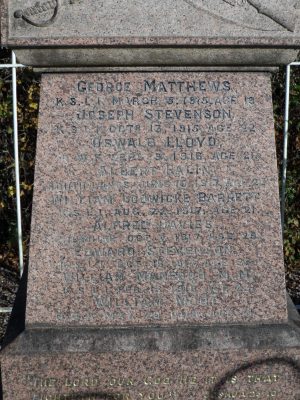
The Allied Victory Medal (also known as 'Wilfred') was issued by each of the allies. It was decided that each of the allies should each issue their own bronze victory medal with a similar design, similar equivalent wording and identical ribbon. The British medal was designed by W. McMillan. The front depicts a winged classical figure representing victory. Approximately 5.7 million victory medals were issued. Interestingly, eligibility for this medal was more restrictive and not everyone who received the British War Medal ('Squeak') also received the Victory Medal ('Wilfred'). However, in general, all recipients of 'Wilfred' also received 'Squeak' and all recipients of The 1914 Star or The 1914/1915 Star (also known as 'Pip') also received both 'Squeak' and 'Wilfred'. The recipient's service number, rank, name and unit was impressed on the rim.


Ernest Edgar Beech

King's Shropshire Light Infantry

Personal Details

Born: December 1883

Family: Second child of John and Hanna Beech of Way Mills, Whitchurch, Shropshire. Ernest married Lily Hopwood on 31 December 1906 and together they had 4 children – Thomas Cyril, John Ernest, Doris May and Frederick.

Civilian Occupation: He worked as a railway signalman.

Residence: The 1911 Census shows him living at New Cottages, Wrenbury, Cheshire. By the time of the 1939 Register, the family had moved to 1 Oak Villas, Nantwich Road, Wrenbury, Cheshire.

Died: Ernest died in 1945.

Military Details:

Regiment: Royal Engineers, Railway Operating Division (King’s Shropshire Light Infantry)

Rank: Sapper,  (Lance Corporal)

Service Number: WR/262276, 217993, (7220)

Date of Enlistment: 3 September 1914

Date of Discharge: 6 February 1919

Reason for Discharge: Demobilisation


Medals and Awards

Ernest was awarded the Campaign Medals (1914/15 Star, British War Medal and Victory Medal).

Campaign Medals

Great War History Hub Whitchurch Shropshire Medals Front Image

The 1914 Star (also known as 'Pip') was authorised under Special Army Order no. 350 in November 1917 and by an Admiralty Fleet Order in 1918, for award to officers and men of the British and Indian Expeditionary Forces who served in France or Belgium between 5 August and midnight of 22–23 November 1914. The former date is the day after Britain's declaration of war against the Central Powers, and the closing date marks the end of the First Battle of Ypres.

The 1914–15 Star (also known as 'Pip') was instituted in December 1918 and was awarded to officers and men of British and Imperial forces who served against the Central European Powers in any theatre of the Great War between 5 August 1914 and 31 December 1915. The period of eligibility was prior to the introduction of the Military Service Act 1916, which instituted conscription in Britain.

The British War Medal (also known as 'Squeak') was a silver or bronze medal awarded to officers and men of the British and Imperial Forces who either entered a theatre of war or entered service overseas between 5th August 1914 and 11th November 1918 inclusive. This was later extended to services in Russia, Siberia and some other areas in 1919 and 1920. Approximately 6.5 million British War Medals were issued. Approximately 6.4 million of these were the silver versions of this medal. Around 110,000 of a bronze version were issued mainly to Chinese, Maltese and Indian Labour Corps. The front (obv or obverse) of the medal depicts the head of George V. The recipient's service number, rank, name and unit was impressed on the rim.
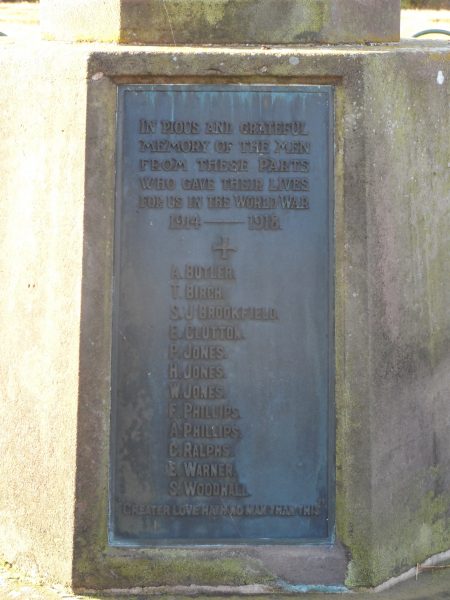
The Allied Victory Medal (also known as 'Wilfred') was issued by each of the allies. It was decided that each of the allies should each issue their own bronze victory medal with a similar design, similar equivalent wording and identical ribbon. The British medal was designed by W. McMillan. The front depicts a winged classical figure representing victory. Approximately 5.7 million victory medals were issued. Interestingly, eligibility for this medal was more restrictive and not everyone who received the British War Medal ('Squeak') also received the Victory Medal ('Wilfred'). However, in general, all recipients of 'Wilfred' also received 'Squeak' and all recipients of The 1914 Star or The 1914/1915 Star (also known as 'Pip') also received both 'Squeak' and 'Wilfred'. The recipient's service number, rank, name and unit was impressed on the rim.


Thomas Beddows

King's Shropshire Light Infantry

Personal Details

Born: 1879

Family: Second son of Thomas and Christina Beddow. Thomas also used the name Beddows.

Residences: Steel Lane, Tilstock, Whitchurch, Shropshire, and 87 Cheeryble Street, Higher Openshawe, Manchester by the end of the war.

Civilian Occupation: He was a farm labourer before joining the army on 22 August 1899.

Military Details

Regiment: King’s Shropshire Light Infantry

Rank: Sergeant

Service Number: 17148

Date of Enlistment: 01 August 1911

Date of Discharge: 24 March 1919

Reason for Discharge: Demobilisation

Other information: He fought in the Boer War and afterwards was stationed in India until November 1907 when he was transferred to the army reserves. He re-enlisted in August 1911 and was mobilised on the 5 August 1915. He was posted on the 6 July 1916 and fought in the Balkans during World War 1.


Medals and Awards

Thomas was awarded the Campaign Medals (British War Medal and Victory Medal).

Campaign Medals

Great War History Hub Whitchurch Shropshire Medals Front Image

The British War Medal (also known as 'Squeak') was a silver or bronze medal awarded to officers and men of the British and Imperial Forces who either entered a theatre of war or entered service overseas between 5th August 1914 and 11th November 1918 inclusive. This was later extended to services in Russia, Siberia and some other areas in 1919 and 1920. Approximately 6.5 million British War Medals were issued. Approximately 6.4 million of these were the silver versions of this medal. Around 110,000 of a bronze version were issued mainly to Chinese, Maltese and Indian Labour Corps. The front (obv or obverse) of the medal depicts the head of George V. The recipient's service number, rank, name and unit was impressed on the rim.
The Allied Victory Medal (also known as 'Wilfred') was issued by each of the allies. It was decided that each of the allies should each issue their own bronze victory medal with a similar design, similar equivalent wording and identical ribbon. The British medal was designed by W. McMillan. The front depicts a winged classical figure representing victory. Approximately 5.7 million victory medals were issued. Interestingly, eligibility for this medal was more restrictive and not everyone who received the British War Medal ('Squeak') also received the Victory Medal ('Wilfred'). However, in general, all recipients of 'Wilfred' also received 'Squeak' and all recipients of The 1914 Star or The 1914/1915 Star (also known as 'Pip') also received both 'Squeak' and 'Wilfred'. The recipient's service number, rank, name and unit was impressed on the rim.


William Arrowsmith

Royal Flying Corps

Born: 19 October 1882

Family: Eldest child of Alfred and Ellen Arrowsmith of Foxes Lane Broughall. In March 1910, William married Mabel Gill and they had a son, Leonard.

Civilian Occupation: At 18 William was an apprentice to a gardener (not domestic); however, in 1907 he became a locomotive fireman. The 1939 Register records him as a locomotive driver.

Residence: At the time of the 1911 Census, he lived at 102 Ruskin Road, Crewe, Cheshire. The 1939 Register records the family living at 56 Smallbrook Road, Whitchurch, Shropshire

Died: 27 October 1948 aged 66.

Regiment: Royal Flying Corps, (previously 6651 Royal North Lancashire Regiment)

Rank: Sergeant

Service Number: B104662

Date of Enlistment: 8 November 1901

Date of Discharge: 7 October 1917

Reason for Discharge: Demobilisation

At the outbreak of war he joined the Royal North Lancashire regiment but was subsequently transferred to the Royal Flying Corps in October 1917.


Medals and Awards

William was awarded the Campaign Medals (British War Medal and Allied Victory Medal) and the 1914 Star.

Campaign Medals

Great War History Hub Whitchurch Shropshire Medals Front Image

The 1914 Star (also known as 'Pip') was authorised under Special Army Order no. 350 in November 1917 and by an Admiralty Fleet Order in 1918, for award to officers and men of the British and Indian Expeditionary Forces who served in France or Belgium between 5 August and midnight of 22–23 November 1914. The former date is the day after Britain's declaration of war against the Central Powers, and the closing date marks the end of the First Battle of Ypres.

The 1914–15 Star (also known as 'Pip') was instituted in December 1918 and was awarded to officers and men of British and Imperial forces who served against the Central European Powers in any theatre of the Great War between 5 August 1914 and 31 December 1915. The period of eligibility was prior to the introduction of the Military Service Act 1916, which instituted conscription in Britain.

The British War Medal (also known as 'Squeak') was a silver or bronze medal awarded to officers and men of the British and Imperial Forces who either entered a theatre of war or entered service overseas between 5th August 1914 and 11th November 1918 inclusive. This was later extended to services in Russia, Siberia and some other areas in 1919 and 1920. Approximately 6.5 million British War Medals were issued. Approximately 6.4 million of these were the silver versions of this medal. Around 110,000 of a bronze version were issued mainly to Chinese, Maltese and Indian Labour Corps. The front (obv or obverse) of the medal depicts the head of George V. The recipient's service number, rank, name and unit was impressed on the rim.

The Allied Victory Medal (also known as 'Wilfred') was issued by each of the allies. It was decided that each of the allies should each issue their own bronze victory medal with a similar design, similar equivalent wording and identical ribbon. The British medal was designed by W. McMillan. The front depicts a winged classical figure representing victory. Approximately 5.7 million victory medals were issued. Interestingly, eligibility for this medal was more restrictive and not everyone who received the British War Medal ('Squeak') also received the Victory Medal ('Wilfred'). However, in general, all recipients of 'Wilfred' also received 'Squeak' and all recipients of The 1914 Star or The 1914/1915 Star (also known as 'Pip') also received both 'Squeak' and 'Wilfred'. The recipient's service number, rank, name and unit was impressed on the rim.


William Beddow

Labour Corps

Born: July 1897

Family: The third child of Thomas and Henrietta Beddow of 8 St John Street, Whitchurch, Shropshire. William married Edith and together they had a son Geoffrey.

Residence: When William was demobilised in 1919 he indicated his address as 11 Sherrymill Hill, Whitchurch, Shropshire. The 1939 Register shows him living at 32 Liverpool Road, Whitchurch, Shropshire.

Occupation: In the 1939 Register he is listed as a general labourer.

Military Details

Regiment: Labour Corps

Rank: Private

Service Number: 136962 (54884, 53815)

Date of Enlistment: 30/08/1916

Date of Discharge: 12/11/1919

Reason for Discharge: Demobilisation

Medals and Awards

It does not appear that William served in the Theatre of War and was consequently not awarded any campaign medals.

Roy Marston Bamber

1st South African Infantry

Personal Details

Born: 18 February 1894 in Sydney, Australia.

Family: 2nd son of William and Eva Mary Bamber. The family returned from Australia in the late 1890s. William married Lillian Cardwell in December 1930 and, after her death, married again in 1954 to Doris Carline.

Civilian Occupation: The 1911 Census shows him as a waggoner; however by the time of the 1939 Register he had become a commercial traveller.

Residence: The 1911 Census shows him boarding in Tushingham, Cheshire (where the family settled on their return from Australia) and in 1939 he was living at 23 Crofts Building, Sims Street, Sheffield.

Died: 15 January 1960 at the Royal Hospital, Sheffield.

Regiment: 1st Infantry Cape Corps,  Corps of Hussars

Rank: Corporal

Service Number: 50523

Date of Discharge: 18 July 1919

Further Information: His brother Oscar Stafford Bamber also served in WW1.

Medals and Awards

Roy was awarded the Campaign Medals (British War Medal and Allied Victory Medal).

Campaign Medals

Great War History Hub Whitchurch Shropshire Medals Front Image

The British War Medal (also known as 'Squeak') was a silver or bronze medal awarded to officers and men of the British and Imperial Forces who either entered a theatre of war or entered service overseas between 5th August 1914 and 11th November 1918 inclusive. This was later extended to services in Russia, Siberia and some other areas in 1919 and 1920. Approximately 6.5 million British War Medals were issued. Approximately 6.4 million of these were the silver versions of this medal. Around 110,000 of a bronze version were issued mainly to Chinese, Maltese and Indian Labour Corps. The front (obv or obverse) of the medal depicts the head of George V. The recipient's service number, rank, name and unit was impressed on the rim.
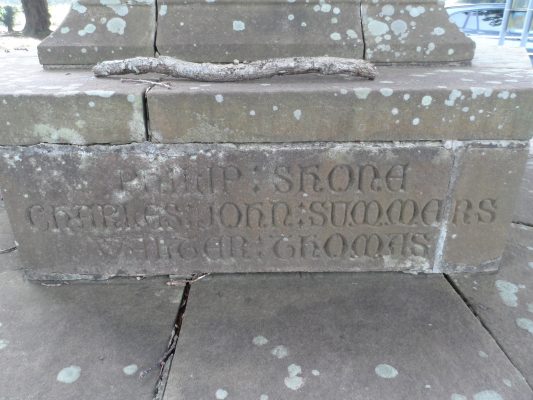
The Allied Victory Medal (also known as 'Wilfred') was issued by each of the allies. It was decided that each of the allies should each issue their own bronze victory medal with a similar design, similar equivalent wording and identical ribbon. The British medal was designed by W. McMillan. The front depicts a winged classical figure representing victory. Approximately 5.7 million victory medals were issued. Interestingly, eligibility for this medal was more restrictive and not everyone who received the British War Medal ('Squeak') also received the Victory Medal ('Wilfred'). However, in general, all recipients of 'Wilfred' also received 'Squeak' and all recipients of The 1914 Star or The 1914/1915 Star (also known as 'Pip') also received both 'Squeak' and 'Wilfred'. The recipient's service number, rank, name and unit was impressed on the rim.


William Robert Bennion

King's Shropshire Light Infantry

Personal Details

Born: 26 September 1876

Family: Son of Margaret Bennion. William married Elizabeth Humphreys on the 23 February 1896 and together they had 7 children – William, Elizabeth, Margaret, Florence, Emily, Samuel and Gwendoline.

Civilian Occupation: Builder’s labourer.

Residence: On leaving the army, the family lived at 1 Sherrymill Hill, Whitchurch, Shropshire. The 1939 Register records William living at 45 Wayland Road, Whitchurch, Shropshire

Died: June 1954 aged 77.

Military Details:

Regiment: King’s Shropshire Light Infantry   (Labour Corps)

Rank: Private

Service Number: 11691 (424447)

Date of Enlistment: 4 December 1914

Date of Discharge: 28 February 1919

Reason for Discharge: Demobilisation


Medals and Awards

William was awarded the Campaign Medals  (1914/15 Star, British War Medal and Victory Medal).

Campaign Medals

Great War History Hub Whitchurch Shropshire Medals Front Image

The 1914 Star (also known as 'Pip') was authorised under Special Army Order no. 350 in November 1917 and by an Admiralty Fleet Order in 1918, for award to officers and men of the British and Indian Expeditionary Forces who served in France or Belgium between 5 August and midnight of 22–23 November 1914. The former date is the day after Britain's declaration of war against the Central Powers, and the closing date marks the end of the First Battle of Ypres.

The 1914–15 Star (also known as 'Pip') was instituted in December 1918 and was awarded to officers and men of British and Imperial forces who served against the Central European Powers in any theatre of the Great War between 5 August 1914 and 31 December 1915. The period of eligibility was prior to the introduction of the Military Service Act 1916, which instituted conscription in Britain.

The British War Medal (also known as 'Squeak') was a silver or bronze medal awarded to officers and men of the British and Imperial Forces who either entered a theatre of war or entered service overseas between 5th August 1914 and 11th November 1918 inclusive. This was later extended to services in Russia, Siberia and some other areas in 1919 and 1920. Approximately 6.5 million British War Medals were issued. Approximately 6.4 million of these were the silver versions of this medal. Around 110,000 of a bronze version were issued mainly to Chinese, Maltese and Indian Labour Corps. The front (obv or obverse) of the medal depicts the head of George V. The recipient's service number, rank, name and unit was impressed on the rim.

The Allied Victory Medal (also known as 'Wilfred') was issued by each of the allies. It was decided that each of the allies should each issue their own bronze victory medal with a similar design, similar equivalent wording and identical ribbon. The British medal was designed by W. McMillan. The front depicts a winged classical figure representing victory. Approximately 5.7 million victory medals were issued. Interestingly, eligibility for this medal was more restrictive and not everyone who received the British War Medal ('Squeak') also received the Victory Medal ('Wilfred'). However, in general, all recipients of 'Wilfred' also received 'Squeak' and all recipients of The 1914 Star or The 1914/1915 Star (also known as 'Pip') also received both 'Squeak' and 'Wilfred'. The recipient's service number, rank, name and unit was impressed on the rim.
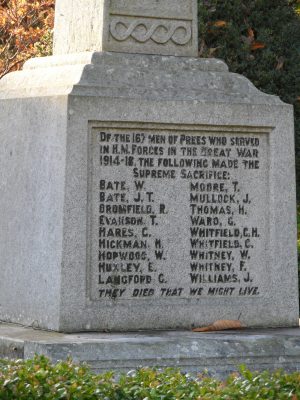


William Ashley

Royal Marine Light Infantry

Born: 12 September 1895

Family: Son of William and Sarah Agnes Ashley. William married Maisie Mary Hart, from Limerick, in 1930.

Education: He attended schools in Whixall and Ash prior to the family moving to Burslem, Staffordshire.

Civilian Occupation: At 14 he was working at the coal mine as a miner’s driver. By 1939, William was employed as a lorry driver for a coal merchant.

Residence: The 1911 Census shows William living at 36 Sparrow Terrace, Porthill, Staffordshire. The 1939 Register shows him living at 3 Albert Place, Villar Street, Hockley, Birmingham, 1939.

Died: 1974, aged 79.

In 1919 he was recorded in the Police Gazette under ‘British Army, deserters and absentees’.


Regiment: Royal Marine Light Infantry

Rank: Private

Service Number: 16112

Date of Enlistment: 3 March 1913

Medals and Awards

William was awarded the Campaign Medals (British War Medal and Victory Medal) and the 1914/15 Star.

Campaign Medals

Great War History Hub Whitchurch Shropshire Medals Front Image

The 1914 Star (also known as 'Pip') was authorised under Special Army Order no. 350 in November 1917 and by an Admiralty Fleet Order in 1918, for award to officers and men of the British and Indian Expeditionary Forces who served in France or Belgium between 5 August and midnight of 22–23 November 1914. The former date is the day after Britain's declaration of war against the Central Powers, and the closing date marks the end of the First Battle of Ypres.

The 1914–15 Star (also known as 'Pip') was instituted in December 1918 and was awarded to officers and men of British and Imperial forces who served against the Central European Powers in any theatre of the Great War between 5 August 1914 and 31 December 1915. The period of eligibility was prior to the introduction of the Military Service Act 1916, which instituted conscription in Britain.

The British War Medal (also known as 'Squeak') was a silver or bronze medal awarded to officers and men of the British and Imperial Forces who either entered a theatre of war or entered service overseas between 5th August 1914 and 11th November 1918 inclusive. This was later extended to services in Russia, Siberia and some other areas in 1919 and 1920. Approximately 6.5 million British War Medals were issued. Approximately 6.4 million of these were the silver versions of this medal. Around 110,000 of a bronze version were issued mainly to Chinese, Maltese and Indian Labour Corps. The front (obv or obverse) of the medal depicts the head of George V. The recipient's service number, rank, name and unit was impressed on the rim.
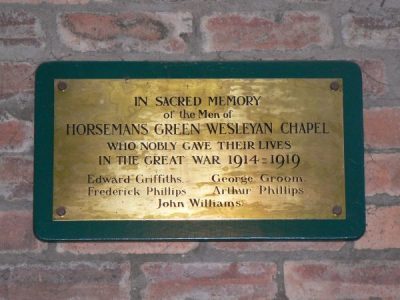
The Allied Victory Medal (also known as 'Wilfred') was issued by each of the allies. It was decided that each of the allies should each issue their own bronze victory medal with a similar design, similar equivalent wording and identical ribbon. The British medal was designed by W. McMillan. The front depicts a winged classical figure representing victory. Approximately 5.7 million victory medals were issued. Interestingly, eligibility for this medal was more restrictive and not everyone who received the British War Medal ('Squeak') also received the Victory Medal ('Wilfred'). However, in general, all recipients of 'Wilfred' also received 'Squeak' and all recipients of The 1914 Star or The 1914/1915 Star (also known as 'Pip') also received both 'Squeak' and 'Wilfred'. The recipient's service number, rank, name and unit was impressed on the rim.
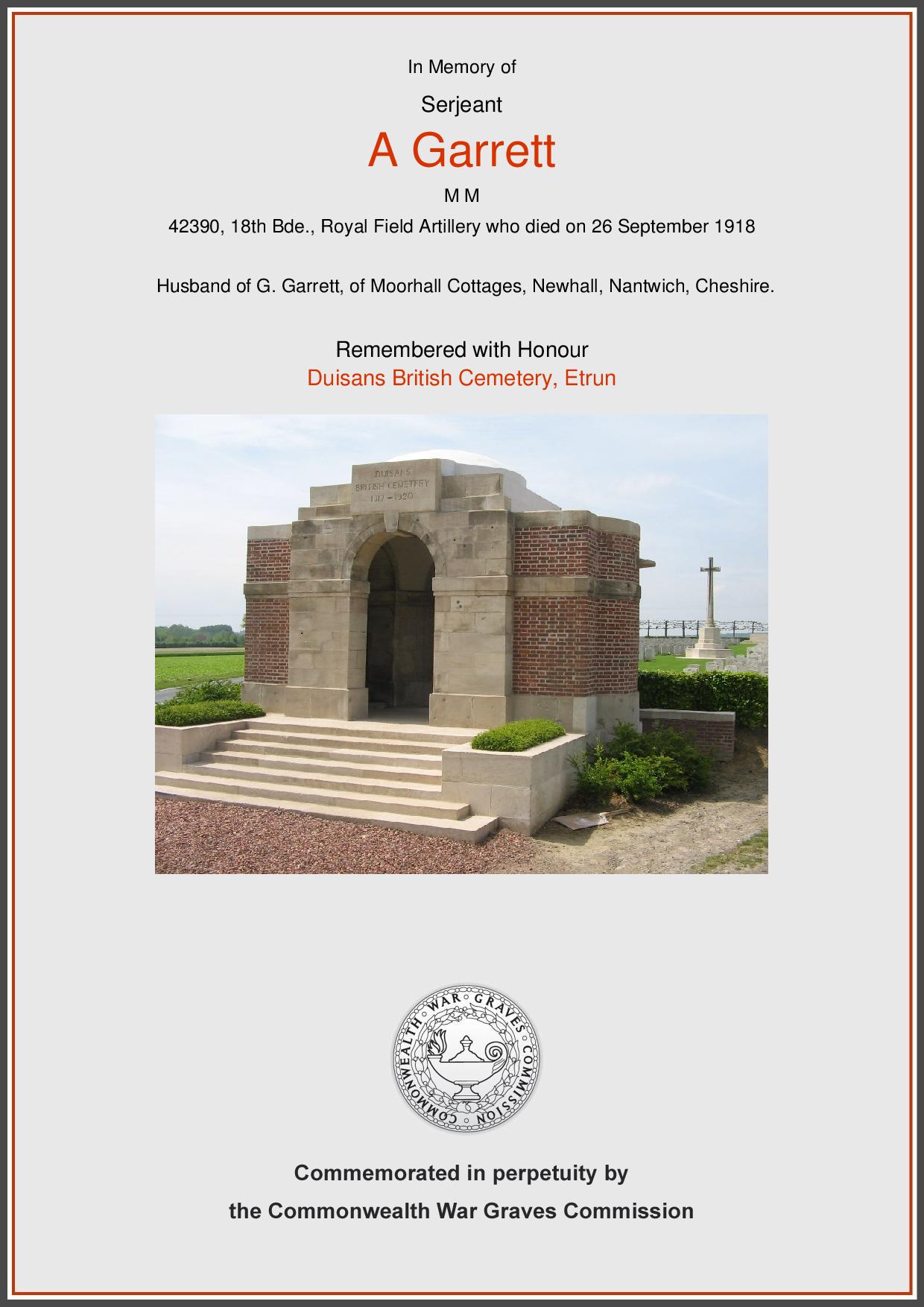


George Hopwood aka George Newbrooke

Personal Details

  • Born 1892
  • Son of Alfred & Sarah Ann Newbrooke of 5 Castle Hill, Whitchurch
  • Civilian occupation – boatman

Military Details

Regiment : Royal Field Artillery
Rank : Gunner
Service Number : 67045

  • 27/09/1911  Enlisted with 33rd Brigade Royal Field Artillery for 3 years service and 9 years on the Reserve
  • 06/11/1914  Disembarked for war
  • 22/06/1915  Mentioned in Dispatches
  • 03/08/1915  Awarded DCM For gallant conduct on the 9th-10th May, 1915, near Rouges Banes in maintaining communications by helio-lamp, under a heavy fire, from the Observation Station in the fire trench. Although knocked over by shell he continued his work. Bombardier Hopwood showed the same gallantry during the action of Neuve Chapelle.

Herbert Barlow

Herbert Barlow

Personal Details

William Herbert Victor Barlow (known as Herbert) was born in Bronington, Flintshire in 1897, the third son of Annie Elizabeth and the late William Barlow of The Chequers, Redbrook, Whitchurch, Shropshire.

Military History

Regiment : B Company, 10th Battalion, Royal Welsh Fusiliers
Rank : Private
Service Number : 54705, formerly 4148

Killed in action; France 13 November 1916 aged 19

Medals and Awards

Herbert was awarded the Campaign Medals (British War Medal and Allied Victory Medal).

Campaign Medals

Great War History Hub Whitchurch Shropshire Medals Front Image

The British War Medal (also known as 'Squeak') was a silver or bronze medal awarded to officers and men of the British and Imperial Forces who either entered a theatre of war or entered service overseas between 5th August 1914 and 11th November 1918 inclusive. This was later extended to services in Russia, Siberia and some other areas in 1919 and 1920. Approximately 6.5 million British War Medals were issued. Approximately 6.4 million of these were the silver versions of this medal. Around 110,000 of a bronze version were issued mainly to Chinese, Maltese and Indian Labour Corps. The front (obv or obverse) of the medal depicts the head of George V. The recipient's service number, rank, name and unit was impressed on the rim.
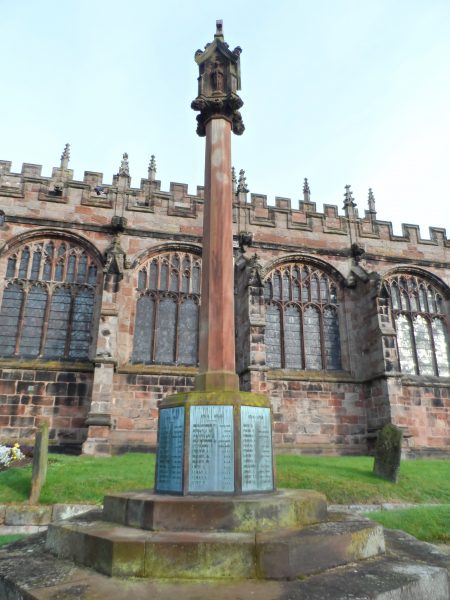
The Allied Victory Medal (also known as 'Wilfred') was issued by each of the allies. It was decided that each of the allies should each issue their own bronze victory medal with a similar design, similar equivalent wording and identical ribbon. The British medal was designed by W. McMillan. The front depicts a winged classical figure representing victory. Approximately 5.7 million victory medals were issued. Interestingly, eligibility for this medal was more restrictive and not everyone who received the British War Medal ('Squeak') also received the Victory Medal ('Wilfred'). However, in general, all recipients of 'Wilfred' also received 'Squeak' and all recipients of The 1914 Star or The 1914/1915 Star (also known as 'Pip') also received both 'Squeak' and 'Wilfred'. The recipient's service number, rank, name and unit was impressed on the rim.
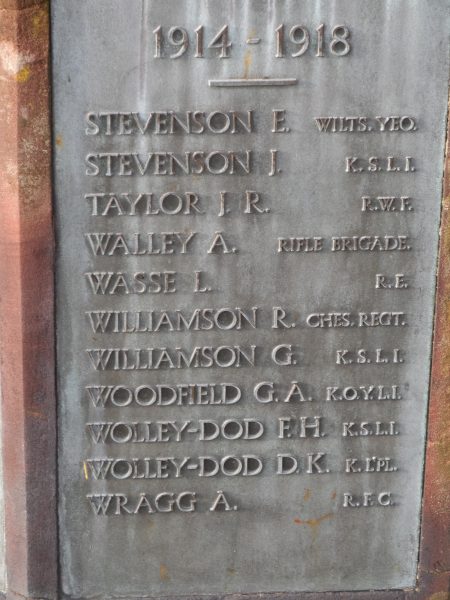


Further Information

More information about William Herbert Victor Barlow is available from Flintshire War Memorials.

If you can provide any further information on William Herbert Victor Barlow please get in touch by leaving a comment below, using our Contact Form or by calling in to Whitchurch Heritage Centre.


Information provided by Whitchurch Museum and Archives

Whixall United Reformed Church Memorial


The memorial was on the outside wall of the United Reformed Church, Whixall. The church has been sold for conversion into a private dwelling; the memorial has been removed and is now free-standing in the adjacent graveyard.

This is an ongoing project, information will be added to the website over the coming weeks and months. It is hoped that the people of Whitchurch, Shropshire and beyond will get involved and provide additional information and images to each entry on the memorials.

Whitchurch Museum and Archives


You can search for a name in the table and view the details or scroll down the page to view those commemorated who gave their lives during The Great War.

First NameOther NamesSurnameDiedLink
ErnestOvertonWalker04/09/1916View Details
AlfredEdwards04/02/1917View Details
John Evans30/04/1917View Details
HerbertWilliamIkin16/08/1917View Details
WilfredHenryBradshaw09/03/1918View Details
WilliamHenryLea22/03/1918View Details
JamesEdgerton01/04/1918View Details
AlfredEddies25/05/1918View Details
HenryJones21/09/1918View Details
FrederickThomas22/10/1918View Details

Whixall St Mary’s Church Memorial


The memorial is inside St Mary’s Church, Church Lane, Whixall.

This is an ongoing project, information will be added to the website over the coming weeks and months. It is hoped that the people of Whitchurch, Shropshire and beyond will get involved and provide additional information and images to each entry on the memorials.

Whitchurch Museum and Archives


You can search for a name in the table and view the details or scroll down the page to view those commemorated who gave their lives during The Great War.

First NameOther NamesSurnameDiedLink
AlfredClorley13/01/1916View Details
AlfredBrown26/02/1916View Details
JohnDownes18/07/1916View Details
JosephClorley24/07/1916View Details
OliverJones24/07/1916View Details
HerbertSamuelSadler30/08/1916View Details
ErnestOvertonWalker04/09/1916View Details
JamesEccleston15/09/1916View Details
EdwinThomasPowell26/09/1916View Details
JosephHenryCotton02/08/1917View Details
ThomasWoodward26/09/1917View Details
WilliamHeath21/03/1918View Details
WilliamStockton31/03/1918View Details
WilliamClorley13/04/1918View Details
SamuelAshley29/09/1918View Details
FrederickDodd08/11/1918View Details

Whixall Methodist Chapel Memorial


The memorial is inside Whixall Welsh End Methodist Chapel.

This is an ongoing project, information will be added to the website over the coming weeks and months. It is hoped that the people of Whitchurch, Shropshire and beyond will get involved and provide additional information and images to each entry on the memorials.

Whitchurch Museum and Archives


You can search for a name in the table and view the details or scroll down the page to view those commemorated who gave their lives during The Great War.

First NameOther NamesSurnameDiedLink
AlfredClorley13/01/1916View Details
JosephClorley24/07/1916View Details
ErnestOvertonWalker04/09/1916View Details
AlfredEdwards04/02/1917View Details
ThomasHuxley30/06/1917View Details

Whitewell Memorial

The memorial is opposite the entrance to Iscoyd Park.

This is an ongoing project, information will be added to the website over the coming weeks and months. It is hoped that the people of Whitchurch, Shropshire and beyond will get involved and provide additional information and images to each entry on the memorials.

Whitchurch Museum and Archives


You can search for a name in the table and view the details or scroll down the page to view those commemorated who gave their lives during The Great War.

First NameOther NamesSurnameDiedLink
HaroldJones06/10/1917View Details
ThomasMellor10/10/1917View Details
PhilipWarburtonLee11/10/1917View Details
WalterHughGodsal26/03/1918View Details
AlfredEdmundGodsal10/05/1918View Details
JosephDuckers04/11/1918View Details
KennethHoughtonGlover08/12/1918View Details

Whixall Village Memorial


The memorial is near Whixall primary school, Mossleigh, Whixall.

This is an ongoing project, information will be added to the website over the coming weeks and months. It is hoped that the people of Whitchurch, Shropshire and beyond will get involved and provide additional information and images to each entry on the memorials.

Whitchurch Museum and Archives


You can search for a name in the table and view the details or scroll down the page to view those commemorated who gave their lives during The Great War.

First NameOther NamesSurnameDiedLink
AlfredClorley13/01/1916View Details
AlfredBrown26/02/1916View Details
JohnDownes18/07/1916View Details
JosephClorley24/07/1916View Details
OliverJones24/07/1916View Details
HerbertSamuelSadler30/08/1916View Details
ErnestOvertonWalker04/09/1916View Details
JamesEccleston15/09/1916View Details
EdwinThomasPowell26/09/1916View Details
AlfredEdwards04/02/1917View Details
JohnEvans30/04/1917View Details
JosephHenryCotton02/08/1917View Details
HerbertWilliamIkin16/08/1917View Details
ThomasWoodward26/09/1917View Details
WilfredHenryBradshaw09/03/1918View Details
WilliamHeath21/03/1918View Details
WilliamHenryLea22/03/1918View Details
JamesEdgerton01/04/1918View Details
WilliamClorley13/04/1918View Details
AlfredEddies25/05/1918View Details
WilliamBayley29/06/1918View Details
WalterJamesFurber20/09/1918View Details
HenryJones21/09/1918View Details
SamuelAshley29/09/1918View Details
FrederickDodd08/11/1918View Details

Miss Etty Beech


Photograph and biographical information kindly supplied by Susan Moss

Ethel May Beech was born on 7th April 1899 and lived at 1, Waymills, Whitchurch. She worked one day a week from 1917 to 1919 at V.A.D. Hospital, Shropshire 26, Broughall, Whitchurch, Salop where she  cleaned floors and operating theatres that served soldiers who came home disabled and needing medical attention.

Her family remembers her mentioning that she worked alongside a Lady Mary who also cleaned despite her privileged background, something that impressed Ethel.

Lady Victoria Constance Mary Cambridge (known as Mary) and Lady Helena Frances Augusta Cambridge (known as Ilona) were nieces of Lord Gerald Grosvenor and both worked as V.A.Ds at Broughall Cottage.

Worthenbury Memorial


The memorial is inside St. Deiniol’s Church, Worthenbury.

This is an ongoing project, information will be added to the website over the coming weeks and months. It is hoped that the people of Whitchurch, Shropshire and beyond will get involved and provide additional information and images to each entry on the memorials.

Whitchurch Museum and Archives


You can search for a name in the table and view the details or scroll down the page to view those commemorated who gave their lives during The Great War.

First NameOther NamesSurnameDiedLink
AlfredSpencer MasonSummers15/09/1916View Details
ErnestGrantWarner19/10/1917View Details
WalterEvanson28/03/1918View Details

Tilstock Memorial


The memorial is in the graveyard of St. Mary’s parish church.

This is an ongoing project, information will be added to the website over the coming weeks and months. It is hoped that the people of Whitchurch, Shropshire and beyond will get involved and provide additional information and images to each entry on the memorials.

Whitchurch Museum and Archives


You can search for a name in the table and view the details or scroll down the page to view those commemorated who gave their lives during The Great War.

First NameOther NamesSurnameDiedLink
CharlesHarding29/10/1914View Details
GeorgeBatho09/08/1915View Details
JohnThomasWalters18/05/1916View Details
JamesEvans17/08/1917View Details
HaroldAdams09/03/1918View Details
WilliamThomasBradshaw13/04/1918View Details
EdwardFrankEvans22/08/1918View Details
HughFearnall22/08/1918View Details
AbelPowell28/09/1918View Details

War work in Whitchurch

Though there were no Munitions factories in Whitchurch or its surrounding area, many civilians made vital contributions to the war effort through their jobs.

The 1918 “Directory of Manufacturers in Engineering and Allied Trades” lists two Whitchurch companies engaged in war work.


Wyatt Bros. of Wayland Road, Whitchurch were employing 10 men and 18 women. Their war work was manufacturing Stokes’ shell parts and 60-pdr fuze sockets, in addition to their normal production of general engineering and water supply works.

   Stokes' mortar bomb

60-pdr fuze

W.H. Smith & Co were listed as employing 60 men but no women. War work included castings, raw and sheet iron work, agricultural implements, water supply work, stables & factories. They also continued manufacturing Dutch barns, iron railings & fencing, water wheels, hydraulic rams etc as they had done pre-war.

De Ruvigny’s Roll of Honour Charles Harding

Report on the death of  Charles Harding in De Ruvigny’s Roll of Honour 1914 – 1919

“HARDING, CHARLES, Private, No. 6391, 1st Battn. Scots Guards; b. Adderley, co. Salop; enlisted 8 Jan. 1906; served with the Expeditionary Force; killed in action 29 Oct. 1914. He m. 28 Oct. 1910, Carrie Smith, and had three children: Alexander, b. 19 Feb. 1912; Eva b. 16 Aug 1913, and Doris b. 7 Jan. 1915.”

De Ruvigny’s Roll of Honour 1914 – 1918

Threapwood Memorial


The memorial is by the roadside in Threapwood.

This is an ongoing project, information will be added to the website over the coming weeks and months. It is hoped that the people of Whitchurch, Shropshire and beyond will get involved and provide additional information and images to each entry on the memorials.

Whitchurch Museum and Archives


You can search for a name in the table and view the details or scroll down the page to view those commemorated who gave their lives during The Great War.

First NameOther NamesSurnameDiedLink
GeorgeMatthews05/03/1915View Details
JosephStevenson12/10/1915View Details
OswaldLloyd09/09/1916View Details
AlbertPalin18/06/1917View Details
WilliamLodwickeBarrett22/08/1917View Details
AlfredDavies07/10/1917View Details
EdwardStevenson18/10/1917View Details
WilliamPowellManford13/02/1918View Details
WilliamMort20/05/1918View Details

Tallarn Green Memorial


The memorial is by the roadside in Tallarn Green.

This is an ongoing project, information will be added to the website over the coming weeks and months. It is hoped that the people of Whitchurch, Shropshire and beyond will get involved and provide additional information and images to each entry on the memorials.

Whitchurch Museum and Archives


You can search for a name in the table and view the details or scroll down the page to view those commemorated who gave their lives during The Great War.

First NameOther NamesSurnameDiedLink
WilliamArthurPhillips11/07/1916View Details
GeorgeFrederickPhillips11/07/1916View Details
EdgarHenryClutton03/03/1917View Details
HaroldJones06/10/1917View Details
ErnestGrantWarner19/10/1917View Details
SidneyJamesBrookfield26/11/1917View Details
AndrewThomasBirch30/03/1918View Details
SydneyWoodhall29/08/1918View Details
CharlesRalphs23/10/1918View Details
ArthurButler07/07/1919View Details

Not commemorated on a memorial

The list below contains all men we have identified who died in the Great War and have a connection to Whitchurch and the surrounding villages, but who are not commemorated on any local memorials.

This is an ongoing project, information will be added to the website over the coming weeks and months. It is hoped that the people of Whitchurch, Shropshire and beyond will get involved and provide additional information and images for these men.

Whitchurch Museum and Archives


The list can be browsed or sorted by given name, surname, or date of death. Scroll down the page to view those commemorated who gave their lives during The Great War.

Given namesSurnameDiedWhitchurch connection
Walter HenryMoulson16/09/1914Born in Worthenbury
Albert GeorgeHayes23/11/1914Born in Wrenbury
Thomas EdwardBebbington18/04/1915Born in Wrenbury
Robert WilliamPearson15/05/1915Born in Whitchurch
John ThomasThompson16/05/1915Born in Whixall
Robert BrockStewart18/05/1915Buried in Malpas cemetery
EnochWilliams18/05/1915Born in Bettisfield
JohnReeves25/09/1915Born in Bettisfield
SamuelHall25/09/1915Born in Whixall
EdwardGriffiths27/09/1915Born in Bettisfield
John VadeWatt30/10/1915Buried in Whitchurch cemetery
JohnMatheson08/12/1915Buried in Whitchurch cemetery
DavidRoberts19/12/1915Born in Tilstock
John Jones01/03/1916Buried in Tilstock churchyard
StephenDowdall17/03/1916Buried in Whitchurch cemetery
WilliamAlty24/03/1916Buried in Tilstock churchyard
Frank Woodward27/03/1916Buried in Tilstock churchyard
Charles WilliamDavies20/04/1916Buried in Whitchurch cemetery
GodfreyReynolds24/04/1916Buried in Tilstock churchyard
RichardCraven26/04/1916Buried in Whitchurch cemetery
WilliamEden05/05/1916Buried in Whitchurch cemetery
JohnDavies15/05/1916Buried in Whitchurch cemetery
James IsaacLanghorn27/05/1916Buried in Whitchurch cemetery
Joseph HenryMansell02/07/1916Buried in Whitchurch cemetery
John Williams04/07/1916Enlisted at Prees Heath
Ernest WilliamJones06/07/1916Lived in Bettisfield
CharlesPerks04/08/1916Born in Marbury
Justin Collins08/08/1916Buried in Bronington churchyard
Charles JohnRichardson28/08/1916Born in Malpas
RichardEdwards21/10/1916Born in Hanmer
JohnLunt29/10/1916Born in Wrenbury
William Bradley03/11/1916Born in Wrenbury
WalterSmith14/11/1916Born in Whitchurch
JamesAstley23/11/1916Born in Wrenbury
Godfrey EgertonGroome07/12/1916Buried in Whitchurch cemetery
Edward Hounsom19/12/1916Buried in Tilstock churchyard
EdwardEvans17/01/1917Buried in Tilstock churchyard
John FrancisBull01/02/1917Buried in Tilstock churchyard
JamesShovelton01/02/1917Buried in Tilstock churchyard
CharlesEvans08/02/1917Buried in Tilstock churchyard
WilliamWhithead06/03/1917Enlisted in Bettisfield
Frederick WilliamChandler13/03/1917Buried in Tilstock churchyard
Leonard CharlesTyler15/03/1917Buried in Tilstock churchyard
Samuel HerbertBuckley19/03/1917Buried in Tilstock churchyard
Henry NormanTaylor19/03/1917Buried in Tilstock churchyard
Walter ABethel20/03/1917Buried in Tilstock churchyard
John RScriven22/03/1917Buried in Prees churchyard
Thomas StanleyLewis25/03/1917Buried in Tilstock churchyard
Thomas VictorWilliams25/03/1917Buried in Tilstock churchyard
WilliamEdmondson26/03/1917Buried in Tilstock churchyard
Ernest Percival WilliamVale27/03/1917Buried in Tilstock churchyard
Robert FrederickKinvig30/03/1917Buried in Tilstock churchyard
GeorgeGriffiths03/04/1917Lived in Malpas
JohnO'Leary04/05/1917Enlisted in Whitchurch
Harold BaileyCalvert19/05/1917Enlisted at Bettisfield Park Camp
ThomasNutter19/05/1917Enlisted in Bettisfield
FrancisAmies22/05/1917Enlisted at Bettisfield Park Camp
FrancisWarrender12/06/1917Lived in Bronington
JohnHenton27/06/1917Buried in Hanmer churchyard
ColinPreston03/07/1917Born in Wrenbury
FrederickShore16/07/1917Born in Hanmer
Edward PhillipHughes27/07/1917Buried in Tilstock churchyard
JohnAnderson31/07/1917Buried in Tilstock churchyard
WilliamWilkinson14/08/1917Enlisted in Bettisfield
GeoffreyBaker01/09/1917Born in Malpas
VictorEdwards05/09/1917Born in Whixall; enlisted in Bettisfield
Edward Jabez CooperTreadwell20/09/1917Buried in Tilstock churchyard extension
ThomasDean23/09/1917Enlisted at Bettisfield Park Camp
JosephDavies26/09/1917Enlisted in Whitchurch
Arthur ThomasOwen30/09/1917Enlisted in Bettisfield
Walter HarrelHerford04/10/1917Buried in Tilstock churchyard extension
Ernest Edwards22/10/1917Born in Bronington
AlfredRidgway26/10/1917Born in Malpas
Francis JosephPim27/10/1917Buried in Tilstock churchyard extension
Ernest JamesKeay06/11/1917Born in Whixall
John FrancisKneale21/12/1917Buried in Tilstock churchyard extension
Guy WinwoodGossage24/12/1917Buried in Tilstock churchyard extension
John EdwardSharples29/12/1917Enlisted in Bettisfield
GeorgePowell30/12/1917Born in and lived in Whitchurch
William PriceSanders29/01/1918Buried in Tilstock churchyard extension
Edwin JohnHolman01/02/1918Buried in Tilstock churchyard extension
Joseph EdwardDaly07/02/1918Enlisted at Bettisfield Park Camp
Frederick ThomasSmith07/02/1918Born in Whitchurch
AlbertMorgan10/02/1918Buried in Tilstock churchyard extension
Reginald JamesForsyth16/02/1918Buried in Tilstock churchyard extension
Francis HerbertJones19/02/1918Buried in Tilstock churchyard extension
Robert WilliamDean21/02/1918Buried in Hanmer churchyard
James HenryMoss23/02/1918Buried in Tilstock churchyard extension
Charles GrayHeath21/03/1918Lived and buried in Whitchurch
WilliamWilson04/04/1918Born in Malpas
SidneyMullock04/04/1918Born in Wrenbury
Horace LewisBond11/04/1918Born in Malpas
PeterBeard26/04/1918Enlisted at Bettisfield park Camp
ThomasPhillips02/05/1918Buried in Hanmer churchyard
Charles RichardClack05/05/1918Buried in Tilstock churchyard extension
MartinKeenan13/05/1918Buried in Tilstock churchyard extension
ErnestJones18/06/1918Born in Malpas
William AlfredLunt21/06/1918Born in Wrenbury
EdgarBerry03/07/1918Enlisted at Bettisfield Park Camp
John Robert Kendall09/07/1918Buried in Tilstock churchyard extension
ThomasEdwards17/07/1918Lived in Whitchurch
John EdwardKelly20/08/1918Born in Threapwood
ErnestHolland30/08/1918Born in Malpas
JohnRichards06/09/1918Born in Malpas
ErnestFisher09/09/1918Born in Marbury
Norman WilliamDean20/09/1918Enlisted in Bettisfield
Jesse GeorgeTurner22/09/1918Lived in Whixall; enlisted in Wem
Leonard CharlesLewis23/09/1918Enlisted in Bettisfield; commemorated at Edstaston
LeonardFrance27/09/1918Born in Whixall
ArthurJones02/10/1918Enlisted in Bettisfield
Frances HerbertFoxley06/10/1918Born in Wrenbury
ArthurHough10/10/1918Lived in Malpas
James HenryWood12/10/1918Lived in Whitchurch
William BurtBickell12/10/1918Buried in Tilstock churchyard extension
SamuelOwens12/10/1918Buried in Tilstock churchyard extension
Arthur LewisChristian14/10/1918Born in Whitchurch
Wilfred SimonHopley19/10/1918Buried in Malpas cemetery
CharlesVickers31/10/1918Lived in Malpas
George LancasterRobinson01/11/1918Buried in Tilstock churchyard extension
Herbert HenryJones02/11/1918Buried in Tilstock churchyard extension
ArthurDavies04/11/1918Born in Whitchurch
JackDrew08/11/1918Buried in Tilstock churchyard extension
Henry NormanHarrison09/11/1918Enlisted in Bettisfield
Gabriel PieterCilliers10/11/1918Buried in Tilstock churchyard extension
CharlesGreenhalgh06/01/1919Buried in Whitchurch cemetery
George WilliamAimson26/02/1919Buried in Tilstock churchyard extension
WilliamHeath21/03/1919Enlisted in Tilstock
EdwardGaffney29/12/1919Buried in Tilstock churchyard extension
AlfredDiggory31/05/1920Buried in Threapwood churchyard
George AlbertLoughmon19/06/1920Buried in Tilstock churchyard extension
Horace NormanYoung13/07/1921Buried in Prees churchyard
Tags:

Tushingham Memorial


The memorial is outside St Chad’s Church, Tushingham.

This is an ongoing project, information will be added to the website over the coming weeks and months. It is hoped that the people of Whitchurch, Shropshire and beyond will get involved and provide additional information and images to each entry on the memorials.

Whitchurch Museum and Archives


You can search for a name in the table and view the details or scroll down the page to view those commemorated who gave their lives during The Great War.

First NameOther NamesSurnameDiedLink
WilliamMellor21/10/1914View Details
EdwardGeorgeDavies21/06/1916View Details
RobertHall07/07/1916View Details
LeonardWilliamDavies07/07/1916View Details
PhillipShone04/11/1916View Details
LeonardParker07/01/1917View Details
FrankGreen11/04/1917View Details
WilliamAlbertDavies25/04/1917View Details
JohnHenryWilliams15/05/1917View Details
FrankLloydFaulkner31/07/1917View Details
GilbertLloydVawdrey10/11/1917View Details
SamuelWorthington28/11/1917View Details
WilliamBirchall31/03/1918View Details
JohnBarlow20/04/1918View Details
GeorgeChesters31/08/1918View Details
WalterThomas11/10/1918View Details
JosephHewitt14/10/1918View Details
CharlesJohnSummers04/11/1918View Details

Prees Memorial


The memorial is outside St Chad’s Church, Prees, with a plaque inside the church.

This is an ongoing project, information will be added to the website over the coming weeks and months. It is hoped that the people of Whitchurch, Shropshire and beyond will get involved and provide additional information and images to each entry on the memorials.

Whitchurch Museum and Archives


You can search for a name in the table and view the details or scroll down the page to view those commemorated who gave their lives during The Great War.

First NameOther NamesSurnameDiedLink
CecilHarry Whitfield22/06/1915View Details
GeorgeWard01/08/1915View Details
JohnThomasBate09/08/1915View Details
JohnReginaldBroomfield05/11/1915View Details
GeorgeLangford17/09/1916View Details
ThomasMoore18/02/1917View Details
HerbertHickman24/04/1917View Details
GeorgeWilliamBate03/09/1917View Details
WilliamWhitney09/09/1917View Details
JohnThomasEvanson04/10/1917View Details
WilfredHopwood06/11/1917View Details
VincentColinHares30/11/1917View Details
ErnestJohnHuxley18/04/1918View Details
JohnArthurWilliams28/05/1918View Details
CharlesWhitfield14/06/1918View Details
JackMullock22/08/1918View Details
HarryThomas22/08/1918View Details
FrederickWhitney22/08/1918View Details

Horsemans Green Memorial


The memorial is in the Scout Hut in Horsemans Green. It was relocated from the Wesleyan Chapel in the village when this was sold to be converted into a private house.

This is an ongoing project, information will be added to the website over the coming weeks and months. It is hoped that the people of Whitchurch, Shropshire and beyond will get involved and provide additional information and images to each entry on the memorials.

Whitchurch Museum and Archives


You can search for a name in the table and view the details or scroll down the page to view those commemorated who gave their lives during The Great War.

First NameOther NamesSurnameDiedLink
WilliamArthurPhillips11/07/1916View Details
GeorgeFrederickPhillips11/07/1916View Details
EdwardJohnGriffiths23/08/1916View Details
GeorgeHaroldGroom21/09/1917View Details
JohnWilliams26/05/1918View Details

Alfred Garrett

Alfred Garrett

Personal Details

(Shown as ‘Garratt’ on Aston and Wrenbury memorials and CWGC, but ‘Garrett’ on the 1901 and 1911 Censuses and Medal Index Card.)

Born in Market Drayton, Shropshire in 1894, the second son of William and Emma Garrett of 30 Buntingsdale Road, Market Drayton, Shropshire.

Husband of Gertrude Garrett of Moorhall Cottages. Newhall, Nantwich, Cheshire. Alfred and Gertrude married on 1st September 1918, 25 days before he lost his life.

Military Details

Regiment : 94th Battalion, 18th Brigade Royal Field Artillery
Rank : Sergeant
Service Number : 42390

Died of wounds; France 26th September 1918 Aged 24

Medals and Awards
Alfred was awarded the Military Medal and the Campaign Medals (1915 Star, British War Medal and Allied Victory Medal).

Military Medal


Until 1993, the Military Medal (MM) was a military decoration awarded to personnel of the British Army and other services, and formerly also to personnel of other Commonwealth countries, below commissioned rank, for bravery in battle on land.
The medal was established on 25 March 1916. It was the other ranks' equivalent to the Military Cross (MC), which was awarded to commissioned officers and, rarely, to warrant officers, although WOs could also be awarded the MM. The MM ranked below the Distinguished Conduct Medal (DCM), which was also awarded to non-commissioned members of the Army.
Click on the tags below to see details of each recipient.


Campaign Medals


Great War History Hub Whitchurch Shropshire Medals Front Image

The 1914 Star (also known as 'Pip') was authorised under Special Army Order no. 350 in November 1917 and by an Admiralty Fleet Order in 1918, for award to officers and men of the British and Indian Expeditionary Forces who served in France or Belgium between 5 August and midnight of 22–23 November 1914. The former date is the day after Britain's declaration of war against the Central Powers, and the closing date marks the end of the First Battle of Ypres.

The 1914–15 Star (also known as 'Pip') was instituted in December 1918 and was awarded to officers and men of British and Imperial forces who served against the Central European Powers in any theatre of the Great War between 5 August 1914 and 31 December 1915. The period of eligibility was prior to the introduction of the Military Service Act 1916, which instituted conscription in Britain.

The British War Medal (also known as 'Squeak') was a silver or bronze medal awarded to officers and men of the British and Imperial Forces who either entered a theatre of war or entered service overseas between 5th August 1914 and 11th November 1918 inclusive. This was later extended to services in Russia, Siberia and some other areas in 1919 and 1920. Approximately 6.5 million British War Medals were issued. Approximately 6.4 million of these were the silver versions of this medal. Around 110,000 of a bronze version were issued mainly to Chinese, Maltese and Indian Labour Corps. The front (obv or obverse) of the medal depicts the head of George V. The recipient's service number, rank, name and unit was impressed on the rim.
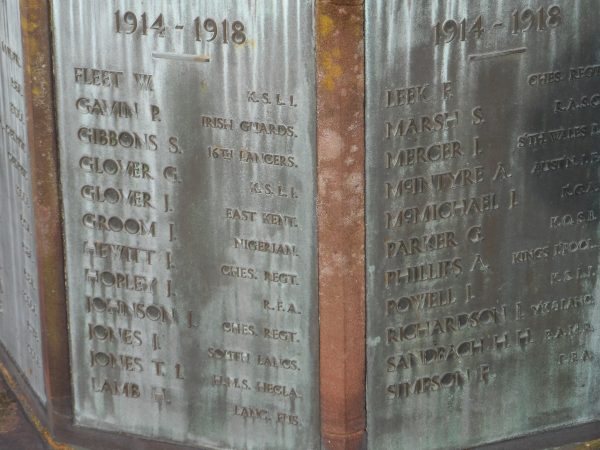
The Allied Victory Medal (also known as 'Wilfred') was issued by each of the allies. It was decided that each of the allies should each issue their own bronze victory medal with a similar design, similar equivalent wording and identical ribbon. The British medal was designed by W. McMillan. The front depicts a winged classical figure representing victory. Approximately 5.7 million victory medals were issued. Interestingly, eligibility for this medal was more restrictive and not everyone who received the British War Medal ('Squeak') also received the Victory Medal ('Wilfred'). However, in general, all recipients of 'Wilfred' also received 'Squeak' and all recipients of The 1914 Star or The 1914/1915 Star (also known as 'Pip') also received both 'Squeak' and 'Wilfred'. The recipient's service number, rank, name and unit was impressed on the rim.
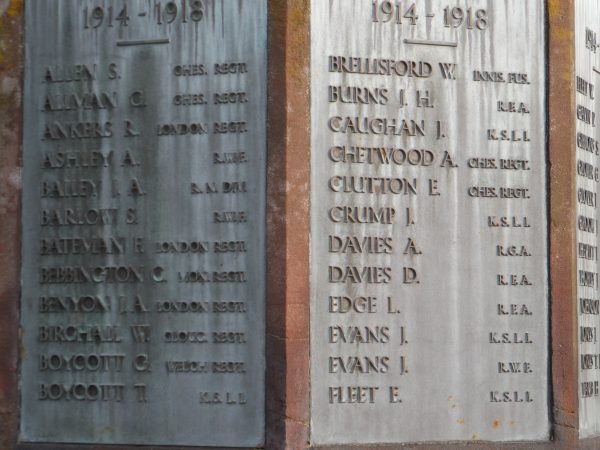


Further Information

If you can provide any further information on Alfred Garrett please get in touch by leaving a comment below, using our Contact Form or by calling in to Whitchurch Heritage Centre.


Information provided by Whitchurch Museum and Archives

Patrick Gavien

Patrick Gavien

Personal Details

We have found limited information for this man. We believe he was Patrick Gavien (Gavin on the Malpas Memorial) and have been able to find some military medal records. We have also found a military record of his hospitalisation in 1918 with bronchitis, but under the name of Gavin (his service number provides the match). We have located a newspaper article in 1914 identifying him as a reservist in the Irish Guards from Malpas, but cannot find him on census records.

There is no CWGC record for him, suggesting that his death was not recognised as a result of the Great War, and we have been unable to locate where he is buried.

Military Details

Regiment : 1st Battalion Irish Guards
Rank : Corporal
Service Number : 1973

We have been unable to determine when or how he died.

Commemorated
There is no Commonwealth War Grave Commission record for Patrick Gavien; we have been unable to establish where he is buried.

Medals and Awards
Patrick was awarded the Campaign Medals (1914/15 Star, British War Medal and Allied Victory Medal).

Campaign Medals


Great War History Hub Whitchurch Shropshire Medals Front Image

The 1914 Star (also known as 'Pip') was authorised under Special Army Order no. 350 in November 1917 and by an Admiralty Fleet Order in 1918, for award to officers and men of the British and Indian Expeditionary Forces who served in France or Belgium between 5 August and midnight of 22–23 November 1914. The former date is the day after Britain's declaration of war against the Central Powers, and the closing date marks the end of the First Battle of Ypres.

The 1914–15 Star (also known as 'Pip') was instituted in December 1918 and was awarded to officers and men of British and Imperial forces who served against the Central European Powers in any theatre of the Great War between 5 August 1914 and 31 December 1915. The period of eligibility was prior to the introduction of the Military Service Act 1916, which instituted conscription in Britain.

The British War Medal (also known as 'Squeak') was a silver or bronze medal awarded to officers and men of the British and Imperial Forces who either entered a theatre of war or entered service overseas between 5th August 1914 and 11th November 1918 inclusive. This was later extended to services in Russia, Siberia and some other areas in 1919 and 1920. Approximately 6.5 million British War Medals were issued. Approximately 6.4 million of these were the silver versions of this medal. Around 110,000 of a bronze version were issued mainly to Chinese, Maltese and Indian Labour Corps. The front (obv or obverse) of the medal depicts the head of George V. The recipient's service number, rank, name and unit was impressed on the rim.
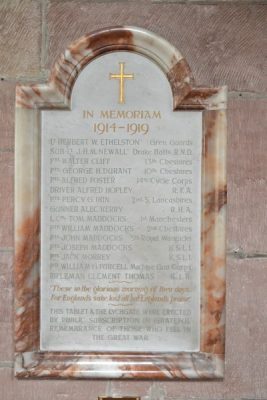
The Allied Victory Medal (also known as 'Wilfred') was issued by each of the allies. It was decided that each of the allies should each issue their own bronze victory medal with a similar design, similar equivalent wording and identical ribbon. The British medal was designed by W. McMillan. The front depicts a winged classical figure representing victory. Approximately 5.7 million victory medals were issued. Interestingly, eligibility for this medal was more restrictive and not everyone who received the British War Medal ('Squeak') also received the Victory Medal ('Wilfred'). However, in general, all recipients of 'Wilfred' also received 'Squeak' and all recipients of The 1914 Star or The 1914/1915 Star (also known as 'Pip') also received both 'Squeak' and 'Wilfred'. The recipient's service number, rank, name and unit was impressed on the rim.


Further Information

If you can provide any further information on Patrick Gavien please get in touch by leaving a comment below, using our Contact Form or by calling in to Whitchurch Heritage Centre.


Information provided by Whitchurch Museum and Archives

Malpas Memorial


The memorial is outside St Oswald’s Church, Malpas.

This is an ongoing project, information will be added to the website over the coming weeks and months. It is hoped that the people of Whitchurch, Shropshire and beyond will get involved and provide additional information and images to each entry on the memorials.

Whitchurch Museum and Archives


You can search for a name in the table and view the details or scroll down the page to view those commemorated who gave their lives during The Great War.

First NameOther NamesSurnameDiedLink
PatrickGavienView Details
GeorgeAllman24/08/1914View Details
SydneyBarlow30/10/1914View Details
HughHandleySandbach03/11/1914View Details
JamesEvans23/05/1915View Details
DouglasKirkWolley Dod25/09/1915View Details
JosephStevenson12/10/1915View Details
AmbroseChetwood02/11/1915View Details
SidneyAlsopAllen19/02/1916View Details
LeonardEdge06/03/1916View Details
JohnEvans22/04/1916View Details
FrederickBateman21/05/1916View Details
Arthur Phillips01/07/1916View Details
ThomasBoycott14/07/1916View Details
JamesGaughan15/07/1916View Details
JohnPowell24/08/1916View Details
CharlesJohnRichardson28/08/1916View Details
RobertAnkers07/10/1916View Details
JohnGlover07/10/1916View Details
JohnJohnson09/11/1916View Details
AlfredWalley14/11/1916View Details
RichardWilliamson20/12/1916View Details
CharlesBebbington16/01/1917View Details
JohnMercer13/02/1917View Details
EdgarHenryClutton03/03/1917View Details
EdgarFleet09/04/1917View Details
DavidDavies17/04/1917View Details
JohnHopley17/04/1917View Details
JohnOwenJones13/05/1917View Details
LeonardWasse19/08/1917View Details
EdwardStevenson18/10/1917View Details
FrankLeek17/12/1917View Details
JohnAlfredBailey05/01/1918View Details
SamuelMarsh21/03/1918View Details
StephenGibbons23/03/1918View Details
WilliamBirchall31/03/1918View Details
GeorgeParker11/04/1918View Details
JamesAlbertBenyon09/05/1918View Details
JohnMcMichael10/05/1918View Details
GeorgeGlover31/05/1918View Details
ArthurDavies02/07/1918View Details
ArchibaldMaltmanMcIntyre04/07/1918View Details
RichardSimpson22/08/1918View Details
GeorgeWilliamson18/09/1918View Details
JamesCrump08/10/1918View Details
JosephHewitt14/10/1918View Details
HarryLamb22/10/1918View Details
WilliamJohnBrellisford16/11/1918View Details
JohnRichardTaylor20/11/1918View Details
GeorgeAlbertWoodfield24/11/1918View Details
AlfredWragg03/03/1919View Details
AlfredAshley06/03/1919View Details
JosephGroom07/04/1919View Details
ThomasIvanJones13/04/1919View Details
FredericHovaWolley Dod24/07/1919View Details
GeorgeBoycott21/09/1919View Details
JohnHenryBurns01/05/1920View Details
WilfredFleet10/05/1920View Details

De Ruvigny’s Roll of Honour Douglas Wolley Dod

Report on the death of Douglas Kirk Wolley Dod in De Ruvigny’s Roll of Honour 1914 – 1919

“WOLLEY-DOD, DOUGLAS KIRK, Lieut., 12th (Service) Battn. The King’s (Liverpool Regt.), yst. s. of Francis Wolley-Dod of Edge Hall, Malpas, Cheshire, late of the Indian Public Works Dept., by his wife, Annette Mary, dau. of the late Frederic Fuhrmann Clarke; and nephew of Brigadier-General D. C. Wolley-Dod; b. Simla, India, 18 Nov. 1896; educ. the Rev. H. E. Mocatta’s Preparatory School, Clive House, Old Colwyn, and School House, Rugby; volunteered and applied for a commission on the outbreak of war; was gazetted 2nd Lieut. to the 12th King’s 17 Sept. 1914, and promoted Lieut. 3 Feb. 1915; left for France with his battalion 25 July, and was killed at the commencement of the battle of Loos 25 Sept. 1915, somewhere in the salient near Armentieres. Buried at Rue Pentillon, near Laventie.

His Commanding Officer, Colonel L.  Nicholson wrote:
“He was killed by a shell while in the trenches with his platoon, and they were being very heavily bombarded, and he was setting a very fine example to his men by by his cool and collected behaviour in trying circumstances. He was killed instantaneously. Not only was your son a very hard-working, keen, reliable officer, happy and cheerful under all circumstances, but his bright disposition had endeared him to all ranks, and he was a great favourite.”

Lieut.-Col. C. D. Fowler, commanding 7th K. O. Y. L. I.:
“I commanded his company from Oct. 1914 to May, 1915, all of which time he was one of my subalterns. I can’t tell you how awfully sorry I was to hear of his being killed during the bombardment; he was the life and soul of our company during our training, and all his influence was for good. He was so cheery and jolly, and his spirits never seemed to get damped. He was the true type of what I am insular enough to think is the best in the world, a young English gentleman, and that your son was in the truest sense.”

The Adjutant (E. H. Pearson, since killed accidentally in France):
“He was the life and soul of the regiment, and he was beloved by all of us, and the regiment, I feel, will never be the same without him. He was killed instantaneously by a shell which hit the parapet and crushed him, and he was laid to rest in a little cemetery about one mile from the firing line, and about two miles from Laventie. As we shall probably be in the neighbourhood for two or three weeks, I shall try and get some box trees to put  round his grave.””

De Ruvigny’s Roll of Honour 1914 – 1918

Marbury Memorial


The memorial plaque is inside St Michael’s Church, Marbury. There is also a commemoration in the lych gate.

This is an ongoing project, information will be added to the website over the coming weeks and months. It is hoped that the people of Whitchurch, Shropshire and beyond will get involved and provide additional information and images to each entry on the memorials.

Whitchurch Museum and Archives


You can search for a name in the table and view the details or scroll down the page to view those commemorated who gave their lives during The Great War.

First NameOther NamesSurnameDiedLink
JackMorreyNot known
HerbertWicksteadEthelston14/03/1915View Details
WilliamMaddocks11/05/1915View Details
JosephMaddocks16/06/1915View Details
GeorgeHugoDurant16/07/1916View Details
JackHainsworth MaxwellNewall13/11/1916View Details
AlfredHopley10/03/1917View Details
ThomasMaddocks16/05/1917View Details
WalterEdwardCliff10/08/1917View Details
JohnMaddocks03/12/1917View Details
ClementThomas09/04/1918View Details
PercyGarnerIkin11/04/1918View Details
WilliamGeorgePurcell22/06/1918View Details
AlfredFoster30/10/1918View Details
AlecKerry21/10/1918View Details

Naval Forces Roll of Honour Jack Newall

Report on the death of Jack Hainsworth Maxwell Newall in Naval Forces Roll of Honour

“NEWALL, JACK HAINSWORTH MAXWELL, Sub.-Lieut. Drake Battn. Royal Naval Division, R. N. V. R., only s. of the late William Newall Maxwell Newall, of Liverpool, Merchant, by his wife, Marion Perrin Knight (Wharton Hall, Winsford, co. Chester), dau. of John Knight Armstrong, of Wharton Hall, Winsford; b. Huyton, near Liverpool, 1 Oct. 1895; educ. Charterhouse, and Trinity College, Cambridge, where he was a member of the O. T. C., but left to join the R. N. V. R. as a Private 12 May, 1915, and was gazetted Sub-Lieut. 14 July, 1915; served with the Mediterranean Expeditionary Force in Gallipoli from Dec. 1915; took part in the evacuation in Jan. 1916; proceeded to France June, 1916, and was killed in action on the outskirts of Beaucourt Village 13 Nov. following. Buried at Hamel. While at Charterhouse he was House Monitor; won both House and Harpie Colours, and swam for his House; unm.”

De Ruvigny’s Roll of Honour 1914 – 1918

Ightfield Memorial


The memorial is at junction of Calverhall Road and Burleydam Road, Ightfield.

This is an ongoing project, information will be added to the website over the coming weeks and months. It is hoped that the people of Whitchurch, Shropshire and beyond will get involved and provide additional information and images to each entry on the memorials.

Whitchurch Museum and Archives


You can search for a name in the table and view the details or scroll down the page to view those commemorated who gave their lives during The Great War.

First NameOther NamesSurnameDiedLink
ArthurHarding16/05/1915View Details
GeorgeWard01/08/1915View Details
ThomasEllison09/10/1916View Details
AndrewArrowsmith23/04/1917View Details
WilliamHenryFurber25/04/1917View Details
AbrahamDarlington18/08/1917View Details
JohnRatcliffe08/09/1917View Details
WilliamCharlesDarlington04/11/1917View Details

Hanmer Memorial


The memorial is outside St Chad’s Church, Hanmer.

This is an ongoing project, information will be added to the website over the coming weeks and months. It is hoped that the people of Whitchurch, Shropshire and beyond will get involved and provide additional information and images to each entry on the memorials.

Whitchurch Museum and Archives


You can search for a name in the table and view the details or scroll down the page to view those commemorated who gave their lives during The Great War.

First NameOther NamesSurnameDiedLink
PhilipCharlesOwen25/09/1915View Details
AlbertJeffreyCartwright26/09/1915View Details
FrederickBreslin13/05/1916View Details
WilliamArthurPhillips11/07/1916View Details
GeorgeFrederickPhillips11/07/1916View Details
EdwardJohnGriffiths23/08/1916View Details
GeorgeHaroldGroom21/09/1917View Details
ReubenBreslin11/03/1918View Details
SamuelRichardWhitfield23/03/1918View Details
HenryStanleyAdams13/04/1918View Details
JohnWilliams26/05/1918View Details

De Ruvigny’s Roll of Honour Philip Owen

Report on the death of Philip Charles Owen in De Ruvigny’s Roll of Honour 1914 – 1919

“OWEN, PHILIP CHARLES, 2nd Lieut., 9th (Service) Battn. The King’s (Shropshire Light Infantry), s. of the Rev. Loftus Meade Owen, Rector of Stockton, Shifnal, co. Salop, 1 May, 1897; educ. Millmead, Shrewsbury, and St. Edward’s School, Oxford; was employed in the offices of the Eastern Telegraph Company, Electra House, London, E.C.; joined the Inns of Court O.T.C. 5 Aug. 1914, the day after war was declared; gazetted 2nd Lieut. 9th Battn. The King’s (Shropshire Light Infantry) 5 Oct. 1914, and promoted Lieut.; trained with the 5th Battn., with which he went to France 20 May, 1915, and was killed in action at Bellewaarde Farm, 25 Sept. following, during an attack on the German trenches. The Commanding Officer of the 5th Battn. Lieut-Col. C.C. Barrett wrote:

“Lieut. P.C. Owen was killed on 25 Sept. while gallantly leading his platoon in an attack on the German trenches. I beg to assure you of the sympathy of all ranks of this battalion, who deplore the loss of a brave and efficient officer and a popular man.””

De Ruvigny’s Roll of Honour 1914 – 1918

Lower Heath School Memorial


The memorial is in Lower Heath School, which is on the B5065 in Lower Heath, Prees, Shropshire. The Memorial was donated anonymously in 1919, the donor expressing the wish ‘that it should be placed in a prominent position, as a continual reminder to the present and future scholars of the part played by the old boys from 1914-1918’. The memorial was initially placed in Fauls Church and was returned at a later date to the school.

This is an ongoing project, information will be added to the website over the coming weeks and months. It is hoped that the people of Whitchurch, Shropshire and beyond will get involved and provide additional information and images to each entry on the memorials.

Whitchurch Museum and Archives


You can search for a name in the table and view the details or scroll down the page to view those commemorated who gave their lives during The Great War.

First NameOther NamesSurnameDiedLink
CecilHarryWhitfield22/06/1915View Details
GeorgeWilliamBrookes30/06/1916View Details
WallaceWilkinson10/08/1916View Details
ThomasArthurFord21/02/1917View Details
HerbertHickman24/04/1917View Details
AllenSands29/10/1917View Details
VincentColinHares30/11/1917View Details
JohnThomasRowlands30/11/1917View Details
EdwardJamesWebb21/12/1917View Details
ClarenceGeorgePowell30/12/1917View Details
EdwinHockenhull14/01/1918View Details
JohnWilliamTinsley27/03/1918View Details
ThomasEvanson22/04/1918View Details
JohnArthurWilliams28/05/1918View Details
CharlesWhitfield14/06/1918View Details
JackMullock22/08/1918View Details
EdgarRichardThomas18/09/1918View Details
JosephDutton24/10/1918View Details

Fauls Green Memorial


The memorial is in the churchyard of Holy Immanuel Church, Fauls Green. There is also a plaque inside the Church commemorating the same men. A memorial to Jack Mullins can be found inside the Church. The Commonwealth War Grave for James Webb is in the eastern side of the churchyard.

This is an ongoing project, information will be added to the website over the coming weeks and months. It is hoped that the people of Whitchurch, Shropshire and beyond will get involved and provide additional information and images to each entry on the memorials.

Whitchurch Museum and Archives


You can search for a name in the table and view the details or scroll down the page to view those commemorated who gave their lives during The Great War.

First NameOther NamesSurnameDiedLink
ThomasDutton11/06/1915View Details
CecilHarryWhitfield22/06/1915View Details
HerbertHeath25/09/1915View Details
WilliamJamesBagley25/09/1915View Details
GeorgeWilliamBrookes30/06/1916View Details
HarryHughes03/08/1916View Details
WallaceWilkinson10/08/1916View Details
WilliamJosephTomlinson04/09/1916View Details
ThomasArthurFord21/02/1917View Details
HerbertHickman24/04/1917View Details
FrankBloor13/05/1917View Details
AllenSands29/10/1917View Details
JohnThomasRowlands30/11/1917View Details
EdwardJamesWebb21/12/1917View Details
ClarenceGeorgePowell30/12/1917View Details
EdwinHockenhull14/01/1918View Details
JohnWilliamTinsley27/03/1918View Details
DavidJohnGriffiths21/04/1918View Details
JohnArthurWilliams28/05/1918View Details
CharlesWhitfield14/06/1918View Details
JackMullock22/08/1918View Details
EdgarRichardThomas18/09/1918View Details
Hon ArthurReginaldClegg-Hill18/09/1918View Details
AlecKerry21/10/1918View Details
JosephDutton24/10/1918View Details
TomVaughan25/02/1919View Details

De Ruvigny’s Roll of Honour Viscount Crichton

CRICHTON, HENRY WILLIAM, Viscount, M.V.O., D.S.O., Major and Brevet Lieut.-Col., Royal Horse Guards; Extra Equerry to His Majesty the King etc. eldest son of John Henry, 4th Earl Erne, K.P., P.C., by his wife, Lady Florence Mary (21, Knightsbridge, S.W.), nee Cole, daughter of William Willoughby, 3rd Earl of Enniskillen, F.R.S.; born at Crom Castle 30 Sept. 1872; educated Eton; and the Royal Military College, Sandhurst; gazetted 2nd Lieut. Royal Horse Guards, 5 May, 1894, and promoted Lieut. 6 Feb. 1895, Capt. 24 Feb. 1900, Major 7 May 1910, and Brevet Lieut.-Col. 7 Nov. 1914; was Adjutant 8 Dec. 1896 to 6 Oct. 1899; A.D.C. to H.M. when Duke of Cornwall during his Colonial Tour, 1901; Equerry 19 Nov. 1901 to 12 May 1908, and Extra Equerry 1 April 1909 to 6 May 1910 to H.M. when Prince of Wales etc., and Exra Equerry to H.M. the Kng from 10 June 1910; M.V.O. (4th class) 1906; served (1) in the South African War 1899-1900, on Staff; was A.D.C. to Major-General Commanding Cavalry Brigade, Natal, 7 Oct. 1899 to 24 Jan. 1901; took part in Defence of Ladysmith; operations in Natal, March to June 1900, and in the Transvaal east of Pretoria, July to Nov. 1900 (mentioned in Despatches (London Gazette, 8 Feb. 1901); D.S.O.; Queen’s Medal with five clasps); and (2) in the European War, Aug. to Nov. 1914 (mentioned in Despatches (London Gazettes, 19 Oct. 1914 and 17 Feb. 1915), and was officially reported missing 1 Nov. 1914.

For over a year it was supposed that he might be a prisoner in Germany, and his father dying 2 Dec. 1914, he appeared in the Peerages for 1915-16 as 5th Earl Erne. According to a list received by the Foreign Office from the German Government through the United States Embassy, Lord Crichton fell in Oct. 1914 and was buried in the cemetery of Wervice Nord (Grave No. 1596). His death, therefore, has been accepted as having ocurred on or about 31 Oct. 1914. From a statement issued by the family in Feb. 1917, it appears that Lord Crichton disappeared at 2 a.m. at Wytschaete. Captain Bowlby, a brother officer of the Horse Guards, since killed, stated that during the fighting round Ypres he and Lord Crichton went out to bring in some men whom Lord Crichton believed belonged to his own regiment. Captain Bowlby thought that they were Germans, and Lord Crichton courageously went out. He was seen riding up to them; they closed around him, and he did not return. Corpl. Coppinger, Royal Horse Guards, who was in hospital in Boulogne after the incident, stated that he was within 50 yards of Lord Crichton when they had retired from the trenches. Lord Crichton went off on a horse to get communcation with other troops and ran straight into the Germans. It was dark at the time, but Coppinger could hear German voices. Another soldier of Coppinger’s party said that he heard a German say in good English: “Most delighted!” Coppinger added that there was no sound of a shot or a struggle, and he had no doubt that Lord Crichton fell unharmed into German hands.

He married 10 June 1903, Lady Mary Cavendish (Crom Castle, Newton Butler, Fermanagh; 21, Knightsbridge, S.W.) nee Grosvenor, daughter of Hugh Lupus, 1st Duke of Westminster, K.G., and had three children: George David Hugh born 12 (died 18) May 1904; John Henry George, now 5th Earl Erne (for whom H.M. the King was sponsor), born 22 Nov. 1907, and Mary Kathleen (for whom H.M. the Queen was sponsor), born 8 July 1905.

DSO

The Distinguished Service Order (DSO) is a military decoration of the United Kingdom, and formerly of other parts of the Commonwealth of Nations, awarded for meritorious or distinguished service by officers of the armed forces during wartime, typically in actual combat.

Instituted on 6 September 1886 by Queen Victoria in a Royal Warrant published in The London Gazette on 9 November, the first DSOs awarded were dated 25 November 1886. It is typically awarded to officers ranked major (or its equivalent) or higher, but the honour has sometimes been awarded to especially valorous junior officers. During the First World War, 8,981 DSOs were awarded, each award being announced in The London Gazette.

The order was established for rewarding individual instances of meritorious or distinguished service in war. It was a military order, until recently for officers only, and normally given for service under fire or under conditions equivalent to service in actual combat with the enemy, although it was awarded between 1914 and 1916 under circumstances which could not be regarded as under fire (often to staff officers, which caused resentment among front-line officers). After 1 January 1917, commanders in the field were instructed to recommend this award only for those serving under fire. Prior to 1943, the order could be given only to someone mentioned in despatches. The order is generally given to officers in command, above the rank of captain. A number of more junior officers were awarded the DSO, and this was often regarded as an acknowledgement that the officer had only just missed out on the award of the Victoria Cross. In 1942, the award of the DSO was extended to officers of the Merchant Navy who had performed acts of gallantry while under enemy attack.


Legion of Honour

The Legion of Honour, full name, National Order of the Legion of Honour (French: Ordre national de la Légion d'honneur), is the highest French order of merit for military and civil merits, established in 1802 by Napoléon Bonaparte.

The order's motto is "Honneur et Patrie" ("Honour and Fatherland") and its seat is the Palais de la Légion d'Honneur next to the Musée d'Orsay, on the left bank of the River Seine in Paris.

The order is divided into five degrees of increasing distinction: Chevalier (Knight), Officier (Officer), Commandeur (Commander), Grand Officier (Grand Officer) and Grand-Croix (Grand Cross).


Eglwys Cross Memorial


The memorial is inside a bus shelter on the Whitchurch Road at Eglwys Cross, Flintshire. This Memorial was originally made to be sited in the Sunday School, but was moved to the bus shelter at some point in the past by persons unknown. The two men commemorated are also commemorated on the Hanmer Memorial.

This is an ongoing project, information will be added to the website over the coming weeks and months. It is hoped that the people of Whitchurch, Shropshire and beyond will get involved and provide additional information and images to each entry on the memorials.

Whitchurch Museum and Archives


You can search for a name in the table and view the details or scroll down the page to view those commemorated who gave their lives during The Great War.

First NameOther NamesSurnameDiedLink
AlbertJeffreyCartwright26/09/1915View Details
AlbertCartwright27/12/1917View Details

Coton Memorial


The memorial is inside Coton Methodist Chapel, Shropshire.

This is an ongoing project, information will be added to the website over the coming weeks and months. It is hoped that the people of Whitchurch, Shropshire and beyond will get involved and provide additional information and images to each entry on the memorials.

Whitchurch Museum and Archives


You can search for a name in the table and view the details or scroll down the page to view those commemorated who gave their lives during The Great War.

First NameOther NamesSurnameDiedLink
JohnThomasWalters18/05/1916View Details
WilfredHenryBradshaw09/03/1918View Details
WilliamHenryLea22/03/1918View Details
PercyBeckett29/03/1918View Details
WilliamRoberts22/08/1918View Details

Calverhall Memorial


The memorial is outside Holy Trinity Church, Calverhall.

This is an ongoing project, information will be added to the website over the coming weeks and months. It is hoped that the people of Whitchurch, Shropshire and beyond will get involved and provide additional information and images to each entry on the memorials.

Whitchurch Museum and Archives


You can search for a name in the table and view the details or scroll down the page to view those commemorated who gave their lives during The Great War.

First NameOther NamesSurnameDiedLink
FrederickFowles09/04/1917View Details
LeonardTew26/03/1918View Details
AlecNorris30/05/1918View Details
WallaceFurber23/09/1918View Details

Burleydam Memorial


The memorial is outside St Mary and Michael’s Church, Burleydam. The grave of the Adamson family is in the churchyard at the eastern end of the church.

This is an ongoing project, information will be added to the website over the coming weeks and months. It is hoped that the people of Whitchurch, Shropshire and beyond will get involved and provide additional information and images to each entry on the memorials.

Whitchurch Museum and Archives


You can search for a name in the table and view the details or scroll down the page to view those commemorated who gave their lives during The Great War.

First NameOther NamesSurnameDiedLink
Lord HughWilliamGrosvenor30/10/1914View Details
Viscount HenryWilliamCrichton31/10/1914View Details
JohnWilliamHulse26/05/1915View Details
FrederickDutton26/09/1916View Details
HenryBardellAdamson30/10/1916View Details
FrancisEdwardReece13/06/1917View Details
HerbertJosephParker01/08/1917View Details
ErnestSevern26/08/1917View Details
HarryHancock01/04/1918View Details
FrankClewes10/12/1919View Details

Bronington Memorial


The memorial is on the A495 on the Whitchurch side of Bronington by the entrance drive to Holy Trinity Church, Bronington.

This is an ongoing project, information will be added to the website over the coming weeks and months. It is hoped that the people of Whitchurch, Shropshire and beyond will get involved and provide additional information and images to each entry on the memorials.

Whitchurch Museum and Archives


You can search for a name in the table and view the details or scroll down the page to view those commemorated who gave their lives during The Great War.

First NameOther NamesSurnameDiedLink
FrancisStarkey14/07/1916View Details
CharlesLightfoot18/08/1916View Details
WilliamHerbert VictorBarlow13/11/1916View Details
CharlesWilliams19/04/1917View Details
WilliamThomasAnkers19/03/1918View Details
ArthurParry05/04/1918View Details

Bickley Memorial


The memorial is in the lych-gate of St Wenefrede’s Church, Bickley.

This is an ongoing project, information will be added to the website over the coming weeks and months. It is hoped that the people of Whitchurch, Shropshire and beyond will get involved and provide additional information and images to each entry on the memorials.

Whitchurch Museum and Archives


You can search for a name in the table and view the details or scroll down the page to view those commemorated who gave their lives during The Great War.

First NameOther NamesSurnameDiedLink
ThomasCoffin15/09/1914View Details
St JohnAlanCharlton26/10/1914View Details
TalbotErnestWilson25/04/1915View Details
ArthurHumphreys04/07/1915View Details
WilliamThomasMurhall15/12/1916View Details
FrederickJosephHopley20/01/1917View Details
ErnestSpeed29/06/1917View Details
JosephAnkersWilliamson02/08/1917View Details
FelixAlfredWalter29/09/1917View Details
ArthurWilkinson20/11/1917View Details
HarryPate01/12/1917View Details
HeneageLatham27/05/1918View Details
JohnFaulkner25/06/1918View Details
HerbertStanleyLatham07/10/1918View Details
WalterThomas11/10/1918View Details
FrankGHewitt20/11/1918View Details

Bettisfield Memorial


The memorial is outside St. John the Baptist Church, Bettisfield. There is also a plaque inside the Village Hall, Bettisfield.

This is an ongoing project, information will be added to the website over the coming weeks and months. It is hoped that the people of Whitchurch, Shropshire and beyond will get involved and provide additional information and images to each entry on the memorials.

Whitchurch Museum and Archives


You can search for a name in the table and view the details or scroll down the page to view those commemorated who gave their lives during The Great War.

First NameOther NamesSurnameDiedLink
Joseph HenrySmith11/06/1915View Details
ErnestGeorgeHarper18/08/1916View Details
HerbertEdwardHallmark30/08/1916View Details
EdwinSpeakman12/06/1917View Details
JohnWilliamCrump23/09/1917View Details
WilliamBeckett26/09/1917View Details
JohnErnestKelsall14/12/1917View Details
FrederickLeslieBarry-Roberts22/12/1917View Details
WalterMaddox26/06/1918View Details
WalterLangford22/08/1918View Details

Aston Memorial


The memorial is in the lych gate to St. Peter’s Church, Aston.

This is an ongoing project, information will be added to the website over the coming weeks and months. It is hoped that the people of Whitchurch, Shropshire and beyond will get involved and provide additional information and images to each entry on the memorials.

Whitchurch Museum and Archives


You can search for a name in the table and view the details or scroll down the page to view those commemorated who gave their lives during The Great War.

First NameOther NamesSurnameDiedLink
FrederickCaulcott15/04/1916View Details
JamesAshley23/11/1916View Details
WilfredStevenson20/12/1916View Details
WilfredWright14/06/1917View Details
WilfredJamesVenables06/09/1917View Details
FrankFrederickPass09/04/1918View Details
JohnBrown10/04/1918View Details
JohnFrederickWright13/07/1918View Details
ArthurHowell04/09/1918View Details
GeoffreyFrankWillett12/09/1918View Details
AlfredGarrett26/09/1918View Details
JohnWalterNicholls30/09/1918View Details
ErnestGregory26/10/1918View Details

Wrenbury School Memorial


The memorial is on the outside wall of Wrenbury School in Nantwich Road, Wrenbury.

This is an ongoing project, information will be added to the website over the coming weeks and months. It is hoped that the people of Whitchurch, Shropshire and beyond will get involved and provide additional information and images to each entry on the memorials.

Whitchurch Museum and Archives


You can search for a name in the table and view the details or scroll down the page to view those commemorated who gave their lives during The Great War.

First NameOther NamesSurnameDiedLink
ArthurRiceBirch01/01/1915View Details
JosephHerriman27/04/1915View Details
FrederickChesters26/06/1915View Details
HaroldGregory20/02/1916View Details
FrederickCaulcott15/04/1916View Details
HerbertSpencer31/08/1916View Details
JohnStevenson11/11/1916View Details
JamesAshley23/11/1916View Details
AlbertDale16/01/1917View Details
PercyCameron18/06/1917View Details
WalterDale22/07/1917View Details
FrankDale30/07/1917View Details
WilliamCartwright15/08/1917View Details
AlfredJohnParker18/04/1918View Details
WilliamTapley09/06/1918View Details
ArthurHowell04/09/1918View Details
WalterDilworthSutton24/09/1918View Details
ErnestGregory26/10/1918View Details

Wrenbury Memorial


The memorial is outside St. Margaret’s Church Wrenbury. There is a memorial window inside the church which includes the names of some of the men on the memorial.

This is an ongoing project, information will be added to the website over the coming weeks and months. It is hoped that the people of Whitchurch, Shropshire and beyond will get involved and provide additional information and images to each entry on the memorials.

Whitchurch Museum and Archives


You can search for a name in the table and view the details or scroll down the page to view those commemorated who gave their lives during The Great War.

First NameOther NamesSurnameDiedLink
JohnRoden20/02/1915View Details
FrederickChesters26/06/1915View Details
HaroldGregory20/02/1916View Details
FrederickCaulcott15/04/1916View Details
FrederickGriffiths03/07/1916View Details
HerbertSpencer31/08/1916View Details
JamesAshley23/11/1916View Details
WilfredStevenson20/12/1916View Details
AlbertDale16/01/1917View Details
WilfredWright14/06/1917View Details
PercyCameron18/06/1917View Details
WalterDale22/07/1917View Details
FrankDale30/07/1917View Details
WilliamThomasCooper01/08/1917View Details
GeorgeEdwardHand07/04/1918View Details
FrankFrederickPass09/04/1918View Details
JohnBrown10/04/1918View Details
AlbertThomasPowell28/04/1918View Details
WilliamTapley09/06/1918View Details
FredHodkinson06/07/1918View Details
JohnFrederickWright13/07/1918View Details
ArthurHowell04/09/1918View Details
WalterDilworthSutton24/09/1918View Details
AlfredGarrett26/09/1918View Details
JohnWalterNicholls30/09/1918View Details
ErnestGregory26/10/1918View Details

Ash Parva Wesleyan Chapel Memorial


The memorial plaque is in St John’s Methodist Church, St John’s Street, Whitchurch. The Wesleyan Chapel in Ash Parva closed for worship in 1930 and has now been converted into a private dwelling.

This is an ongoing project, information will be added to the website over the coming weeks and months. It is hoped that the people of Whitchurch, Shropshire and beyond will get involved and provide additional information and images to each entry on the memorials.

Whitchurch Museum and Archives


You can search for a name in the table and view the details or scroll down the page to view those commemorated who gave their lives during The Great War.

First NameOther NamesSurnameDiedLink
HarryWilliams02/04/1917View Details
HenryHollowood20/09/1918View Details

Royal Victorian Order

Great War History Hub Whitchurch Shropshire Medals Front Image

The Royal Victorian Order is a dynastic order of knighthood established in 1896 by Queen Victoria. It recognises distinguished personal service to the monarch of the Commonwealth realms, members of the monarch's family, or to any viceroy or senior representative of the monarch. The present monarch, Queen Elizabeth II, is the Sovereign of the order, its motto is Victoria, and its official day is 20 June. The order's chapel is the Savoy Chapel in London.

There are no limits on the number honoured, and admission remains at the sole discretion of the monarch, with each of the order's five grades and one medal with three levels representing different levels of service. While all those honoured may use the prescribed styles of the order—the top two grades grant titles of knighthood, and all grades accord distinct post-nominal letters—the Royal Victorian Order's precedence amongst other honours differs from realm to realm and admission to some grades may be barred to citizens of those realms by government policy.


CMG

Great War History Hub Whitchurch Shropshire Medals Front Image

The Most Distinguished Order of Saint Michael and Saint George is a British order of chivalry founded on 28 April 1818 by George, Prince Regent, later King George IV, while he was acting as regent for his father, King George III.

It is named in honour of two military saints, St Michael and St George.

The Order of St Michael and St George was originally awarded to those holding commands or high position in the Mediterranean territories acquired in the Napoleonic Wars, and was subsequently extended to holders of similar office or position in other territories of the British Empire. It is at present awarded to men and women who hold high office or who render extraordinary or important non-military service in a foreign country, and can also be conferred for important or loyal service in relation to foreign and Commonwealth affairs.


Ash Magna Memorial


The memorial is on the corner of Whitchurch Road and Ash Lane, Ash Magna; with a plaque inside Christ Church, Ash.

This is an ongoing project, information will be added to the website over the coming weeks and months. It is hoped that the people of Whitchurch, Shropshire and beyond will get involved and provide additional information and images to each entry on the memorials.

Whitchurch Museum and Archives


You can search for a name in the table and view the details or scroll down the page to view those commemorated who gave their lives during The Great War.

First NameOther NamesSurnameDiedLink
ThomasHenry RiversBulkeley22/10/1914View Details
JohnTurner CloughHazledine09/05/1915View Details
CharlesIvor RiversBulkeley16/05/1915View Details
ArthurHarding16/05/1915View Details
GeorgeWard01/08/1915View Details
JohnWilliamFrost20/09/1915View Details
JamesHenryHockenhull16/03/1916View Details
JosephGraydon18/03/1916View Details
AlbertJamesFrancis14/07/1916View Details
RichardStockley25/09/1916View Details
WilliamGraydon25/09/1916View Details
FrederickClarke13/11/1916View Details
JohnJosephFaulkner04/02/1917View Details
GeorgeHenryMiddleton27/03/1917View Details
HarryWilliams02/04/1917View Details
CharlesJackson27/04/1917View Details
JosephSwanwick16/08/1917View Details
PercyOliver21/09/1917View Details
CyrilStanley GeoffreyStevens09/10/1917View Details
PercyLeonardHall10/10/1917View Details
HarryHancock01/04/1918View Details
HenryHollowood20/09/1918View Details

St Johns Church Memorial


The memorial is in St John’s Methodist Church, St John’s Street, Whitchurch.

This is an ongoing project, information will be added to the website over the coming weeks and months. It is hoped that the people of Whitchurch, Shropshire and beyond will get involved and provide additional information and images to each entry on the memorials.

Whitchurch Museum and Archives


You can search for a name in the table and view the details or scroll down the page to view those commemorated who gave their lives during The Great War.

First NameOther NamesSurnameDiedLink
JohnThomasJones01/03/1916View Details
WilliamErnestBurrows15/07/1916View Details
GeorgeCaldecottTaylor17/07/1916View Details
DouglasArthurOulton20/07/1917View Details
JamesCrewe08/10/1917View Details
ReginaldArthurTrickett27/11/1917View Details
ArthurBeechSteele30/12/1917View Details
GeorgeEdmundVickers09/02/1918View Details
RobertHalesRidgway12/04/1918View Details
GeoffreyFrankWillett12/09/1918View Details
ColinJohnGrindley08/11/1918View Details
HarryJackVenables15/11/1918View Details

St Alkmund’s Church Memorial


St Alkmund’s Church is at the top of Bargate, Whitchurch, next to the site of the original Whitchurch Grammar School. At the west end of the Church is a triptych form war memorial with a central panel of a mosaic of St Michael. The memorial was dedicated by the parents of Lieutenant Thomas Chesters Bowler who is among those listed on the outer panels.

This is an ongoing project, information will be added to the website over the coming weeks and months. It is hoped that the people of Whitchurch, Shropshire and beyond will get involved and provide additional information and images to each entry on the memorials.

Whitchurch Museum and Archives


You can search for a name in the table and view the details or scroll down the page to view those commemorated who gave their lives during The Great War.

First NameOther NamesSurnameDiedLink
WilliamMellor21/10/1914View Details
WilliamHagan27/11/1914View Details
JohnWilliamField22/12/1914View Details
ThomasTravers13/04/1915View Details
ArthurNunnerley27/04/1915View Details
AlfredCharles GraysPeirson13/05/1915View Details
FrederickPhillipsPearson07/07/1915View Details
PercyWilliamFreer23/07/1915View Details
HoraceBirchDavenport09/08/1915View Details
JohnWilliamFrost20/09/1915View Details
GeorgeHewitt25/09/1915View Details
ThomasHewitt25/09/1915View Details
WilliamGosnell15/01/1916View Details
JohnPhillips22/01/1916View Details
JohnNewbrook26/01/1916View Details
JohnThomasJones01/03/1916View Details
JohnHenryHockenhull16/03/1916View Details
HarryDavies19/04/1916View Details
StanleyVictorNewbrook25/04/1916View Details
GeorgeSpeaks29/04/1916View Details
RichardHamer27/05/1916View Details
WilliamFowles01/07/1916View Details
BrianHarrison10/07/1916View Details
AlbertJamesFrancis14/07/1916View Details
FrederickGeorgeHarper14/07/1916View Details
FrankThomasBarron15/07/1916View Details
WilliamErnestBurrows15/07/1916View Details
ThomasFrederickCliff15/07/1916View Details
JohnGrantLewis15/07/1916View Details
JamesGaughan15/07/1916View Details
GeorgeCaldecottTaylor17/07/1916View Details
RichardJohn EdgeRycroft20/07/1916View Details
JohnJamesKelly01/08/1916View Details
GeorgePercyBurrows03/08/1916View Details
GeorgeAlbertHales11/08/1916View Details
HaroldPurcell18/08/1916View Details
WilliamParker18/08/1916View Details
WilliamGough20/08/1916View Details
GeorgeHerbertWilliams30/08/1916View Details
AlfredCharlesHendrick31/08/1916View Details
JohnArthurLee16/09/1916View Details
EricHansonLee19/09/1916View Details
RichardStockley25/09/1916View Details
CharlesHerbertShaw02/10/1916View Details
JosephJones09/10/1916View Details
CharlesCrump12/10/1916View Details
AlbertHenshall14/11/1916View Details
SidneyHubertCrewe07/12/1916View Details
EdwardThomasRoberts25/02/1917View Details
ArthurRoberts09/03/1917View Details
WilliamGordonWelch06/04/1917View Details
RalphDrakeNewbrook09/04/1917View Details
FrankEvans23/04/1917View Details
GeraldWilliamRogers24/04/1917View Details
HoraceBruckshaw28/04/1917View Details
WrightGravesSlawson13/05/1917View Details
JohnHenryWilliams15/05/1917View Details
ThomasJudson19/05/1917View Details
EdwinChase15/06/1917View Details
PercyBlencowe08/07/1917View Details
DouglasArthurOulton20/07/1917View Details
WilliamClive16/08/1917View Details
GeorgeWebster23/08/1917View Details
WilliamLee BrooksRichards25/08/1917View Details
ThomasBagleyJones19/09/1917View Details
PatrickGaughan26/09/1917View Details
JimCrewe08/10/1917View Details
JohnHerbertWilliams19/10/1917View Details
HerbertArthurDawson10/11/1917View Details
ReginaldArthurTrickett27/11/1917View Details
SamuelWorthington28/11/1917View Details
AlbertEdwardThomas30/11/1917View Details
TomWilliams02/12/1917View Details
SidneyOscarHobbs03/12/1917View Details
GeorgeAlfredChubb05/12/1917View Details
ArthurBeechSteele30/12/1917View Details
ArthurBernardJoyce30/12/1917View Details
GeorgeEdmundVickers09/02/1918View Details
JohnWilliam BrooksRichards24/03/1918View Details
WilliamAlbertEvans28/03/1918View Details
JohnThomasJones28/03/1918View Details
JohnWilliamTaylor30/03/1918View Details
JohnGermanHarrison11/04/1918View Details
RobertHalesRidgway12/04/1918View Details
CecilBedford17/04/1918View Details
AlfredErnestProdger19/04/1918View Details
ErnestEdwardFrancis25/04/1918View Details
FrankHeatley19/05/1918View Details
GeorgeHenryWhite07/06/1918View Details
CharlesWilliamRuth17/06/1918View Details
SamuelHarris16/07/1918View Details
CharlesArthurHewitt29/07/1918View Details
AlfredDarlingtonRoberts09/08/1918View Details
JamesGlendenningSmith14/08/1918View Details
JohnJackson21/08/1918View Details
FrankChallenor31/08/1918View Details
GeoffreyFrankWillett12/09/1918View Details
FrankViggor21/09/1918View Details
JohnWillieDodd29/09/1918View Details
AlfredEvason30/09/1918View Details
ThomasClayton02/10/1918View Details
ThomasChesterBowler03/10/1918View Details
JamesHenryWood12/10/1918View Details
JamesCrump16/10/1918View Details
JohnHenryElsley23/10/1918View Details
Rev RichardWilliamDugdale24/10/1918View Details
GeorgeFallousChallenor26/10/1918View Details
RobertEdwardHolloway29/10/1918View Details
ReginaldConnor30/10/1918View Details
WilliamHenshall07/11/1918View Details
ColinJohnGrindley08/11/1918View Details
WilliamOwen09/11/1918View Details
WilliamHuxley16/11/1918View Details
CliveRichardBarber20/11/1918View Details
AlfredPryceEdwards21/11/1918View Details
GeorgeWilliamPrice22/11/1918View Details
JosephEdwardAustin24/11/1918View Details
JohnThomasMellor02/12/1918View Details
RichardSharps03/12/1918View Details
JohnHenryHassall21/03/1919View Details

Whitchurch Grammar School Memorial


The panel containing the memorial was removed from the original Grammar School in Bargate, Whitchurch and now hangs in Sir John Talbot School, Tilstock Road, Whitchurch, the current secondary school.

This is an ongoing project, information will be added to the website over the coming weeks and months. It is hoped that the people of Whitchurch, Shropshire and beyond will get involved and provide additional information and images to each entry on the memorials.

Whitchurch Museum and Archives


You can search for a name in the table and view the details or scroll down the page to view those commemorated who gave their lives during The Great War.

First NameOther NamesSurnameDiedLink
ArthurNunnerley27/04/1915View Details
GeorgeCaldecottTaylor17/07/1916View Details
GeorgeAlbertHales11/08/1916View Details
JohnArthurLee16/09/1916View Details
EricHansonLee19/09/1916View Details
WilliamHerbert VictorBarlow13/11/1916View Details
GeraldWilliamRogers24/04/1917View Details
HoraceBruckshaw28/04/1917View Details
PercyBlencowe08/07/1917View Details
FrankLloydFaulkner31/07/1917View Details
CharlesAngeloMoody21/08/1917View Details
WilliamLee BrooksRichards25/08/1917View Details
GeorgeElliottAustin27/08/1917View Details
GeorgeHaroldGroom21/09/1917View Details
GeorgeAlfredChubb05/12/1917View Details
ArthurBernardJoyce30/12/1917View Details
JohnWilliam BrooksRichards24/03/1918View Details
JohnThomasJones28/03/1918View Details
RobertHalesRidgway12/04/1918View Details
GordonJosephEgerton10/06/1918View Details
CliveRichardBarber20/11/1918View Details

Castle Hill Methodist Chapel Memorial


The memorial is in St John’s Methodist Church, St John’s Street, Whitchurch.

This is an ongoing project, information will be added to the website over the coming weeks and months. It is hoped that the people of Whitchurch, Shropshire and beyond will get involved and provide additional information and images to each entry on the memorials.

Whitchurch Museum and Archives


You can search for a name in the table and view the details or scroll down the page to view those commemorated who gave their lives during The Great War.

First NameOther NamesSurnameDiedLink
JacobGriffiths24/08/1914View Details
JamesHenryHockenhull16/03/1916View Details
StanleyVictorNewbrook25/04/1916View Details
RalphDrakeNewbrook09/04/1917View Details
GeorgeHenryPointon15/06/1917View Details
AlfredEvason30/09/1918View Details
CliveRichardBarber20/11/1918View Details

Birmingham Daily Post 6 September 1917

Report in the Birmingham Daily Post 6th September 1917 regarding the death of George Austin

“Second Lieutenant George Elliott Austin, Royal Warwickshire Regiment, killed in action, was the youngest son of the late Mr. William Austin, Whitchurch, Salop, and 24 years of age. Educated at the Royal Masonic School, Bushey, he was employed by the Alliance Assurance Company at their Colmore Row branch, and resided at Oliver Road, Edgbaston. The year before the war he joined the Territorials, and consequently had been on service since August 1914. He went to France early in 1915, and subsequently obtained a commission. Some time age he was invalided home, and he only returned to his battalion in July”

Birmingham Daily Post 6th September 1917

Extract from army record concerning his death

His Army Record States;

"Sir, I beg to report that No. 20850 Pte. J. W. Frost 6th Bn. York & Lancashire Regiment was admitted on board this Hospital Ship on 16th September 1915, suffering from Dysentery. His condition on admission was serious and in spite of every care and attention he passed away at 12-45 pm, on the 20th September. He was buried at sea with full Military Honours on the 21st September 1915
Signed J Alan Longley Captain
Hospital Ship, “Aquitania”"

Extract from Army Record

Public Images


If you have any photographs or information relating to the project please get in touch by leaving a comment below, using our Contact Form or by calling in to Whitchurch Heritage Centre.


Despatch from Field Marshall Sir John French

"Lance Corporal John William Field, 1st Battalion Seaforth Highlanders is recommended for Gallant and Distinguished Service in the field."

Despatch from Field Marshall Sir John French Commander-in-Chief of the British Expeditionary Force (BEF) France 1914

Queen’s South Africa Medal

The Queen's South Africa Medal is a British campaign medal which was awarded to British and Colonial military personnel, civilians employed in official capacity and war correspondents who served in the Second Boer War in South Africa. Altogether twenty-six clasps were awarded to recipients of the Queen's South Africa Medal, to indicate particular actions and campaigns of the Second Boer War.


Military Medal

Until 1993, the Military Medal (MM) was a military decoration awarded to personnel of the British Army and other services, and formerly also to personnel of other Commonwealth countries, below commissioned rank, for bravery in battle on land.
The medal was established on 25 March 1916. It was the other ranks' equivalent to the Military Cross (MC), which was awarded to commissioned officers and, rarely, to warrant officers, although WOs could also be awarded the MM. The MM ranked below the Distinguished Conduct Medal (DCM), which was also awarded to non-commissioned members of the Army.
Click on the tags below to see details of each recipient.


Territorial Force War Medal

Great War History Hub Whitchurch Shropshire Medals Front Image

The Territorial Force War Medal was a campaign medal awarded to members of the British Territorial Force and Territorial Force Nursing Services who served overseas in World War I; it is the rarest of the five British Great War medals.

The medal was established in April 1920 for award to members of the Territorial Force and Territorial Force Nursing Services who volunteered for service overseas on or before 30 September 1914, and served overseas. They had to have been serving with the force on 4 August 1914 or have completed four years service with the force before 4 August 1914 and rejoined the force on or before 30 September 1914.


Silver War Badge

Great War History Hub Whitchurch Shropshire Medals Front Image

The Silver War Badge was issued in the United Kingdom and the British Empire to service personnel who had been honourably discharged due to wounds or sickness from military service in World War I. The badge, sometimes known as the "Discharge Badge", the "Wound Badge" or "Services Rendered Badge", was first issued in September 1916, along with an official certificate of entitlement.


Campaign Medals 3

Great War History Hub Whitchurch Shropshire Medals Front Image

The 1914 Star (also known as 'Pip') was authorised under Special Army Order no. 350 in November 1917 and by an Admiralty Fleet Order in 1918, for award to officers and men of the British and Indian Expeditionary Forces who served in France or Belgium between 5 August and midnight of 22–23 November 1914. The former date is the day after Britain's declaration of war against the Central Powers, and the closing date marks the end of the First Battle of Ypres.

The 1914–15 Star (also known as 'Pip') was instituted in December 1918 and was awarded to officers and men of British and Imperial forces who served against the Central European Powers in any theatre of the Great War between 5 August 1914 and 31 December 1915. The period of eligibility was prior to the introduction of the Military Service Act 1916, which instituted conscription in Britain.

The British War Medal (also known as 'Squeak') was a silver or bronze medal awarded to officers and men of the British and Imperial Forces who either entered a theatre of war or entered service overseas between 5th August 1914 and 11th November 1918 inclusive. This was later extended to services in Russia, Siberia and some other areas in 1919 and 1920. Approximately 6.5 million British War Medals were issued. Approximately 6.4 million of these were the silver versions of this medal. Around 110,000 of a bronze version were issued mainly to Chinese, Maltese and Indian Labour Corps. The front (obv or obverse) of the medal depicts the head of George V. The recipient's service number, rank, name and unit was impressed on the rim.
The Allied Victory Medal (also known as 'Wilfred') was issued by each of the allies. It was decided that each of the allies should each issue their own bronze victory medal with a similar design, similar equivalent wording and identical ribbon. The British medal was designed by W. McMillan. The front depicts a winged classical figure representing victory. Approximately 5.7 million victory medals were issued. Interestingly, eligibility for this medal was more restrictive and not everyone who received the British War Medal ('Squeak') also received the Victory Medal ('Wilfred'). However, in general, all recipients of 'Wilfred' also received 'Squeak' and all recipients of The 1914 Star or The 1914/1915 Star (also known as 'Pip') also received both 'Squeak' and 'Wilfred'. The recipient's service number, rank, name and unit was impressed on the rim.


Campaign Medals 2

Great War History Hub Whitchurch Shropshire Medals Front Image

The British War Medal (also known as 'Squeak') was a silver or bronze medal awarded to officers and men of the British and Imperial Forces who either entered a theatre of war or entered service overseas between 5th August 1914 and 11th November 1918 inclusive. This was later extended to services in Russia, Siberia and some other areas in 1919 and 1920. Approximately 6.5 million British War Medals were issued. Approximately 6.4 million of these were the silver versions of this medal. Around 110,000 of a bronze version were issued mainly to Chinese, Maltese and Indian Labour Corps. The front (obv or obverse) of the medal depicts the head of George V. The recipient's service number, rank, name and unit was impressed on the rim.

The Allied Victory Medal (also known as 'Wilfred') was issued by each of the allies. It was decided that each of the allies should each issue their own bronze victory medal with a similar design, similar equivalent wording and identical ribbon. The British medal was designed by W. McMillan. The front depicts a winged classical figure representing victory. Approximately 5.7 million victory medals were issued. Interestingly, eligibility for this medal was more restrictive and not everyone who received the British War Medal ('Squeak') also received the Victory Medal ('Wilfred'). However, in general, all recipients of 'Wilfred' also received 'Squeak' and all recipients of The 1914 Star or The 1914/1915 Star (also known as 'Pip') also received both 'Squeak' and 'Wilfred'. The recipient's service number, rank, name and unit was impressed on the rim.


Women Bank Clerks

FIRST FEMALE CLERKS AT LLOYDS

With the outbreak of the First World War, Lloyds Bank employed women as clerks for the first time. They replaced men who had joined the armed services. Nationally six women were taken on at the start of the War. By the end there were more than 2,000 on the payroll. 

It would appear that the Whitchurch branch of Lloyds employed its first female clerks in 1916. Proof of this has been found in the form of graffiti on the door of  the Caldecott clock in the town library.

"Girls first employed in Whitchurch office 20th March 1916"

Clock

(This clock contained sketches by Randolph Caldecott from when he worked for the Whitchurch and Ellesmere Banking Company, which was taken over by Lloyds in 1881)

Whitchurch Herald 20th January 1917

Report in the Whitchurch Herald 20th January 1917 regarding the death of Ernest Wilson

"Pte, Ernest Wilson a Whitchurch Boy K.L.R. (Pals) age 19, after a year’s active service and participating in severe action has died of wounds in No 43 Casualty Clearing Station, France
Ernest took part in the four big battles of the Somme offensive on July1/2 and his battalion were successful in entering and capturing their objective. He was also involved in very heavy fighting in Trones Wood on July 30th, where he received his first wound, which was slight and after a few days he again was in the thick of it. He was in heavy fighting in October, when many of his regiment fell but he was lucky enough to get through unhurt."

Whitchurch Herald 20th January 1917

Whitchurch Herald 21st October 1916

Letter in the Whitchurch Herald 21st October 1916 received by Mrs Jones regarding the death of her husband, Joseph Jones.

"Dear Madam,
As the Chaplain attached to the 3rd Worcester Regiment, it is with deepest regret and sympathy that I have give you the sad news of the death in action of your husband No 39540, Pte, J Jones, which took place on October 9th. Your husband was in the trenches when a shell burst in the entrance of his dugout, killing him instantly. He can have felt no pain, I buried him next day in a little cemetery behind the trenches. A handsome wooden cross is being erected over his grave. The Commanding Officer and his Company Officers and comrades all send you their sincerest sympathy.
With Deepest Sympathy I remain yours sincerely,"

(Rev) G M Evans C F

Whitchurch Herald 21st October 1916

Video

Your Voice Sings Not So Soft

Your Voice Sings Not So Soft
Young people use creative and digital media to retell first hand accounts from WW1 to a contemporary audience

As part of MediaActive’s response to the WW1 Commemorations Shropshire Remembers, a team of twelve young people, working with filmmaking mentors, produced this animation based on the history of Prees Heath Common.

For more information about MediaActive please visit: www.mediaactive.org
For more information about the Shropshire Remembers Eyewitness project please visit www.eyewitnessww1.co.uk

War Hospital Supply Depots

Where did all the bandages come from? Who supplied the nightshirts for soldiers in hospital?

War Hospital Supply Depots were organised by individuals and staffed by civilian volunteers. Without them supplies of dressings and garments to many hospitals would have been non-existent.
A number of supply depots were located in the Whitchurch area and included

1998 WHITCHURCH MRS BLACK, PREES HALL
4082 WHITCHURCH MRS DOWNES, CALVERHALL
5206 WHITCHURCH MRS CHAMBERS, HANMER VICARAGE

According to an article published in The Chester Chronicle on Saturday 26 August 1916 another War Hospital Supply Depot was situated at Melton Lodge, Alkington Road, Whitchurch. This was being organised by Mrs Godsall of Iscoyd Park and Mrs Blezard of Wickstead Hall.

Melton Lodge


Army Records

An Army Report from the Medical Record of Charles Herbert Shaw concerning his illness.

"Medical Report States;
That the early winter was exceptionally cold and wet, the man was then a private, and took his regular turn on guard. Got thoroughly chilled and soaked to the skin and could not remove his clothes while off guard in the crowded and unventilated guard room. Sleeping quarters equally crowded, badly ventilated and damp. Indeed circumstances better calculated to induce pulmonary trouble can scarcely be imagined."

Army Records

Whitchurch Herald 23rd September 1916

Report in the Whitchurch Herald 23rd September 1916 concerning the death of Eric Hanson Lee.

"Mr L Lee, High Street, Whitchurch on Tuesday night he received news that his second son John Arthur had been killed in action. On Thursday morning he received a wire announcing that his eldest son Eric had died from wounds, both ex pupils of Whitchurch Grammar School, Eric had been a resident at St Johns College, Cambridge. Arthur left the Grammar School and attended Ardingly College Sussex and Canley School Surrey."

Whitchurch Herald 23rd September 1916

The History of the KSLI

An excerpt from The History of the KSLI in the Great War 1914-1918 by Major W de B Wood, regarding the death of John Arthur Lee.

"On 16th September 1916 after being relieved by the 6th Duke of Cornwall's Light Infantry and having eleven hours' rest in the Montauban area, the battalion was again in the trenches in relief of the King's Royal Rifle Corps. An order which was received to capture Gueudecourt having been cancelled and the battalion being relieved, it marched back to the camp from whence it started on the 15th. The casualties for the 16th September were 2nd Lieutenant J.A. Lee, and 2 other ranks killed and 8 other ranks wounded."

The History of the KSLI in the Great War 1914-1918 Major W de B Wood

Whitchurch Herald 9th September 1916

Letter in the Whitchurch Herald 9th September 1916 received by Mr and Mrs Gough regarding the death of their son, William Gough.

"Dear Mr Goff,
It is with very great regret that I have to communicate to you a very bad piece of news, namely that we lost your son in the fighting here on the night of the 23rd of this month. He was crossing a very dangerous piece of ground carrying the gun, when he was stopped by a beam across the trench, and it was while crossing the obstacle that a shell burst between him and the man behind him bury them both. We called to them but to no purpose, they had disappeared. Next morning I saw what had happened, and discovered them both badly wounded and pinned down by the beam. We extracted the bodies and buried them decently close to the spot and marked it with a cross. He must have been killed instantly, for he had several mortal wounds. That is all I glad of, because he was one of my best and reliable men, and I am very, very sorry for his death. If I can be any further assistance in settling his affairs I shall be glad to give you every help. Please accept my sincere sympathy and that of the whole section in your loss I remain yours sincerely"

John A Frazer, S/Lieutenant

Whitchurch Herald 9th September 1916

Whitchurch Herald 19th August 1916

Letter in the Whitchurch Herald 19th August 1916 received by Mr and Mrs Hales regarding the death of their son, George Albert Hales

"George Hales had been in the trenches for three months when he was admitted to No 18 General Hospital, Etaples, France, at the end of July suffering from shell shock, he was making good progress towards recovery when he suddenly collapsed and died of heart failure on the 11th August."

Whitchurch Herald 19th August 1916

Whitchurch Herald 28th August 1916

Report in the Whitchurch Herald 28th August 1916 on the death of George Percy Burrows

Letter received by Mrs Burrows;

"Dear Mrs Burrows,
Will you kindly accept my sincere sympathy and condolence in the decease of that worthy citizen and heroic soldier your son, Pte. G P Burrows, while one cannot too deeply mourn the loss of such a brave comrade, there is a consolation in knowing that he died doing his duty fearlessly and well, and gave his life for the cause of liberty and up building of the Empire. Again extending to you my heart felt sympathy."

Sam Hughes, Major-General

Minister of Militia and Defence for Canada

Whitchurch Herald 28th August 1916

Whitchurch Herald 29th July 1916

Letter in the Whitchurch Herald 29th July 1916 on the death of Richard John Edge Rycroft

"Dear Madam, I regret to have to write and inform you that your husband was brought into this Hospital seriously wounded during the night of the 19th July, and died on Thursday July 20th. You have the consolation of feeling that his suffering in so far as he felt any pain were of slight duration, and while you mourns his loss, you can not but feel that he has given his life for his country and died a noble death. Let me assure you of my sympathy."

Chaplain, Casualty Clearing Station

Whitchurch Herald 29th July 1916

Whitchurch Herald 22nd July 1916

Report in the Whitchurch Herald 22nd July 1916 on the death of George Caldecott Taylor

"George Caldecott Taylor was taken ill at Bedford, sent home on a sick furlong, but was admitted to the Military Hospital, at Prees Heath when his condition got worse. Subsequently Enteric developed and in spite of all that was possible being done for him, he gradually sank, and passed away on Monday the 17th July 1916."

Whitchurch Herald 22nd July 1916

Wellington Journal and Shrewsbury News December 1916

A report in the Wellington Journal & Shrewsbury News December 1916 regarding the death of John Grant Lewis.

“The deepest sympathy is felt by all for Mr and Mrs John Lewis of Green End, Whitchurch, in the death of their only son, Rifleman John Grant Lewis, Kings Royal Rifle Corps, who was killed in France during an attack in a wood . The fallen soldier who was 22 years old had won the admiration of his officers for his work on wire in front of the trenches. He was a saddler by trade.”

Wellington Journal & Shrewsbury News December 1916

Wellington Journal and Shrewsbury News July 1916

Letter to the parents of William Ernest Burrows in the Wellington Journal & Shrewsbury News July 1916 regarding the death of their son.

“I much regret having to tell you that your son Rifleman W E Burrows was killed in action while the company was attacking a wood, during the advance on the 15th July. He will much missed by the company, as he was popular with his comrades, and had done good work as a sniper during our tours of duty in the trenches. His company officer was pleased with his work, and would have written to you personally, but unfortunately he was also killed in the same action. Hoping you will find comfort in your bereavement. I am yours, with deepest sympathy.”

Company Sergeant Major, Beekley

Wellington Journal & Shrewsbury News July 1916

Wellington Journal & Shrewsbury News July 1916

Report in the Wellington Journal & Shrewsbury News July 1916 regarding the death of Brian Harrison.

“Another name has to be added to the ever growing list of men from Whitchurch who have made the great sacrifice and the deep sympathy of all goes out to Major and Mrs Harrison in the blow which has befallen them by the death of their youngest son, Second Lieutenant Brian Harrison, Royal Welch Fusiliers. The gallant officer, who was 23, was born in Whitchurch and educated at Chester and at Shrewsbury School (1906-1910) and for a time worked in the L & N. W. R. District Superintendants office in Lime Street, Liverpool, after which he left to joined his late uncle’s firm in Birmingham. Obtaining a commission with Royal Welsh Fusiliers in January 1915.
He was of bright and cheery disposition, and his death cuts short a promising career. His elder brother, John German Harrison, is in training with Royal Field Artillery.”

Wellington Journal & Shrewsbury News July 1916

Whitchurch Herald 15th July 1916

Report in the Whitchurch Herald 15th July 1916 on the death of George Frederick Jones

Letter received by Mr & Mrs Jones;

"It’s with deepest regret that I write this letter to inform you of the death of your son, Private Jones, who died from wounds received from a shell which burst just behind him. It occurred at about 8am on July 1st, when there was a big action in progress; your son was working with a small party bridging a trench under exceedingly heavy shell fire. He was badly wounded, and owing to the heavy fire could not be moved until night, when he was brought in, but died on the way back. One man in the platoon, Private Holmes remained with your son all day, which was an exceedingly brave act. It is needless to say that the loss of your son is felt by all of ranks, especially his own platoon. He was a splendid soldier and did his duty till the last."

Anon Officer

Whitchurch Herald 15th July 1916

Gifts

British Journal of Nursing 12th June 1915

We have received the following gift this week from Miss Thompson, of Whitchurch : Cakes soap, tooth brushes, handkerchiefs, knitted scarf and old linen. They will be forwarded where they are greatly needed, as all such things are in military hospitals in France.


Voluntary Aid Detachments (VADs)


220px-VAD_poster


County branches of the Red Cross had their own groups of male and female volunteers called Voluntary Aid Detachments. At the beginning of WW1 the V.A.Ds carried out a range of voluntary positions including nursing, transport duties, working parties and the organisation of rest stations and auxiliary hospitals.

In September 1915 a “general service” section of the V.A.D. was established. The new roles undertaken included dispensers, clerks, cooks and storekeepers, replacing the men who had gone off to fight.


VAD hospitals and depots in the Whitchurch area included :


Seven Sisters, Ellesmere

Oteley, Ellesmere

Broughall, Whitchurch

Trimpley Hall, Ellesmere

Military Cross

Military_Cross

The Military Cross is the third-level military decoration awarded to officers and (since 1993) other ranks of the British Armed Forces, and used to be awarded to officers of other Commonwealth countries.
The Military Cross is granted in recognition of "an act or acts of exemplary gallantry during active operations against the enemy on land to all members, of any rank in Our Armed Forces". In 1979, the Queen approved a proposal that a number of awards, including the Military Cross, could be awarded posthumously.

Click on the tag below to see details of each recipient.


Broughall Cottage

V.A.D. Nurse

red cross

Miss Muriel Bulkeley

Of Oak Cottage, Whitchurch, Salop

Served at V.A.D. Hospital, Shropshire 26, Broughall, Whitchurch, Salop

From 28/01/1915 to 03/03/1919


Further Information

Muriel was the sister of Charles Ivor Rivers Bulkeley and Thomas Henry Rivers Bulkeley, both of whom lost their lives in the Great War.

Broughall Cottage V.A.D. Hospital

broughall cottage   
 Broughall-Cottage-1024x742
In 1915 the V.A.D. (Voluntary Aid Detachment) Hospital was opened under General Buston and Mrs Lambert in the house of Mr H.L. Storey at Broughall Cottage. They had beds for 20 patients and two trained nurses to look after soldiers from the front. Monetary donations and gifts of food and cigarettes were regularly featured in the Whitchurch Herald.

Philip Buston

Philip Buston was born in Twyford, Hampshire in 1853, the son of the Reverend Roger Buston and his wife Anne Mary Buston. He joined the Royal Engineers and became a major in 1889. He served during the Boer War and was awarded the D.S.O. in 1901. After retiring from the army he went to live at Tilstock Lodge, Whitchurch.
H L Storey
Herbert Lushington Storey was born in Lancaster in 1853, the eldest son of Sir Thomas Storey. He had many business interests including the family's industrial firm. In 1882 he married Miss Emily Muriel Fisher of Cheadle and they had two children.  Herbert was a philanthropist, giving money to many academic, educational and social causes. In 1910  Mrs Storey died at Broughall Cottage, Whitchurch. The following year H.L. Storey was elected President of the Whitchurch and District Agricultural Society. He also hunted with the Cheshire, North Shropshire and Sir Watkin Wynn's Hounds.

Llewellyn Passant

Monmouthshire Regiment

Personal Details

  • Born 1890
  • Son of - John & Annie Passant, 4 Sherrymill Hill, Whitchurch
  • Civilian occupation - Shoemaker

Military Details

Regiment : Monmouthshire Regiment
Rank : Corporal
Service Number : 226027, 2869

  • 04/09/1914 Enlisted with 1st Monmouthshire Regiment
  • 07/06/1917 Went under fire to assist bringing in wounded men
  • 08/06/1917 Committed acts of courageous conduct and leadership for which he was later awarded the Military medal

Walter Sydney Fisher

King's Shropshire Light Infantry

Personal Details

  • Born 1881
  • Next of kin - Mrs Alice Ann Fisher (wife), 20 Pepper Street, Whitchurch
  • Civilian occupation - Stoker at Whitchurch Gas Works

Military Details

Regiment : King's Shropshire Light Infantry, Royal Defence Corps
Rank : Private
Service Number : 87899, 14536

  • 17/09/1914 Enlisted with King's Shropshire Light Infantry
  • 22/04/1916 Received gunshot wound to left elbow at Ypres
  • 18/10/1916 Discharged from Aberystwyth Red Cross Hospital after 59 days
  • 26/11/1916 Embarked Southampton
  • 27/11/1916 Disembarked Rouen & joined 7th K.S.L.I
  • 25/01/1917 Reposted to 6th K.S.L.I
  • 31/01/1918 Granted leave to UK
  • 23/02/1918 Etaples - wound to left hand
  • 23/02/1918 Transferred to England on hospital ship "Stad Antwerpen"
  • 27/08/1918 Attended Medical Board at Knowsley Park. Classified B2
  • 23/09/1918 Compulsorily transferred to Royal Defence Corps
  • 06/03/1919 Transferred to Reserve

Alfred Baddeley

Alfred Baddeley Shropshire Yeomanry

Personal Details

  • Born 1885
  • Next of kin - Mrs Baddeley, Lower Morrey, Shavington (wife)
  • Civilian occupation - Farmer

Military Details

Regiment : Shropshire Yeomanry
Rank : Sergeant, Corporal
Service Number : 887

  • 01/04/1908 Enlisted with Shropshire Yeomanry as Private & attended yearly training
  • 05/08/1914 Re-engaged with 2-1st Shropshire Yeomanry for home defence
  • 17/04/1915 Appointed Lance Corporal at Ellington
  • 03/12/1915 Appointed Acting Transport Sergeant at Newbiggin
  • 22/04/1916 Discharged from Newbiggin-by-the-Sea, on termination of his period of engagement

William R. Bennion

King's Shropshire Light Infantry

Personal Details

  • Born 1874
  • Next of kin - Mrs Elizabeth Bennion (wife), 1 Sherrymill Hill, Whitchurch
  • Civilian occupation - Builder's labourer

Military Details

Regiment : King's Shropshire Light Infantry, Labour Corps
Rank : Corporal, Private
Service Number : 11691, 42444

  • 31/12/1914 Enlisted with King's Shropshire Light Infantry, 3rd Battalion
  • 00/05/1915 Embarked for France
  • 00/00/0000 Put in 2nd Battalion
  • 15/06/1917 Transferred to 119 Labour Company
  • 00/00/0000 Transferred to 86 Labour Company
  • 30/07/1918 Gunshot wound to back
  • 18/08/1918 Sick
  • 21/10/1918 Oswestry
  • 30/11/1918 Embarked Folkestone, disembarked Boulogne
  • 28/02/1919 Discharged from Prees Heath

Alfred James Woolley

Royal-Army-Service-Corps-15

Personal Details

  • Born 1891
  • Next of kin - Mrs Annie Woolley, Cemetery Lodge, Milebank, Whitchurch (wife)
  • Civilian occupation - Motor Driver

Military details

Regiment : Royal Army Service Corps
Rank : Private
Service Number : M2/167596

  • 10/12/1915 Enlisted with Royal Army Service Corps
  • 06/05/1916 Embarked S.S.Ballarat for India
  • 05/06/1916 Disembarked S.S.Ballarat at Karachi
  • 15/06/1917 Joined Waziristan Field Force
  • 15/12/1918 Present with O C 693 M T Company at Rawalpindi
  • 27/04/1919 Selected as unfit to spend another summer in India
  • 28/11/1919 Embarked S.S. Manora at Bombay
  • 23/12/1919 Discharged from Prees Heath

Meritorious Service Medal

Meritorious Service Medal

The following Whitchurch men were recipients of the Meritorious Service Medal :

M2/167596 Private Alfred James Woolley, Royal Army Service Corps
Whitchurch, Shropshire – 14 May 1920

S4/144030 Corporal Thomas Barnett Cartwight, Army Service Corps
Whitchurch, Shropshire – 14 June 1918

Sapper J Harvey

Corporal T E Houghton

N.B. the date given is when the announcement appeared in the London Gazette


Belgian Croix de Guerre

Belgian Croix de Guerre

The World War I Croix de guerre was established by royal decree on 25 October 1915 as an award for bravery or other military virtue on the battlefield. It was only awarded to individuals. The Croix de guerre was not only awarded for bravery but also for three years or more of service on the front line, or for good conduct on the battlefield. It was also awarded to volunteers older than 40 or younger than 16 after a minimum of 18 months of service, to escaped prisoners of war rejoining the armed forces, and to military personnel who were placed on inactive duty because of injury.

Click on the tag below to see details of each recipient.


Distinguished Conduct Medal

Distinguished conduct medal

The following Whitchurch men were recipients of the Distinguished Conduct Medal :

43987 2nd Cpl. G. G. Wyatt, 16th Div. Sig. Coy., Royal Engineers
Whitchurch, Shropshire – 31 December 1918

11851 Pte. G. M. Sergeant, 6th Bn., King’s Shropshire Light Infantry
Whitchurch, Shropshire – 30 May 1919

67045 Bombardier George Hopwood, 33rd Brigade, Royal Field Artillery
Whitchurch, Shropshire – 3 August 1915

Bombardier J Groom

Sergeant G H Wilson


Raynor Taylor – Life at Prees Heath Army Camp

A recording of Raynor Taylor describing life at Prees Heath Army Camp in 1916, although not a local resident it provides insight into training at the camp.

Topics include

  • Size of camp
  • One legged soldier
  • Hut accommodation and beds
  • Stealing coal for stove
  • Role of hut orderlies
  • Kit inspections
  • Question of stealing
  • Relationship with ORs including question of bullying
  • Story of recruit from wealthy background whose parents intervened to secure his transfer as officer to Royal Flying Corps and his subsequent death
  • Food rations
  • Drill
  • Route marches

Audio by permission of the Imperial War Museum

Raynor Taylor was born in 1899 in Oldham, where he worked as a piercer at Durban Cotton Mill until he enlisted in 1916. He served with the Glamorgan Yeomanry in Britain in 1916-1917; the Welsh Regiment on the Western Front in 1917-1918; served with provisional companies in 1918-1919, as an officer's servant with North Russian Expeditionary Force in 1919.

Whitchurch Memorial


I first started visiting the Battlefields, Cemeteries and Memorials of the Western Front some fifteen years ago. Three years ago I decided to research the names on the War Memorial in Station Road, that’s all they are names, carved in stone, or written on a Roll of Honour

The Memorial was granted grade two listed status in November 2017

Every November we gather around the Memorial to remember them, but who were they? A list of names about whom little or nothing is known, behind every name is a person. For some of the men a great deal of information is available, for some very little, and for others, nothing!

I have spent hours researching each individual and have only included in this book facts that I can verify from records I have sourced, these include; National Archives, Commonwealth War Graves Commission and Local Newspapers

Terry Evanson
Whitchurch
2014

This is an ongoing project, Terry’s information will be added to the website over the coming weeks and months. It is hoped that the people of Whitchurch, Shropshire and beyond will get involved and provide additional information and images to each entry on the memorials.

Whitchurch Museum and Archives


You can search for a name in the table and view the details or scroll down the page to view those from Whitchurch who gave their lives during The Great War. We will replace the poppy image with an image of the person when we have it, if you can provide an image please get in touch here.

First NameOther NamesSurnameDiedLink
PercyHenryHayesNot known
ThomasJacksonNot known
JacobGriffiths24/08/1914View Details
WilliamMellor21/10/1914View Details
MatthewJohnson24/10/1914View Details
WilliamHagan27/11/1914View Details
JohnWilliamField22/12/1914View Details
ThomasTravers13/04/1915View Details
ArthurThomasSimmonds27/04/1915View Details
ArthurNunnerley27/04/1915View Details
AlfredCharles GraysPeirson13/05/1915View Details
JohnWillieHeycocks25/05/1915View Details
FrederickPhillipsPearson07/07/1915View Details
PercyWilliamFreer23/07/1915View Details
HoraceBirchDavenport09/08/1915View Details
JohnWilliamFrost20/09/1915View Details
HerbertBebbington25/09/1915View Details
GeorgeHewitt25/09/1915View Details
ThomasHewitt25/09/1915View Details
WilliamGosnell15/01/1916View Details
JohnPhillips22/01/1916View Details
JohnNewbrook26/01/1916View Details
JohnThomasJones01/03/1916View Details
JohnHenryHockenhull16/03/1916View Details
HarryDavies19/04/1916View Details
StanleyVictorNewbrook25/04/1916View Details
GeorgeSpeaks29/04/1916View Details
RichardHamer27/05/1916View Details
WilliamFowles01/07/1916View Details
GeorgeFrederickJones01/07/1916View Details
RobertHall07/07/1916View Details
BrianHarrison10/07/1916View Details
AlbertJamesFrancis14/07/1916View Details
FrederickGeorgeHarper14/07/1916View Details
FrankThomasBarron15/07/1916View Details
WilliamErnestBurrows15/07/1916View Details
ThomasFrederickCliff15/07/1916View Details
JohnGrantLewis15/07/1916View Details
JamesGaughan15/07/1916View Details
GeorgeCaldecottTaylor17/07/1916View Details
RichardJohn EdgeRycroft20/07/1916View Details
JohnJamesKelly01/08/1916View Details
GeorgePercyBurrows03/08/1916View Details
GeorgeAlbertHales11/08/1916View Details
CharlesJones18/08/1916View Details
HaroldPurcell18/08/1916View Details
WilliamParker18/08/1916View Details
WilliamGough20/08/1916View Details
GeorgeHerbertWilliams30/08/1916View Details
AlfredCharlesHendrick31/08/1916View Details
JohnArthurLee16/09/1916View Details
EricHansonLee19/09/1916View Details
RichardStockley25/09/1916View Details
CharlesHerbertShaw02/10/1916View Details
JosephJones09/10/1916View Details
CharlesCrump12/10/1916View Details
AlbertHenshall14/11/1916View Details
SidneyHubertCrewe07/12/1916View Details
WilliamThomasMurhall15/12/1916View Details
JohnSamuelBreese17/12/1916View Details
ErnestWilson29/12/1916View Details
CyrilCedricRoles10/01/1917View Details
WilliamBoylin17/01/1917View Details
EdwardThomasRoberts25/02/1917View Details
ArthurRoberts09/03/1917View Details
WilliamGordonWelch06/04/1917View Details
RalphDrakeNewbrook09/04/1917View Details
FrankEvans23/04/1917View Details
GeraldWilliamRogers24/04/1917View Details
HoraceBruckshaw28/04/1917View Details
WrightGravesSlawson13/05/1917View Details
JohnHenryWilliams15/05/1917View Details
ThomasJudson19/05/1917View Details
WillieEdwards23/05/1917View Details
WilliamDebanks01/06/1917View Details
EdwinChase15/06/1917View Details
GeorgeHenryPointon15/06/1917View Details
PercyBlencowe08/07/1917View Details
DouglasArthurOulton20/07/1917View Details
WilliamClive16/08/1917View Details
GeorgeWebster23/08/1917View Details
WilliamLee BrooksRichards25/08/1917View Details
JohnBoyle16/09/1917View Details
ThomasBagleyJones/Stockton19/09/1917View Details
LeonardWilson19/09/1917View Details
PatrickGaughan26/09/1917View Details
JimCrewe08/10/1917View Details
JohnHerbertWilliams19/10/1917View Details
AlbertWitkiss24/10/1917View Details
HerbertArthurDawson10/11/1917View Details
ReginaldArthurTrickett27/11/1917View Details
SamuelWorthington28/11/1917View Details
AlbertEdwardThomas30/11/1917View Details
TomWilliams02/12/1917View Details
SidneyOscarHobbs03/12/1917View Details
JohnMaddocks03/12/1917View Details
GeorgeAlfredChubb05/12/1917View Details
ArthurBeechSteele30/12/1917View Details
ArthurBernardJoyce30/12/1917View Details
GeorgeEdmundVickers09/02/1918View Details
ArthurHughes21/03/1918View Details
JohnWilliamHaycocks22/03/1918View Details
JohnWilliam BrooksRichards24/03/1918View Details
JohnSumner26/03/1918View Details
WilliamAlbertEvans28/03/1918View Details
JohnThomasJones28/03/1918View Details
JohnWilliamTaylor30/03/1918View Details
JohnGermanHarrison11/04/1918View Details
RobertHalesRidgway12/04/1918View Details
ThomasDay14/04/1918View Details
CecilBedford17/04/1918View Details
AlfredErnestProdger19/04/1918View Details
ThomasEvanson22/04/1918View Details
ErnestEdwardFrancis25/04/1918View Details
JohnHarryPearce06/05/1918View Details
FrankHeatley19/05/1918View Details
FrankHeatley29/05/1918View Details
GeorgeHenryWhite07/06/1918View Details
CharlesWilliamRuth17/06/1918View Details
JamesHenrySimon29/06/1918View Details
SamuelHarris16/07/1918View Details
CharlesArthurHewitt29/07/1918View Details
AlfredDarlingtonRoberts09/08/1918View Details
JamesGlendenningSmith14/08/1918View Details
JohnJackson21/08/1918View Details
FrankChallenor31/08/1918View Details
GeoffreyFrankWillett12/09/1918View Details
FrankViggor21/09/1918View Details
HarrySparkes21/09/1918View Details
JohnWillieDodd29/09/1918View Details
AlfredEvason30/09/1918View Details
ThomasClayton02/10/1918View Details
ThomasChesterBowler03/10/1918View Details
JamesHenryWood12/10/1918View Details
JamesCrump16/10/1918View Details
ThomasAnkers23/10/1918View Details
JohnHenryElsley23/10/1918View Details
Rev RichardWilliamDugdale24/10/1918View Details
OwenArthurJones24/10/1918View Details
GeorgeFallousChallenor26/10/1918View Details
RobertEdwardHolloway29/10/1918View Details
ReginaldConnor30/10/1918View Details
WilliamHenshall07/11/1918View Details
ColinJohnGrindley08/11/1918View Details
WilliamOwen09/11/1918View Details
HarryJackVenables15/11/1918View Details
WilliamHuxley16/11/1918View Details
CliveRichardBarber20/11/1918View Details
AlfredPryceEdwards21/11/1918View Details
GeorgeWilliamPrice22/11/1918View Details
GeorgeElliottAustin24/11/1918View Details
John ThomasMellor02/12/1918View Details
RichardSharps03/12/1918View Details
MatthewKavanagh20/12/1918View Details
EdwardWalford07/02/1919View Details
JohnHenryHassall21/03/1919View Details
ThomasRoche26/09/1919View Details
ArthurTopladyPowell00/11/1920View Details

Women Police Officers

Patrolling the streets of Whitchurch, Shropshire during the Great War, Emily Stephings and Isabella Hardy were amongst the first police women in the country.

They say there’s something about a man in uniform. The uniformed men certainly acted as a draw to the women living near the military training camps in Shropshire. So much so that people began to worry about the severe drop in moral standards. It was known as ‘Khaki Fever’.

In Whitchurch, Shropshire two women were recruited into the police force especially to deal with this problem. They were Emily Stephings and Isabella Hardy and they were given the ranks of Sergeant and Constable. They had no powers of arrest. Their job was to patrol the streets near the camps and dissuade the women against losing their virtue to the trainee recruits.

This was required by the army as well as the local moral guardians. A soldier with venereal disease wasn’t very welcome in the army. They wanted A1 healthy troops.

Stephings and Hardy continued to work in the police force until 1920. They were amongst the first policewomen in Shropshire.

If you’re related to or have any information on Emily or Isabella we would love to hear from you. Please get in touch by leaving a comment below, using our Contact Form or by calling in to Whitchurch Heritage Centre.


Whitchurch Herald 30 April 1921

Report in the Whitchurch Herald recording the decision of the Whitchurch War Memorial Committee at its wind up meeting

“Additional names to be placed upon the Memorial - Arthur Powell, Matthew John Powell, Charles Jones. Matthew John being a doubt as to whether this man’s name might not be placed on the Tilstock Memorial.”

Whitchurch Herald 30 April 1921

Whitchurch Herald 13 November 1920

Report in the Whitchurch Herald regarding the death of Arthur Toplady Powell

“We deeply regret to announce the death of Mr Arthur Toplady Powell only son of Mrs W. A. Powell and the late Mr W. A. Powell who was for some years stationed at Whitchurch as Inland Revenue Officer and afterwards at Fort William.
Mr Arthur Powell was nearly 26 years of age. He was a lad of great ability and promise and of a genial disposition which endeared him to all with who he came into contact. After a short time in an estate agency office he joined the army soon after the outbreak of war and quickly rose to the rank of Lance Sergeant but was wounded in action and this subsequently necessitated the amputation of his right arm. He underwent training to fit himself for the earning of his livelihood under the new conditions and bore his disabilities with great fortitude and cheerfulness. His health however broke down and tuberculosis supervened; and in spite of all that could be done his condition became gradually worse and he died in a Nursing Home at Bournemouth on Friday at noon and the internment took place in the same town on Monday.
It is needless to say that the utmost sympathy is extended to the relatives in their singularly sad bereavement.
In view of the fact that the late Mr Arthur Powell undoubtedly lost his life through his war services it is worth suggesting that his name might well be inscribed on the War Memorial which was unveiled on Thursday.”

Whitchurch Herald 13 November 1920

Arthur Powell

Rev Richard William Dugdale

Personal Details

Baptised in Whitchurch, Shropshire 22nd May 1895, Arthur Toplady Powell was the youngest of eight children and the only son of Harriet Emma Powell and the late William Arthur Powell of 24 Dodington, Whitchurch, Shropshire. The family later lived in Wrexham Road and then Talbot Street.

In 1911 Arthur worked as a clerk in an estate office and lived in Bridlington Road, Sledmere, Yorkshire prior to enlisting.

Arthur was wounded in France which resulted in the amputation of his right arm. He was discharged from the Army in 1916, fitted with a prosthetic arm and retrained as left handed. He contracted tuberculosis and died in Bournemouth early November 1920.

Military Details

Regiment : 5th Battalion Alexandra, Princess of Wales’s Own Yorkshire Regiment

Rank : Lance Sergeant
Service Number : 1173

Died of illness; UK November 1920 aged 25

Commemorated
Place of burial Bournemouth, but no grave yet identified

Not commemorated by the Commonwealth War Grave Commission

Medals and Awards
Arthur was awarded the Campaign Medals (1914/15 Star, British War Medal and Allied Victory Medal), together with the Silver War Badge following his discharge through illness

Campaign Medals


Great War History Hub Whitchurch Shropshire Medals Front Image

The 1914 Star (also known as 'Pip') was authorised under Special Army Order no. 350 in November 1917 and by an Admiralty Fleet Order in 1918, for award to officers and men of the British and Indian Expeditionary Forces who served in France or Belgium between 5 August and midnight of 22–23 November 1914. The former date is the day after Britain's declaration of war against the Central Powers, and the closing date marks the end of the First Battle of Ypres.

The 1914–15 Star (also known as 'Pip') was instituted in December 1918 and was awarded to officers and men of British and Imperial forces who served against the Central European Powers in any theatre of the Great War between 5 August 1914 and 31 December 1915. The period of eligibility was prior to the introduction of the Military Service Act 1916, which instituted conscription in Britain.

The British War Medal (also known as 'Squeak') was a silver or bronze medal awarded to officers and men of the British and Imperial Forces who either entered a theatre of war or entered service overseas between 5th August 1914 and 11th November 1918 inclusive. This was later extended to services in Russia, Siberia and some other areas in 1919 and 1920. Approximately 6.5 million British War Medals were issued. Approximately 6.4 million of these were the silver versions of this medal. Around 110,000 of a bronze version were issued mainly to Chinese, Maltese and Indian Labour Corps. The front (obv or obverse) of the medal depicts the head of George V. The recipient's service number, rank, name and unit was impressed on the rim.
The Allied Victory Medal (also known as 'Wilfred') was issued by each of the allies. It was decided that each of the allies should each issue their own bronze victory medal with a similar design, similar equivalent wording and identical ribbon. The British medal was designed by W. McMillan. The front depicts a winged classical figure representing victory. Approximately 5.7 million victory medals were issued. Interestingly, eligibility for this medal was more restrictive and not everyone who received the British War Medal ('Squeak') also received the Victory Medal ('Wilfred'). However, in general, all recipients of 'Wilfred' also received 'Squeak' and all recipients of The 1914 Star or The 1914/1915 Star (also known as 'Pip') also received both 'Squeak' and 'Wilfred'. The recipient's service number, rank, name and unit was impressed on the rim.
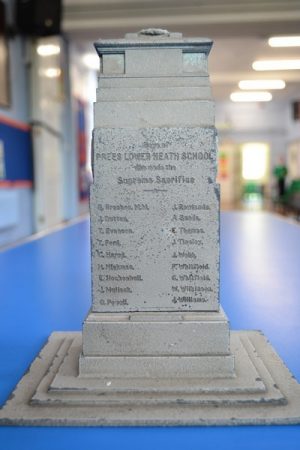


Silver War Badge


Great War History Hub Whitchurch Shropshire Medals Front Image

The Silver War Badge was issued in the United Kingdom and the British Empire to service personnel who had been honourably discharged due to wounds or sickness from military service in World War I. The badge, sometimes known as the "Discharge Badge", the "Wound Badge" or "Services Rendered Badge", was first issued in September 1916, along with an official certificate of entitlement.


Further Information

There are a series of articles in the Whitchurch Herald chronicling the wounding and eventual death of Arthur T Powell:

8/5/1915 is a letter home having just arrived at the trenches
12/6/1915 records his initial wounding in the right arm (not thought to be serious)
26/6/1915 records his arm being amputated
3/7/1915 corrects some details in the previous article

These are then followed by the following three articles:

Whitchurch Herald 25 March 1916


Report in the Whitchurch Herald recording the rehabilitation of Arthur Toplady Powell following the amputation of his right arm and his training to write left handed

“ Lance Sargeant Arthur T Powell, son of Mrs Powell Talbot Street, who it will be remembered lost his right arm below the elbow as a result of a wound received in France recently went up to Roehampton House Convalescent Hospital. This building was formerly the residence of Mr Kenneth Wilson but is now used as a hospital for soldiers with lost limbs. Sergeant Powell was there for a few days when he was discharged for 3 months pending the making of his artificial arm. He is now staying in London and taking lessons in left hand writing, typing and shorthand at Clarke’s College. His tutor also goes to Roehampton House to give classes there and on Friday last week when the King and Queen were visiting the hospital he took with him specimens of Sergt Powell’s handwriting and shorthand to show their majesties. The King was very much surprised by them both and said he could hardly credit it.”

Whitchurch Herald 25 March 1916


Whitchurch Herald 13 November 1920


Report in the Whitchurch Herald regarding the death of Arthur Toplady Powell

“We deeply regret to announce the death of Mr Arthur Toplady Powell only son of Mrs W. A. Powell and the late Mr W. A. Powell who was for some years stationed at Whitchurch as Inland Revenue Officer and afterwards at Fort William.
Mr Arthur Powell was nearly 26 years of age. He was a lad of great ability and promise and of a genial disposition which endeared him to all with who he came into contact. After a short time in an estate agency office he joined the army soon after the outbreak of war and quickly rose to the rank of Lance Sergeant but was wounded in action and this subsequently necessitated the amputation of his right arm. He underwent training to fit himself for the earning of his livelihood under the new conditions and bore his disabilities with great fortitude and cheerfulness. His health however broke down and tuberculosis supervened; and in spite of all that could be done his condition became gradually worse and he died in a Nursing Home at Bournemouth on Friday at noon and the internment took place in the same town on Monday.
It is needless to say that the utmost sympathy is extended to the relatives in their singularly sad bereavement.
In view of the fact that the late Mr Arthur Powell undoubtedly lost his life through his war services it is worth suggesting that his name might well be inscribed on the War Memorial which was unveiled on Thursday.”

Whitchurch Herald 13 November 1920


Whitchurch Herald 30 April 1921


Report in the Whitchurch Herald recording the decision of the Whitchurch War Memorial Committee at its wind up meeting

“Additional names to be placed upon the Memorial - Arthur Powell, Matthew John Powell, Charles Jones. Matthew John being a doubt as to whether this man’s name might not be placed on the Tilstock Memorial.”

Whitchurch Herald 30 April 1921


If you can provide any further information on Arthur Toplady Powell please get in touch by leaving a comment below, using our Contact Form or by calling in to Whitchurch Heritage Centre.


Information provided by Whitchurch Museum and Archives

Wilfred Fleet

Wilfred Fleet

Personal Details

Born in Malpas, Cheshire in 1894 (baptised 19th August 1894), the third son of John and Elizabeth Fleet of Church Street, Malpas, Cheshire.

Husband of Mary Fleet (nee Roberts) (married in 1919).

The 1911 Census shows Wilfred as an apprentice joiner; he joined the trade union in 1914 with seven years at trade.

Wilfred died from heart trouble arising from rheumatism suffered in the army.

Wilfred’s older brother Edgar also lost his life in the Great War.

Military Details

Regiment : 1st Army Workshop Company No. 8 Royal Engineers, formerly King’s Shropshire Light Infantry (19755)
Rank : 2nd Corporal
Service Number : 251785

Died of illness; United Kingdom 10 May 1920 Aged 25

Medals and Awards
Wilfred was awarded the Campaign Medals (British War Medal and Allied Victory Medal).

Campaign Medals


Great War History Hub Whitchurch Shropshire Medals Front Image

The British War Medal (also known as 'Squeak') was a silver or bronze medal awarded to officers and men of the British and Imperial Forces who either entered a theatre of war or entered service overseas between 5th August 1914 and 11th November 1918 inclusive. This was later extended to services in Russia, Siberia and some other areas in 1919 and 1920. Approximately 6.5 million British War Medals were issued. Approximately 6.4 million of these were the silver versions of this medal. Around 110,000 of a bronze version were issued mainly to Chinese, Maltese and Indian Labour Corps. The front (obv or obverse) of the medal depicts the head of George V. The recipient's service number, rank, name and unit was impressed on the rim.
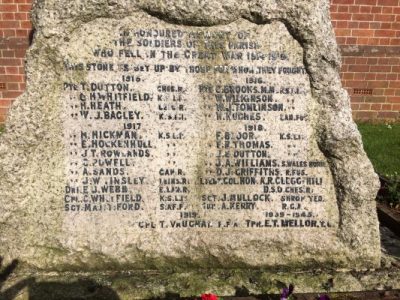
The Allied Victory Medal (also known as 'Wilfred') was issued by each of the allies. It was decided that each of the allies should each issue their own bronze victory medal with a similar design, similar equivalent wording and identical ribbon. The British medal was designed by W. McMillan. The front depicts a winged classical figure representing victory. Approximately 5.7 million victory medals were issued. Interestingly, eligibility for this medal was more restrictive and not everyone who received the British War Medal ('Squeak') also received the Victory Medal ('Wilfred'). However, in general, all recipients of 'Wilfred' also received 'Squeak' and all recipients of The 1914 Star or The 1914/1915 Star (also known as 'Pip') also received both 'Squeak' and 'Wilfred'. The recipient's service number, rank, name and unit was impressed on the rim.
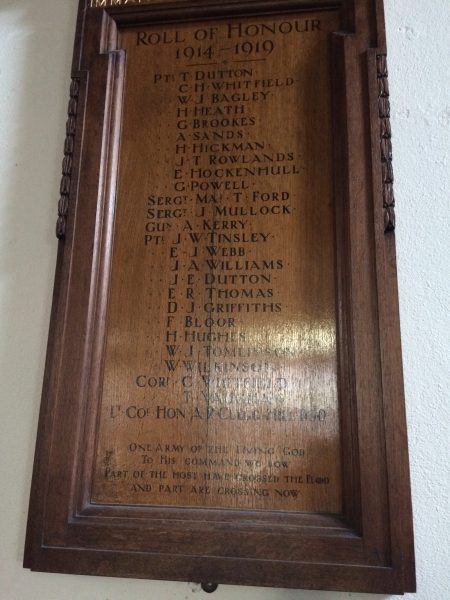


Further Information

If you can provide any further information on Wilfred Fleet please get in touch by leaving a comment below, using our Contact Form or by calling in to Whitchurch Heritage Centre.


Information provided by Whitchurch Museum and Archives

John Burns

John Burns

Personal Details

Born in Malpas, Cheshire in 1894, the son of the late Thomas Edward Burns (shown on his marriage certificate, although we can find no record of him in the censuses). The 1901 Census shows him living with his grandparents Michael and Mary Burns, in Malpas, Cheshire.

Husband to Dorothy Gladys Burns (nee Box) (married 15th December 1917).

The 1911 census shows John as a domestic chauffeur.

John died in Whitchurch Cottage Hospital from illness attributed to his war service.

Military Details

Regiment : ‘X’ 4th T.M. Battery Royal Field Artillery
Rank : Gunner
Service Number : 3917 (although shown as 1917 on the CWGC site)

Died of illness; United Kingdom 1 May 1920 Aged 25

Medals and Awards
John was awarded the Campaign Medals (1915 Star, British War Medal and Allied Victory Medal).

Campaign Medals


Great War History Hub Whitchurch Shropshire Medals Front Image

The 1914 Star (also known as 'Pip') was authorised under Special Army Order no. 350 in November 1917 and by an Admiralty Fleet Order in 1918, for award to officers and men of the British and Indian Expeditionary Forces who served in France or Belgium between 5 August and midnight of 22–23 November 1914. The former date is the day after Britain's declaration of war against the Central Powers, and the closing date marks the end of the First Battle of Ypres.

The 1914–15 Star (also known as 'Pip') was instituted in December 1918 and was awarded to officers and men of British and Imperial forces who served against the Central European Powers in any theatre of the Great War between 5 August 1914 and 31 December 1915. The period of eligibility was prior to the introduction of the Military Service Act 1916, which instituted conscription in Britain.

The British War Medal (also known as 'Squeak') was a silver or bronze medal awarded to officers and men of the British and Imperial Forces who either entered a theatre of war or entered service overseas between 5th August 1914 and 11th November 1918 inclusive. This was later extended to services in Russia, Siberia and some other areas in 1919 and 1920. Approximately 6.5 million British War Medals were issued. Approximately 6.4 million of these were the silver versions of this medal. Around 110,000 of a bronze version were issued mainly to Chinese, Maltese and Indian Labour Corps. The front (obv or obverse) of the medal depicts the head of George V. The recipient's service number, rank, name and unit was impressed on the rim.
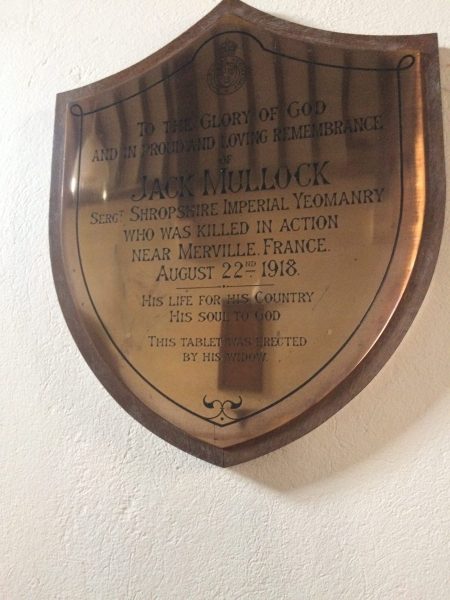
The Allied Victory Medal (also known as 'Wilfred') was issued by each of the allies. It was decided that each of the allies should each issue their own bronze victory medal with a similar design, similar equivalent wording and identical ribbon. The British medal was designed by W. McMillan. The front depicts a winged classical figure representing victory. Approximately 5.7 million victory medals were issued. Interestingly, eligibility for this medal was more restrictive and not everyone who received the British War Medal ('Squeak') also received the Victory Medal ('Wilfred'). However, in general, all recipients of 'Wilfred' also received 'Squeak' and all recipients of The 1914 Star or The 1914/1915 Star (also known as 'Pip') also received both 'Squeak' and 'Wilfred'. The recipient's service number, rank, name and unit was impressed on the rim.


Further Information

If you can provide any further information on John Henry Burns please get in touch by leaving a comment below, using our Contact Form or by calling in to Whitchurch Heritage Centre.


Information provided by Whitchurch Museum and Archives

Frank Clewes

John William Frost

Personal Details

Born in Aston, Staffordshire in 1887.

Husband to Edith Clewes (nee Edgerton) of Middle Morrey Cottage, Shavington, Market Drayton, Shropshire and father to Gladys Mary, Elsie, Frances Edna, Phyllis H M and Edith A

Frank was a farm labourer before enlisting.

Frank was discharged from the army 26 September 1919. He was hospitalised in 1918 for 6 weeks with a teratoma of the left testicle.

Military Details

Regiment : Royal Garrison Artillery
Rank : Bombadier
Service Number : 92545

Died of illness; UK 10 December 1919 Aged 30

Commemorated
Frank is not commemorated by the CWGC (Commonwealth War Graves Commission). His death was registered in Chester, but we do not know where he is buried.

Medals and Awards
Frank was awarded the Campaign Medals (British War Medal and Allied Victory Medal)

Campaign Medals


Great War History Hub Whitchurch Shropshire Medals Front Image

The British War Medal (also known as 'Squeak') was a silver or bronze medal awarded to officers and men of the British and Imperial Forces who either entered a theatre of war or entered service overseas between 5th August 1914 and 11th November 1918 inclusive. This was later extended to services in Russia, Siberia and some other areas in 1919 and 1920. Approximately 6.5 million British War Medals were issued. Approximately 6.4 million of these were the silver versions of this medal. Around 110,000 of a bronze version were issued mainly to Chinese, Maltese and Indian Labour Corps. The front (obv or obverse) of the medal depicts the head of George V. The recipient's service number, rank, name and unit was impressed on the rim.
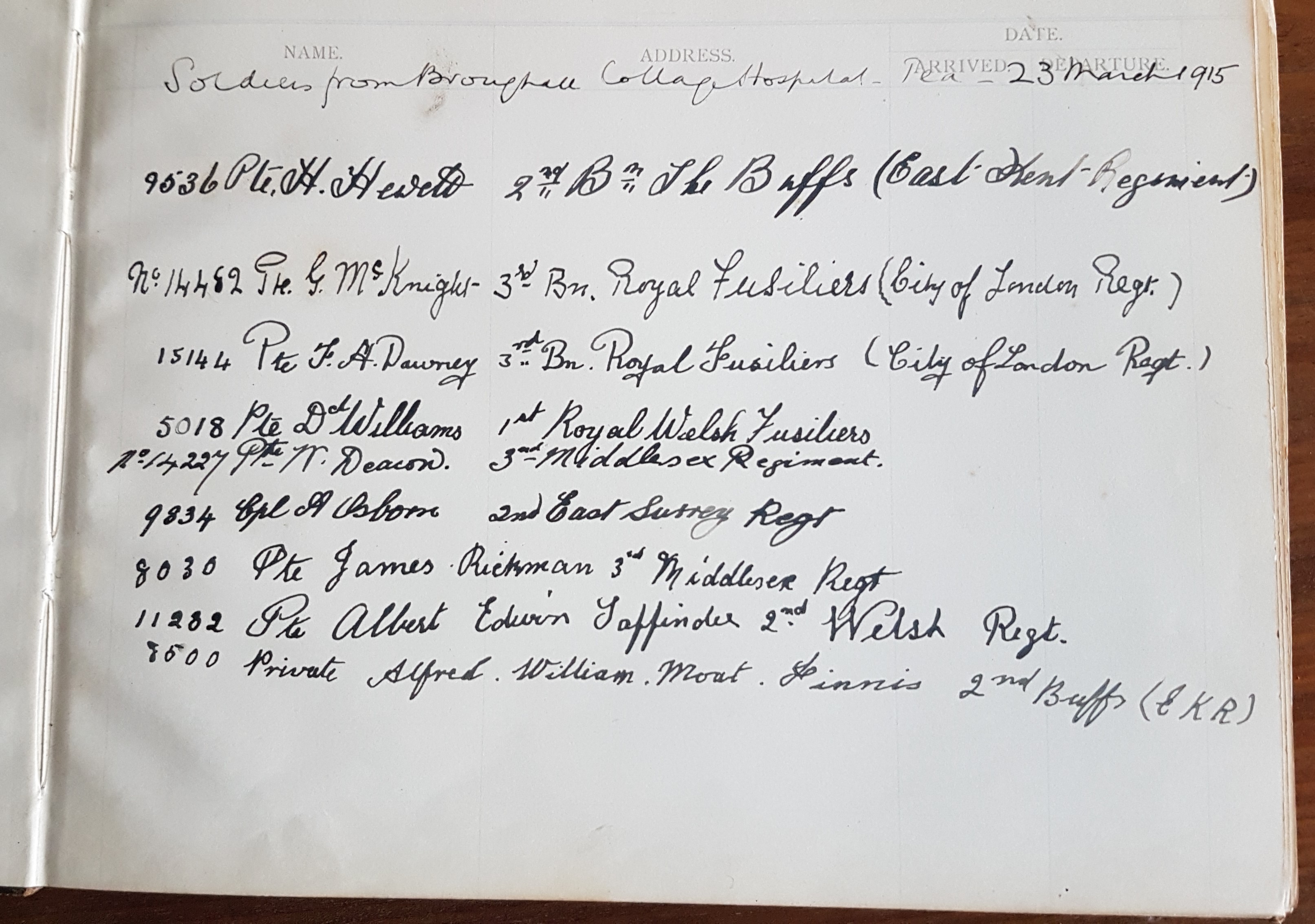
The Allied Victory Medal (also known as 'Wilfred') was issued by each of the allies. It was decided that each of the allies should each issue their own bronze victory medal with a similar design, similar equivalent wording and identical ribbon. The British medal was designed by W. McMillan. The front depicts a winged classical figure representing victory. Approximately 5.7 million victory medals were issued. Interestingly, eligibility for this medal was more restrictive and not everyone who received the British War Medal ('Squeak') also received the Victory Medal ('Wilfred'). However, in general, all recipients of 'Wilfred' also received 'Squeak' and all recipients of The 1914 Star or The 1914/1915 Star (also known as 'Pip') also received both 'Squeak' and 'Wilfred'. The recipient's service number, rank, name and unit was impressed on the rim.
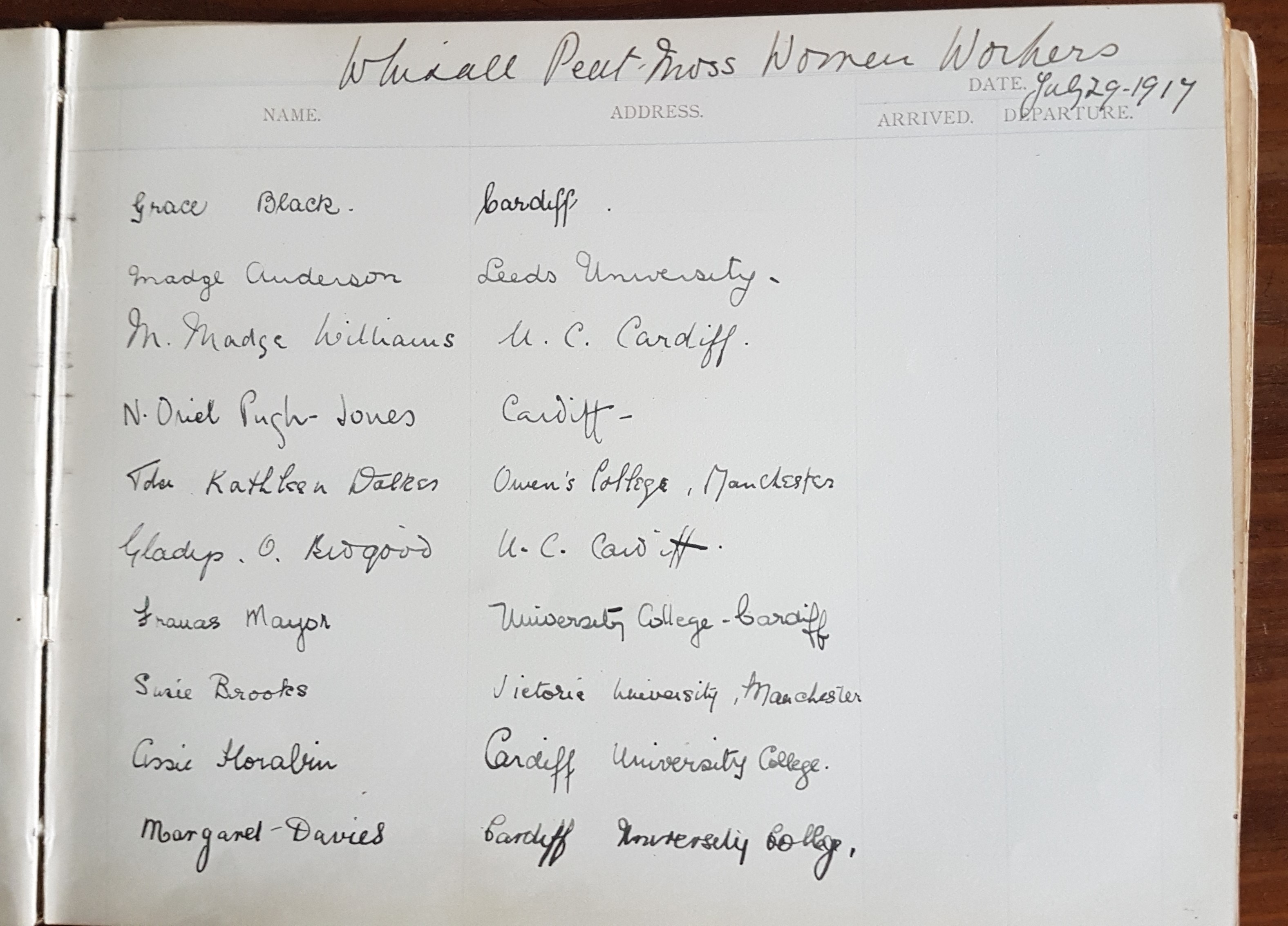


Further Information

If you can provide any further information on Frank Clewes please get in touch by leaving a comment below, using our Contact Form or by calling in to Whitchurch Heritage Centre.


Information provided by Whitchurch Museum and Archives

Thomas Roche

Thomas Roche

Personal Details

Born in Pradesh, India in 1874, the second son of William and Mary Louisa Roche of Mount View, Alkington Road, Whitchurch.

Husband of Dorothy (nee Hatton) Roche, of Exeter, Devon and father of Thomas William.

Thomas was a Farmer in South Africa. In March 1916 he returned to England and joined the Army, and was made a temporary Captain; he was awarded the Military Cross.

After leaving the Army he was returning back to South Africa with his family; unfortunately he was taken ill and subsequently died.

Military Details

Regiment : 2nd Battalion Royal Munster Fusiliers
Rank : Captain
Service Number :

Died of Illness; At Sea 26th September 1919 Age 45

Medals and Awards
Thomas was awarded the Military Cross and the Campaign Medals (British War Medal and Allied Victory Medal). His Military Cross citation read "T/Lt Thomas Roche, 2nd Battalion Royal Munster Fusiliers: For conspicuous gallantry and good work during operations south-east of Le Cateau on 18/19th October 1918. He was in command of an ammunition convoy, and under heavy fire personally saw that the supply was kept at the right spot. It was due to his skill and gallantry that his battalion was well supplied with ammunition and rations"

Military Cross


Military_Cross

The Military Cross is the third-level military decoration awarded to officers and (since 1993) other ranks of the British Armed Forces, and used to be awarded to officers of other Commonwealth countries.
The Military Cross is granted in recognition of "an act or acts of exemplary gallantry during active operations against the enemy on land to all members, of any rank in Our Armed Forces". In 1979, the Queen approved a proposal that a number of awards, including the Military Cross, could be awarded posthumously.

Click on the tag below to see details of each recipient.


Campaign Medals


Great War History Hub Whitchurch Shropshire Medals Front Image

The British War Medal (also known as 'Squeak') was a silver or bronze medal awarded to officers and men of the British and Imperial Forces who either entered a theatre of war or entered service overseas between 5th August 1914 and 11th November 1918 inclusive. This was later extended to services in Russia, Siberia and some other areas in 1919 and 1920. Approximately 6.5 million British War Medals were issued. Approximately 6.4 million of these were the silver versions of this medal. Around 110,000 of a bronze version were issued mainly to Chinese, Maltese and Indian Labour Corps. The front (obv or obverse) of the medal depicts the head of George V. The recipient's service number, rank, name and unit was impressed on the rim.
The Allied Victory Medal (also known as 'Wilfred') was issued by each of the allies. It was decided that each of the allies should each issue their own bronze victory medal with a similar design, similar equivalent wording and identical ribbon. The British medal was designed by W. McMillan. The front depicts a winged classical figure representing victory. Approximately 5.7 million victory medals were issued. Interestingly, eligibility for this medal was more restrictive and not everyone who received the British War Medal ('Squeak') also received the Victory Medal ('Wilfred'). However, in general, all recipients of 'Wilfred' also received 'Squeak' and all recipients of The 1914 Star or The 1914/1915 Star (also known as 'Pip') also received both 'Squeak' and 'Wilfred'. The recipient's service number, rank, name and unit was impressed on the rim.


Further Information

Will of Thomas Roche
Roche, Thomas of Johannesburg Transvaal South Africa died 26 September 1919 at sea Probate London 4 March to Dorothy Roche widow. Effects £1133 15s.

Taken from Forces War Records


If you can provide any further information on Thomas Roche please get in touch by leaving a comment below, using our Contact Form or by calling in to Whitchurch Heritage Centre.


Information provided by Terry Evanson Whitchurch, Shropshire and Whitchurch Museum and Archives

George Boycott

George Boycott

Personal Details

Born in Malpas, Cheshire on 14th November 1898 (baptised 1st January 1899), the fourth son of William and Elizabeth Boycott of 180 Broomfield Road, Coventry; formerly of Old Hall Street, Malpas, Cheshire.

George showed his occupation as general labourer when enlisting in 1917.

He accidentally drowned whilst bathing in the Pembroke docks.

His older brother, Thomas, also lost his life in the Great War.

Military Details

Regiment : 13th Battalion Welsh Regiment
Rank : Private
Service Number : 61135

Died (accident); United Kingdom 21 September 1919 Aged 20

Medals and Awards
George was awarded the Campaign Medals (British War Medal and Allied Victory Medal).

Campaign Medals


Great War History Hub Whitchurch Shropshire Medals Front Image

The British War Medal (also known as 'Squeak') was a silver or bronze medal awarded to officers and men of the British and Imperial Forces who either entered a theatre of war or entered service overseas between 5th August 1914 and 11th November 1918 inclusive. This was later extended to services in Russia, Siberia and some other areas in 1919 and 1920. Approximately 6.5 million British War Medals were issued. Approximately 6.4 million of these were the silver versions of this medal. Around 110,000 of a bronze version were issued mainly to Chinese, Maltese and Indian Labour Corps. The front (obv or obverse) of the medal depicts the head of George V. The recipient's service number, rank, name and unit was impressed on the rim.
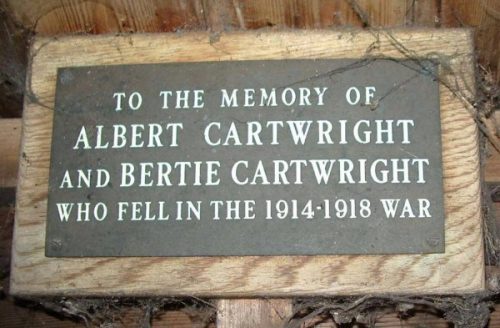
The Allied Victory Medal (also known as 'Wilfred') was issued by each of the allies. It was decided that each of the allies should each issue their own bronze victory medal with a similar design, similar equivalent wording and identical ribbon. The British medal was designed by W. McMillan. The front depicts a winged classical figure representing victory. Approximately 5.7 million victory medals were issued. Interestingly, eligibility for this medal was more restrictive and not everyone who received the British War Medal ('Squeak') also received the Victory Medal ('Wilfred'). However, in general, all recipients of 'Wilfred' also received 'Squeak' and all recipients of The 1914 Star or The 1914/1915 Star (also known as 'Pip') also received both 'Squeak' and 'Wilfred'. The recipient's service number, rank, name and unit was impressed on the rim.


Further Information

If you can provide any further information on George Boycott please get in touch by leaving a comment below, using our Contact Form or by calling in to Whitchurch Heritage Centre.


Information provided by Whitchurch Museum and Archives

Whitchurch Herald 16th August 1919

Report in the Whitchurch Herald 16th August 1919 relating to Arthur Hughes

"Official news has been received by Mr and Mrs Hughes that their son Arthur, of the King's Royal Rifles, reported missing since March 21st 1918, now reported killed in action, 21st March 1918. A letter of sympathy was received from the King"

Whitchurch Herald 16th August 1919

Frederic Wolley Dod

Frederic Wolley Dod

Personal Details

Frederic Hova Wolley Dod was born in Eton, Buckinghamshire in 1872 (baptised 25th March 1872), the fourth son of the Rev. Charles and Mrs Frances Lucy Wolley Dod of Edge, Malpas, Cheshire.

Frederic emigrated to Canada in 1893, taking his substantial collection of butterflies and moths with him, and was recognised there as an expert in the field of lepidoptera (butterflies and moths). He was well published and had various specimens named after him. He joined up in 1917 and was transferred to a Labour Company in Macedonia where he hoped to continue his passion for lepidoptera.

Frederic is also commemorated on the memorial at The Abbey Church of St Mary, Nuneaton.

Military Details

Regiment : 1st Garrison Battalion King’s Own Yorkshire Light Infantry
Rank : Lieutenant
Service Number :

Died of illness (typhoid); Macedonia (now Turkey) 24 July 1919 Aged 47

Medals and Awards
Frederic was awarded the Campaign Medals (British War Medal and Allied Victory Medal).

Campaign Medals


Great War History Hub Whitchurch Shropshire Medals Front Image

The British War Medal (also known as 'Squeak') was a silver or bronze medal awarded to officers and men of the British and Imperial Forces who either entered a theatre of war or entered service overseas between 5th August 1914 and 11th November 1918 inclusive. This was later extended to services in Russia, Siberia and some other areas in 1919 and 1920. Approximately 6.5 million British War Medals were issued. Approximately 6.4 million of these were the silver versions of this medal. Around 110,000 of a bronze version were issued mainly to Chinese, Maltese and Indian Labour Corps. The front (obv or obverse) of the medal depicts the head of George V. The recipient's service number, rank, name and unit was impressed on the rim.
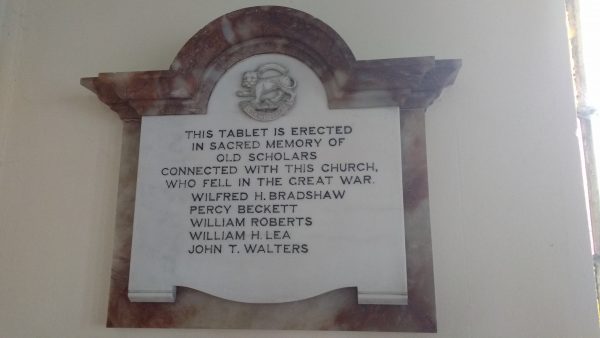
The Allied Victory Medal (also known as 'Wilfred') was issued by each of the allies. It was decided that each of the allies should each issue their own bronze victory medal with a similar design, similar equivalent wording and identical ribbon. The British medal was designed by W. McMillan. The front depicts a winged classical figure representing victory. Approximately 5.7 million victory medals were issued. Interestingly, eligibility for this medal was more restrictive and not everyone who received the British War Medal ('Squeak') also received the Victory Medal ('Wilfred'). However, in general, all recipients of 'Wilfred' also received 'Squeak' and all recipients of The 1914 Star or The 1914/1915 Star (also known as 'Pip') also received both 'Squeak' and 'Wilfred'. The recipient's service number, rank, name and unit was impressed on the rim.


Further Information

Will of Frederic Hova Wolley Dod
DOD Frederic Hova Wolley of Midnapore Alberta Canada second-lieutenant Yorkshire Light Infantry died 24 July 1919 at the stationary hospital Chanak army of the Black Sea Administration (with Will limited) London 2 April to Francis Richard Clarke and Gordon Lloyd Trevor Kenyon solicitors attorneys of Herbert Smith and Norman Williams. Effects £951 1s. 1d.

Taken from Forces War Records


More information about Frederic Hova Wolley Dod is available from Alberta Lepidopterists' Guild.

If you can provide any further information on Frederic Hova Wolley Dod please get in touch by leaving a comment below, using our Contact Form or by calling in to Whitchurch Heritage Centre.


Information provided by Whitchurch Museum and Archives

The Brecon County Times 17 April 1919

Report in The Brecon County Times 17 April 1919 regarding the death of Joseph Groom

“The death took place at Welshpool on the 5th inst., under peculiarly sad circumstances of Regimental-Sergt.-Major Joseph Groom, of the 1st Battalion Shropshire Light Infantry. Only 23 years of age when he died, Sergt.-Major Groom had a wonderful war record, yet a record such as one would expect of a soldier who was known in his regiment for his dash and bravery and was esteemed accordingly by all ranks. When the war broke out the deceased, then a sergeant, was stationed with his battalion in Tipperary. He went to France with his unit as part of the original British Expeditionary Force, and was there till the beginning of 1917. During those fateful two and a half years he was twice wounded and won the Distinguished Conduct Medal; and also helped to prove the adaptability of the British soldier by ranking as a first class machine-gunner. Transferred to home service as a staff-sergeant, he was not long content, and volunteered to serve in German East Africa, where he was sent in April, 1917. There he was once more wounded, and during twelve months’ hard service was advanced to the rank of company-sergt.-major. He came home again in April, 1918, on two months’ leave; but by June was on his way to West Africa. Whilst there he was promoted regimental-sergt.-major, after nine years service with the Colours – (he joined as a boy) – and once more returned home at the end of February last.

In March, 1917, he married at Pembroke, Miss Edith Mabel Delonra, of Brecon. He and his wife were spending part of a holiday at Welshpool, where on the 5th inst. he was suddenly taken ill. He died on the 7th inst., of blackwater fever, contracted in West Africa.

On Wednesday, the 9th inst., after a short service at the house, the body was taken with military honours to Welshpool station for conveyance to Brecon. A large number of local service men home on leave marched to the station, and the greatest possible respect was shown by the inhabitants.

The funeral took place at Brecon on Friday afternoon, with full military honours. Troops from the Brecon Depot attended under the command of Lieut. Parry, and the band of the 2nd Battalion South Wales Borderers (conducted by Mr. C. Fenner, L.R.A.M.) played Chopin’s ‘Marche Funebre’ and the ‘Dead March’ from ‘Saul’ on the way to the cemetery. The Rev. H. J. Church Jones took the burial service, and at the close the usual volleys were fired over the grave and the ‘Last Post’ was sounded to band accompaniment.

The chief mourners were the widow; Mr and Mrs Parker, Malpas, Cheshire, brother-in-law and sister; Mrs Mytton, Welshpool, sister; Mrs Delonra, Brecon, mother-in-law; Mrs Morris, Brecon, sister-in-law; Pte W. and Mrs Thomas, brother-in-law and sister; Mrs Jack Williams, Brecon, sister-in-law; Master Harry Delonra, brother-in-law; Mrs Power, Brecon and Mr W. Power, aunt and cousin; Pte J. Morris, Pte Prosser, and Mr and Mrs Cliff, Brecon.

Wreaths were sent by the following – The widow, Mr and Mrs Parker, Mrs Mytton, Mrs Delonra and family, the Sergeants’ mess at the Brecon Depot South Wales Borderers, Mrs Power and son, Mrs Jack Williams, Mrs Morris, Mr and Mrs Cliff, Pte W. and Mrs Thomas, Miss Gladys Delonra, Miss Dora Hargest, Master Steve Thomas, master Jim Morris and Master Dorie O’Shea.”

The Brecon County Times 17 April 1919

Thomas Jones

Thomas Jones

Personal Details

Thomas Ivan Jones was born in Rensselaer, New York, United States of America on 6th October 1890, the son of Thomas and Minnie H Jones who were living in Shrewsbury in 1901.

Husband to Keziah Jones (nee Ince) (married in 1915 in London) and father of Edith K (baptised in St Oswald’s Church, Malpas on 22 December 1918) and George I (baptised in St Oswald’s Church, Malpas on 6 November 1916).

Thomas enlisted in the Royal Navy on 6 October 1908 and served on many ships. He was taken ill on the Hecla and died from pneumonia in the Royal Naval Hospital Edinburgh.

His wife was born in Malpas, Cheshire and baptised in St Oswald’s Church; their two children’s births were registered in Whitchurch, Shropshire. This is the link to the Malpas memorial, and we can only assume that Keziah continued to live in Malpas after they married, possibly with her parents, and that Thomas continued to serve in the Navy.

Military Details

Regiment : HM Torpedo Boat No. 36, Hecla, Royal Navy
Rank : Able Seaman
Service Number : 237257 (CH)

Died of illness; United Kingdom 13 April 1919 Aged 28

Medals and Awards
Thomas was awarded the Campaign Medals (1914/15 Star, British War Medal and Allied Victory Medal).

Campaign Medals


Great War History Hub Whitchurch Shropshire Medals Front Image

The 1914 Star (also known as 'Pip') was authorised under Special Army Order no. 350 in November 1917 and by an Admiralty Fleet Order in 1918, for award to officers and men of the British and Indian Expeditionary Forces who served in France or Belgium between 5 August and midnight of 22–23 November 1914. The former date is the day after Britain's declaration of war against the Central Powers, and the closing date marks the end of the First Battle of Ypres.

The 1914–15 Star (also known as 'Pip') was instituted in December 1918 and was awarded to officers and men of British and Imperial forces who served against the Central European Powers in any theatre of the Great War between 5 August 1914 and 31 December 1915. The period of eligibility was prior to the introduction of the Military Service Act 1916, which instituted conscription in Britain.

The British War Medal (also known as 'Squeak') was a silver or bronze medal awarded to officers and men of the British and Imperial Forces who either entered a theatre of war or entered service overseas between 5th August 1914 and 11th November 1918 inclusive. This was later extended to services in Russia, Siberia and some other areas in 1919 and 1920. Approximately 6.5 million British War Medals were issued. Approximately 6.4 million of these were the silver versions of this medal. Around 110,000 of a bronze version were issued mainly to Chinese, Maltese and Indian Labour Corps. The front (obv or obverse) of the medal depicts the head of George V. The recipient's service number, rank, name and unit was impressed on the rim.

The Allied Victory Medal (also known as 'Wilfred') was issued by each of the allies. It was decided that each of the allies should each issue their own bronze victory medal with a similar design, similar equivalent wording and identical ribbon. The British medal was designed by W. McMillan. The front depicts a winged classical figure representing victory. Approximately 5.7 million victory medals were issued. Interestingly, eligibility for this medal was more restrictive and not everyone who received the British War Medal ('Squeak') also received the Victory Medal ('Wilfred'). However, in general, all recipients of 'Wilfred' also received 'Squeak' and all recipients of The 1914 Star or The 1914/1915 Star (also known as 'Pip') also received both 'Squeak' and 'Wilfred'. The recipient's service number, rank, name and unit was impressed on the rim.
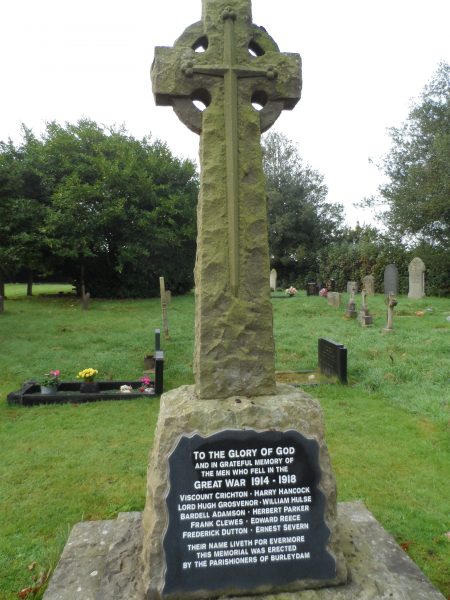


Further Information

If you can provide any further information on Thomas Ivan Jones please get in touch by leaving a comment below, using our Contact Form or by calling in to Whitchurch Heritage Centre.


Information provided by Whitchurch Museum and Archives

Joseph Groom

Joseph Groom

Personal Details

Born in Norbury, Cheshire in 1896, the husband of Edith Mabel Groom (nee De Loura) (married in 1917) of 56 The Street, Brecon, Powys, Wales.

Joseph went to France in November 1914 as part of the British Expeditionary Force, serving until 1917. He was awarded the Distinguished Conduct Medal in 1915. In 1917 he volunteered to serve in German East Africa and was sent to East Africa in April 1917, having married the month before. In June 1918 he was posted to West Africa and was on holiday in Welshpool, Powys, Wales with his wife when he was taken ill with blackwater fever, contracted in West Africa, and died at the Buck Inn. He was buried in the cemetery in Brecon, his then home town, with full military honours.

Military Details

Regiment : Nigerian Regiment, West African Frontier Force, formerly 3rd Battalion King’s Shropshire Light Infantry
Rank : Colour Sergeant
Service Number : 9865 (KSLI number)

Died of illness; United Kingdom 7 April 1919 Aged 23

Medals and Awards
Joseph was awarded the Distinguished Conduct Medal and Campaign Medals (1914/15 Star, British War Medal and Allied Victory Medal).

His DCM citation read: "For conspicuous gallantry on the 9th August 1915, during the attack on the Hooge trenches, when he was ordered to reinforce the captured trenches with a machine gun. In the advance he came under heavy shell fire, the gun was damaged and several of the gun team wounded. Although wounded himself, he bound up his comrades' wounds, returned to headquarters and reported, and successfully took another gun and team to the firing line."

Distinguished Conduct Medal


Distinguished conduct medal

The following Whitchurch men were recipients of the Distinguished Conduct Medal :

43987 2nd Cpl. G. G. Wyatt, 16th Div. Sig. Coy., Royal Engineers
Whitchurch, Shropshire – 31 December 1918

11851 Pte. G. M. Sergeant, 6th Bn., King’s Shropshire Light Infantry
Whitchurch, Shropshire – 30 May 1919

67045 Bombardier George Hopwood, 33rd Brigade, Royal Field Artillery
Whitchurch, Shropshire – 3 August 1915

Bombardier J Groom

Sergeant G H Wilson


Campaign Medals


Great War History Hub Whitchurch Shropshire Medals Front Image

The 1914 Star (also known as 'Pip') was authorised under Special Army Order no. 350 in November 1917 and by an Admiralty Fleet Order in 1918, for award to officers and men of the British and Indian Expeditionary Forces who served in France or Belgium between 5 August and midnight of 22–23 November 1914. The former date is the day after Britain's declaration of war against the Central Powers, and the closing date marks the end of the First Battle of Ypres.

The 1914–15 Star (also known as 'Pip') was instituted in December 1918 and was awarded to officers and men of British and Imperial forces who served against the Central European Powers in any theatre of the Great War between 5 August 1914 and 31 December 1915. The period of eligibility was prior to the introduction of the Military Service Act 1916, which instituted conscription in Britain.

The British War Medal (also known as 'Squeak') was a silver or bronze medal awarded to officers and men of the British and Imperial Forces who either entered a theatre of war or entered service overseas between 5th August 1914 and 11th November 1918 inclusive. This was later extended to services in Russia, Siberia and some other areas in 1919 and 1920. Approximately 6.5 million British War Medals were issued. Approximately 6.4 million of these were the silver versions of this medal. Around 110,000 of a bronze version were issued mainly to Chinese, Maltese and Indian Labour Corps. The front (obv or obverse) of the medal depicts the head of George V. The recipient's service number, rank, name and unit was impressed on the rim.
The Allied Victory Medal (also known as 'Wilfred') was issued by each of the allies. It was decided that each of the allies should each issue their own bronze victory medal with a similar design, similar equivalent wording and identical ribbon. The British medal was designed by W. McMillan. The front depicts a winged classical figure representing victory. Approximately 5.7 million victory medals were issued. Interestingly, eligibility for this medal was more restrictive and not everyone who received the British War Medal ('Squeak') also received the Victory Medal ('Wilfred'). However, in general, all recipients of 'Wilfred' also received 'Squeak' and all recipients of The 1914 Star or The 1914/1915 Star (also known as 'Pip') also received both 'Squeak' and 'Wilfred'. The recipient's service number, rank, name and unit was impressed on the rim.


Further Information

The Brecon County Times 17 April 1919


Report in The Brecon County Times 17 April 1919 regarding the death of Joseph Groom

“The death took place at Welshpool on the 5th inst., under peculiarly sad circumstances of Regimental-Sergt.-Major Joseph Groom, of the 1st Battalion Shropshire Light Infantry. Only 23 years of age when he died, Sergt.-Major Groom had a wonderful war record, yet a record such as one would expect of a soldier who was known in his regiment for his dash and bravery and was esteemed accordingly by all ranks. When the war broke out the deceased, then a sergeant, was stationed with his battalion in Tipperary. He went to France with his unit as part of the original British Expeditionary Force, and was there till the beginning of 1917. During those fateful two and a half years he was twice wounded and won the Distinguished Conduct Medal; and also helped to prove the adaptability of the British soldier by ranking as a first class machine-gunner. Transferred to home service as a staff-sergeant, he was not long content, and volunteered to serve in German East Africa, where he was sent in April, 1917. There he was once more wounded, and during twelve months’ hard service was advanced to the rank of company-sergt.-major. He came home again in April, 1918, on two months’ leave; but by June was on his way to West Africa. Whilst there he was promoted regimental-sergt.-major, after nine years service with the Colours – (he joined as a boy) – and once more returned home at the end of February last.

In March, 1917, he married at Pembroke, Miss Edith Mabel Delonra, of Brecon. He and his wife were spending part of a holiday at Welshpool, where on the 5th inst. he was suddenly taken ill. He died on the 7th inst., of blackwater fever, contracted in West Africa.

On Wednesday, the 9th inst., after a short service at the house, the body was taken with military honours to Welshpool station for conveyance to Brecon. A large number of local service men home on leave marched to the station, and the greatest possible respect was shown by the inhabitants.

The funeral took place at Brecon on Friday afternoon, with full military honours. Troops from the Brecon Depot attended under the command of Lieut. Parry, and the band of the 2nd Battalion South Wales Borderers (conducted by Mr. C. Fenner, L.R.A.M.) played Chopin’s ‘Marche Funebre’ and the ‘Dead March’ from ‘Saul’ on the way to the cemetery. The Rev. H. J. Church Jones took the burial service, and at the close the usual volleys were fired over the grave and the ‘Last Post’ was sounded to band accompaniment.

The chief mourners were the widow; Mr and Mrs Parker, Malpas, Cheshire, brother-in-law and sister; Mrs Mytton, Welshpool, sister; Mrs Delonra, Brecon, mother-in-law; Mrs Morris, Brecon, sister-in-law; Pte W. and Mrs Thomas, brother-in-law and sister; Mrs Jack Williams, Brecon, sister-in-law; Master Harry Delonra, brother-in-law; Mrs Power, Brecon and Mr W. Power, aunt and cousin; Pte J. Morris, Pte Prosser, and Mr and Mrs Cliff, Brecon.

Wreaths were sent by the following – The widow, Mr and Mrs Parker, Mrs Mytton, Mrs Delonra and family, the Sergeants’ mess at the Brecon Depot South Wales Borderers, Mrs Power and son, Mrs Jack Williams, Mrs Morris, Mr and Mrs Cliff, Pte W. and Mrs Thomas, Miss Gladys Delonra, Miss Dora Hargest, Master Steve Thomas, master Jim Morris and Master Dorie O’Shea.”

The Brecon County Times 17 April 1919


More information about Joseph Groom is available from Brecon Remembers.

If you can provide any further information on Joseph Groom please get in touch by leaving a comment below, using our Contact Form or by calling in to Whitchurch Heritage Centre.


Information provided by Whitchurch Museum and Archives

Sheffield Independent 27 March 1919

Report in the Sheffield Independent 27 March 1919 finally confirming Lord Grosvenor's death

"OCTOBER '14 TO MARCH '19

Lady Hugh Grosvenor whose husband's death is now officially concluded to have taken place in October 1914, when he was listed as 'missing' along with her brother, Lord Crichton, had long ago abandoned all hope of his being alive. In October 1917, as nothing had been heard of him, Lady Hugh after three years of anxiety, was reluctantly compelled to believe he was no more. She then resigned his prospective candidature for Macclesfield. He was the Duke of Westminster's step-uncle."

Sheffield Independent 27 March 1919

John Hassall

John Henry Hassall

Personal Details

John Henry Hassall, born in Marbury, Cheshire in 1880, the second son of George and Harriett Hassall.

Husband of Doris Ethel (nee Grist) Hassall of Birkenhead, Cheshire, and father of Kathleen Mary.

John worked in a draper's shop in Birkenhead, before joining the Army.

Military Details

Regiment : Royal Army Service Corps
Rank : Private
Service Number : M415516

Died of Illness; United Kingdom 21st March 1919 Age 40

Medals and Awards
Not Known

Further Information

Will of John Henry Hassall
Hassall, John Henry of 10 Kingluke-road Wallasey Cheshire private Royal Army Service Corps died 21 March 1919 at Stepping Hill Military Hospital Stockport Cheshire Administration (with Will) Chester 2 June to Doris Ethel Hassall widow. Effects £316 11s. 6d.

Taken from Forces War Records


If you can provide any further information on John Henry Hassall please get in touch by leaving a comment below, using our Contact Form or by calling in to Whitchurch Heritage Centre.


Information provided by Terry Evanson Whitchurch, Shropshire and Whitchurch Museum and Archives

Alfred Ashley

Alfred Ashley

Personal Details

Born in Malpas, Cheshire in 1891 (christened 30th December 1891), the son of Mrs Sarah Ashley.

Husband of Alice Mullock, formerly Ashley (nee Edwards) (married 26th January 1915) of Bickerton, Malpas, Cheshire and father to Alice Helena (baptised 28 November 1915 at St Oswald’s Church, Malpas).

The 1911 Census shows Alfred as an apprentice joiner.

Alfred died in Chester; he had been severely wounded in Palestine, treated at the Bollings VAD Hospital in Malpas and transferred to Chester where he died of pneumonia. He was buried in Malpas Cemetery on 10 march 1919.

Military Details

Regiment : Depot Royal Welsh Fusiliers
Rank : Private
Service Number : 202832

Died; UK 6 March 1919 Aged 27

Medals and Awards
Alfred was awarded the Campaign Medals (British War Medal and Allied Victory Medal).

Campaign Medals


Great War History Hub Whitchurch Shropshire Medals Front Image

The British War Medal (also known as 'Squeak') was a silver or bronze medal awarded to officers and men of the British and Imperial Forces who either entered a theatre of war or entered service overseas between 5th August 1914 and 11th November 1918 inclusive. This was later extended to services in Russia, Siberia and some other areas in 1919 and 1920. Approximately 6.5 million British War Medals were issued. Approximately 6.4 million of these were the silver versions of this medal. Around 110,000 of a bronze version were issued mainly to Chinese, Maltese and Indian Labour Corps. The front (obv or obverse) of the medal depicts the head of George V. The recipient's service number, rank, name and unit was impressed on the rim.

The Allied Victory Medal (also known as 'Wilfred') was issued by each of the allies. It was decided that each of the allies should each issue their own bronze victory medal with a similar design, similar equivalent wording and identical ribbon. The British medal was designed by W. McMillan. The front depicts a winged classical figure representing victory. Approximately 5.7 million victory medals were issued. Interestingly, eligibility for this medal was more restrictive and not everyone who received the British War Medal ('Squeak') also received the Victory Medal ('Wilfred'). However, in general, all recipients of 'Wilfred' also received 'Squeak' and all recipients of The 1914 Star or The 1914/1915 Star (also known as 'Pip') also received both 'Squeak' and 'Wilfred'. The recipient's service number, rank, name and unit was impressed on the rim.


Further Information

If you can provide any further information on Alfred Ashley please get in touch by leaving a comment below, using our Contact Form or by calling in to Whitchurch Heritage Centre.


Information provided by Whitchurch Museum and Archives

Alfred Wragg

Alfred Wragg

Personal Details

Born in Malpas, Cheshire in 1883, the second son of William Wragg and the late Sarah Wragg of Church Street, Malpas, Cheshire.

Husband to Sarah Ann Wragg (nee Walker) (married 24th December 1906) of 4 Arthur Street, Crewe, Cheshire and father to Thomas Alfred, Reginald and Leonard.

Alfred died from broncho-pneumonia resulting from influenza.

Military Details

Regiment : 3rd Balloon Wing Royal Air Force
Rank : Aircraftman 2nd Class
Service Number : 67787

Died of illness; France 3 March 1919 Aged 36

Medals and Awards
Alfred was awarded the Campaign Medals (British War Medal and Allied Victory Medal).

Campaign Medals


Great War History Hub Whitchurch Shropshire Medals Front Image

The British War Medal (also known as 'Squeak') was a silver or bronze medal awarded to officers and men of the British and Imperial Forces who either entered a theatre of war or entered service overseas between 5th August 1914 and 11th November 1918 inclusive. This was later extended to services in Russia, Siberia and some other areas in 1919 and 1920. Approximately 6.5 million British War Medals were issued. Approximately 6.4 million of these were the silver versions of this medal. Around 110,000 of a bronze version were issued mainly to Chinese, Maltese and Indian Labour Corps. The front (obv or obverse) of the medal depicts the head of George V. The recipient's service number, rank, name and unit was impressed on the rim.
The Allied Victory Medal (also known as 'Wilfred') was issued by each of the allies. It was decided that each of the allies should each issue their own bronze victory medal with a similar design, similar equivalent wording and identical ribbon. The British medal was designed by W. McMillan. The front depicts a winged classical figure representing victory. Approximately 5.7 million victory medals were issued. Interestingly, eligibility for this medal was more restrictive and not everyone who received the British War Medal ('Squeak') also received the Victory Medal ('Wilfred'). However, in general, all recipients of 'Wilfred' also received 'Squeak' and all recipients of The 1914 Star or The 1914/1915 Star (also known as 'Pip') also received both 'Squeak' and 'Wilfred'. The recipient's service number, rank, name and unit was impressed on the rim.
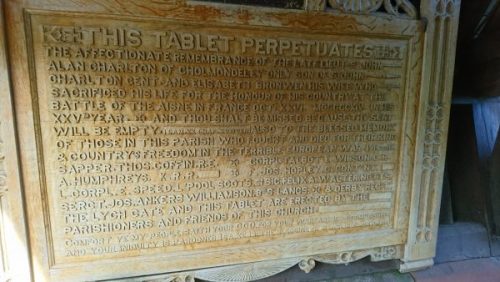


Further Information

If you can provide any further information on Alfred Wragg please get in touch by leaving a comment below, using our Contact Form or by calling in to Whitchurch Heritage Centre.
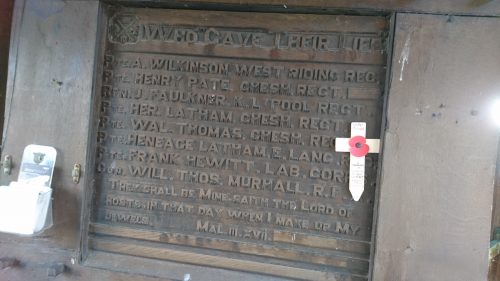

Information provided by Whitchurch Museum and Archives

Tom Vaughan

John William Frost

Personal Details

Born in Wem, Shropshire in 1896, the fifth son of Charles William and Sarah Vaughan of Prees, Lower Heath, Whitchurch, Shropshire.

The 1911 census shows him as a painter.

Military Details

Regiment : Royal Field Artillery
Rank : Corporal
Service Number : 1286

Killed in action; France 25 February 1919 Aged 23

Medals and Awards
Tom was awarded the Campaign Medals (British War Medal and Allied Victory Medal)

Campaign Medals


Great War History Hub Whitchurch Shropshire Medals Front Image

The British War Medal (also known as 'Squeak') was a silver or bronze medal awarded to officers and men of the British and Imperial Forces who either entered a theatre of war or entered service overseas between 5th August 1914 and 11th November 1918 inclusive. This was later extended to services in Russia, Siberia and some other areas in 1919 and 1920. Approximately 6.5 million British War Medals were issued. Approximately 6.4 million of these were the silver versions of this medal. Around 110,000 of a bronze version were issued mainly to Chinese, Maltese and Indian Labour Corps. The front (obv or obverse) of the medal depicts the head of George V. The recipient's service number, rank, name and unit was impressed on the rim.

The Allied Victory Medal (also known as 'Wilfred') was issued by each of the allies. It was decided that each of the allies should each issue their own bronze victory medal with a similar design, similar equivalent wording and identical ribbon. The British medal was designed by W. McMillan. The front depicts a winged classical figure representing victory. Approximately 5.7 million victory medals were issued. Interestingly, eligibility for this medal was more restrictive and not everyone who received the British War Medal ('Squeak') also received the Victory Medal ('Wilfred'). However, in general, all recipients of 'Wilfred' also received 'Squeak' and all recipients of The 1914 Star or The 1914/1915 Star (also known as 'Pip') also received both 'Squeak' and 'Wilfred'. The recipient's service number, rank, name and unit was impressed on the rim.


Further Information

If you can provide any further information on Tom Vaughan please get in touch by leaving a comment below, using our Contact Form or by calling in to Whitchurch Heritage Centre.


Information provided by Whitchurch Museum and Archives

Whitchurch Herald 15th February 1919

Report in the Whitchurch Herald 15th February 1919 relating to the death of Frank Challenor

"Mr W Challenor, 28 Claypit Street has received the sad news of the death of his son Private Frank Challenor, 1/4th Kings Shropshire Light Infantry who was a prisoner of war. His death occurred on the 30th August 1918 in a War Hospital at Remushill, after being a prisoner for 9 months"

Whitchurch Herald 15th February 1919

Whitchurch Herald 15th February 1919

Report in the Whitchurch Herald 15th February 1919 of a letter received by Mrs. Walford regarding the death of her son, Edward Walford

"Dear Mrs Walford I deeply regret to tell you your son passed away this morning at 03.45 on the 7th February 1919. He was in a very, very, poor condition when he came to us
B Edmund,
No 36 Casualty Clearing Station, BEF"

Whitchurch Herald 15th February 1919

Whitchurch Herald 15th February 1919

Report in the Whitchurch Herald 15th February 1919 relating to the death of Frank Challenor

"Mr W Challenor, 28 Claypit Street has received the sad news of the death of his son Private Frank Challenor, 1/4th Kings Shropshire Light Infantry who was a prisoner of war. His death occurred on the 30th August 1918 in a War Hospital at Remushill, after being a prisoner for 9 months"

Whitchurch Herald 15th February 1919

Whitchurch Herald 8th February 1919

Report in the Whitchurch Herald 8th February 1919 regarding the death of James Henry Simon

"Many readers will remember James Henry Simon, who worked at the Showrooms in Whitchurch before the War. He joined the Kings Shropshire Light Infantry in the first weeks of the war, and was taken prisoner in the 1918 March offensive. His uncle, Mr G Simon, of Willaston, Caverhall, has received official word that he died at Stendal, in Germany on or about his 21st birthday last June, the cause of his death was stated as Tuberculosis In the earlier part of the year he was at home on leave and looking as fit as ever, it says something for the treatment he must have received afterwards."

Whitchurch Herald 8th February 1919

Whitchurch Herald 8th February 1919

Report in the Whitchurch Herald 8th February 1919 relating to the death of Geoffrey Frank Willett

"Mrs Willet has received the sad news that her husband, Pte; Geoffrey Willet 19760, 7th Btn Kings Shropshire Light Infantry “B” Company, has died from Pneumonia at Laz Denain on September 12th 1918. He was captured during the action at St Quentine, France. Mrs Willet would be grateful if any ex prisoner could give any information concerning her husband"

Whitchurch Herald 8th February 1919

Edward Walford

Edward Walford

Personal Details

Born in Whitchurch in 1890, the third son of George and Harriet Walford of 28 Watergate Street, Whitchurch.

Edward worked as a coach builder before joining the Army.

Military Details

Regiment : 11th (Service) Battalion Cheshire Regiment, formerly Hereford Regiment No 239302

Rank : Private
Service Number : 260176

Died of Illness; Germany (Former Prisoner of War) 7th February 1919 Age 29

Medals and Awards
Edward was awarded the Campaign Medals (British War Medal and Allied Victory Medal)

Campaign Medals


Great War History Hub Whitchurch Shropshire Medals Front Image

The British War Medal (also known as 'Squeak') was a silver or bronze medal awarded to officers and men of the British and Imperial Forces who either entered a theatre of war or entered service overseas between 5th August 1914 and 11th November 1918 inclusive. This was later extended to services in Russia, Siberia and some other areas in 1919 and 1920. Approximately 6.5 million British War Medals were issued. Approximately 6.4 million of these were the silver versions of this medal. Around 110,000 of a bronze version were issued mainly to Chinese, Maltese and Indian Labour Corps. The front (obv or obverse) of the medal depicts the head of George V. The recipient's service number, rank, name and unit was impressed on the rim.

The Allied Victory Medal (also known as 'Wilfred') was issued by each of the allies. It was decided that each of the allies should each issue their own bronze victory medal with a similar design, similar equivalent wording and identical ribbon. The British medal was designed by W. McMillan. The front depicts a winged classical figure representing victory. Approximately 5.7 million victory medals were issued. Interestingly, eligibility for this medal was more restrictive and not everyone who received the British War Medal ('Squeak') also received the Victory Medal ('Wilfred'). However, in general, all recipients of 'Wilfred' also received 'Squeak' and all recipients of The 1914 Star or The 1914/1915 Star (also known as 'Pip') also received both 'Squeak' and 'Wilfred'. The recipient's service number, rank, name and unit was impressed on the rim.


Further Information

Whitchurch Herald 1st June 1918


Report in the Whitchurch Herald 1st June 1918 of a post card received by Mr. and Mrs. Walford from their son, Edward Walford

"Mr & Mrs Walford received a post card from their son, Edward, who is a prisoner of war in Germany"

Whitchurch Herald 1st June 1918


Whitchurch Herald 15th February 1919


Report in the Whitchurch Herald 15th February 1919 of a letter received by Mrs. Walford regarding the death of her son, Edward Walford

"Dear Mrs Walford I deeply regret to tell you your son passed away this morning at 03.45 on the 7th February 1919. He was in a very, very, poor condition when he came to us
B Edmund,
No 36 Casualty Clearing Station, BEF"

Whitchurch Herald 15th February 1919


If you can provide any further information on Edward Walford please get in touch by leaving a comment below, using our Contact Form or by calling in to Whitchurch Heritage Centre.


Information provided by Terry Evanson Whitchurch, Shropshire and Whitchurch Museum and Archives

Staffordshire Advertiser 11th January 1919

Report in the Staffordshire Advertiser 11th January 1919 regarding the death of Matthew Kavanagh, titled 'Stafford Soldiers Killed on Salvage Work'

"Mrs. Kavanagh of 49, Rowley Street, Stafford, has received intimation of the death of her husband Lance Corporal Matthew Kavanagh of the 7th East Kent Regiment (the Buffs) who was severely wounded in the thigh on December 17 of last year by the accidental explosion of a German shell whilst engaged in salvage work near Cambrai, in France, and succumbed to his injuries three days later. It appears that several men were killed and others wounded by the same explosion. Corporal Kavanagh's wounds were dressed and he was sent to a casualty clearing station. His condition was critical, and he gradually became weaker and passed peacefully away. Sympathetic letters have been received by Mrs. Kavanagh from Sister A. Duncan, in charge of the hospital, and Lieutenant Greenwood, the officer commanding the company, who wrote:- "It is fearfully sad to think your husband should lose his life during armistice. He died like a man. He was an excellent fellow, and I shall miss him greatly."
Corporal Kavanagh who leaves a widow and three young children, the eldest only eight years old, was a native of Whitchurch, Salop. He had been in the employ of Messrs. Higgins and Son, saddlers, Gaol Road, Stafford, for nine years. He had had two years and seven months' service in the war. He enlisted in the Army Service Corps and worked at his trade for some time. He was then transferred to the A.O.C. and later to the East Kent Regiment. He has a brother, Able Seaman John Kavanagh, who has just been demobilized from the Navy. Mrs. Kavanagh has two brothers and two brothers-in-law serving."

Staffordshire Advertiser 11th January 1919

Whitchurch Herald 11th January 1919

Report in the Whitchurch Herald 11th January 1919 regarding the death of Alfred Evason

"Mrs Evason of 19 Bark Hill, has received the sad news of the death of her husband, Pte, A Evason while a prisoner of war. Pte, Evason was previously to joining the army in business in Whitchurch as a butcher, he was prominently connected to the Primitive Methodist Chapel, as a worker and Preacher. He joined the army in April 1917, being sent to the KSLI in Swansea, and the following October to Grantham for instructions in Machine Gun fighting. He landed in France in February 1918, and was taken prisoner in the German offensive in April, and died the following September in Le-Cateau Hospital."

Report in the Whitchurch Herald 11th January 1919 of a letter received by Mrs. Evason

"Dear Mrs Evason I regret that it is my painful duty to inform you of the death of Pte, A Evason as a prisoner of war, occurring in Le- Cateau Hospital during the month of September last. I very much regret I am unable to give you any more information.
In deepest sympathy yours faithfully
R Jetney, Captain,
Machine Gun Training Centre"

Whitchurch Herald 11th January 1919

Matthew Kavanagh

Matthew Kavanagh

Personal Details

Born in Nantwich, Cheshire in 1885, the eldest son of Patrick and Emma Kavanagh. Husband of Mary (nee Green) Kavanagh, of 49 Rowley Street, Stafford, Staffordshire, and father of Edward, Henry Patrick and Pat.

Matthew had been employed by Higgins & Son as a Saddler before joining the Army.

Military Details

Regiment : 7th (Service) Battalion The Buffs (East Kent Regiment)

Rank : Lance Corporal
Service Number : 35714

Killed accidentally; France (Clearing Munitions) 20th December 1918 Age 33

Medals and Awards
Matthew was awarded the Campaign Medals (British War Medal and Allied Victory Medal)

Campaign Medals


Great War History Hub Whitchurch Shropshire Medals Front Image

The British War Medal (also known as 'Squeak') was a silver or bronze medal awarded to officers and men of the British and Imperial Forces who either entered a theatre of war or entered service overseas between 5th August 1914 and 11th November 1918 inclusive. This was later extended to services in Russia, Siberia and some other areas in 1919 and 1920. Approximately 6.5 million British War Medals were issued. Approximately 6.4 million of these were the silver versions of this medal. Around 110,000 of a bronze version were issued mainly to Chinese, Maltese and Indian Labour Corps. The front (obv or obverse) of the medal depicts the head of George V. The recipient's service number, rank, name and unit was impressed on the rim.

The Allied Victory Medal (also known as 'Wilfred') was issued by each of the allies. It was decided that each of the allies should each issue their own bronze victory medal with a similar design, similar equivalent wording and identical ribbon. The British medal was designed by W. McMillan. The front depicts a winged classical figure representing victory. Approximately 5.7 million victory medals were issued. Interestingly, eligibility for this medal was more restrictive and not everyone who received the British War Medal ('Squeak') also received the Victory Medal ('Wilfred'). However, in general, all recipients of 'Wilfred' also received 'Squeak' and all recipients of The 1914 Star or The 1914/1915 Star (also known as 'Pip') also received both 'Squeak' and 'Wilfred'. The recipient's service number, rank, name and unit was impressed on the rim.


Further Information

Whitchurch Herald 4th January 1919


Report in the Whitchurch Herald 4th January 1919 of a letter received by Mrs. Kavanagh regarding the death of her son, Matthew Kavanagh

"The deepest sympathy is felt with Mrs & Mrs Kavanagh of Wrexham Road, Whitchurch. in the sad news of an accident to their son, Corporal Matthew Kavanagh of the Buffs, which has proved to be fatal to the gallant soldier who died on 20th December 1918, age 33. Corporal Kavanagh previous to the war was in the employment of Mrs Wycherely where he served his apprenticeship. He served in France and was in the last battle of Mons. On December 18th he was engaged with other soldiers in clearing an ammunition dump, when a comrade accidently dropped a bomb which exploded injuring Matthew seriously in the thigh. He was taken to Hospital and died three days later. His home was in Stafford, where he was in business. He leaves a widow, and 3 children"

Whitchurch Herald 4th January 1919


Staffordshire Advertiser 11th January 1919


Report in the Staffordshire Advertiser 11th January 1919 regarding the death of Matthew Kavanagh, titled 'Stafford Soldiers Killed on Salvage Work'

"Mrs. Kavanagh of 49, Rowley Street, Stafford, has received intimation of the death of her husband Lance Corporal Matthew Kavanagh of the 7th East Kent Regiment (the Buffs) who was severely wounded in the thigh on December 17 of last year by the accidental explosion of a German shell whilst engaged in salvage work near Cambrai, in France, and succumbed to his injuries three days later. It appears that several men were killed and others wounded by the same explosion. Corporal Kavanagh's wounds were dressed and he was sent to a casualty clearing station. His condition was critical, and he gradually became weaker and passed peacefully away. Sympathetic letters have been received by Mrs. Kavanagh from Sister A. Duncan, in charge of the hospital, and Lieutenant Greenwood, the officer commanding the company, who wrote:- "It is fearfully sad to think your husband should lose his life during armistice. He died like a man. He was an excellent fellow, and I shall miss him greatly."
Corporal Kavanagh who leaves a widow and three young children, the eldest only eight years old, was a native of Whitchurch, Salop. He had been in the employ of Messrs. Higgins and Son, saddlers, Gaol Road, Stafford, for nine years. He had had two years and seven months' service in the war. He enlisted in the Army Service Corps and worked at his trade for some time. He was then transferred to the A.O.C. and later to the East Kent Regiment. He has a brother, Able Seaman John Kavanagh, who has just been demobilized from the Navy. Mrs. Kavanagh has two brothers and two brothers-in-law serving."

Staffordshire Advertiser 11th January 1919


If you can provide any further information on Matthew Kavanagh please get in touch by leaving a comment below, using our Contact Form or by calling in to Whitchurch Heritage Centre.


Information provided by Terry Evanson Whitchurch, Shropshire and Whitchurch Museum and Archives

Whitchurch Herald January 4th 1919

Report in the Whitchurch Herald 4th January 1919 of a letter received by Mrs. Kavanagh regarding the death of her son, Matthew Kavanagh

"The deepest sympathy is felt with Mrs & Mrs Kavanagh of Wrexham Road, Whitchurch. in the sad news of an accident to their son, Corporal Matthew Kavanagh of the Buffs, which has proved to be fatal to the gallant soldier who died on 20th December 1918, age 33. Corporal Kavanagh previous to the war was in the employment of Mrs Wycherely where he served his apprenticeship. He served in France and was in the last battle of Mons. On December 18th he was engaged with other soldiers in clearing an ammunition dump, when a comrade accidently dropped a bomb which exploded injuring Matthew seriously in the thigh. He was taken to Hospital and died three days later. His home was in Stafford, where he was in business. He leaves a widow, and 3 children"

Whitchurch Herald 4th January 1919

Whitchurch Herald 14th December 1918

Report in the Whitchurch Herald 14th December 1918 relating to the death of Richard Sharps

"Sharps; On December 3rd in the Military Hospital, Catterick, Yorkshire, Richard Sharps, Royal Garrison Artillery, the youngest son of Mr Richard Sharps, Dairy House, Park Avenue, Whitchurch, died of influenza age 20"

Whitchurch Herald 14th December 1918

Kenneth Glover

Kenneth Glover

Personal Details

Kenneth Houghton Glover was born in Barton-upon-Irwell, Lancashire in 1888 (baptised 2nd December 1888), the only son of James and Charlotte Elizabeth Glover of Lowton House, Lowton, Lancashire.

Husband to Mary Belle Glover (nee Ireland) of Elf House, Staveley, Westmorland.

Kenneth died of pneumonia in Iscoyd Park Military Hospital. This appears to be his only link to Whitewell or Iscoyd, and we can only conjecture what brought him there.

Kenneth is also commemorated on a plaque in St. Luke’s Church, Lowton, Lancashire.

Military History

Regiment : Royal Field Artillery
Rank : Gunner (Signaller)
Service Number : 193803

Died of illness; United Kingdom 8 December 1918 Aged 30 Aged 22

Medals and Awards

We can find no record of any medals being awarded to Kenneth.

Further Information

More information about Kenneth Houghton Glover is available from Flintshire War Memorials.

If you can provide any further information on Kenneth Houghton Glover please get in touch by leaving a comment below, using our Contact Form or by calling in to Whitchurch Heritage Centre.


Information provided by Whitchurch Museum and Archives

Richard Sharps

Rev Richard William Dugdale

Personal Details

Born in High Street, Whitchurch in 1898, he was the third son of Richard and Rachel Sharps of the Dairy House, Park Avenue, Whitchurch.

Richard was working in the Family Business (Sharps Butchers High Street) before joining the Army in 1916.

Military Details

Regiment : Royal Garrison Artillery (Depot)

Rank : Gunner
Service Number : 16113

Died of illness; United Kingdom 3rd December 1918 Age 20

Medals and Awards
Richard was awarded the Campaign Medals (British War Medal and Allied Victory Medal)."

Campaign Medals


Great War History Hub Whitchurch Shropshire Medals Front Image

The British War Medal (also known as 'Squeak') was a silver or bronze medal awarded to officers and men of the British and Imperial Forces who either entered a theatre of war or entered service overseas between 5th August 1914 and 11th November 1918 inclusive. This was later extended to services in Russia, Siberia and some other areas in 1919 and 1920. Approximately 6.5 million British War Medals were issued. Approximately 6.4 million of these were the silver versions of this medal. Around 110,000 of a bronze version were issued mainly to Chinese, Maltese and Indian Labour Corps. The front (obv or obverse) of the medal depicts the head of George V. The recipient's service number, rank, name and unit was impressed on the rim.

The Allied Victory Medal (also known as 'Wilfred') was issued by each of the allies. It was decided that each of the allies should each issue their own bronze victory medal with a similar design, similar equivalent wording and identical ribbon. The British medal was designed by W. McMillan. The front depicts a winged classical figure representing victory. Approximately 5.7 million victory medals were issued. Interestingly, eligibility for this medal was more restrictive and not everyone who received the British War Medal ('Squeak') also received the Victory Medal ('Wilfred'). However, in general, all recipients of 'Wilfred' also received 'Squeak' and all recipients of The 1914 Star or The 1914/1915 Star (also known as 'Pip') also received both 'Squeak' and 'Wilfred'. The recipient's service number, rank, name and unit was impressed on the rim.


Further Information

Whitchurch Herald 14th December 1918


Report in the Whitchurch Herald 14th December 1918 relating to the death of Richard Sharps

"Sharps; On December 3rd in the Military Hospital, Catterick, Yorkshire, Richard Sharps, Royal Garrison Artillery, the youngest son of Mr Richard Sharps, Dairy House, Park Avenue, Whitchurch, died of influenza age 20"

Whitchurch Herald 14th December 1918


Will of Richard Sharps
Sharps, Richard (the younger) of Dairy House Whitchurch Shropshire gunner Royal Garrison Artillery died 3 December 1918 at Catterick Military Hospital Yorkshire Administration (with Will) Shrewsbury 29 May to Annie Sharps spinster. Effects £171 11s. 10d.

Taken from Forces War Records


If you can provide any further information on Richard Sharps please get in touch by leaving a comment below, using our Contact Form or by calling in to Whitchurch Heritage Centre.


Information provided by Terry Evanson Whitchurch, Shropshire and Whitchurch Museum and Archives

John Mellor

John William Frost

Personal Details

John Thomas Mellor, born in Tushingham, Cheshire in 1891, the eldest son of William and the late Annie Mellor of Scotland Street, Whitchurch, Shropshire.

Military Details

Regiment : 8th Battalion King’s Shropshire Light Infantry
Rank : Private
Service Number : 15493

Died; Greece 2 December 1918 Aged 27

Medals and Awards
John was awarded the Campaign Medals (1915 Star, British War Medal and Allied Victory Medal)

Campaign Medals


Great War History Hub Whitchurch Shropshire Medals Front Image

The 1914 Star (also known as 'Pip') was authorised under Special Army Order no. 350 in November 1917 and by an Admiralty Fleet Order in 1918, for award to officers and men of the British and Indian Expeditionary Forces who served in France or Belgium between 5 August and midnight of 22–23 November 1914. The former date is the day after Britain's declaration of war against the Central Powers, and the closing date marks the end of the First Battle of Ypres.

The 1914–15 Star (also known as 'Pip') was instituted in December 1918 and was awarded to officers and men of British and Imperial forces who served against the Central European Powers in any theatre of the Great War between 5 August 1914 and 31 December 1915. The period of eligibility was prior to the introduction of the Military Service Act 1916, which instituted conscription in Britain.

The British War Medal (also known as 'Squeak') was a silver or bronze medal awarded to officers and men of the British and Imperial Forces who either entered a theatre of war or entered service overseas between 5th August 1914 and 11th November 1918 inclusive. This was later extended to services in Russia, Siberia and some other areas in 1919 and 1920. Approximately 6.5 million British War Medals were issued. Approximately 6.4 million of these were the silver versions of this medal. Around 110,000 of a bronze version were issued mainly to Chinese, Maltese and Indian Labour Corps. The front (obv or obverse) of the medal depicts the head of George V. The recipient's service number, rank, name and unit was impressed on the rim.

The Allied Victory Medal (also known as 'Wilfred') was issued by each of the allies. It was decided that each of the allies should each issue their own bronze victory medal with a similar design, similar equivalent wording and identical ribbon. The British medal was designed by W. McMillan. The front depicts a winged classical figure representing victory. Approximately 5.7 million victory medals were issued. Interestingly, eligibility for this medal was more restrictive and not everyone who received the British War Medal ('Squeak') also received the Victory Medal ('Wilfred'). However, in general, all recipients of 'Wilfred' also received 'Squeak' and all recipients of The 1914 Star or The 1914/1915 Star (also known as 'Pip') also received both 'Squeak' and 'Wilfred'. The recipient's service number, rank, name and unit was impressed on the rim.


Further Information


If you can provide any further information on John Thomas Mellor please get in touch by leaving a comment below, using our Contact Form or by calling in to Whitchurch Heritage Centre.


Information provided by Whitchurch Museum and Archives

Nantwich Guardian 29 November 1918

Report in the Nantwich Guardian 29th November 1918 regarding the death of Alfred Foster

“Mr. and Mrs. J. Foster of Hollyhurst, have been officially informed that their son, Alfred, was killed in action on October 30th. Private Foster enlisted in the King’s Shropshire Light Infantry in 1914, was afterwards transferred to the Cyclists Corps, and at the time of his death he was serving in Italy as a Lewis gunner.”

Nantwich Guardian 29th November 1918

Joseph Austin

Joseph Edward Austin

Personal Details

Joseph Edward Austin, born in Cockshutt, Shropshire in 1893, the only son of Edward and Caroline Austin of 8, Claypit Street, Whitchurch.

Military Details

Regiment : 1/4th (Territorial) Battalion, King’s Shropshire Light Infantry
Rank : Private
Service Number : 200659

Joseph was already a Territorial soldier when war broke out. His Battalion embarked for the Far East and Australia in October 1914, before returning to France in July 1917.

Died of Illness France 24th November 1918 Age 25

Medals and Awards
Joseph was awarded the Territorial Force War Medal and the Campaign Medals (British War Medal and Allied Victory Medal).

Campaign Medals


Great War History Hub Whitchurch Shropshire Medals Front Image

The British War Medal (also known as 'Squeak') was a silver or bronze medal awarded to officers and men of the British and Imperial Forces who either entered a theatre of war or entered service overseas between 5th August 1914 and 11th November 1918 inclusive. This was later extended to services in Russia, Siberia and some other areas in 1919 and 1920. Approximately 6.5 million British War Medals were issued. Approximately 6.4 million of these were the silver versions of this medal. Around 110,000 of a bronze version were issued mainly to Chinese, Maltese and Indian Labour Corps. The front (obv or obverse) of the medal depicts the head of George V. The recipient's service number, rank, name and unit was impressed on the rim.

The Allied Victory Medal (also known as 'Wilfred') was issued by each of the allies. It was decided that each of the allies should each issue their own bronze victory medal with a similar design, similar equivalent wording and identical ribbon. The British medal was designed by W. McMillan. The front depicts a winged classical figure representing victory. Approximately 5.7 million victory medals were issued. Interestingly, eligibility for this medal was more restrictive and not everyone who received the British War Medal ('Squeak') also received the Victory Medal ('Wilfred'). However, in general, all recipients of 'Wilfred' also received 'Squeak' and all recipients of The 1914 Star or The 1914/1915 Star (also known as 'Pip') also received both 'Squeak' and 'Wilfred'. The recipient's service number, rank, name and unit was impressed on the rim.


Territorial Force War Medal


Great War History Hub Whitchurch Shropshire Medals Front Image

The Territorial Force War Medal was a campaign medal awarded to members of the British Territorial Force and Territorial Force Nursing Services who served overseas in World War I; it is the rarest of the five British Great War medals.

The medal was established in April 1920 for award to members of the Territorial Force and Territorial Force Nursing Services who volunteered for service overseas on or before 30 September 1914, and served overseas. They had to have been serving with the force on 4 August 1914 or have completed four years service with the force before 4 August 1914 and rejoined the force on or before 30 September 1914.


Further Information

If you can provide any further information on Joseph Edward Austin please get in touch by leaving a comment below, using our Contact Form or by calling in to Whitchurch Heritage Centre.


Information provided by Terry Evanson Whitchurch, Shropshire and Whitchurch Museum and Archives

George Woodfield

George Woodfield

Personal Details

Born in Worthenbury, Flintshire, Wales in 1888, the eldest son of the late John and Elizabeth Woodfield of Worthenbury, Flintshire, Wales.

The 1911 Census shows George living with his brother John at Barton Mere, Malpas, Cheshire and employed as a mill waggoner.

George died of pneumonia at Pembroke Dock. He was awarded service medals, so had seen service on the Western Front. We can only presume he was on his way back to the United Kingdom after the Armistice and fell ill.

Military Details

Regiment : 4th Reserve Battalion King’s Shropshire Light Infantry, formerly Cheshire Yeomanry (1178)
Rank : Private
Service Number : 230789

Died of illness; United Kingdom 24 November 1918 Aged 29

Medals and Awards
George was awarded the Campaign Medals (British War Medal and Allied Victory Medal).

Campaign Medals


Great War History Hub Whitchurch Shropshire Medals Front Image

The British War Medal (also known as 'Squeak') was a silver or bronze medal awarded to officers and men of the British and Imperial Forces who either entered a theatre of war or entered service overseas between 5th August 1914 and 11th November 1918 inclusive. This was later extended to services in Russia, Siberia and some other areas in 1919 and 1920. Approximately 6.5 million British War Medals were issued. Approximately 6.4 million of these were the silver versions of this medal. Around 110,000 of a bronze version were issued mainly to Chinese, Maltese and Indian Labour Corps. The front (obv or obverse) of the medal depicts the head of George V. The recipient's service number, rank, name and unit was impressed on the rim.

The Allied Victory Medal (also known as 'Wilfred') was issued by each of the allies. It was decided that each of the allies should each issue their own bronze victory medal with a similar design, similar equivalent wording and identical ribbon. The British medal was designed by W. McMillan. The front depicts a winged classical figure representing victory. Approximately 5.7 million victory medals were issued. Interestingly, eligibility for this medal was more restrictive and not everyone who received the British War Medal ('Squeak') also received the Victory Medal ('Wilfred'). However, in general, all recipients of 'Wilfred' also received 'Squeak' and all recipients of The 1914 Star or The 1914/1915 Star (also known as 'Pip') also received both 'Squeak' and 'Wilfred'. The recipient's service number, rank, name and unit was impressed on the rim.


Further Information

If you can provide any further information on George Albert Woodfield please get in touch by leaving a comment below, using our Contact Form or by calling in to Whitchurch Heritage Centre.


Information provided by Whitchurch Museum and Archives

Whitchurch Herald 23rd November 1918

Report in the Whitchurch Herald 23rd November 1918 of the death of Harry Jack Venables

"Venables: On November 15th at the General East Suffolk Hospital, of Pneumonia, following Influenza, Harry Jack, the dearly loved eldest son of Sarah Jane Venables, of Talbot Street.
His younger brother Arthur Malcolm was taken serious ill with Influenza in Ipswich, where he was stationed. Harry and his mother made the journey to Ipswich after several anxious days had passed Arthur was on the way to recovery. Unfortunately Harry caught the infection of the epidemic and passed away after five days of acute illness and suffering. The funeral which was a Military one, took place in Whitchurch on Tuesday 19th November 1918."

Whitchurch Herald 23rd November 1918

Whitchurch Herald 23rd November 1918

Report in the Whitchurch Herald 23rd November 1918 regarding the death of Reginald Arthur Trickett

"Guardsman Reginald Arthur Trickett, of the 3rd Grenadiers Guards, the only son of Mr & Mrs Trickett, Belton Road, Whitchurch, owing to uncertainty of his fate his career has not been recorded in these columns. Now the sorrowing parents have been informed by the Army Council that he is believed to be dead, killed in action at Cambrai in November 1917. The deepest sympathy is felt for the bereaved family in the loss and the great suspense which they must have endured in not knowing what really happened to the gallant soldier, who on the 27th November 1917, was last seen wounded and making his way to a dressing station behind the firing line, since then no news of his fate has been obtained. He served 23 months in the Guards; previous to joining the Army Private Trickett was a Tailor, and he had served his apprenticeship with Mr Eaton, of the High Street, Whitchurch, and subsequently worked in Manchester. He was a member of the Whitchurch Congregational Church Choir, and a large circle of local friends, who mourn the loss of a promising young life given at the age of 23 to his King and Country "

Whitchurch Herald 23rd November 1918

George Price

George William Price

Personal Details

George William Price, born in Waymills, Whitchurch in 1887, the eldest son of Samuel and Frances Price. Husband of Amy (nee Reynolds) Price, of 3, Newtown Street, Whitchurch, father of John.

George worked as a Groom before joining the Army.

Military Details

Regiment : 5th (Service) Battalion Wiltshire Regiment, formerly Royal Field Artillery No 186354
Rank : Private
Service Number : 33241

Died of Illness; Mesopotamia 22nd November 1918 Age 31

Medals and Awards
George was awarded the Campaign Medals (British War Medal and Allied Victory Medal)

Campaign Medals


Great War History Hub Whitchurch Shropshire Medals Front Image

The British War Medal (also known as 'Squeak') was a silver or bronze medal awarded to officers and men of the British and Imperial Forces who either entered a theatre of war or entered service overseas between 5th August 1914 and 11th November 1918 inclusive. This was later extended to services in Russia, Siberia and some other areas in 1919 and 1920. Approximately 6.5 million British War Medals were issued. Approximately 6.4 million of these were the silver versions of this medal. Around 110,000 of a bronze version were issued mainly to Chinese, Maltese and Indian Labour Corps. The front (obv or obverse) of the medal depicts the head of George V. The recipient's service number, rank, name and unit was impressed on the rim.

The Allied Victory Medal (also known as 'Wilfred') was issued by each of the allies. It was decided that each of the allies should each issue their own bronze victory medal with a similar design, similar equivalent wording and identical ribbon. The British medal was designed by W. McMillan. The front depicts a winged classical figure representing victory. Approximately 5.7 million victory medals were issued. Interestingly, eligibility for this medal was more restrictive and not everyone who received the British War Medal ('Squeak') also received the Victory Medal ('Wilfred'). However, in general, all recipients of 'Wilfred' also received 'Squeak' and all recipients of The 1914 Star or The 1914/1915 Star (also known as 'Pip') also received both 'Squeak' and 'Wilfred'. The recipient's service number, rank, name and unit was impressed on the rim.


Further Information

If you can provide any further information on George William Price please get in touch by leaving a comment below, using our Contact Form or by calling in to Whitchurch Heritage Centre.


Information provided by Terry Evanson Whitchurch, Shropshire and Whitchurch Museum and Archives

Alfred Edwards

Alfred Pryce Edwards

Personal Details

Alfred Pryce Edwards, born in Whixall, Shropshire in 1893, the third son of Evan and Sarah Edwards.

Husband of Gertrude (nee Crewe) Edwards, of 14, Barkhill Whitchurch, father of Winifred, Alfred, Sidney Cecil, Walter Kitchener and Dorothy Evelyn.

Alfred was employed at the Gas Works before joining the army in 1914; he was laid to rest in Whitchurch Cemetery with full Military Honours.

Military Details

Regiment : “B” Squadron, 2/1st Shropshire Yeomanry
Rank : Private
Service Number : 160067

Died of Illness; Ireland 21st November 1918 Age 25

The 2/1st Shropshire Yeomanry was a 'second line' unit, raised in Shrewsbury in 1914. It's initial function was to supply drafts to the 1/1st and to undertake home defence duties. It only served in the UK, based in Northumberland, East Anglia and Morpeth. In July 1916 it was converted to a Cyclist unit in the 10th Cyclist Brigade, which was re-named the 6th Cyclist Brigade in November 1916. It went to Ireland early in 1918 and was based at the Curragh, Dublin, when the war ended in November 1918. It was disbanded shortly afterwards.

Medals and Awards
Alfred received no overseas war service or battle honours

Further Information

If you can provide any further information on Alfred Pryce Edwards please get in touch by leaving a comment below, using our Contact Form or by calling in to Whitchurch Heritage Centre.


Information provided by Terry Evanson Whitchurch, Shropshire and Whitchurch Museum and Archives

John Taylor

John Taylor

Personal Details

John Richard Taylor was born in Malpas, Cheshire in 1898, the eldest son of the late William Henry Taylor and Mrs Martha Taylor of Rose Cottage, Higher Wych, Malpas, Cheshire.

Military Details

Regiment : 3rd Battalion Royal Welsh Fusiliers
Rank : Private
Service Number : 90622

Died; United Kingdom 20 November 1918 Aged 20

Medals and Awards

There is no record of John being awarded any medals. The 3rd Battalion Royal Welsh Fusiliers did not see action on the Western Front.

Further Information

If you can provide any further information on John Richard Taylor please get in touch by leaving a comment below, using our Contact Form or by calling in to Whitchurch Heritage Centre.


Information provided by Whitchurch Museum and Archives

Clive Barber

Clive Barber

Personal Details

Clive Richard Barber, born in Wombridge, Shropshire in 1897, the only son of Thomas and Winifred Barber of Dairy Cottage, Park Avenue, Whitchurch.

Military Details

Regiment : 225th Siege Battery, Royal Garrison Artillery

Rank : Sergeant
Service Number : 106199

Died of Illness (influenza); France 20th November 1918 Age 21

Medals and Awards
Clive was awarded the Military Medal and the Campaign Medals (British War Medal and Allied Victory Medal).

Military Medal


Until 1993, the Military Medal (MM) was a military decoration awarded to personnel of the British Army and other services, and formerly also to personnel of other Commonwealth countries, below commissioned rank, for bravery in battle on land.
The medal was established on 25 March 1916. It was the other ranks' equivalent to the Military Cross (MC), which was awarded to commissioned officers and, rarely, to warrant officers, although WOs could also be awarded the MM. The MM ranked below the Distinguished Conduct Medal (DCM), which was also awarded to non-commissioned members of the Army.
Click on the tags below to see details of each recipient.


Campaign Medals


Great War History Hub Whitchurch Shropshire Medals Front Image

The British War Medal (also known as 'Squeak') was a silver or bronze medal awarded to officers and men of the British and Imperial Forces who either entered a theatre of war or entered service overseas between 5th August 1914 and 11th November 1918 inclusive. This was later extended to services in Russia, Siberia and some other areas in 1919 and 1920. Approximately 6.5 million British War Medals were issued. Approximately 6.4 million of these were the silver versions of this medal. Around 110,000 of a bronze version were issued mainly to Chinese, Maltese and Indian Labour Corps. The front (obv or obverse) of the medal depicts the head of George V. The recipient's service number, rank, name and unit was impressed on the rim.

The Allied Victory Medal (also known as 'Wilfred') was issued by each of the allies. It was decided that each of the allies should each issue their own bronze victory medal with a similar design, similar equivalent wording and identical ribbon. The British medal was designed by W. McMillan. The front depicts a winged classical figure representing victory. Approximately 5.7 million victory medals were issued. Interestingly, eligibility for this medal was more restrictive and not everyone who received the British War Medal ('Squeak') also received the Victory Medal ('Wilfred'). However, in general, all recipients of 'Wilfred' also received 'Squeak' and all recipients of The 1914 Star or The 1914/1915 Star (also known as 'Pip') also received both 'Squeak' and 'Wilfred'. The recipient's service number, rank, name and unit was impressed on the rim.


Further Information

Whitchurch Herald 30th November 1918


Report in the Whitchurch Herald 30th November 1918 relating to the death of Clive Richard Barber

"Mr & Mrs Barber, Park Avenue, Whitchurch, have received sad news that their son, Sergeant Clive Richard Barker has died of Influenza at the No 11 Stationary Hospital, Rouen, France on the 20th November 1918. Sergeant Barber was educated at Whitchurch grammar School and afterwards employed as a clerk at Whitchurch Railway Station. He is shown as enlisting on the 10th December 1915, possibly his 18th birthday, and mobilised on the 14th July 1916. He move to France with the 225th Siege Battery on the 18th January 1917. He was promoted Bombardier in March 1917, Corporal in November 1917 and Sergeant in August 1918. He passed out from the 2nd Army Signalling School as a Signaller, First Class. He won the Military Medal on May 6th 1917 whilst with the French Army on the Aisne, for patrolling and repairing telephone lines while under heavy shell fire all day, keeping communications open. His actions that day help save the position. He was offered a commission, but preferred to stay with his pals in the battery, he was admitted to hospital on 7th November 1918, and died on 20th November 1918"

Whitchurch Herald 30th November 1918


If you can provide any further information on Clive Richard Barber please get in touch by leaving a comment below, using our Contact Form or by calling in to Whitchurch Heritage Centre.


Information provided by Terry Evanson Whitchurch, Shropshire and Whitchurch Museum and Archives

Whitchurch Herald 30th November 1918

Report in the Whitchurch Herald 30th November 1918 relating to the death of Clive Richard Barber

"Mr & Mrs Barber, Park Avenue, Whitchurch, have received sad news that their son, Sergeant Clive Richard Barker has died of Influenza at the No 11 Stationary Hospital, Rouen, France on the 20th November 1918. Sergeant Barber was educated at Whitchurch grammar School and afterwards employed as a clerk at Whitchurch Railway Station. He is shown as enlisting on the 10th December 1915, possibly his 18th birthday, and mobilised on the 14th July 1916. He move to France with the 225th Siege Battery on the 18th January 1917. He was promoted Bombardier in March 1917, Corporal in November 1917 and Sergeant in August 1918. He passed out from the 2nd Army Signalling School as a Signaller, First Class. He won the Military Medal on May 6th 1917 whilst with the French Army on the Aisne, for patrolling and repairing telephone lines while under heavy shell fire all day, keeping communications open. His actions that day help save the position. He was offered a commission, but preferred to stay with his pals in the battery, he was admitted to hospital on 7th November 1918, and died on 20th November 1918"

Whitchurch Herald 30th November 1918

Frank Hewitt

Clive Richard Barber

Personal Details

Frank G Hewitt, born in Norbury, Cheshire in 1894, the second son of Thomas and Jane Hewitt of Norbury Common, Whitchurch, Shropshire.

Military Details

Regiment : 514th Agricultural Company, Labour Corps
Rank : Private
Service Number : 459494

Likely died from illness; UK 20 November 1918 Aged 24

Medals and Awards
Frank was awarded the Campaign Medals (British War Medal and Allied Victory Medal)

Campaign Medals


Great War History Hub Whitchurch Shropshire Medals Front Image

The British War Medal (also known as 'Squeak') was a silver or bronze medal awarded to officers and men of the British and Imperial Forces who either entered a theatre of war or entered service overseas between 5th August 1914 and 11th November 1918 inclusive. This was later extended to services in Russia, Siberia and some other areas in 1919 and 1920. Approximately 6.5 million British War Medals were issued. Approximately 6.4 million of these were the silver versions of this medal. Around 110,000 of a bronze version were issued mainly to Chinese, Maltese and Indian Labour Corps. The front (obv or obverse) of the medal depicts the head of George V. The recipient's service number, rank, name and unit was impressed on the rim.

The Allied Victory Medal (also known as 'Wilfred') was issued by each of the allies. It was decided that each of the allies should each issue their own bronze victory medal with a similar design, similar equivalent wording and identical ribbon. The British medal was designed by W. McMillan. The front depicts a winged classical figure representing victory. Approximately 5.7 million victory medals were issued. Interestingly, eligibility for this medal was more restrictive and not everyone who received the British War Medal ('Squeak') also received the Victory Medal ('Wilfred'). However, in general, all recipients of 'Wilfred' also received 'Squeak' and all recipients of The 1914 Star or The 1914/1915 Star (also known as 'Pip') also received both 'Squeak' and 'Wilfred'. The recipient's service number, rank, name and unit was impressed on the rim.


Further Information


If you can provide any further information on Frank G Hewitt please get in touch by leaving a comment below, using our Contact Form or by calling in to Whitchurch Heritage Centre.


Information provided by Whitchurch Museum and Archives

William Huxley

William Huxley

Personal Details

Born in Wem, Shropshire in 1890, the second son of William and Emma Huxley of the Toll Gate House, Wrexham Road, Whitchurch.

William worked as a Farm Waggoner before joining the Army.

Military Details

Regiment : ‘B’ Battery, CLXX th Brigade, Royal Field Artillery
Rank : Driver
Service Number : 218432

Died of Wounds; France 16th November 1918 Age 28

Medals and Awards
William was awarded the Campaign Medals (British War Medal and Allied Victory Medal)

Campaign Medals


Great War History Hub Whitchurch Shropshire Medals Front Image

The British War Medal (also known as 'Squeak') was a silver or bronze medal awarded to officers and men of the British and Imperial Forces who either entered a theatre of war or entered service overseas between 5th August 1914 and 11th November 1918 inclusive. This was later extended to services in Russia, Siberia and some other areas in 1919 and 1920. Approximately 6.5 million British War Medals were issued. Approximately 6.4 million of these were the silver versions of this medal. Around 110,000 of a bronze version were issued mainly to Chinese, Maltese and Indian Labour Corps. The front (obv or obverse) of the medal depicts the head of George V. The recipient's service number, rank, name and unit was impressed on the rim.

The Allied Victory Medal (also known as 'Wilfred') was issued by each of the allies. It was decided that each of the allies should each issue their own bronze victory medal with a similar design, similar equivalent wording and identical ribbon. The British medal was designed by W. McMillan. The front depicts a winged classical figure representing victory. Approximately 5.7 million victory medals were issued. Interestingly, eligibility for this medal was more restrictive and not everyone who received the British War Medal ('Squeak') also received the Victory Medal ('Wilfred'). However, in general, all recipients of 'Wilfred' also received 'Squeak' and all recipients of The 1914 Star or The 1914/1915 Star (also known as 'Pip') also received both 'Squeak' and 'Wilfred'. The recipient's service number, rank, name and unit was impressed on the rim.


Further Information

If you can provide any further information on William Huxley please get in touch by leaving a comment below, using our Contact Form or by calling in to Whitchurch Heritage Centre.


Information provided by Terry Evanson Whitchurch, Shropshire and Whitchurch Museum and Archives

Whitchurch Herald 16th November 1918

Report in the Whitchurch Herald 16th November 1918 relating to the death of Frank Viggor

"The sad news that Mr F Viggor, late of Messrs Tupling & Viggor Ironmongers of Whitchurch, has been killed in action in France was received last weekend with very sincere regrets by many personal friends in Whitchurch, and also customers of the firm, to whom he was courteous and obliging. The town has lost by his death a respected tradesman. The gallant soldier came to Whitchurch from Little Budworth, Tarporley, and joined Mr Tupling in the Ironmongery and Coal business in May 1909. He entered the Army in April 1917 in the transport section, later being passed for the infantry and was posted to the 10th Battalion East Kent Regiment. He trained in Edinburgh and afterwards served in the firing line in Egypt, Palestine and France. He was reported missing on September 21st, and has since been reported killed in action on that date. He leaves an elder brother and two sisters, his mother died whilst he was in Egypt."

Whitchurch Herald 16th November 1918

William Brellisford

William Brellisford

Personal Details

Born William John Cartwright in Birkenhead, Cheshire in 1882, eldest son of the late Job Cartwright and Arabella Cartwright (nee Brellisford) of Bickley Road, Malpas, Cheshire. William changed his name to Brellisford (his mother’s maiden name) sometime between 1901(when he is recorded as Cartwright in the Census) and 1909 (when he married Sarah Ann Morgan).

Husband of Sarah Ann Brellisford (nee Morgan) (married 1909) of 83 Ward Street, Hanley, Stoke on Trent.

The 1911 census shows William as a blast furnaceman.

Military Details

Regiment : 6th Battalion Royal Inniskilling Fusiliers, formerly Cheshire Regiment (32767)
Rank : Private
Service Number : 48750

Died of wounds; France 16 November 1918 Aged 36

Medals and Awards
William was awarded the Campaign Medals (British War Medal and Allied Victory Medal).

Campaign Medals


Great War History Hub Whitchurch Shropshire Medals Front Image

The British War Medal (also known as 'Squeak') was a silver or bronze medal awarded to officers and men of the British and Imperial Forces who either entered a theatre of war or entered service overseas between 5th August 1914 and 11th November 1918 inclusive. This was later extended to services in Russia, Siberia and some other areas in 1919 and 1920. Approximately 6.5 million British War Medals were issued. Approximately 6.4 million of these were the silver versions of this medal. Around 110,000 of a bronze version were issued mainly to Chinese, Maltese and Indian Labour Corps. The front (obv or obverse) of the medal depicts the head of George V. The recipient's service number, rank, name and unit was impressed on the rim.

The Allied Victory Medal (also known as 'Wilfred') was issued by each of the allies. It was decided that each of the allies should each issue their own bronze victory medal with a similar design, similar equivalent wording and identical ribbon. The British medal was designed by W. McMillan. The front depicts a winged classical figure representing victory. Approximately 5.7 million victory medals were issued. Interestingly, eligibility for this medal was more restrictive and not everyone who received the British War Medal ('Squeak') also received the Victory Medal ('Wilfred'). However, in general, all recipients of 'Wilfred' also received 'Squeak' and all recipients of The 1914 Star or The 1914/1915 Star (also known as 'Pip') also received both 'Squeak' and 'Wilfred'. The recipient's service number, rank, name and unit was impressed on the rim.


Further Information

If you can provide any further information on William John Brellisford please get in touch by leaving a comment below, using our Contact Form or by calling in to Whitchurch Heritage Centre.


Information provided by Whitchurch Museum and Archives

Harry Venables

Harry Jack Venables

Personal Details

Harry Jack Venables, born in High Street, Whitchurch in 1894, the eldest son of Samuel and Sarah Jane Venables, of 34, Talbot Street, Whitchurch. Harry was married to Sarah Jane.

He worked as a Cheese Factor’s Clerk before enlisting on the 12th December 1915.

He was discharged on the 18th December 1916, unfit for any military service. During his short military career, whilst serving in Tenby, South Wales he contracted pleurisy, which left him with permanent breathing problems.

Military Details

Regiment : 3/4th (Reserve) Battalion King’s Shropshire Light Infantry

Rank : Private
Service Number : 4538

Died of Illness United Kingdom 15th November 1918 Age 25

Medals and Awards
We don’t think Harry was awarded any medals as he does not appear to have served abroad in the arena of conflict.

Further Information

Whitchurch Herald 23rd November 1918


Report in the Whitchurch Herald 23rd November 1918 of the death of Harry Jack Venables

"Venables: On November 15th at the General East Suffolk Hospital, of Pneumonia, following Influenza, Harry Jack, the dearly loved eldest son of Sarah Jane Venables, of Talbot Street.
His younger brother Arthur Malcolm was taken serious ill with Influenza in Ipswich, where he was stationed. Harry and his mother made the journey to Ipswich after several anxious days had passed Arthur was on the way to recovery. Unfortunately Harry caught the infection of the epidemic and passed away after five days of acute illness and suffering. The funeral which was a Military one, took place in Whitchurch on Tuesday 19th November 1918."

Whitchurch Herald 23rd November 1918


Will of Harry Jack Venables
Venables Harry Jack of 34 Talbot-street Whitchurch Shropshire commercial clerk died 15 November 1918 Administration Shrewsbury 15 December to Sarah Jane Venables widow. Effects £119 13s. 6d.

Taken from Forces War Records


If you can provide any further information on Harry Jack Venables please get in touch by leaving a comment below, using our Contact Form or by calling in to Whitchurch Heritage Centre.


Information provided by Terry Evanson Whitchurch, Shropshire and Whitchurch Museum and Archives

North Wales Chronicle 15 November 1918

Report in the North Wales Chronicle and Advertiser for the Principality 15th November 1918 regarding the death of Owen Arthur Jones

“ROLL OF HONOUR. – The death on active service is reported of Private Owen Arthur Jones, son of Mrs M. E. Jones. Assheton-terr, and the late Capt. Wm. Jones, Felinheli-terrace. Private Jones was about 20 years of age and was an ‘old boy’ of the Council School and Friars School, Bangor. Before joining up he was employed at Lloyds Bank, Whitchurch.”

North Wales Chronicle 15th November 1918

Whitchurch Herald 14th November 1918

Memorial for Herbert Arthur Dawson in the Whitchurch Herald 14th November 1918

"In Memory;
In sacred remembrance of Herbert Arthur (Bertie) second son and dearly beloved son, of Mr & Mrs Dawson of Station Road, Whitchurch He was killed whilst under heavy shell fire on November 10th 1917, having volunteered as a stretcher bearer when every stretcher bearer in his platoon had been killed. He was serving with the First Canadians "

Whitchurch Herald 14th November 1918

William Owen

William Owen

Personal Details

William was born in Shrewsbury in 1878, the fourth son of John and Anne Owen. Husband of Annie Elizabeth Ellen (nee Jones) Owen, of 11, High Street, Whitchurch and Father of Geoffrey.

William was the Manager of Wyles Shoe Shop, in High Street, Whitchurch, before joining the Army.

Military Details

Regiment : Royal Army Service Corps, formerly King’s Shropshire Light Infantry No 34449
Rank : Private
Service Number : S/443027

Died of Illness; United Kingdom 9th November 1918 Age 40

Medals and Awards
William was awarded the Campaign Medals (British War Medal and Allied Victory Medal)

Campaign Medals


Great War History Hub Whitchurch Shropshire Medals Front Image

The British War Medal (also known as 'Squeak') was a silver or bronze medal awarded to officers and men of the British and Imperial Forces who either entered a theatre of war or entered service overseas between 5th August 1914 and 11th November 1918 inclusive. This was later extended to services in Russia, Siberia and some other areas in 1919 and 1920. Approximately 6.5 million British War Medals were issued. Approximately 6.4 million of these were the silver versions of this medal. Around 110,000 of a bronze version were issued mainly to Chinese, Maltese and Indian Labour Corps. The front (obv or obverse) of the medal depicts the head of George V. The recipient's service number, rank, name and unit was impressed on the rim.

The Allied Victory Medal (also known as 'Wilfred') was issued by each of the allies. It was decided that each of the allies should each issue their own bronze victory medal with a similar design, similar equivalent wording and identical ribbon. The British medal was designed by W. McMillan. The front depicts a winged classical figure representing victory. Approximately 5.7 million victory medals were issued. Interestingly, eligibility for this medal was more restrictive and not everyone who received the British War Medal ('Squeak') also received the Victory Medal ('Wilfred'). However, in general, all recipients of 'Wilfred' also received 'Squeak' and all recipients of The 1914 Star or The 1914/1915 Star (also known as 'Pip') also received both 'Squeak' and 'Wilfred'. The recipient's service number, rank, name and unit was impressed on the rim.


Further Information

Nantwich Guardian 8 November 1918


Report in the Nantwich Guardian 8 November 1918 regarding the death of Wilfrid Owen

"Much sympathy is expressed with Mr. Harry Owen and family in the bereavement which they have sustained by the death from pneumonia of their son, Mr. Wilfrid Owen. He was 23 years of age. After the death of his uncle, the late Mr. Ankers, he had charge of the antique furniture business which was for so long associated with the name Ankers, and in this capacity he was brought into contact with many people outside Nantwich who will be sorry to hear of his death."

Nantwich Guardian 8 November 1918


Will of Wilfrid Owen
Owen William of 11 High-street Whitchurch Shropshire private Army Service Corps formerly 3rd and 1/4th King’s Shropshire Light Infantry died 9 November 1918 at the Military Hospital Prees Heath near Whitchurch Probate Shrewsbury 23 December to Annie Eliza Ellen Owen widow. Effects £412 10s. 1d.

Taken from Forces War Records


If you can provide any further information on William Owen please get in touch by leaving a comment below, using our Contact Form or by calling in to Whitchurch Heritage Centre.


Information provided by Terry Evanson Whitchurch, Shropshire and Whitchurch Museum and Archives

Nantwich Guardian 8 November 1918

Report in the Nantwich Guardian 8th November 1918 regarding the death of Ernest Gregory

“The funeral took place on Wednesday last week at Wrenbury Parish Church of Private Ernest Gregory, Cheshire Regiment, who died the previous Saturday at the Military Hospital, Herne Bay, from pneumonia, following influenza. He was 28 years of age, and joined the Colours six weeks ago. He was previously in the employment of Mr. Carter, Cholmondeston. Private Gregory leaves a widow and one child. There were present at the funeral: Mrs. Gregory (widow), Mr. David Gregory (father), Messrs. Harry, William and David Gregory (brothers), Misses Maggie and Emmie Gregory (sisters), Mr. and Mrs. Samuel Jones (father-in-law and mother-in-law), Mrs. Cartwright and Miss Emmie Jones (sisters-in-law), Mr. William Jones, Mr. Arthur Jones, Mr. John Jones, Mr.and Mrs. Samuel Maddocks, Mr. and Mrs. Jennings (brothers-in-law and sisters-in-law), Mr. Carter, Mrs. F. Elwood, Mr. Gibbs, Miss Gladys Jones, Corporal J. Jones (South Wales Borderers). The Rev. J. Webster (vicar) officiated. Before proceeding to the church a short service was held at the house. A muffled peal was rung. There were many wreaths, including one from the Worleston Volunteer Company, of which deceased had been a member previous to joining the Army.”

Nantwich Guardian 8th November 1918

Colin Grindley

Colin John Grindley

Personal Details

Colin John Grindley, born in Whitchurch in 1897, the second son of John and Frances Grindley of 4, Worthington Street, Whitchurch.

Landed in France on the 7th May 1918, from Egypt.

Military Details

Regiment : 10th (Service) Battalion King’s Shropshire Light Infantry, formerly Shropshire & Cheshire Yeomanry No 2542
Rank : Private
Service Number : 230434

Died of Illness; France 8th November 1918 Age 22

Medals and Awards
Colin was awarded the Campaign Medals (British War Medal and Allied Victory Medal)

Campaign Medals


Great War History Hub Whitchurch Shropshire Medals Front Image

The British War Medal (also known as 'Squeak') was a silver or bronze medal awarded to officers and men of the British and Imperial Forces who either entered a theatre of war or entered service overseas between 5th August 1914 and 11th November 1918 inclusive. This was later extended to services in Russia, Siberia and some other areas in 1919 and 1920. Approximately 6.5 million British War Medals were issued. Approximately 6.4 million of these were the silver versions of this medal. Around 110,000 of a bronze version were issued mainly to Chinese, Maltese and Indian Labour Corps. The front (obv or obverse) of the medal depicts the head of George V. The recipient's service number, rank, name and unit was impressed on the rim.

The Allied Victory Medal (also known as 'Wilfred') was issued by each of the allies. It was decided that each of the allies should each issue their own bronze victory medal with a similar design, similar equivalent wording and identical ribbon. The British medal was designed by W. McMillan. The front depicts a winged classical figure representing victory. Approximately 5.7 million victory medals were issued. Interestingly, eligibility for this medal was more restrictive and not everyone who received the British War Medal ('Squeak') also received the Victory Medal ('Wilfred'). However, in general, all recipients of 'Wilfred' also received 'Squeak' and all recipients of The 1914 Star or The 1914/1915 Star (also known as 'Pip') also received both 'Squeak' and 'Wilfred'. The recipient's service number, rank, name and unit was impressed on the rim.


Further Information

If you can provide any further information on Colin John Grindley please get in touch by leaving a comment below, using our Contact Form or by calling in to Whitchurch Heritage Centre.


Information provided by Terry Evanson Whitchurch, Shropshire and Whitchurch Museum and Archives

Nantwich Guardian 8 November 1918

Report in the Nantwich Guardian 8 November 1918 regarding the death of Wilfrid Owen

"Much sympathy is expressed with Mr. Harry Owen and family in the bereavement which they have sustained by the death from pneumonia of their son, Mr. Wilfrid Owen. He was 23 years of age. After the death of his uncle, the late Mr. Ankers, he had charge of the antique furniture business which was for so long associated with the name Ankers, and in this capacity he was brought into contact with many people outside Nantwich who will be sorry to hear of his death."

Nantwich Guardian 8 November 1918

Frederick Dodd

John William Frost

Personal Details

Frederick (known as Fred), born in Whixall, Shropshire on 18 March 1899 (baptised 11 June 1899), the fourth son of Joseph and Eliza Dodd of Welsh End, Whixall, Whitchurch, Shropshire.

Military Details

Regiment : 9th Battalion King’s Own Yorkshire Light Infantry
Rank : Lance Corporal
Service Number : 62699

Died of wounds; France 8 November 1918 Aged 19

Medals and Awards
Frederick was awarded the Campaign Medals (British War Medal and Allied Victory Medal)

Campaign Medals


Great War History Hub Whitchurch Shropshire Medals Front Image

The British War Medal (also known as 'Squeak') was a silver or bronze medal awarded to officers and men of the British and Imperial Forces who either entered a theatre of war or entered service overseas between 5th August 1914 and 11th November 1918 inclusive. This was later extended to services in Russia, Siberia and some other areas in 1919 and 1920. Approximately 6.5 million British War Medals were issued. Approximately 6.4 million of these were the silver versions of this medal. Around 110,000 of a bronze version were issued mainly to Chinese, Maltese and Indian Labour Corps. The front (obv or obverse) of the medal depicts the head of George V. The recipient's service number, rank, name and unit was impressed on the rim.

The Allied Victory Medal (also known as 'Wilfred') was issued by each of the allies. It was decided that each of the allies should each issue their own bronze victory medal with a similar design, similar equivalent wording and identical ribbon. The British medal was designed by W. McMillan. The front depicts a winged classical figure representing victory. Approximately 5.7 million victory medals were issued. Interestingly, eligibility for this medal was more restrictive and not everyone who received the British War Medal ('Squeak') also received the Victory Medal ('Wilfred'). However, in general, all recipients of 'Wilfred' also received 'Squeak' and all recipients of The 1914 Star or The 1914/1915 Star (also known as 'Pip') also received both 'Squeak' and 'Wilfred'. The recipient's service number, rank, name and unit was impressed on the rim.


Further Information

If you can provide any further information on Frederick Dodd please get in touch by leaving a comment below, using our Contact Form or by calling in to Whitchurch Heritage Centre.


Information provided by Whitchurch Museum and Archives

William Henshall

William Henshall

Personal Details

Born in Yardington, Whitchurch in 1879, the eldest son of William and Harriet Henshall of 42, Yardington, Whitchurch.

William worked as a General Labourer before joining the Army.

William's brother, Albert, died from his wounds in 1916.

Military Details

Regiment : South Wales Borderers No 36114 (Labour Corps No 46413), formerly The King’s (Liverpool Regiment) No 44981
Rank : Private
Service Number : 36114

Died of Illness; United Kingdom 7th November 1918 Age 39

Medals and Awards
William was awarded the Campaign Medals (British War Medal and Allied Victory Medal)

Campaign Medals


Great War History Hub Whitchurch Shropshire Medals Front Image

The British War Medal (also known as 'Squeak') was a silver or bronze medal awarded to officers and men of the British and Imperial Forces who either entered a theatre of war or entered service overseas between 5th August 1914 and 11th November 1918 inclusive. This was later extended to services in Russia, Siberia and some other areas in 1919 and 1920. Approximately 6.5 million British War Medals were issued. Approximately 6.4 million of these were the silver versions of this medal. Around 110,000 of a bronze version were issued mainly to Chinese, Maltese and Indian Labour Corps. The front (obv or obverse) of the medal depicts the head of George V. The recipient's service number, rank, name and unit was impressed on the rim.

The Allied Victory Medal (also known as 'Wilfred') was issued by each of the allies. It was decided that each of the allies should each issue their own bronze victory medal with a similar design, similar equivalent wording and identical ribbon. The British medal was designed by W. McMillan. The front depicts a winged classical figure representing victory. Approximately 5.7 million victory medals were issued. Interestingly, eligibility for this medal was more restrictive and not everyone who received the British War Medal ('Squeak') also received the Victory Medal ('Wilfred'). However, in general, all recipients of 'Wilfred' also received 'Squeak' and all recipients of The 1914 Star or The 1914/1915 Star (also known as 'Pip') also received both 'Squeak' and 'Wilfred'. The recipient's service number, rank, name and unit was impressed on the rim.


Further Information

If you can provide any further information on William Henshall please get in touch by leaving a comment below, using our Contact Form or by calling in to Whitchurch Heritage Centre.


Information provided by Terry Evanson Whitchurch, Shropshire and Whitchurch Museum and Archives

Joseph Duckers

Joseph Duckers

Personal Details

Joseph was born in Whitewell in 1889, the eldest son of Joseph Duckers and stepson of Mary Elizabeth (nee Forrester) Duckers. The 1911 Census records Joseph as being a domestic gardener; however, he had changed occupation by the outbreak of war and was then a lorry driver. He enlisted in London on the 26th November 1914 and disembarked on 14th December 1914.

Joseph was admitted to the 3rd Canadian General Hospital, Boulogne on the 31st October 1918 with a diagnosis of PUO (pyrexia of unknown origin). He later developed pneumonia from which he died.

Military History

Regiment : 6th Mechanical Transport Company, Army Service Corps
Rank : Private
Service Number : M2/020641

Died of illness; France 4 November 1918 Aged 29

Medals and Awards

Joseph was awarded the Campaign Medals (1914/15 Star, British War Medal and Allied Victory Medal).

Campaign Medals

Great War History Hub Whitchurch Shropshire Medals Front Image

The 1914 Star (also known as 'Pip') was authorised under Special Army Order no. 350 in November 1917 and by an Admiralty Fleet Order in 1918, for award to officers and men of the British and Indian Expeditionary Forces who served in France or Belgium between 5 August and midnight of 22–23 November 1914. The former date is the day after Britain's declaration of war against the Central Powers, and the closing date marks the end of the First Battle of Ypres.

The 1914–15 Star (also known as 'Pip') was instituted in December 1918 and was awarded to officers and men of British and Imperial forces who served against the Central European Powers in any theatre of the Great War between 5 August 1914 and 31 December 1915. The period of eligibility was prior to the introduction of the Military Service Act 1916, which instituted conscription in Britain.

The British War Medal (also known as 'Squeak') was a silver or bronze medal awarded to officers and men of the British and Imperial Forces who either entered a theatre of war or entered service overseas between 5th August 1914 and 11th November 1918 inclusive. This was later extended to services in Russia, Siberia and some other areas in 1919 and 1920. Approximately 6.5 million British War Medals were issued. Approximately 6.4 million of these were the silver versions of this medal. Around 110,000 of a bronze version were issued mainly to Chinese, Maltese and Indian Labour Corps. The front (obv or obverse) of the medal depicts the head of George V. The recipient's service number, rank, name and unit was impressed on the rim.

The Allied Victory Medal (also known as 'Wilfred') was issued by each of the allies. It was decided that each of the allies should each issue their own bronze victory medal with a similar design, similar equivalent wording and identical ribbon. The British medal was designed by W. McMillan. The front depicts a winged classical figure representing victory. Approximately 5.7 million victory medals were issued. Interestingly, eligibility for this medal was more restrictive and not everyone who received the British War Medal ('Squeak') also received the Victory Medal ('Wilfred'). However, in general, all recipients of 'Wilfred' also received 'Squeak' and all recipients of The 1914 Star or The 1914/1915 Star (also known as 'Pip') also received both 'Squeak' and 'Wilfred'. The recipient's service number, rank, name and unit was impressed on the rim.


Further Information

More information about Joseph Duckers is available from Flintshire War Memorials.

If you can provide any further information on Joseph Duckers please get in touch by leaving a comment below, using our Contact Form or by calling in to Whitchurch Heritage Centre.


Information provided by Whitchurch Museum and Archives

Charles Summers

Charles Summers

Personal Details

Charles John Summers was born in Northrepps, Norfolk on 22nd November 1884 (baptised 11th January 1885), the fourth son of John Henry and Sarah Summers of Northrepps, Norfolk.

Husband to Rosa Beatrice Laccohee Summers (nee Baker) and father to Arthur Charles, Ernest William and Mabel. Rosa and Charles married on 13th January 1902.

The 1911 Census shows Charles as a general labourer.

Charles’ marriage record indicates his age as 21, whilst his actual age was 17!

Charles enlisted in Whitchurch, Shropshire and is commemorated on the Tushingham memoria. We are unable to determine how he came to be in the Whitchurch area. The only possible clue is that he and Rosa do not appear to have had any further children after Mabel (born 1910), and the record of army effects shows his sister Agnes M Eacott as his sole legatee. This might suggest that he and Rosa had separated or divorced.

Military Details

Regiment : 10th Battalion King’s Shropshire Light Infantry
Rank : Private
Service Number : 24010

Killed in action; Belgium 4 November 1918 Aged 33

Medals and Awards
Charles was awarded the Campaign Medals (British War Medal and Allied Victory Medal).

Campaign Medals


Great War History Hub Whitchurch Shropshire Medals Front Image

The British War Medal (also known as 'Squeak') was a silver or bronze medal awarded to officers and men of the British and Imperial Forces who either entered a theatre of war or entered service overseas between 5th August 1914 and 11th November 1918 inclusive. This was later extended to services in Russia, Siberia and some other areas in 1919 and 1920. Approximately 6.5 million British War Medals were issued. Approximately 6.4 million of these were the silver versions of this medal. Around 110,000 of a bronze version were issued mainly to Chinese, Maltese and Indian Labour Corps. The front (obv or obverse) of the medal depicts the head of George V. The recipient's service number, rank, name and unit was impressed on the rim.

The Allied Victory Medal (also known as 'Wilfred') was issued by each of the allies. It was decided that each of the allies should each issue their own bronze victory medal with a similar design, similar equivalent wording and identical ribbon. The British medal was designed by W. McMillan. The front depicts a winged classical figure representing victory. Approximately 5.7 million victory medals were issued. Interestingly, eligibility for this medal was more restrictive and not everyone who received the British War Medal ('Squeak') also received the Victory Medal ('Wilfred'). However, in general, all recipients of 'Wilfred' also received 'Squeak' and all recipients of The 1914 Star or The 1914/1915 Star (also known as 'Pip') also received both 'Squeak' and 'Wilfred'. The recipient's service number, rank, name and unit was impressed on the rim.


Further Information

If you can provide any further information on Charles John Summers please get in touch by leaving a comment below, using our Contact Form or by calling in to Whitchurch Heritage Centre.


Information provided by Whitchurch Museum and Archives

Whitchurch Herald 2nd November 1918

Report in the Whitchurch Herald 2nd November 1918 relating to the death of The Rev Richard William Dugdale MC CF

"Chaplain Reverend Richard William Dugdale, attached to the Norfolk Regiment has been awarded the Military Cross; “He tended the wounded under heavy fire without the slightest regard for his own personal safety. He located wounded men in the most advanced positions and guided stretcher parties to bring them in”"

The sad news was conveyed to the family in the following telegram, which was received by the Rector on Monday evening last:

"Deepest regret Captain Rev. R W Dugdale MC attached to Norfolk Regiment Killed in Action October 23rd."

His Commanding officer writes:

"He was killed instantly by a shell which exploded in the Regimental Aid Post where he was sitting. By the death of this young officer, the Church, the State and the Army have lost a valuable promising life."

Whitchurch Herald 2nd November 1918

Reginald Connor

Reginald Connor

Personal Details

Born in Normanton, Derbyshire in 1885, the second son of James and Ellen Connor of 9, St John’s Street, Whitchurch. Husband of Beatrice (nee George) Connor, of 2, St Johns’ Street, Whitchurch, father of Mary.

Before enlisting Reginald worked as a Postman in the town; he died of his wounds at No 1 Australian General Hospital, Rouen, France.

Military Details

Regiment : 25th Divisional Signals Company, Royal Engineers
Rank : Pioneer
Service Number : 237245

Died of Wounds; France 30th October 1918 Age 23

Medals and Awards
Reginald was awarded the Campaign Medals (British War Medal and Allied Victory Medal)

Campaign Medals


Great War History Hub Whitchurch Shropshire Medals Front Image

The British War Medal (also known as 'Squeak') was a silver or bronze medal awarded to officers and men of the British and Imperial Forces who either entered a theatre of war or entered service overseas between 5th August 1914 and 11th November 1918 inclusive. This was later extended to services in Russia, Siberia and some other areas in 1919 and 1920. Approximately 6.5 million British War Medals were issued. Approximately 6.4 million of these were the silver versions of this medal. Around 110,000 of a bronze version were issued mainly to Chinese, Maltese and Indian Labour Corps. The front (obv or obverse) of the medal depicts the head of George V. The recipient's service number, rank, name and unit was impressed on the rim.

The Allied Victory Medal (also known as 'Wilfred') was issued by each of the allies. It was decided that each of the allies should each issue their own bronze victory medal with a similar design, similar equivalent wording and identical ribbon. The British medal was designed by W. McMillan. The front depicts a winged classical figure representing victory. Approximately 5.7 million victory medals were issued. Interestingly, eligibility for this medal was more restrictive and not everyone who received the British War Medal ('Squeak') also received the Victory Medal ('Wilfred'). However, in general, all recipients of 'Wilfred' also received 'Squeak' and all recipients of The 1914 Star or The 1914/1915 Star (also known as 'Pip') also received both 'Squeak' and 'Wilfred'. The recipient's service number, rank, name and unit was impressed on the rim.


Further Information

If you can provide any further information on Reginald Connor please get in touch by leaving a comment below, using our Contact Form or by calling in to Whitchurch Heritage Centre.


Information provided by Terry Evanson Whitchurch, Shropshire and Whitchurch Museum and Archives

Alfred Foster

Alfred Foster

Personal Details

Born in Cheadle Hulme, Cheshire in 1887, the second son of John and Harriet Foster of Cheadle Hulme, Cheshire.

The 1911 Census shows Alfred working on his father’s farm: The Homestead, Hollyhurst, Whitchurch, Shropshire.

Military Details

Regiment : 14th Battalion Army Cyclist Corps, formerly King’s Shropshire Light Infantry
Rank : Private
Service Number : 4287

Killed in Action; Italy 30 October 1918 Aged 31

Medals and Awards
Alfred was awarded the Campaign Medals (1914/15 Star, British War Medal and Allied Victory Medal).

Campaign Medals


Great War History Hub Whitchurch Shropshire Medals Front Image

The 1914 Star (also known as 'Pip') was authorised under Special Army Order no. 350 in November 1917 and by an Admiralty Fleet Order in 1918, for award to officers and men of the British and Indian Expeditionary Forces who served in France or Belgium between 5 August and midnight of 22–23 November 1914. The former date is the day after Britain's declaration of war against the Central Powers, and the closing date marks the end of the First Battle of Ypres.

The 1914–15 Star (also known as 'Pip') was instituted in December 1918 and was awarded to officers and men of British and Imperial forces who served against the Central European Powers in any theatre of the Great War between 5 August 1914 and 31 December 1915. The period of eligibility was prior to the introduction of the Military Service Act 1916, which instituted conscription in Britain.

The British War Medal (also known as 'Squeak') was a silver or bronze medal awarded to officers and men of the British and Imperial Forces who either entered a theatre of war or entered service overseas between 5th August 1914 and 11th November 1918 inclusive. This was later extended to services in Russia, Siberia and some other areas in 1919 and 1920. Approximately 6.5 million British War Medals were issued. Approximately 6.4 million of these were the silver versions of this medal. Around 110,000 of a bronze version were issued mainly to Chinese, Maltese and Indian Labour Corps. The front (obv or obverse) of the medal depicts the head of George V. The recipient's service number, rank, name and unit was impressed on the rim.

The Allied Victory Medal (also known as 'Wilfred') was issued by each of the allies. It was decided that each of the allies should each issue their own bronze victory medal with a similar design, similar equivalent wording and identical ribbon. The British medal was designed by W. McMillan. The front depicts a winged classical figure representing victory. Approximately 5.7 million victory medals were issued. Interestingly, eligibility for this medal was more restrictive and not everyone who received the British War Medal ('Squeak') also received the Victory Medal ('Wilfred'). However, in general, all recipients of 'Wilfred' also received 'Squeak' and all recipients of The 1914 Star or The 1914/1915 Star (also known as 'Pip') also received both 'Squeak' and 'Wilfred'. The recipient's service number, rank, name and unit was impressed on the rim.


Further Information

Nantwich Guardian 29 November 1918


Report in the Nantwich Guardian 29th November 1918 regarding the death of Alfred Foster

“Mr. and Mrs. J. Foster of Hollyhurst, have been officially informed that their son, Alfred, was killed in action on October 30th. Private Foster enlisted in the King’s Shropshire Light Infantry in 1914, was afterwards transferred to the Cyclists Corps, and at the time of his death he was serving in Italy as a Lewis gunner.”

Nantwich Guardian 29th November 1918


If you can provide any further information on Alfred Foster please get in touch by leaving a comment below, using our Contact Form or by calling in to Whitchurch Heritage Centre.


Information provided by Whitchurch Museum and Archives

Robert Holloway

Robert Edward Holloway

Personal Details

Robert Edward Holloway, born in Higginsfield, Cheshire in 1892, the second son of Frances Charles and Isabella Holloway of 34, Green End, Whitchurch. Husband of Lily Alice (nee Naylor) Holloway of Aldershot, Hampshire

Robert was a regular soldier serving in Meerut, India in August 1914, landing in France on the 15th December 1914. In July the Regiment moved to Mesopotamia (Iraq).

Military Details

Regiment : ‘B’ Squadron 13th Hussars (Cavalry of the Line)
Rank : Sergeant
Service Number : 3978

Killed in Action; Mesopotamia 29th October 1918 Age 25

Medals and Awards
Robert was awarded the Campaign Medals (1914/15 Star, British War Medal and Allied Victory Medal)

Campaign Medals


Great War History Hub Whitchurch Shropshire Medals Front Image

The 1914 Star (also known as 'Pip') was authorised under Special Army Order no. 350 in November 1917 and by an Admiralty Fleet Order in 1918, for award to officers and men of the British and Indian Expeditionary Forces who served in France or Belgium between 5 August and midnight of 22–23 November 1914. The former date is the day after Britain's declaration of war against the Central Powers, and the closing date marks the end of the First Battle of Ypres.

The 1914–15 Star (also known as 'Pip') was instituted in December 1918 and was awarded to officers and men of British and Imperial forces who served against the Central European Powers in any theatre of the Great War between 5 August 1914 and 31 December 1915. The period of eligibility was prior to the introduction of the Military Service Act 1916, which instituted conscription in Britain.

The British War Medal (also known as 'Squeak') was a silver or bronze medal awarded to officers and men of the British and Imperial Forces who either entered a theatre of war or entered service overseas between 5th August 1914 and 11th November 1918 inclusive. This was later extended to services in Russia, Siberia and some other areas in 1919 and 1920. Approximately 6.5 million British War Medals were issued. Approximately 6.4 million of these were the silver versions of this medal. Around 110,000 of a bronze version were issued mainly to Chinese, Maltese and Indian Labour Corps. The front (obv or obverse) of the medal depicts the head of George V. The recipient's service number, rank, name and unit was impressed on the rim.

The Allied Victory Medal (also known as 'Wilfred') was issued by each of the allies. It was decided that each of the allies should each issue their own bronze victory medal with a similar design, similar equivalent wording and identical ribbon. The British medal was designed by W. McMillan. The front depicts a winged classical figure representing victory. Approximately 5.7 million victory medals were issued. Interestingly, eligibility for this medal was more restrictive and not everyone who received the British War Medal ('Squeak') also received the Victory Medal ('Wilfred'). However, in general, all recipients of 'Wilfred' also received 'Squeak' and all recipients of The 1914 Star or The 1914/1915 Star (also known as 'Pip') also received both 'Squeak' and 'Wilfred'. The recipient's service number, rank, name and unit was impressed on the rim.


Further Information

If you can provide any further information on Robert Edward Holloway please get in touch by leaving a comment below, using our Contact Form or by calling in to Whitchurch Heritage Centre.


Information provided by Terry Evanson Whitchurch, Shropshire and Whitchurch Museum and Archives

De Ruvigny’s Roll of Honour 1914-1918

Report on the death of Frederick Phillips Pearson of Whitchurch, Shropshire in De Ruvigny’s Rollof Honour 1914-918

His Lieutenant wrote;

"A shell came over which did not explode but crashed in a dugout burying two men, one of which was lying in the debris wounded. Pearson and a another man at once got to work to dig them out, and had just succeeded when another shell came over, and a piece of shrapnel struck Pearson on the head. I took him up myself, but to no purpose, he was hit badly. We all recognised his position and others like him nobly served their country by joining in the ranks. He was actually killed trying to save the lives of other men, which I take it is the greatest thing a man can do. On all sides one hears the men talking about him, and there is no doubt he is a loss to the Regiment."

De Ruvigny’s Roll of Honour 1914-918

George Challenor

George Fallous Challenor

Personal Details

George Fallous Challenor, born in Whitchurch in 1899, the fourth son of William and Elizabeth Challenor of 28, Claypit Street, Whitchurch.

George enlisted on the 16th September 1917 aged 18 and after initial training embarked for service in Russia in October 1918.

George was the Brother of Frank Challenor who also lost his life in the Great War.

Military Details

Regiment : 2/7th (Territorial) Battalion Durham Light Infantry

Rank : Private
Service Number : 59639

Died of Illness; Russia 26th October 1918 Age 19

Medals and Awards
George was awarded the Campaign Medals (British War Medal and Allied Victory Medal)

Campaign Medals


Great War History Hub Whitchurch Shropshire Medals Front Image

The British War Medal (also known as 'Squeak') was a silver or bronze medal awarded to officers and men of the British and Imperial Forces who either entered a theatre of war or entered service overseas between 5th August 1914 and 11th November 1918 inclusive. This was later extended to services in Russia, Siberia and some other areas in 1919 and 1920. Approximately 6.5 million British War Medals were issued. Approximately 6.4 million of these were the silver versions of this medal. Around 110,000 of a bronze version were issued mainly to Chinese, Maltese and Indian Labour Corps. The front (obv or obverse) of the medal depicts the head of George V. The recipient's service number, rank, name and unit was impressed on the rim.

The Allied Victory Medal (also known as 'Wilfred') was issued by each of the allies. It was decided that each of the allies should each issue their own bronze victory medal with a similar design, similar equivalent wording and identical ribbon. The British medal was designed by W. McMillan. The front depicts a winged classical figure representing victory. Approximately 5.7 million victory medals were issued. Interestingly, eligibility for this medal was more restrictive and not everyone who received the British War Medal ('Squeak') also received the Victory Medal ('Wilfred'). However, in general, all recipients of 'Wilfred' also received 'Squeak' and all recipients of The 1914 Star or The 1914/1915 Star (also known as 'Pip') also received both 'Squeak' and 'Wilfred'. The recipient's service number, rank, name and unit was impressed on the rim.


Further Information

If you can provide any further information on George Fallous Challenor please get in touch by leaving a comment below, using our Contact Form or by calling in to Whitchurch Heritage Centre.


Information provided by Terry Evanson Whitchurch, Shropshire and Whitchurch Museum and Archives

Ernest Gregory

Ernest Gregory

Personal Details

Born in Wrenbury, Cheshire in 1890, the eldest son of David and Jane Gregory of 2 Smeaton Wood Cottages, Pinsley Green, Wrenbury, Cheshire.

Ernest died of pneumonia at The Military Hospital, Herne Bay, leaving a widow, Mrs Gregory (nee Jones), and a young child.

The 1911 Census shows him as a farm labourer.

Military Details

Regiment : 4th Reserve Battalion Cheshire Regiment
Rank : Private
Service Number : 78844

Died of illness; United Kingdom 26 October 1918 Aged 28

Medals and Awards
Ernest did not gain any medals, not having served in the theatre of war.

Further Information

Nantwich Guardian 8 November 1918


Report in the Nantwich Guardian 8th November 1918 regarding the death of Ernest Gregory

“The funeral took place on Wednesday last week at Wrenbury Parish Church of Private Ernest Gregory, Cheshire Regiment, who died the previous Saturday at the Military Hospital, Herne Bay, from pneumonia, following influenza. He was 28 years of age, and joined the Colours six weeks ago. He was previously in the employment of Mr. Carter, Cholmondeston. Private Gregory leaves a widow and one child. There were present at the funeral: Mrs. Gregory (widow), Mr. David Gregory (father), Messrs. Harry, William and David Gregory (brothers), Misses Maggie and Emmie Gregory (sisters), Mr. and Mrs. Samuel Jones (father-in-law and mother-in-law), Mrs. Cartwright and Miss Emmie Jones (sisters-in-law), Mr. William Jones, Mr. Arthur Jones, Mr. John Jones, Mr.and Mrs. Samuel Maddocks, Mr. and Mrs. Jennings (brothers-in-law and sisters-in-law), Mr. Carter, Mrs. F. Elwood, Mr. Gibbs, Miss Gladys Jones, Corporal J. Jones (South Wales Borderers). The Rev. J. Webster (vicar) officiated. Before proceeding to the church a short service was held at the house. A muffled peal was rung. There were many wreaths, including one from the Worleston Volunteer Company, of which deceased had been a member previous to joining the Army.”

Nantwich Guardian 8th November 1918


If you can provide any further information on Ernest Gregory please get in touch by leaving a comment below, using our Contact Form or by calling in to Whitchurch Heritage Centre.


Information provided by Whitchurch Museum and Archives

Joseph Dutton

John William Frost

Personal Details

Born in Salford, Lancashire in 1897, the fourth son of the late William Dutton and Mary Dutton of Darliston, Prees, Whitchurch, Shropshire.

Joseph’s brother Thomas also died in the Great War.

Military Details

Regiment : 1st Battalion King’s Shropshire Light Infantry
Rank : Private
Service Number : 19441

Killed in action; France 24 October 1918 Aged 21

Medals and Awards
Joseph was awarded the Campaign Medals (British War Medal and Allied Victory Medal)

Campaign Medals


Great War History Hub Whitchurch Shropshire Medals Front Image

The British War Medal (also known as 'Squeak') was a silver or bronze medal awarded to officers and men of the British and Imperial Forces who either entered a theatre of war or entered service overseas between 5th August 1914 and 11th November 1918 inclusive. This was later extended to services in Russia, Siberia and some other areas in 1919 and 1920. Approximately 6.5 million British War Medals were issued. Approximately 6.4 million of these were the silver versions of this medal. Around 110,000 of a bronze version were issued mainly to Chinese, Maltese and Indian Labour Corps. The front (obv or obverse) of the medal depicts the head of George V. The recipient's service number, rank, name and unit was impressed on the rim.

The Allied Victory Medal (also known as 'Wilfred') was issued by each of the allies. It was decided that each of the allies should each issue their own bronze victory medal with a similar design, similar equivalent wording and identical ribbon. The British medal was designed by W. McMillan. The front depicts a winged classical figure representing victory. Approximately 5.7 million victory medals were issued. Interestingly, eligibility for this medal was more restrictive and not everyone who received the British War Medal ('Squeak') also received the Victory Medal ('Wilfred'). However, in general, all recipients of 'Wilfred' also received 'Squeak' and all recipients of The 1914 Star or The 1914/1915 Star (also known as 'Pip') also received both 'Squeak' and 'Wilfred'. The recipient's service number, rank, name and unit was impressed on the rim.


Further Information

If you can provide any further information on Thomas Dutton please get in touch by leaving a comment below, using our Contact Form or by calling in to Whitchurch Heritage Centre.


Information provided by Whitchurch Museum and Archives

Rev Richard Dugdale

Richard William Dugdale

Personal Details

The Rev Richard William Dugdale MC CF, born in Salisbury, Wiltshire in 1889, the second son of The Rev Sidney and his first wife Edith Dugdale of The Rectory, Whitchurch.

Richard attended Rugby School; after leaving Rugby in 1908 he went up to Corpus Christi College, Oxford where he read classics. He graduated with a BA in 1912, and an MA in 1915. He trained for ordination to the Clergy at Bishop’s Hostel in Farnham, Surrey and was ordained Deacon at Worcester in December 1913 and a Priest a year later. He served as Curate at Rugby from 1913 to 1915 during which time he was initiated into the Freemason Lodge of Rectitude in Rugby.

Military Details

Regiment : Royal Army Chaplains' Department, attached to 1st Battalion, The Norfolk Regiment
Rank : Chaplain 4th Class
Service Number :

Killed in Action; France 24th October 1918 Age 28

Medals and Awards
Richard was awarded the Military Cross and the Campaign Medals (1914/15 Star, British War Medal and Allied Victory Medal).

His Military Cross citation read: "For conspicuous gallantry and devotion to duty. He tended the wounded under very heavy fire without the slightest regard for his own personal safety. He located wounded men in the most advanced positions and guided stretcher parties to bring them in."

Military Cross


Military_Cross

The Military Cross is the third-level military decoration awarded to officers and (since 1993) other ranks of the British Armed Forces, and used to be awarded to officers of other Commonwealth countries.
The Military Cross is granted in recognition of "an act or acts of exemplary gallantry during active operations against the enemy on land to all members, of any rank in Our Armed Forces". In 1979, the Queen approved a proposal that a number of awards, including the Military Cross, could be awarded posthumously.

Click on the tag below to see details of each recipient.


Campaign Medals


Great War History Hub Whitchurch Shropshire Medals Front Image

The 1914 Star (also known as 'Pip') was authorised under Special Army Order no. 350 in November 1917 and by an Admiralty Fleet Order in 1918, for award to officers and men of the British and Indian Expeditionary Forces who served in France or Belgium between 5 August and midnight of 22–23 November 1914. The former date is the day after Britain's declaration of war against the Central Powers, and the closing date marks the end of the First Battle of Ypres.

The 1914–15 Star (also known as 'Pip') was instituted in December 1918 and was awarded to officers and men of British and Imperial forces who served against the Central European Powers in any theatre of the Great War between 5 August 1914 and 31 December 1915. The period of eligibility was prior to the introduction of the Military Service Act 1916, which instituted conscription in Britain.

The British War Medal (also known as 'Squeak') was a silver or bronze medal awarded to officers and men of the British and Imperial Forces who either entered a theatre of war or entered service overseas between 5th August 1914 and 11th November 1918 inclusive. This was later extended to services in Russia, Siberia and some other areas in 1919 and 1920. Approximately 6.5 million British War Medals were issued. Approximately 6.4 million of these were the silver versions of this medal. Around 110,000 of a bronze version were issued mainly to Chinese, Maltese and Indian Labour Corps. The front (obv or obverse) of the medal depicts the head of George V. The recipient's service number, rank, name and unit was impressed on the rim.

The Allied Victory Medal (also known as 'Wilfred') was issued by each of the allies. It was decided that each of the allies should each issue their own bronze victory medal with a similar design, similar equivalent wording and identical ribbon. The British medal was designed by W. McMillan. The front depicts a winged classical figure representing victory. Approximately 5.7 million victory medals were issued. Interestingly, eligibility for this medal was more restrictive and not everyone who received the British War Medal ('Squeak') also received the Victory Medal ('Wilfred'). However, in general, all recipients of 'Wilfred' also received 'Squeak' and all recipients of The 1914 Star or The 1914/1915 Star (also known as 'Pip') also received both 'Squeak' and 'Wilfred'. The recipient's service number, rank, name and unit was impressed on the rim.


Further Information

Whitchurch Herald 2nd November 1918


Report in the Whitchurch Herald 2nd November 1918 relating to the death of The Rev Richard William Dugdale MC CF

"Chaplain Reverend Richard William Dugdale, attached to the Norfolk Regiment has been awarded the Military Cross; “He tended the wounded under heavy fire without the slightest regard for his own personal safety. He located wounded men in the most advanced positions and guided stretcher parties to bring them in”"

The sad news was conveyed to the family in the following telegram, which was received by the Rector on Monday evening last:

"Deepest regret Captain Rev. R W Dugdale MC attached to Norfolk Regiment Killed in Action October 23rd."

His Commanding officer writes:

"He was killed instantly by a shell which exploded in the Regimental Aid Post where he was sitting. By the death of this young officer, the Church, the State and the Army have lost a valuable promising life."

Whitchurch Herald 2nd November 1918


Rugbeians Memorial for The Rev Richard William Dugdale
revdugdalerugbeians-page-001

Taken from Forces War Records

De Ruvigny's Roll of Honour, 1914-1919
deruvignysrollofhonour-page-001

Taken from Forces War Records

Will of The Rev Richard William Dugdale
Dugdale reverend Richard William of 9 Horton Crescent Rugby Warwickshire clerk attached to 1st Norfolk regiment died 23 October 1918 in France Administration (with Will) London 1 February to reverend Sydney Dugdale clerk.
Effects £2454 12s 1d.

Taken from Forces War Records

An extract from a friend's letter
“How Dick would have revelled in the peace celebrations! These crowds in Piccadilly and Trafalgar Square put one in mind of the gorgeous ‘beanos’ we had after beating Rugby or Cheltenham at Rugger or bumping ‘Pembe’ in the togger. Dick Dugdale was always a great hand at festive assemblies in honour of great events, whether it was somebody’s ‘twenty-firster’ or the end of ‘Schools’. He had such a fund of animal spirits that for pure fun and reckless abandon he could knock spots off the weaker brethren who depended on artificial stimulants to gaiety. That is the picture of him that first comes to mind – his zest for good-fellowship and fun. He had a big heart and a wonderful capacity for sympathy and intimacy with men of all kinds. With each of his friends he established an intimate and personal relationship based on some bond of common interest or affection peculiar to the two. He had the rare gift of being close and intimate friends with men of many different types, and of evoking in each a richer expression of their higher self. It was stimulating and inspiring to be with him. His radiant personality dissolved all coldness and reserve, and the most unlikely persons developed a point of view, or at least a sense of humour, in his presence.
Coming from Rugby with a reputation as a great runner and athlete, and with a number of old school friends in the senior years, he was at once picked out as one of the leading spirits of his year and elected to all the College clubs. This position he held through. He took the lead and achieved distinction in every sphere – athletic, social, intellectual, and religious.
His intellectual development during his time at Oxford was remarkable. Being naturally of a sanguine and orthodox bent he was at first inclined to shrink from the more extravagant immaturities of some of his friends. But his natural inclination towards sympathy and understanding rather than dissent soon gave him the measure of this malaise of youth, and many a clever undergraduate learnt to take himself less seriously by finding his views listened to respectfully but not over-seriously by one so sane and large hearted.
Both in his work and his recreations he set himself a high standard. Aristotle’s Ethics became an adventure when tackled in Dick’s company in the spirit of a toughish climb up Skaw Fell. He had the natural man’s love of pleasure and idleness, and though effort and achievement seemed to come spontaneously, he used to confess an inward struggle to keep up to the mark. It was then in the most intimate moments that he would humbly avow his belief in prayer, and one got a glimpse of the strength and simplicity of his inmost springs of action.
Most loveable, most gentle, and most strong, he was the ideal type of Christian priest. The loss to the Church and to those who would have come under his spell is even greater than the loss to his friends and to those who have known him and treasure his memory. His enthusiasm for reform, his humanity, and his strength of purpose assured him a future rich in honour and full of benefit to his country. Cut short on the eve of victory, his life is an inspiration and example, and his death an earnest of the truth by which he lived”

If you can provide any further information on The Rev Richard William Dugdale please get in touch by leaving a comment below, using our Contact Form or by calling in to Whitchurch Heritage Centre.


Information provided by Terry Evanson Whitchurch, Shropshire and Whitchurch Museum and Archives

Owen Jones

Thomas Roche

Personal Details

Born in Llanfair-is-Gaer, Port Dinorwic, Caernarvonshire, Wales in 1897, the eldest son of Captain William and Mrs Margaret E Jones of 6 Velinheli Terrace, Port Dinorwic. Caernarvonshire, Wales.

Owen was working at Lloyds Bank in Whitchurch, living in Shrewsbury when he enlisted.

Military Details

Regiment : 2nd/5th Battalion Gloucestershire Regiment (previously South Wales Borderers No 46094)

Rank : Private
Service Number : 38509

Killed in action; France 24 October 1918 Aged 21

Medals and Awards
Owen was awarded the Campaign Medals (British War Medal and Allied Victory Medal).

Campaign Medals


Great War History Hub Whitchurch Shropshire Medals Front Image

The British War Medal (also known as 'Squeak') was a silver or bronze medal awarded to officers and men of the British and Imperial Forces who either entered a theatre of war or entered service overseas between 5th August 1914 and 11th November 1918 inclusive. This was later extended to services in Russia, Siberia and some other areas in 1919 and 1920. Approximately 6.5 million British War Medals were issued. Approximately 6.4 million of these were the silver versions of this medal. Around 110,000 of a bronze version were issued mainly to Chinese, Maltese and Indian Labour Corps. The front (obv or obverse) of the medal depicts the head of George V. The recipient's service number, rank, name and unit was impressed on the rim.

The Allied Victory Medal (also known as 'Wilfred') was issued by each of the allies. It was decided that each of the allies should each issue their own bronze victory medal with a similar design, similar equivalent wording and identical ribbon. The British medal was designed by W. McMillan. The front depicts a winged classical figure representing victory. Approximately 5.7 million victory medals were issued. Interestingly, eligibility for this medal was more restrictive and not everyone who received the British War Medal ('Squeak') also received the Victory Medal ('Wilfred'). However, in general, all recipients of 'Wilfred' also received 'Squeak' and all recipients of The 1914 Star or The 1914/1915 Star (also known as 'Pip') also received both 'Squeak' and 'Wilfred'. The recipient's service number, rank, name and unit was impressed on the rim.


Further Information

North Wales Chronicle 15th November 1918


Report in the North Wales Chronicle and Advertiser for the Principality 15th November 1918 regarding the death of Owen Arthur Jones

“ROLL OF HONOUR. – The death on active service is reported of Private Owen Arthur Jones, son of Mrs M. E. Jones. Assheton-terr, and the late Capt. Wm. Jones, Felinheli-terrace. Private Jones was about 20 years of age and was an ‘old boy’ of the Council School and Friars School, Bangor. Before joining up he was employed at Lloyds Bank, Whitchurch.”

North Wales Chronicle 15th November 1918


If you can provide any further information on Owen Arthur Jones please get in touch by leaving a comment below, using our Contact Form or by calling in to Whitchurch Heritage Centre.


Information provided by Terry Evanson Whitchurch, Shropshire and Whitchurch Museum and Archives

John Elsley

John Henry Elsley

Personal Details

John Henry Elsley, born in Yardington, Whitchurch in 1894, the eldest son of John and Eunice Elsley of 30, Yardington, Whitchurch.

John worked in an Ironmongers shop before he enlisted in December 1915 and was discharged on the 25th September 1918, unfit for any Military service because of injuries or sickness.

Military Details

Regiment : 274th Siege Battery, Royal Garrison Artillery
Rank : Gunner
Service Number : 114606

Died of Illness; United Kingdom 23rd October 1918 Age 23

Commemorated
Whitchurch Cemetery, Mile Bank, Whitchurch, Shropshire

Not on the Commonwealth War Grave website

Medals and Awards
John was awarded the Campaign Medals (British War Medal and Allied Victory Medal), together with the Silver War Badge following his discharge through injury

Campaign Medals


Great War History Hub Whitchurch Shropshire Medals Front Image

The British War Medal (also known as 'Squeak') was a silver or bronze medal awarded to officers and men of the British and Imperial Forces who either entered a theatre of war or entered service overseas between 5th August 1914 and 11th November 1918 inclusive. This was later extended to services in Russia, Siberia and some other areas in 1919 and 1920. Approximately 6.5 million British War Medals were issued. Approximately 6.4 million of these were the silver versions of this medal. Around 110,000 of a bronze version were issued mainly to Chinese, Maltese and Indian Labour Corps. The front (obv or obverse) of the medal depicts the head of George V. The recipient's service number, rank, name and unit was impressed on the rim.

The Allied Victory Medal (also known as 'Wilfred') was issued by each of the allies. It was decided that each of the allies should each issue their own bronze victory medal with a similar design, similar equivalent wording and identical ribbon. The British medal was designed by W. McMillan. The front depicts a winged classical figure representing victory. Approximately 5.7 million victory medals were issued. Interestingly, eligibility for this medal was more restrictive and not everyone who received the British War Medal ('Squeak') also received the Victory Medal ('Wilfred'). However, in general, all recipients of 'Wilfred' also received 'Squeak' and all recipients of The 1914 Star or The 1914/1915 Star (also known as 'Pip') also received both 'Squeak' and 'Wilfred'. The recipient's service number, rank, name and unit was impressed on the rim.


Silver War Badge


Great War History Hub Whitchurch Shropshire Medals Front Image

The Silver War Badge was issued in the United Kingdom and the British Empire to service personnel who had been honourably discharged due to wounds or sickness from military service in World War I. The badge, sometimes known as the "Discharge Badge", the "Wound Badge" or "Services Rendered Badge", was first issued in September 1916, along with an official certificate of entitlement.


Further Information

If you can provide any further information on John Henry Elsley please get in touch by leaving a comment below, using our Contact Form or by calling in to Whitchurch Heritage Centre.


Information provided by Terry Evanson Whitchurch, Shropshire and Whitchurch Museum and Archives

Thomas Ankers

Thomas Ankers

Personal Details

Born in Newtown, Whitchurch in 1895, the fifth son of John Thomas and Charlotte Ankers of 14b, Dodington, Whitchurch; Husband of Maggie (nee Mellor) Ankers, of Market Drayton, father of Margaret.

Military Details

Regiment : 1st Battalion North Staffordshire Regiment, formerly King's Shropshire Light Infantry (19568)
Rank : Private
Service Number : 28611

Thomas enlisted in December 1915; he served in France until January 1917, when he was posted home unfit for war service, due to shell shock. He was discharged totally unfit for any military service, in December 1917.

Died of Illness; United Kingdom 23rd October 1918 Age 23

Commemorated
Whitchurch Cemetery, Mile Bank, Whitchurch, Shropshire

Not on the Commonwealth War Grave website

Medals and Awards
Thomas was awarded the Campaign Medals (British War Medal and Allied Victory Medal), together with the Silver War Badge following his discharge through injury

Campaign Medals


Great War History Hub Whitchurch Shropshire Medals Front Image

The British War Medal (also known as 'Squeak') was a silver or bronze medal awarded to officers and men of the British and Imperial Forces who either entered a theatre of war or entered service overseas between 5th August 1914 and 11th November 1918 inclusive. This was later extended to services in Russia, Siberia and some other areas in 1919 and 1920. Approximately 6.5 million British War Medals were issued. Approximately 6.4 million of these were the silver versions of this medal. Around 110,000 of a bronze version were issued mainly to Chinese, Maltese and Indian Labour Corps. The front (obv or obverse) of the medal depicts the head of George V. The recipient's service number, rank, name and unit was impressed on the rim.

The Allied Victory Medal (also known as 'Wilfred') was issued by each of the allies. It was decided that each of the allies should each issue their own bronze victory medal with a similar design, similar equivalent wording and identical ribbon. The British medal was designed by W. McMillan. The front depicts a winged classical figure representing victory. Approximately 5.7 million victory medals were issued. Interestingly, eligibility for this medal was more restrictive and not everyone who received the British War Medal ('Squeak') also received the Victory Medal ('Wilfred'). However, in general, all recipients of 'Wilfred' also received 'Squeak' and all recipients of The 1914 Star or The 1914/1915 Star (also known as 'Pip') also received both 'Squeak' and 'Wilfred'. The recipient's service number, rank, name and unit was impressed on the rim.


Silver War Badge


Great War History Hub Whitchurch Shropshire Medals Front Image

The Silver War Badge was issued in the United Kingdom and the British Empire to service personnel who had been honourably discharged due to wounds or sickness from military service in World War I. The badge, sometimes known as the "Discharge Badge", the "Wound Badge" or "Services Rendered Badge", was first issued in September 1916, along with an official certificate of entitlement.


Further Information

If you can provide any further information on Thomas Ankers please get in touch by leaving a comment below, using our Contact Form or by calling in to Whitchurch Heritage Centre.


Information provided by Terry Evanson Whitchurch, Shropshire and Whitchurch Museum and Archives

Charles Ralphs

Charles Ralphs

Personal Details

Charles Ralphs, known as Charlie, was born in Willington, Malpas, Cheshire in 1899, the fifth son of Charles and Ellen Ralphs of Tallarn Green, Flintshire, Wales.

Husband to Clara E Ralphs (nee Dutton); married 1918.

The 1911 Census shows Charlie as a blacksmith’s striker.

Military History

Regiment : 1st Battalion Cheshire Regiment, formerly Training Battalion (TR4/41682)
Rank : Private
Service Number : 53644

Killed in action; France 23 October 1918 Aged 19

Medals and Awards

Charlie was awarded the Campaign Medals (British War Medal and Allied Victory Medal).

Campaign Medals

Great War History Hub Whitchurch Shropshire Medals Front Image

The British War Medal (also known as 'Squeak') was a silver or bronze medal awarded to officers and men of the British and Imperial Forces who either entered a theatre of war or entered service overseas between 5th August 1914 and 11th November 1918 inclusive. This was later extended to services in Russia, Siberia and some other areas in 1919 and 1920. Approximately 6.5 million British War Medals were issued. Approximately 6.4 million of these were the silver versions of this medal. Around 110,000 of a bronze version were issued mainly to Chinese, Maltese and Indian Labour Corps. The front (obv or obverse) of the medal depicts the head of George V. The recipient's service number, rank, name and unit was impressed on the rim.

The Allied Victory Medal (also known as 'Wilfred') was issued by each of the allies. It was decided that each of the allies should each issue their own bronze victory medal with a similar design, similar equivalent wording and identical ribbon. The British medal was designed by W. McMillan. The front depicts a winged classical figure representing victory. Approximately 5.7 million victory medals were issued. Interestingly, eligibility for this medal was more restrictive and not everyone who received the British War Medal ('Squeak') also received the Victory Medal ('Wilfred'). However, in general, all recipients of 'Wilfred' also received 'Squeak' and all recipients of The 1914 Star or The 1914/1915 Star (also known as 'Pip') also received both 'Squeak' and 'Wilfred'. The recipient's service number, rank, name and unit was impressed on the rim.


Further Information

If you can provide any further information on Charles Ralphs please get in touch by leaving a comment below, using our Contact Form or by calling in to Whitchurch Heritage Centre.


Information provided by Whitchurch Museum and Archives

Harold Lamb

Harold Lamb

Personal Details

Harold Lamb (known as Harry) was born in Bangor, Denbighshire, Wales on 9th January 1891 (baptised 12th February 1891), the fourth son of Edwin and Ellen Lamb of 22 Trevor Street, Wrexham, Wales.

The 1911 Census shows Harry as a domestic groom at Macefen Hall Stables, Malpas, Cheshire.

Military Details

Regiment : 1st/7th Battalion Lancashire Fusiliers, formerly Cheshire Yeomanry (1872)
Rank : Private
Service Number : 37323

Killed in action; France 22 October 1918 Aged 27

Medals and Awards
Harry was awarded the Campaign Medals (British War Medal and Allied Victory Medal).

Campaign Medals


Great War History Hub Whitchurch Shropshire Medals Front Image

The British War Medal (also known as 'Squeak') was a silver or bronze medal awarded to officers and men of the British and Imperial Forces who either entered a theatre of war or entered service overseas between 5th August 1914 and 11th November 1918 inclusive. This was later extended to services in Russia, Siberia and some other areas in 1919 and 1920. Approximately 6.5 million British War Medals were issued. Approximately 6.4 million of these were the silver versions of this medal. Around 110,000 of a bronze version were issued mainly to Chinese, Maltese and Indian Labour Corps. The front (obv or obverse) of the medal depicts the head of George V. The recipient's service number, rank, name and unit was impressed on the rim.

The Allied Victory Medal (also known as 'Wilfred') was issued by each of the allies. It was decided that each of the allies should each issue their own bronze victory medal with a similar design, similar equivalent wording and identical ribbon. The British medal was designed by W. McMillan. The front depicts a winged classical figure representing victory. Approximately 5.7 million victory medals were issued. Interestingly, eligibility for this medal was more restrictive and not everyone who received the British War Medal ('Squeak') also received the Victory Medal ('Wilfred'). However, in general, all recipients of 'Wilfred' also received 'Squeak' and all recipients of The 1914 Star or The 1914/1915 Star (also known as 'Pip') also received both 'Squeak' and 'Wilfred'. The recipient's service number, rank, name and unit was impressed on the rim.


Further Information

If you can provide any further information on Harold Lamb please get in touch by leaving a comment below, using our Contact Form or by calling in to Whitchurch Heritage Centre.


Information provided by Whitchurch Museum and Archives

Lancashire Evening Post 22nd October 1918

Obituary for Thomas Clayton in the Lancashire Evening Post 22 October 1918

"Clayton. - Killed in action, in France, October 2nd, Lance-Corpl. THOMAS CLAYTON, aged 32 years.
As dawn crept o'er the trenches,
You fell 'midst shot and shell;
My only grief I was not there
To bid a last farewell.
But the hardest part has yet to come
When the heroes do return,
And I'll miss among the cheering crowd
The one I loved so well.
- From his sorrowing Wife and Child, 222, Lancaster-road, Preston."

Lancashire Evening Post 22 October 1918

Frederick Thomas

John William Frost

Personal Details

Born in Wrexham, Denbighshire, Wales in 1891, the fifth son of Mary Clarke (previously Thomas) of Pentrecoed, Ellesmere, Shropshire.

The 1911 census shows Frederick as a joiner.

We have been unable to find the link to Whixall; it is possible that Frederick was working there or living there when he joined up.

Military Details

Regiment : 1st Battalion Staffordshire Yeomanry
Rank : Private
Service Number : 276622

Died; Lebanon 22 October 1918 Aged 27

Medals and Awards
Frederick was awarded the Campaign Medals (British War Medal and Allied Victory Medal)

Campaign Medals


Great War History Hub Whitchurch Shropshire Medals Front Image

The British War Medal (also known as 'Squeak') was a silver or bronze medal awarded to officers and men of the British and Imperial Forces who either entered a theatre of war or entered service overseas between 5th August 1914 and 11th November 1918 inclusive. This was later extended to services in Russia, Siberia and some other areas in 1919 and 1920. Approximately 6.5 million British War Medals were issued. Approximately 6.4 million of these were the silver versions of this medal. Around 110,000 of a bronze version were issued mainly to Chinese, Maltese and Indian Labour Corps. The front (obv or obverse) of the medal depicts the head of George V. The recipient's service number, rank, name and unit was impressed on the rim.

The Allied Victory Medal (also known as 'Wilfred') was issued by each of the allies. It was decided that each of the allies should each issue their own bronze victory medal with a similar design, similar equivalent wording and identical ribbon. The British medal was designed by W. McMillan. The front depicts a winged classical figure representing victory. Approximately 5.7 million victory medals were issued. Interestingly, eligibility for this medal was more restrictive and not everyone who received the British War Medal ('Squeak') also received the Victory Medal ('Wilfred'). However, in general, all recipients of 'Wilfred' also received 'Squeak' and all recipients of The 1914 Star or The 1914/1915 Star (also known as 'Pip') also received both 'Squeak' and 'Wilfred'. The recipient's service number, rank, name and unit was impressed on the rim.


Further Information

If you can provide any further information on Frederick Thomas please get in touch by leaving a comment below, using our Contact Form or by calling in to Whitchurch Heritage Centre.


Information provided by Whitchurch Museum and Archives

Alec Kerry

John William Frost

Personal Details

(Baptised as Alec, but the military records record him as Alick.)

Born in Stanton-Upon-Hine-Heath, Shrewsbury, Shropshire on 26 June 1890, the second son of Samuel and Harriet Kerry of 1 Church Cottage, Stanton, Shropshire.

The 1911 Census shows him as a carter on a farm.

Alec is also commemorated on the memorial at St Andrew’s Church, Stanton-Upon-Hine-Heath.

Military Details

Regiment : 527th Battery, 56th Brigade Royal Field Artillery
Rank : Gunner
Service Number : 137156

Died; France 21 October 1918 Aged 28

Medals and Awards
Alec was awarded the Campaign Medals (British War Medal and Allied Victory Medal).

Campaign Medals


Great War History Hub Whitchurch Shropshire Medals Front Image

The British War Medal (also known as 'Squeak') was a silver or bronze medal awarded to officers and men of the British and Imperial Forces who either entered a theatre of war or entered service overseas between 5th August 1914 and 11th November 1918 inclusive. This was later extended to services in Russia, Siberia and some other areas in 1919 and 1920. Approximately 6.5 million British War Medals were issued. Approximately 6.4 million of these were the silver versions of this medal. Around 110,000 of a bronze version were issued mainly to Chinese, Maltese and Indian Labour Corps. The front (obv or obverse) of the medal depicts the head of George V. The recipient's service number, rank, name and unit was impressed on the rim.

The Allied Victory Medal (also known as 'Wilfred') was issued by each of the allies. It was decided that each of the allies should each issue their own bronze victory medal with a similar design, similar equivalent wording and identical ribbon. The British medal was designed by W. McMillan. The front depicts a winged classical figure representing victory. Approximately 5.7 million victory medals were issued. Interestingly, eligibility for this medal was more restrictive and not everyone who received the British War Medal ('Squeak') also received the Victory Medal ('Wilfred'). However, in general, all recipients of 'Wilfred' also received 'Squeak' and all recipients of The 1914 Star or The 1914/1915 Star (also known as 'Pip') also received both 'Squeak' and 'Wilfred'. The recipient's service number, rank, name and unit was impressed on the rim.


Further Information

If you can provide any further information on Alec Kerry please get in touch by leaving a comment below, using our Contact Form or by calling in to Whitchurch Heritage Centre.


Information provided by Whitchurch Museum and Archives

James Crump

James Crump

Personal Details

Born in Hayles Yard, Green End, Whitchurch in 1900, the eldest son of James and Louisa Crump of Castle Hill, Whitchurch.

James’ father died in 1902, his mother married Richard Pace, and they lived at 3a, Castle Hill, Whitchurch.

Military Details

Regiment : 9th (Service) Battalion East Surrey Regiment, formerly Manchester Regiment No 55960

Rank : Private
Service Number : 26710

Killed in Action; France 16th October 1918 Age 18

Medals and Awards
James was awarded the Campaign Medals (British War Medal and Allied Victory Medal)

Campaign Medals


Great War History Hub Whitchurch Shropshire Medals Front Image

The British War Medal (also known as 'Squeak') was a silver or bronze medal awarded to officers and men of the British and Imperial Forces who either entered a theatre of war or entered service overseas between 5th August 1914 and 11th November 1918 inclusive. This was later extended to services in Russia, Siberia and some other areas in 1919 and 1920. Approximately 6.5 million British War Medals were issued. Approximately 6.4 million of these were the silver versions of this medal. Around 110,000 of a bronze version were issued mainly to Chinese, Maltese and Indian Labour Corps. The front (obv or obverse) of the medal depicts the head of George V. The recipient's service number, rank, name and unit was impressed on the rim.

The Allied Victory Medal (also known as 'Wilfred') was issued by each of the allies. It was decided that each of the allies should each issue their own bronze victory medal with a similar design, similar equivalent wording and identical ribbon. The British medal was designed by W. McMillan. The front depicts a winged classical figure representing victory. Approximately 5.7 million victory medals were issued. Interestingly, eligibility for this medal was more restrictive and not everyone who received the British War Medal ('Squeak') also received the Victory Medal ('Wilfred'). However, in general, all recipients of 'Wilfred' also received 'Squeak' and all recipients of The 1914 Star or The 1914/1915 Star (also known as 'Pip') also received both 'Squeak' and 'Wilfred'. The recipient's service number, rank, name and unit was impressed on the rim.


Further Information

If you can provide any further information on James Crump please get in touch by leaving a comment below, using our Contact Form or by calling in to Whitchurch Heritage Centre.


Information provided by Terry Evanson Whitchurch, Shropshire and Whitchurch Museum and Archives

Joseph Hewitt

Joseph Hewitt

Personal Details

Born in Shocklach, Cheshire in 1896, the eldest son of David and Edith Hewitt of Bradley Brook, Malpas, Cheshire. Joseph had an older step-brother, William Fairbrother.

The 1911 Census shows Joseph as a general farm lad working on Whalebone Farm, Willington, Malpas, Cheshire.

Military Details

Regiment : 15th Battalion Cheshire Regiment, formerly Labour Corps (223555)
Rank : Private
Service Number : 19241

Killed in action; Belgium 14 October 1918 Aged 22

Medals and Awards
Joseph was awarded the Campaign Medals (British War Medal and Allied Victory Medal).

Campaign Medals


Great War History Hub Whitchurch Shropshire Medals Front Image

The British War Medal (also known as 'Squeak') was a silver or bronze medal awarded to officers and men of the British and Imperial Forces who either entered a theatre of war or entered service overseas between 5th August 1914 and 11th November 1918 inclusive. This was later extended to services in Russia, Siberia and some other areas in 1919 and 1920. Approximately 6.5 million British War Medals were issued. Approximately 6.4 million of these were the silver versions of this medal. Around 110,000 of a bronze version were issued mainly to Chinese, Maltese and Indian Labour Corps. The front (obv or obverse) of the medal depicts the head of George V. The recipient's service number, rank, name and unit was impressed on the rim.

The Allied Victory Medal (also known as 'Wilfred') was issued by each of the allies. It was decided that each of the allies should each issue their own bronze victory medal with a similar design, similar equivalent wording and identical ribbon. The British medal was designed by W. McMillan. The front depicts a winged classical figure representing victory. Approximately 5.7 million victory medals were issued. Interestingly, eligibility for this medal was more restrictive and not everyone who received the British War Medal ('Squeak') also received the Victory Medal ('Wilfred'). However, in general, all recipients of 'Wilfred' also received 'Squeak' and all recipients of The 1914 Star or The 1914/1915 Star (also known as 'Pip') also received both 'Squeak' and 'Wilfred'. The recipient's service number, rank, name and unit was impressed on the rim.


Further Information

If you can provide any further information on Joseph Hewitt please get in touch by leaving a comment below, using our Contact Form or by calling in to Whitchurch Heritage Centre.


Information provided by Whitchurch Museum and Archives

James Wood

James Henry Wood

Personal Details

James Henry Wood, born in Barbridge, Cheshire in 1886, the eldest son of James and Sarah Wood of The Lock House, Grindley Brook, Whitchurch.

James was working as a Porter in a Canal Warehouse at Pontcysyllte Wharf, Trevor, Denbighshire.

Military Details

Regiment : 10th (Service) Battalion Lancashire Fusiliers, formerly Royal Field Artillery No 137203
Rank : Private
Service Number : 26100

Killed in Action; France 12th October 1918 Age 33

Medals and Awards
James was awarded the Campaign Medals (British War Medal and Allied Victory Medal)

Campaign Medals


Great War History Hub Whitchurch Shropshire Medals Front Image

The British War Medal (also known as 'Squeak') was a silver or bronze medal awarded to officers and men of the British and Imperial Forces who either entered a theatre of war or entered service overseas between 5th August 1914 and 11th November 1918 inclusive. This was later extended to services in Russia, Siberia and some other areas in 1919 and 1920. Approximately 6.5 million British War Medals were issued. Approximately 6.4 million of these were the silver versions of this medal. Around 110,000 of a bronze version were issued mainly to Chinese, Maltese and Indian Labour Corps. The front (obv or obverse) of the medal depicts the head of George V. The recipient's service number, rank, name and unit was impressed on the rim.

The Allied Victory Medal (also known as 'Wilfred') was issued by each of the allies. It was decided that each of the allies should each issue their own bronze victory medal with a similar design, similar equivalent wording and identical ribbon. The British medal was designed by W. McMillan. The front depicts a winged classical figure representing victory. Approximately 5.7 million victory medals were issued. Interestingly, eligibility for this medal was more restrictive and not everyone who received the British War Medal ('Squeak') also received the Victory Medal ('Wilfred'). However, in general, all recipients of 'Wilfred' also received 'Squeak' and all recipients of The 1914 Star or The 1914/1915 Star (also known as 'Pip') also received both 'Squeak' and 'Wilfred'. The recipient's service number, rank, name and unit was impressed on the rim.


Further Information

If you can provide any further information on James Henry Wood please get in touch by leaving a comment below, using our Contact Form or by calling in to Whitchurch Heritage Centre.


Information provided by Terry Evanson Whitchurch, Shropshire and Whitchurch Museum and Archives

Nantwich Guardian 11 October 1918

Report in the Nantwich Guardian 11th October 1918 regarding the death of John Walter Nicholls

“Official news has been received that Private J. Nicholls of the Tank Corps, who formerly resided at Aston, has been killed in action. He was chauffeur to Mr. R. Tew, The Plantation, Aston, and leaves a widow and young family.”

Nantwich Guardian 11th October 1918

Walter Thomas

Walter Thomas

Personal Details

Born in Malpas, Cheshire in 1895, the third son of William George and Emma Thomas of No Man’s Heath, Malpas, Cheshire.

Husband to Alice Edith Thomas (nee Edge) of Norbury Common, near Whitchurch, Shropshire; father to Albert Leslie and Frances Ivy.

The 1911 Census shows Walter as a waggoner’s assistant on a farm.

Military Details

Regiment : 1st/6th Cheshire Regiment
Rank : Private
Service Number : 52698, formerly 4390

Killed in action; France 11 October 1918 Aged 23

Medals and Awards
Walter was awarded the Campaign Medals (British War Medal and Allied Victory Medal).

Campaign Medals


Great War History Hub Whitchurch Shropshire Medals Front Image

The British War Medal (also known as 'Squeak') was a silver or bronze medal awarded to officers and men of the British and Imperial Forces who either entered a theatre of war or entered service overseas between 5th August 1914 and 11th November 1918 inclusive. This was later extended to services in Russia, Siberia and some other areas in 1919 and 1920. Approximately 6.5 million British War Medals were issued. Approximately 6.4 million of these were the silver versions of this medal. Around 110,000 of a bronze version were issued mainly to Chinese, Maltese and Indian Labour Corps. The front (obv or obverse) of the medal depicts the head of George V. The recipient's service number, rank, name and unit was impressed on the rim.

The Allied Victory Medal (also known as 'Wilfred') was issued by each of the allies. It was decided that each of the allies should each issue their own bronze victory medal with a similar design, similar equivalent wording and identical ribbon. The British medal was designed by W. McMillan. The front depicts a winged classical figure representing victory. Approximately 5.7 million victory medals were issued. Interestingly, eligibility for this medal was more restrictive and not everyone who received the British War Medal ('Squeak') also received the Victory Medal ('Wilfred'). However, in general, all recipients of 'Wilfred' also received 'Squeak' and all recipients of The 1914 Star or The 1914/1915 Star (also known as 'Pip') also received both 'Squeak' and 'Wilfred'. The recipient's service number, rank, name and unit was impressed on the rim.


Further Information

If you can provide any further information on Walter Thomas please get in touch by leaving a comment below, using our Contact Form or by calling in to Whitchurch Heritage Centre.


Information provided by Whitchurch Museum and Archives

James Crump

James Crump

Personal Details

Born in Hampton, Malpas, Cheshire in 1897 (baptised 29th August 1897), the second son of Charles and Mary Crump of 1 Black Park Cottages, Whitchurch, Shropshire.

Military Details

Regiment : 1st Battalion King’s Shropshire Light Infantry
Rank : Private
Service Number : 10464

Killed in action; France 8 October 1918 Aged 21

Medals and Awards
James was awarded the Campaign Medals (1914 Star, British War Medal and Allied Victory Medal).

Campaign Medals


Great War History Hub Whitchurch Shropshire Medals Front Image

The 1914 Star (also known as 'Pip') was authorised under Special Army Order no. 350 in November 1917 and by an Admiralty Fleet Order in 1918, for award to officers and men of the British and Indian Expeditionary Forces who served in France or Belgium between 5 August and midnight of 22–23 November 1914. The former date is the day after Britain's declaration of war against the Central Powers, and the closing date marks the end of the First Battle of Ypres.

The 1914–15 Star (also known as 'Pip') was instituted in December 1918 and was awarded to officers and men of British and Imperial forces who served against the Central European Powers in any theatre of the Great War between 5 August 1914 and 31 December 1915. The period of eligibility was prior to the introduction of the Military Service Act 1916, which instituted conscription in Britain.

The British War Medal (also known as 'Squeak') was a silver or bronze medal awarded to officers and men of the British and Imperial Forces who either entered a theatre of war or entered service overseas between 5th August 1914 and 11th November 1918 inclusive. This was later extended to services in Russia, Siberia and some other areas in 1919 and 1920. Approximately 6.5 million British War Medals were issued. Approximately 6.4 million of these were the silver versions of this medal. Around 110,000 of a bronze version were issued mainly to Chinese, Maltese and Indian Labour Corps. The front (obv or obverse) of the medal depicts the head of George V. The recipient's service number, rank, name and unit was impressed on the rim.

The Allied Victory Medal (also known as 'Wilfred') was issued by each of the allies. It was decided that each of the allies should each issue their own bronze victory medal with a similar design, similar equivalent wording and identical ribbon. The British medal was designed by W. McMillan. The front depicts a winged classical figure representing victory. Approximately 5.7 million victory medals were issued. Interestingly, eligibility for this medal was more restrictive and not everyone who received the British War Medal ('Squeak') also received the Victory Medal ('Wilfred'). However, in general, all recipients of 'Wilfred' also received 'Squeak' and all recipients of The 1914 Star or The 1914/1915 Star (also known as 'Pip') also received both 'Squeak' and 'Wilfred'. The recipient's service number, rank, name and unit was impressed on the rim.


Further Information

If you can provide any further information on James Crump please get in touch by leaving a comment below, using our Contact Form or by calling in to Whitchurch Heritage Centre.


Information provided by Whitchurch Museum and Archives

Herbert Latham

Clive Richard Barber

Personal Details

Born in Bickley, Cheshire in 1898, the third son of William Henry and Eveline Elizabeth Latham of Brook House Farm, Chorley, Nantwich, Cheshire.

Herbert’s uncle, Heneage, was also killed in the Great War.

Military Details

Regiment : 10th Battalion King’s Shropshire Light Infantry, formerly 71694 Cheshire Regiment

Rank : Private
Service Number : 30079

Died of wounds; France 7 October 1918 Aged 20

Medals and Awards
Herbert was awarded the Campaign Medals (British War Medal and Allied Victory Medal)

Campaign Medals


Great War History Hub Whitchurch Shropshire Medals Front Image

The British War Medal (also known as 'Squeak') was a silver or bronze medal awarded to officers and men of the British and Imperial Forces who either entered a theatre of war or entered service overseas between 5th August 1914 and 11th November 1918 inclusive. This was later extended to services in Russia, Siberia and some other areas in 1919 and 1920. Approximately 6.5 million British War Medals were issued. Approximately 6.4 million of these were the silver versions of this medal. Around 110,000 of a bronze version were issued mainly to Chinese, Maltese and Indian Labour Corps. The front (obv or obverse) of the medal depicts the head of George V. The recipient's service number, rank, name and unit was impressed on the rim.

The Allied Victory Medal (also known as 'Wilfred') was issued by each of the allies. It was decided that each of the allies should each issue their own bronze victory medal with a similar design, similar equivalent wording and identical ribbon. The British medal was designed by W. McMillan. The front depicts a winged classical figure representing victory. Approximately 5.7 million victory medals were issued. Interestingly, eligibility for this medal was more restrictive and not everyone who received the British War Medal ('Squeak') also received the Victory Medal ('Wilfred'). However, in general, all recipients of 'Wilfred' also received 'Squeak' and all recipients of The 1914 Star or The 1914/1915 Star (also known as 'Pip') also received both 'Squeak' and 'Wilfred'. The recipient's service number, rank, name and unit was impressed on the rim.


Further Information


If you can provide any further information on Herbert Stanley Latham please get in touch by leaving a comment below, using our Contact Form or by calling in to Whitchurch Heritage Centre.


Information provided by Whitchurch Museum and Archives

Thomas Bowler

Thomas Chester Bowler

Personal Details

Thomas Chester Bowler, born in Didsbury, Manchester in 1899, the eldest son of Samuel and Hannah Bowler of The Mount, Wirswall, Whitchurch.

Thomas was a student at Manchester University studying Chemistry when he enlisted in 1918. He gained a commission on the 23rd June 1918, with the 3rd Battalion, King’s Shropshire Light Infantry.

A triptych form war memorial (the centre panel depicting a mosaic of St Michael) was placed in St. Alkmund's Church, Whitchurch, Shropshire. It is dedicated to 'The Glory of God in memory of the Whitchurch men who died in the Great War'. It was given by the parents of Lieutenant Thomas Chesters Bowler.

Military Details

Regiment : Attached to 1/4th (Territorial) Battalion, The Loyal North Lancashire Regiment from 3rd Battalion King’s Shropshire Light Infantry No 34926
Rank : Second Lieutenant
Service Number :

Died of Wounds; France 3rd October 1918 Age 19

Medals and Awards
Thomas was awarded the Campaign Medals (British War Medal and Allied Victory Medal)

Campaign Medals


Great War History Hub Whitchurch Shropshire Medals Front Image

The British War Medal (also known as 'Squeak') was a silver or bronze medal awarded to officers and men of the British and Imperial Forces who either entered a theatre of war or entered service overseas between 5th August 1914 and 11th November 1918 inclusive. This was later extended to services in Russia, Siberia and some other areas in 1919 and 1920. Approximately 6.5 million British War Medals were issued. Approximately 6.4 million of these were the silver versions of this medal. Around 110,000 of a bronze version were issued mainly to Chinese, Maltese and Indian Labour Corps. The front (obv or obverse) of the medal depicts the head of George V. The recipient's service number, rank, name and unit was impressed on the rim.

The Allied Victory Medal (also known as 'Wilfred') was issued by each of the allies. It was decided that each of the allies should each issue their own bronze victory medal with a similar design, similar equivalent wording and identical ribbon. The British medal was designed by W. McMillan. The front depicts a winged classical figure representing victory. Approximately 5.7 million victory medals were issued. Interestingly, eligibility for this medal was more restrictive and not everyone who received the British War Medal ('Squeak') also received the Victory Medal ('Wilfred'). However, in general, all recipients of 'Wilfred' also received 'Squeak' and all recipients of The 1914 Star or The 1914/1915 Star (also known as 'Pip') also received both 'Squeak' and 'Wilfred'. The recipient's service number, rank, name and unit was impressed on the rim.


Further Information

Will of Thomas Chester Bowler
Bowler Thomas Chestus of the Mount Wirswall near Whitchurch Shropshire died 3 October 1918 in France on active service Administration (with Will) London 7 February to Samuel Bowler gentleman. Effects £343 2s. 2d. Resworn £408 0s. 8d.

Taken from Forces War Records


If you can provide any further information on Thomas Chester Bowler please get in touch by leaving a comment below, using our Contact Form or by calling in to Whitchurch Heritage Centre


Information provided by Terry Evanson Whitchurch, Shropshire and Whitchurch Museum and Archives

Thomas Clayton

Thomas Clayton

Personal Details

Born in Dodington, Whitchurch in 1887, the second son of Thomas and Anne Clayton of 3a, Wrexham, Road, Whitchurch.

Military Details

Regiment : 25th (Service) Battalion The King’s (Liverpool Regiment), formerly Royal Welsh Fusiliers No 5113
Rank : Lance Corporal
Service Number : 380354

Killed in Action; France 2nd October 1918 Age 31

Medals and Awards
Thomas was awarded the Campaign Medals (British War Medal and Allied Victory Medal)

Campaign Medals


Great War History Hub Whitchurch Shropshire Medals Front Image

The British War Medal (also known as 'Squeak') was a silver or bronze medal awarded to officers and men of the British and Imperial Forces who either entered a theatre of war or entered service overseas between 5th August 1914 and 11th November 1918 inclusive. This was later extended to services in Russia, Siberia and some other areas in 1919 and 1920. Approximately 6.5 million British War Medals were issued. Approximately 6.4 million of these were the silver versions of this medal. Around 110,000 of a bronze version were issued mainly to Chinese, Maltese and Indian Labour Corps. The front (obv or obverse) of the medal depicts the head of George V. The recipient's service number, rank, name and unit was impressed on the rim.

The Allied Victory Medal (also known as 'Wilfred') was issued by each of the allies. It was decided that each of the allies should each issue their own bronze victory medal with a similar design, similar equivalent wording and identical ribbon. The British medal was designed by W. McMillan. The front depicts a winged classical figure representing victory. Approximately 5.7 million victory medals were issued. Interestingly, eligibility for this medal was more restrictive and not everyone who received the British War Medal ('Squeak') also received the Victory Medal ('Wilfred'). However, in general, all recipients of 'Wilfred' also received 'Squeak' and all recipients of The 1914 Star or The 1914/1915 Star (also known as 'Pip') also received both 'Squeak' and 'Wilfred'. The recipient's service number, rank, name and unit was impressed on the rim.


Further Information

Lancashire Evening Post 22nd October 1918


Obituary for Thomas Clayton in the Lancashire Evening Post 22 October 1918

"Clayton. - Killed in action, in France, October 2nd, Lance-Corpl. THOMAS CLAYTON, aged 32 years.
As dawn crept o'er the trenches,
You fell 'midst shot and shell;
My only grief I was not there
To bid a last farewell.
But the hardest part has yet to come
When the heroes do return,
And I'll miss among the cheering crowd
The one I loved so well.
- From his sorrowing Wife and Child, 222, Lancaster-road, Preston."

Lancashire Evening Post 22 October 1918


If you can provide any further information on Thomas Clayton please get in touch by leaving a comment below, using our Contact Form or by calling in to Whitchurch Heritage Centre.


Information provided by Terry Evanson Whitchurch, Shropshire and Whitchurch Museum and Archives

John Nicholls

John Nicholls

Personal Details

John Walter Nicholls was born in Lilleshall, Newport, Shropshire in 1892, the third son of Joseph and Elizabeth Nicholls of 4 Church Road, Lilleshall, Newport, Shropshire.

Husband of Elsie Mary Nicholls (nee Carp) of Aston, Nantwich, Cheshire. John and Elsie married on 3 March 1915 and father to Vera J.

Military Details

Regiment : G Company, 7th Battalion Tank Corps, formerly 32495 Machine Gun Corps
Rank : Private
Service Number : 201462

Killed in action; France 30th September 1918 Aged 26

Medals and Awards
John was awarded the Campaign Medals (British War Medal and Allied Victory Medal).

Campaign Medals


Great War History Hub Whitchurch Shropshire Medals Front Image

The British War Medal (also known as 'Squeak') was a silver or bronze medal awarded to officers and men of the British and Imperial Forces who either entered a theatre of war or entered service overseas between 5th August 1914 and 11th November 1918 inclusive. This was later extended to services in Russia, Siberia and some other areas in 1919 and 1920. Approximately 6.5 million British War Medals were issued. Approximately 6.4 million of these were the silver versions of this medal. Around 110,000 of a bronze version were issued mainly to Chinese, Maltese and Indian Labour Corps. The front (obv or obverse) of the medal depicts the head of George V. The recipient's service number, rank, name and unit was impressed on the rim.

The Allied Victory Medal (also known as 'Wilfred') was issued by each of the allies. It was decided that each of the allies should each issue their own bronze victory medal with a similar design, similar equivalent wording and identical ribbon. The British medal was designed by W. McMillan. The front depicts a winged classical figure representing victory. Approximately 5.7 million victory medals were issued. Interestingly, eligibility for this medal was more restrictive and not everyone who received the British War Medal ('Squeak') also received the Victory Medal ('Wilfred'). However, in general, all recipients of 'Wilfred' also received 'Squeak' and all recipients of The 1914 Star or The 1914/1915 Star (also known as 'Pip') also received both 'Squeak' and 'Wilfred'. The recipient's service number, rank, name and unit was impressed on the rim.


Further Information

Nantwich Guardian 11 October 1918


Report in the Nantwich Guardian 11th October 1918 regarding the death of John Walter Nicholls

“Official news has been received that Private J. Nicholls of the Tank Corps, who formerly resided at Aston, has been killed in action. He was chauffeur to Mr. R. Tew, The Plantation, Aston, and leaves a widow and young family.”

Nantwich Guardian 11th October 1918


If you can provide any further information on John Walter Nicholls please get in touch by leaving a comment below, using our Contact Form or by calling in to Whitchurch Heritage Centre.


Information provided by Whitchurch Museum and Archives

Alfred Evason

Alfred Evason

Personal Details

Born in Toxteth, Liverpool in 1888, the second son of Charles and Jane Evason.

In 1910 Alfred married Fanny (nee Stoker) Evason of Wellington and they resided at 19 Bark Hill, Whitchurch.

Alfred was a butcher in business at 24 Watergate, Whitchurch.

Military Details

Regiment : 66th Company, Machine Gun Corps (Infantry), formerly King’s Shropshire Light Infantry No 204022
Rank : Sergeant
Service Number : 128596

Died of Illness; France (Prisoner of War) 30th September 1918 Age 30

Medals and Awards
Alfred was awarded the Campaign Medals (British War Medal and Allied Victory Medal)

Campaign Medals


Great War History Hub Whitchurch Shropshire Medals Front Image

The British War Medal (also known as 'Squeak') was a silver or bronze medal awarded to officers and men of the British and Imperial Forces who either entered a theatre of war or entered service overseas between 5th August 1914 and 11th November 1918 inclusive. This was later extended to services in Russia, Siberia and some other areas in 1919 and 1920. Approximately 6.5 million British War Medals were issued. Approximately 6.4 million of these were the silver versions of this medal. Around 110,000 of a bronze version were issued mainly to Chinese, Maltese and Indian Labour Corps. The front (obv or obverse) of the medal depicts the head of George V. The recipient's service number, rank, name and unit was impressed on the rim.

The Allied Victory Medal (also known as 'Wilfred') was issued by each of the allies. It was decided that each of the allies should each issue their own bronze victory medal with a similar design, similar equivalent wording and identical ribbon. The British medal was designed by W. McMillan. The front depicts a winged classical figure representing victory. Approximately 5.7 million victory medals were issued. Interestingly, eligibility for this medal was more restrictive and not everyone who received the British War Medal ('Squeak') also received the Victory Medal ('Wilfred'). However, in general, all recipients of 'Wilfred' also received 'Squeak' and all recipients of The 1914 Star or The 1914/1915 Star (also known as 'Pip') also received both 'Squeak' and 'Wilfred'. The recipient's service number, rank, name and unit was impressed on the rim.


Further Information

Whitchurch Herald 11th January 1919


Report in the Whitchurch Herald 11th January 1919 regarding the death of Alfred Evason

"Mrs Evason of 19 Bark Hill, has received the sad news of the death of her husband, Pte, A Evason while a prisoner of war. Pte, Evason was previously to joining the army in business in Whitchurch as a butcher, he was prominently connected to the Primitive Methodist Chapel, as a worker and Preacher. He joined the army in April 1917, being sent to the KSLI in Swansea, and the following October to Grantham for instructions in Machine Gun fighting. He landed in France in February 1918, and was taken prisoner in the German offensive in April, and died the following September in Le-Cateau Hospital."

Report in the Whitchurch Herald 11th January 1919 of a letter received by Mrs. Evason

"Dear Mrs Evason I regret that it is my painful duty to inform you of the death of Pte, A Evason as a prisoner of war, occurring in Le- Cateau Hospital during the month of September last. I very much regret I am unable to give you any more information.
In deepest sympathy yours faithfully
R Jetney, Captain,
Machine Gun Training Centre"

Whitchurch Herald 11th January 1919


Will of Alfred Evason
Evason, Alfred of 17 Bark Hill Whitchurch Shropshire died 30 September 1918 at Le Cateau France Administration London 12 September to Fanny Evason widow. Effects £250.

Taken from Forces War Records


If you can provide any further information on Alfred Evason please get in touch by leaving a comment below, using our Contact Form or by calling in to Whitchurch Heritage Centre.


Information provided by Terry Evanson Whitchurch, Shropshire and Whitchurch Museum and Archives

John Dodd

John Willie Dodd

Personal Details

John Willie Dodd born in Barlow’s Yard, High Street, Whitchurch in 1900. He was the third son of John and Ann Dodd of 6 Barlow’s Yard, High Street, Whitchurch.

John died of illness in the Camp Hospital at Kimmel Park, Rhyl.

Military Details

Regiment : 53rd (Young Soldiers) Battalion South Wales Borderers
Rank : Private
Service Number : 4/67908

Died of Illness; United Kingdom 29th September 1918 Age 18

Medals and Awards
We do not believe that John saw active service at the front and was consequently not awarded any Campaign Medals.

Further Information

If you can provide any further information on John Willie Dodd please get in touch by leaving a comment below, using our Contact Form or by calling in to Whitchurch Heritage Centre.


Information provided by Terry Evanson Whitchurch, Shropshire and Whitchurch Museum and Archives

Samuel Ashley

John William Frost

Personal Details

Born in Whixall, Shropshire on 29 March 1894 (baptised 22 April 1894), the second son of Samuel and Elizabeth Ashley of 4 Moss Cottages, Whixall, Whitchurch, Shropshire.

The 1911 Census shows Samuel as a farm labourer at Old Fenns Hall, Bronington, Flintshire, Wales.

More information regarding Samuel Ashley can be found at http://www.flintshirewarmemorials.com/memorials/bronington/bronnington-soldiers-ww1/ashley-samuel-not-on-memorial/

Military Details

Regiment : 2nd Battalion Worcestershire Regiment; formerly 2752 King’s Shropshire Light Infantry
Rank : Private
Service Number : 39515

Killed in action; France 29 September 1918 Aged 24

Medals and Awards
Samuel was awarded the Campaign Medals (British War Medal and Allied Victory Medal)

Campaign Medals


Great War History Hub Whitchurch Shropshire Medals Front Image

The British War Medal (also known as 'Squeak') was a silver or bronze medal awarded to officers and men of the British and Imperial Forces who either entered a theatre of war or entered service overseas between 5th August 1914 and 11th November 1918 inclusive. This was later extended to services in Russia, Siberia and some other areas in 1919 and 1920. Approximately 6.5 million British War Medals were issued. Approximately 6.4 million of these were the silver versions of this medal. Around 110,000 of a bronze version were issued mainly to Chinese, Maltese and Indian Labour Corps. The front (obv or obverse) of the medal depicts the head of George V. The recipient's service number, rank, name and unit was impressed on the rim.

The Allied Victory Medal (also known as 'Wilfred') was issued by each of the allies. It was decided that each of the allies should each issue their own bronze victory medal with a similar design, similar equivalent wording and identical ribbon. The British medal was designed by W. McMillan. The front depicts a winged classical figure representing victory. Approximately 5.7 million victory medals were issued. Interestingly, eligibility for this medal was more restrictive and not everyone who received the British War Medal ('Squeak') also received the Victory Medal ('Wilfred'). However, in general, all recipients of 'Wilfred' also received 'Squeak' and all recipients of The 1914 Star or The 1914/1915 Star (also known as 'Pip') also received both 'Squeak' and 'Wilfred'. The recipient's service number, rank, name and unit was impressed on the rim.


Further Information

If you can provide any further information on Samuel Ashley please get in touch by leaving a comment below, using our Contact Form or by calling in to Whitchurch Heritage Centre.


Information provided by Whitchurch Museum and Archives

Abel Powell

Abel Powell

Personal Details

Born in Whixall, Shropshire in 1895, the second son of Thomas and Hannah Powell of Tilstock, Whitchurch, Shropshire.

The 1911 Census shows Abel as a farm waggoner working on Tilstock Park Farm, Whitchurch, Shropshire.

Military History

Regiment : 9th Battalion Loyal North Lancashire Regiment
Rank : Private
Service Number : 34774

Killed in action; Belgium 28 September 1918 Aged 22

Medals and Awards

Abel was awarded the Campaign Medals (British War Medal and Allied Victory Medal).

Campaign Medals

Great War History Hub Whitchurch Shropshire Medals Front Image

The British War Medal (also known as 'Squeak') was a silver or bronze medal awarded to officers and men of the British and Imperial Forces who either entered a theatre of war or entered service overseas between 5th August 1914 and 11th November 1918 inclusive. This was later extended to services in Russia, Siberia and some other areas in 1919 and 1920. Approximately 6.5 million British War Medals were issued. Approximately 6.4 million of these were the silver versions of this medal. Around 110,000 of a bronze version were issued mainly to Chinese, Maltese and Indian Labour Corps. The front (obv or obverse) of the medal depicts the head of George V. The recipient's service number, rank, name and unit was impressed on the rim.

The Allied Victory Medal (also known as 'Wilfred') was issued by each of the allies. It was decided that each of the allies should each issue their own bronze victory medal with a similar design, similar equivalent wording and identical ribbon. The British medal was designed by W. McMillan. The front depicts a winged classical figure representing victory. Approximately 5.7 million victory medals were issued. Interestingly, eligibility for this medal was more restrictive and not everyone who received the British War Medal ('Squeak') also received the Victory Medal ('Wilfred'). However, in general, all recipients of 'Wilfred' also received 'Squeak' and all recipients of The 1914 Star or The 1914/1915 Star (also known as 'Pip') also received both 'Squeak' and 'Wilfred'. The recipient's service number, rank, name and unit was impressed on the rim.


Further Information

If you can provide any further information on Abel Powell please get in touch by leaving a comment below, using our Contact Form or by calling in to Whitchurch Heritage Centre.


Information provided by Whitchurch Museum and Archives

Walter Sutton

Walter Sutton

Personal Details

Walter Dilworth Sutton was born in Wrenbury, Cheshire on 14 July 1895, the eldest son of Arthur and the late Elizabeth A Sutton of Rose Cottage, Wrenbury, Nantwich, Cheshire.

Walter joined the London & North Western Railway on 30 November 1915. He left on 12 May 1916, presumably to enlist.

Military History

Regiment : 19th Siege Battery, Royal Garrison Artillery
Rank : Gunner
Service Number : 186346

Killed in action; France 24th September 1918 Aged 23

Medals and Awards

Walter was awarded the Campaign Medals (British War Medal and Allied Victory Medal).

Campaign Medals

Great War History Hub Whitchurch Shropshire Medals Front Image

The British War Medal (also known as 'Squeak') was a silver or bronze medal awarded to officers and men of the British and Imperial Forces who either entered a theatre of war or entered service overseas between 5th August 1914 and 11th November 1918 inclusive. This was later extended to services in Russia, Siberia and some other areas in 1919 and 1920. Approximately 6.5 million British War Medals were issued. Approximately 6.4 million of these were the silver versions of this medal. Around 110,000 of a bronze version were issued mainly to Chinese, Maltese and Indian Labour Corps. The front (obv or obverse) of the medal depicts the head of George V. The recipient's service number, rank, name and unit was impressed on the rim.

The Allied Victory Medal (also known as 'Wilfred') was issued by each of the allies. It was decided that each of the allies should each issue their own bronze victory medal with a similar design, similar equivalent wording and identical ribbon. The British medal was designed by W. McMillan. The front depicts a winged classical figure representing victory. Approximately 5.7 million victory medals were issued. Interestingly, eligibility for this medal was more restrictive and not everyone who received the British War Medal ('Squeak') also received the Victory Medal ('Wilfred'). However, in general, all recipients of 'Wilfred' also received 'Squeak' and all recipients of The 1914 Star or The 1914/1915 Star (also known as 'Pip') also received both 'Squeak' and 'Wilfred'. The recipient's service number, rank, name and unit was impressed on the rim.


Further Information

If you can provide any further information on Walter Dilworth Sutton please get in touch by leaving a comment below, using our Contact Form or by calling in to Whitchurch Heritage Centre.


Information provided by Whitchurch Museum and Archives

Wallace Furber

John William Frost

Personal Details

Born in Moreton Say, Market Drayton, Whitchurch, Shropshire on 20 March 1894, the second son of Joseph and Elizabeth Furber of Craig-ydon, Market Drayton, Shropshire.

Wallace was taken prisoner of war and died in the Langensalza Prisoner of War Camp from an ulcer of the oesophagus.

Military Details

Regiment : 4th Battalion King’s Shropshire Light Infantry; formerly 2286
Rank : Private
Service Number : 26900

Died in captivity; Germany 23 September 1918 Aged 24

Medals and Awards
Wallace was awarded the Campaign Medals (British War Medal and Allied Victory Medal)

Campaign Medals


Great War History Hub Whitchurch Shropshire Medals Front Image

The British War Medal (also known as 'Squeak') was a silver or bronze medal awarded to officers and men of the British and Imperial Forces who either entered a theatre of war or entered service overseas between 5th August 1914 and 11th November 1918 inclusive. This was later extended to services in Russia, Siberia and some other areas in 1919 and 1920. Approximately 6.5 million British War Medals were issued. Approximately 6.4 million of these were the silver versions of this medal. Around 110,000 of a bronze version were issued mainly to Chinese, Maltese and Indian Labour Corps. The front (obv or obverse) of the medal depicts the head of George V. The recipient's service number, rank, name and unit was impressed on the rim.

The Allied Victory Medal (also known as 'Wilfred') was issued by each of the allies. It was decided that each of the allies should each issue their own bronze victory medal with a similar design, similar equivalent wording and identical ribbon. The British medal was designed by W. McMillan. The front depicts a winged classical figure representing victory. Approximately 5.7 million victory medals were issued. Interestingly, eligibility for this medal was more restrictive and not everyone who received the British War Medal ('Squeak') also received the Victory Medal ('Wilfred'). However, in general, all recipients of 'Wilfred' also received 'Squeak' and all recipients of The 1914 Star or The 1914/1915 Star (also known as 'Pip') also received both 'Squeak' and 'Wilfred'. The recipient's service number, rank, name and unit was impressed on the rim.


Further Information

Will of Wallace Furber
Furber, Wallace of the Moat Farm New Street-lane near Market Drayton Shropshire died 23 September 1918 in Germany Administration London 28 June to Joseph Furber farmer. Effects £596 4s. 4d.

Taken from Forces War Records


If you can provide any further information on Wallace Furber please get in touch by leaving a comment below, using our Contact Form or by calling in to Whitchurch Heritage Centre.


Information provided by Whitchurch Museum and Archives

Harry Sparkes

Harry Sparkes

Personal Details

Born in Whitchurch in 1900, the second son of Edwin and Harriett Sparkes of 6 Alkington Road, Whitchurch.

Harry enlisted on his 18th Birthday in January 1918.

Military Details

Regiment : 10th (Service) Battalion Essex Regiment, formerly The King’s (Liverpool Regiment) No 94583
Rank : Private
Service Number : 51078

Killed in Action; France 21st September 1918 Age 18

Medals and Awards
Harry was awarded the Campaign Medals (British War Medal and Allied Victory Medal)

Campaign Medals


Great War History Hub Whitchurch Shropshire Medals Front Image

The British War Medal (also known as 'Squeak') was a silver or bronze medal awarded to officers and men of the British and Imperial Forces who either entered a theatre of war or entered service overseas between 5th August 1914 and 11th November 1918 inclusive. This was later extended to services in Russia, Siberia and some other areas in 1919 and 1920. Approximately 6.5 million British War Medals were issued. Approximately 6.4 million of these were the silver versions of this medal. Around 110,000 of a bronze version were issued mainly to Chinese, Maltese and Indian Labour Corps. The front (obv or obverse) of the medal depicts the head of George V. The recipient's service number, rank, name and unit was impressed on the rim.

The Allied Victory Medal (also known as 'Wilfred') was issued by each of the allies. It was decided that each of the allies should each issue their own bronze victory medal with a similar design, similar equivalent wording and identical ribbon. The British medal was designed by W. McMillan. The front depicts a winged classical figure representing victory. Approximately 5.7 million victory medals were issued. Interestingly, eligibility for this medal was more restrictive and not everyone who received the British War Medal ('Squeak') also received the Victory Medal ('Wilfred'). However, in general, all recipients of 'Wilfred' also received 'Squeak' and all recipients of The 1914 Star or The 1914/1915 Star (also known as 'Pip') also received both 'Squeak' and 'Wilfred'. The recipient's service number, rank, name and unit was impressed on the rim.


Further Information

If you can provide any further information on Harry Sparkes please get in touch by leaving a comment below, using our Contact Form or by calling in to Whitchurch Heritage Centre.


Information provided by Terry Evanson Whitchurch, Shropshire and Whitchurch Museum and Archives

Frank Viggor

Frank Viggor

Personal Details

Born in Over, Cheshire in 1879, the second son of Joseph and Sarah Viggor. Frank lodged at 8 Richmond Terrace, Station Road, Whitchurch before moving close by to Laurel Mount in Station Road. He was an ironmonger with a shop in Whitchurch.

Frank was wounded in action on 18th September 1918 when his battalion was shelled by British artillery which fell short. The battalion suffered 13 killed in this action with another 48 wounded. Interestingly most of the graves, including Frank Viggor's and one of the officers, were lost. The other officer Captain H L Allfrey was buried in a cemetery some 10 miles away, perhaps because his body was found and could be identified after the War. (Sources: Battalion War Diary and CWGC)

Military Details

Regiment : 10th (Service) Battalion The Buffs (East Kent Regiment)

Rank : Private
Service Number : G/24588

Killed in Action; France 21st September 1918 Age 29

Medals and Awards
Frank was awarded the Campaign Medals (British War Medal and Allied Victory Medal)

Campaign Medals


Great War History Hub Whitchurch Shropshire Medals Front Image

The British War Medal (also known as 'Squeak') was a silver or bronze medal awarded to officers and men of the British and Imperial Forces who either entered a theatre of war or entered service overseas between 5th August 1914 and 11th November 1918 inclusive. This was later extended to services in Russia, Siberia and some other areas in 1919 and 1920. Approximately 6.5 million British War Medals were issued. Approximately 6.4 million of these were the silver versions of this medal. Around 110,000 of a bronze version were issued mainly to Chinese, Maltese and Indian Labour Corps. The front (obv or obverse) of the medal depicts the head of George V. The recipient's service number, rank, name and unit was impressed on the rim.

The Allied Victory Medal (also known as 'Wilfred') was issued by each of the allies. It was decided that each of the allies should each issue their own bronze victory medal with a similar design, similar equivalent wording and identical ribbon. The British medal was designed by W. McMillan. The front depicts a winged classical figure representing victory. Approximately 5.7 million victory medals were issued. Interestingly, eligibility for this medal was more restrictive and not everyone who received the British War Medal ('Squeak') also received the Victory Medal ('Wilfred'). However, in general, all recipients of 'Wilfred' also received 'Squeak' and all recipients of The 1914 Star or The 1914/1915 Star (also known as 'Pip') also received both 'Squeak' and 'Wilfred'. The recipient's service number, rank, name and unit was impressed on the rim.


Further Information

Whitchurch Herald 16th November 1918


Report in the Whitchurch Herald 16th November 1918 relating to the death of Frank Viggor

"The sad news that Mr F Viggor, late of Messrs Tupling & Viggor Ironmongers of Whitchurch, has been killed in action in France was received last weekend with very sincere regrets by many personal friends in Whitchurch, and also customers of the firm, to whom he was courteous and obliging. The town has lost by his death a respected tradesman. The gallant soldier came to Whitchurch from Little Budworth, Tarporley, and joined Mr Tupling in the Ironmongery and Coal business in May 1909. He entered the Army in April 1917 in the transport section, later being passed for the infantry and was posted to the 10th Battalion East Kent Regiment. He trained in Edinburgh and afterwards served in the firing line in Egypt, Palestine and France. He was reported missing on September 21st, and has since been reported killed in action on that date. He leaves an elder brother and two sisters, his mother died whilst he was in Egypt."

Whitchurch Herald 16th November 1918


Will of Frank Viggor
Viggor Frank of Laurel Mount Whitchurch Shropshire private East Kent regiment died 21 November 1918 in France Administration (with will) London 14 August to Arthur Barlow Viggor manager. Effects £2054 4s. 7d.

Taken from Forces War Records


If you can provide any further information on George Frank Viggor please get in touch by leaving a comment below, using our Contact Form or by calling in to Whitchurch Heritage Centre.


Information provided by Terry Evanson Whitchurch, Shropshire and Whitchurch Museum and Archives

Whitchurch Herald 21st September 1918

Report in the Whitchurch Herald 21st September 1918 relating to the death of John Jackson

"Killed in Action on the 21st August 1918, in France, Corporal John Jackson 1st Battalion Cheshire Regiment, youngest son of Mr & Mrs Jackson, late of Terrick, Whitchurch, the husband of Martha Jackson, of 29 St Marys Street, Whitchurch. Age 29"

Whitchurch Herald 21st September 1918

Henry Jones

John William Frost

Personal Details

Born in Edstaston, Shropshire in 1887, the third son of Emily Jones and the late Thomas Jones of Lindford, Weston-under-Redcastle, Shrewsbury, Shropshire.

The 1911 Census shows Henry working on the family farm and living at Brook House, Brook Farm, Coton, Whixall, Whitchurch, Shropshire.

Military Details

Regiment : 6th Battalion King’s Shropshire Light Infantry
Rank : Private
Service Number : 33013

Killed in action; France 21 September 1918 Aged 31

Medals and Awards
Henry was awarded the Campaign Medals (British War Medal and Allied Victory Medal)

Campaign Medals


Great War History Hub Whitchurch Shropshire Medals Front Image

The British War Medal (also known as 'Squeak') was a silver or bronze medal awarded to officers and men of the British and Imperial Forces who either entered a theatre of war or entered service overseas between 5th August 1914 and 11th November 1918 inclusive. This was later extended to services in Russia, Siberia and some other areas in 1919 and 1920. Approximately 6.5 million British War Medals were issued. Approximately 6.4 million of these were the silver versions of this medal. Around 110,000 of a bronze version were issued mainly to Chinese, Maltese and Indian Labour Corps. The front (obv or obverse) of the medal depicts the head of George V. The recipient's service number, rank, name and unit was impressed on the rim.

The Allied Victory Medal (also known as 'Wilfred') was issued by each of the allies. It was decided that each of the allies should each issue their own bronze victory medal with a similar design, similar equivalent wording and identical ribbon. The British medal was designed by W. McMillan. The front depicts a winged classical figure representing victory. Approximately 5.7 million victory medals were issued. Interestingly, eligibility for this medal was more restrictive and not everyone who received the British War Medal ('Squeak') also received the Victory Medal ('Wilfred'). However, in general, all recipients of 'Wilfred' also received 'Squeak' and all recipients of The 1914 Star or The 1914/1915 Star (also known as 'Pip') also received both 'Squeak' and 'Wilfred'. The recipient's service number, rank, name and unit was impressed on the rim.


Further Information

If you can provide any further information on Henry Jones please get in touch by leaving a comment below, using our Contact Form or by calling in to Whitchurch Heritage Centre.


Information provided by Whitchurch Museum and Archives

Henry Hollowood

Rev Richard William Dugdale

Personal Details

Born in Ash Parva, Shropshire in 1886, the second son of the late John and Elizabeth Hollowood of Ash Wood Lane, Ash Parva, Shropshire.

Husband to Elizabeth Hollowood (nee Hawley).

Military Details

Regiment : 10th (Shropshire and Cheshire Yeomanry) Battalion King’s Shropshire Light Infantry (formerly Welsh Regiment number 285191 and King’s Shropshire Light Infantry, number 203591)

Rank : Private
Service Number : 29788

Killed in Action; France 20 September 1918 Aged 32

Medals and Awards
Henry was awarded the Campaign Medals (1914/15 Star, British War Medal and Allied Victory Medal).

Campaign Medals


Great War History Hub Whitchurch Shropshire Medals Front Image

The 1914 Star (also known as 'Pip') was authorised under Special Army Order no. 350 in November 1917 and by an Admiralty Fleet Order in 1918, for award to officers and men of the British and Indian Expeditionary Forces who served in France or Belgium between 5 August and midnight of 22–23 November 1914. The former date is the day after Britain's declaration of war against the Central Powers, and the closing date marks the end of the First Battle of Ypres.

The 1914–15 Star (also known as 'Pip') was instituted in December 1918 and was awarded to officers and men of British and Imperial forces who served against the Central European Powers in any theatre of the Great War between 5 August 1914 and 31 December 1915. The period of eligibility was prior to the introduction of the Military Service Act 1916, which instituted conscription in Britain.

The British War Medal (also known as 'Squeak') was a silver or bronze medal awarded to officers and men of the British and Imperial Forces who either entered a theatre of war or entered service overseas between 5th August 1914 and 11th November 1918 inclusive. This was later extended to services in Russia, Siberia and some other areas in 1919 and 1920. Approximately 6.5 million British War Medals were issued. Approximately 6.4 million of these were the silver versions of this medal. Around 110,000 of a bronze version were issued mainly to Chinese, Maltese and Indian Labour Corps. The front (obv or obverse) of the medal depicts the head of George V. The recipient's service number, rank, name and unit was impressed on the rim.

The Allied Victory Medal (also known as 'Wilfred') was issued by each of the allies. It was decided that each of the allies should each issue their own bronze victory medal with a similar design, similar equivalent wording and identical ribbon. The British medal was designed by W. McMillan. The front depicts a winged classical figure representing victory. Approximately 5.7 million victory medals were issued. Interestingly, eligibility for this medal was more restrictive and not everyone who received the British War Medal ('Squeak') also received the Victory Medal ('Wilfred'). However, in general, all recipients of 'Wilfred' also received 'Squeak' and all recipients of The 1914 Star or The 1914/1915 Star (also known as 'Pip') also received both 'Squeak' and 'Wilfred'. The recipient's service number, rank, name and unit was impressed on the rim.


Further Information

Will of Henry Hollowood
Hollowood, Henry of 34 Ash Tarva near Whitchurch Shropshire private 1st battalion King’s Shropshire Light Infantry died 20 September 1918 in France Administration (with will) Shrewsbury 16 January to Elizabeth Hollowood widow. Effects £116 17s. 2d.

Taken from Forces War Records


If you can provide any further information on Henry Hollowood please get in touch by leaving a comment below, using our Contact Form or by calling in to Whitchurch Heritage Centre.


Information provided by Whitchurch Museum and Archives

James Furber

John William Frost

Personal Details

Walter James Furber (shown as James Furber on the Whixall memorials), born in Wem, Shropshire in 1896 (baptised 27 November 1896), the second son of Alice Furber and the late Abraham Furber.

Military Details

Regiment : 8th Battalion King’s Shropshire Light Infantry
Rank : Lance Corporal
Service Number : 23997

Died of wounds; Greece 20 September 1918 Aged 22

Medals and Awards
James was awarded the Campaign Medals (British War Medal and Allied Victory Medal)

Campaign Medals


Great War History Hub Whitchurch Shropshire Medals Front Image

The British War Medal (also known as 'Squeak') was a silver or bronze medal awarded to officers and men of the British and Imperial Forces who either entered a theatre of war or entered service overseas between 5th August 1914 and 11th November 1918 inclusive. This was later extended to services in Russia, Siberia and some other areas in 1919 and 1920. Approximately 6.5 million British War Medals were issued. Approximately 6.4 million of these were the silver versions of this medal. Around 110,000 of a bronze version were issued mainly to Chinese, Maltese and Indian Labour Corps. The front (obv or obverse) of the medal depicts the head of George V. The recipient's service number, rank, name and unit was impressed on the rim.

The Allied Victory Medal (also known as 'Wilfred') was issued by each of the allies. It was decided that each of the allies should each issue their own bronze victory medal with a similar design, similar equivalent wording and identical ribbon. The British medal was designed by W. McMillan. The front depicts a winged classical figure representing victory. Approximately 5.7 million victory medals were issued. Interestingly, eligibility for this medal was more restrictive and not everyone who received the British War Medal ('Squeak') also received the Victory Medal ('Wilfred'). However, in general, all recipients of 'Wilfred' also received 'Squeak' and all recipients of The 1914 Star or The 1914/1915 Star (also known as 'Pip') also received both 'Squeak' and 'Wilfred'. The recipient's service number, rank, name and unit was impressed on the rim.


Further Information

Will of Walter James Furber
Furber: Walter James of Wicksall near Prees in Shropshire private King’s Shropshire Light Infantry died 22 September 1918 at Salonika Administration London 15 December to Edward Spencer Furber forwarding clerk. Effects £138 5s. 4d.

Taken from Forces War Records


If you can provide any further information on Walter James Furber please get in touch by leaving a comment below, using our Contact Form or by calling in to Whitchurch Heritage Centre.


Information provided by Whitchurch Museum and Archives

George Williamson

George Williamson

Personal Details

Born in Overton Common, Malpas, Cheshire in 1896 (baptised 2nd August 1896), the third son of Robert and Mary Williamson of High Street, Malpas, Cheshire.

The 1911 Census shows George as a farm servant.

Military Details

Regiment : 8th Battalion King’s Shropshire Light Infantry
Rank : Private
Service Number : 24397

Killed in action; Greece 18 September 1918 Aged 22

Medals and Awards
George was awarded the Campaign Medals (British War Medal and Allied Victory Medal).

Campaign Medals


Great War History Hub Whitchurch Shropshire Medals Front Image

The British War Medal (also known as 'Squeak') was a silver or bronze medal awarded to officers and men of the British and Imperial Forces who either entered a theatre of war or entered service overseas between 5th August 1914 and 11th November 1918 inclusive. This was later extended to services in Russia, Siberia and some other areas in 1919 and 1920. Approximately 6.5 million British War Medals were issued. Approximately 6.4 million of these were the silver versions of this medal. Around 110,000 of a bronze version were issued mainly to Chinese, Maltese and Indian Labour Corps. The front (obv or obverse) of the medal depicts the head of George V. The recipient's service number, rank, name and unit was impressed on the rim.

The Allied Victory Medal (also known as 'Wilfred') was issued by each of the allies. It was decided that each of the allies should each issue their own bronze victory medal with a similar design, similar equivalent wording and identical ribbon. The British medal was designed by W. McMillan. The front depicts a winged classical figure representing victory. Approximately 5.7 million victory medals were issued. Interestingly, eligibility for this medal was more restrictive and not everyone who received the British War Medal ('Squeak') also received the Victory Medal ('Wilfred'). However, in general, all recipients of 'Wilfred' also received 'Squeak' and all recipients of The 1914 Star or The 1914/1915 Star (also known as 'Pip') also received both 'Squeak' and 'Wilfred'. The recipient's service number, rank, name and unit was impressed on the rim.


Further Information

If you can provide any further information on George Williamson please get in touch by leaving a comment below, using our Contact Form or by calling in to Whitchurch Heritage Centre.


Information provided by Whitchurch Museum and Archives

Hon Arthur Clegg-Hill

John William Frost

Personal Details

The Honourable Arthur Reginald Clegg-Hill, born at Hawkstone Hall, Marchamley, Shropshire on 15 June 1877, the second son of the late Rowland Clegg-Hill, 3rd Viscount Hill and the late Isabella Elizabeth Clegg-Hill, Viscountess Hill of the same address.

Husband of Evelyn Hilda Sinclair Clegg-Hill, nee Bell, of 22D Ebury Street, London and father to Evelyn Mary and Aline Rosemary who both died in early childhood. Arthur and Evelyn married on 4 July 1905.

Arthur is also commemorated on the Ripe Memorial, East Sussex and the House of Lords Memorial (as son of a peer).

Military Details

Regiment : Commanding Officer 12th Battalion Cheshire Regiment
Rank : Lieutenant Colonel
Service Number :

Killed in action; Greece 18 September 1918 Aged 41

Medals and Awards
Arthur was awarded the DSO (Distinguished Service Order), Croix de Guerre avec Palmes and Campaign Medals (1914/15 Star, British War Medal and Allied Victory Medal). He was also mentioned in dispatches five times.

DSO


The Distinguished Service Order (DSO) is a military decoration of the United Kingdom, and formerly of other parts of the Commonwealth of Nations, awarded for meritorious or distinguished service by officers of the armed forces during wartime, typically in actual combat.

Instituted on 6 September 1886 by Queen Victoria in a Royal Warrant published in The London Gazette on 9 November, the first DSOs awarded were dated 25 November 1886. It is typically awarded to officers ranked major (or its equivalent) or higher, but the honour has sometimes been awarded to especially valorous junior officers. During the First World War, 8,981 DSOs were awarded, each award being announced in The London Gazette.

The order was established for rewarding individual instances of meritorious or distinguished service in war. It was a military order, until recently for officers only, and normally given for service under fire or under conditions equivalent to service in actual combat with the enemy, although it was awarded between 1914 and 1916 under circumstances which could not be regarded as under fire (often to staff officers, which caused resentment among front-line officers). After 1 January 1917, commanders in the field were instructed to recommend this award only for those serving under fire. Prior to 1943, the order could be given only to someone mentioned in despatches. The order is generally given to officers in command, above the rank of captain. A number of more junior officers were awarded the DSO, and this was often regarded as an acknowledgement that the officer had only just missed out on the award of the Victoria Cross. In 1942, the award of the DSO was extended to officers of the Merchant Navy who had performed acts of gallantry while under enemy attack.


Campaign Medals


Great War History Hub Whitchurch Shropshire Medals Front Image

The 1914 Star (also known as 'Pip') was authorised under Special Army Order no. 350 in November 1917 and by an Admiralty Fleet Order in 1918, for award to officers and men of the British and Indian Expeditionary Forces who served in France or Belgium between 5 August and midnight of 22–23 November 1914. The former date is the day after Britain's declaration of war against the Central Powers, and the closing date marks the end of the First Battle of Ypres.

The 1914–15 Star (also known as 'Pip') was instituted in December 1918 and was awarded to officers and men of British and Imperial forces who served against the Central European Powers in any theatre of the Great War between 5 August 1914 and 31 December 1915. The period of eligibility was prior to the introduction of the Military Service Act 1916, which instituted conscription in Britain.

The British War Medal (also known as 'Squeak') was a silver or bronze medal awarded to officers and men of the British and Imperial Forces who either entered a theatre of war or entered service overseas between 5th August 1914 and 11th November 1918 inclusive. This was later extended to services in Russia, Siberia and some other areas in 1919 and 1920. Approximately 6.5 million British War Medals were issued. Approximately 6.4 million of these were the silver versions of this medal. Around 110,000 of a bronze version were issued mainly to Chinese, Maltese and Indian Labour Corps. The front (obv or obverse) of the medal depicts the head of George V. The recipient's service number, rank, name and unit was impressed on the rim.

The Allied Victory Medal (also known as 'Wilfred') was issued by each of the allies. It was decided that each of the allies should each issue their own bronze victory medal with a similar design, similar equivalent wording and identical ribbon. The British medal was designed by W. McMillan. The front depicts a winged classical figure representing victory. Approximately 5.7 million victory medals were issued. Interestingly, eligibility for this medal was more restrictive and not everyone who received the British War Medal ('Squeak') also received the Victory Medal ('Wilfred'). However, in general, all recipients of 'Wilfred' also received 'Squeak' and all recipients of The 1914 Star or The 1914/1915 Star (also known as 'Pip') also received both 'Squeak' and 'Wilfred'. The recipient's service number, rank, name and unit was impressed on the rim.


Further Information

Will of The Hon Arthur Reginald Clegg-Hill
Clegg-Hill, the honourable Arthur Reginald of Hall Court Ripe Sussex lieutenant-colonel 12th Cheshire regiment died 18 September 1918 at Salonica Probate London 10 October to the honourable Evelyn Hilda Sinclair Clegg-Hill widow and the right honourable Rowland Richard viscount Hill. Effects £159 19s.

Taken from Forces War Records


If you can provide any further information on The Hon Arthur Reginald Clegg-Hill please get in touch by leaving a comment below, using our Contact Form or by calling in to Whitchurch Heritage Centre.


Information provided by Whitchurch Museum and Archives