
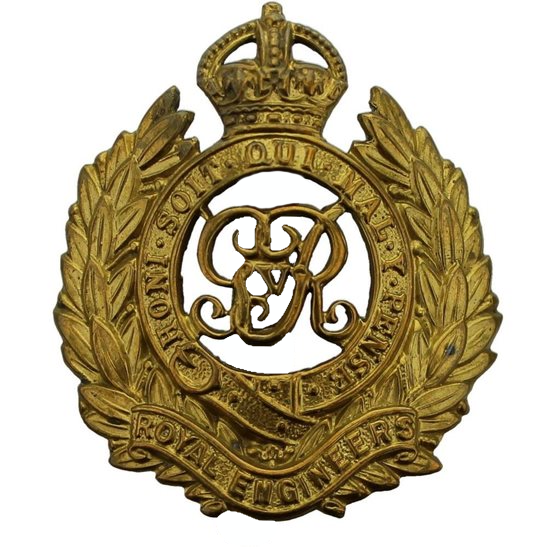
Military Details
Regiment: Royal Engineers
Rank: Major
Service Number:
Date of Enlistment: December 1915 under Lord Derby
Date of Discharge: After January 1918
Reason for Discharge: Not known
Frank was awarded the Campaign Medals (British War Medal and Victory Medal) and the Military Cross.
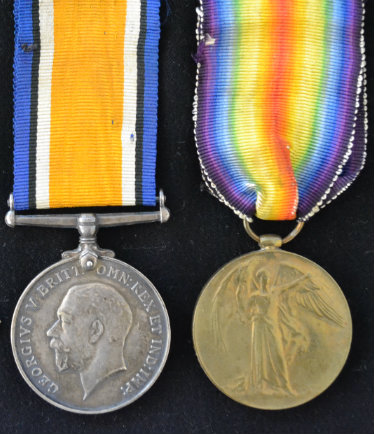
The British War Medal (also known as 'Squeak') was a silver or bronze medal awarded to officers and men of the British and Imperial Forces who either entered a theatre of war or entered service overseas between 5th August 1914 and 11th November 1918 inclusive. This was later extended to services in Russia, Siberia and some other areas in 1919 and 1920. Approximately 6.5 million British War Medals were issued. Approximately 6.4 million of these were the silver versions of this medal. Around 110,000 of a bronze version were issued mainly to Chinese, Maltese and Indian Labour Corps. The front (obv or obverse) of the medal depicts the head of George V. The recipient's service number, rank, name and unit was impressed on the rim.
The Allied Victory Medal (also known as 'Wilfred') was issued by each of the allies. It was decided that each of the allies should each issue their own bronze victory medal with a similar design, similar equivalent wording and identical ribbon. The British medal was designed by W. McMillan. The front depicts a winged classical figure representing victory. Approximately 5.7 million victory medals were issued. Interestingly, eligibility for this medal was more restrictive and not everyone who received the British War Medal ('Squeak') also received the Victory Medal ('Wilfred'). However, in general, all recipients of 'Wilfred' also received 'Squeak' and all recipients of The 1914 Star or The 1914/1915 Star (also known as 'Pip') also received both 'Squeak' and 'Wilfred'. The recipient's service number, rank, name and unit was impressed on the rim.
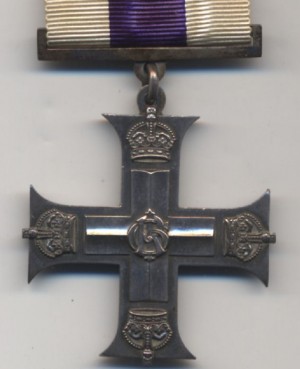
The Military Cross is the third-level military decoration awarded to officers and (since 1993) other ranks of the British Armed Forces, and used to be awarded to officers of other Commonwealth countries.
The Military Cross is granted in recognition of "an act or acts of exemplary gallantry during active operations against the enemy on land to all members, of any rank in Our Armed Forces". In 1979, the Queen approved a proposal that a number of awards, including the Military Cross, could be awarded posthumously.
Click on the tag below to see details of each recipient.
Frank Harry Williams was my great uncle. I am descended from his youngest sister Edith. I have been trying to find his citation for his MC. I note you quote a citation but it is dated 5 July 1918. His award of the MC was announced in the London Gazette supplement 30450 p50 published on 28.12.1917. I do not therefore understand why your reference is dated July. Also is it possible to search newspapers of the time to see what, if anything was reported about him at the time. Thank you by the way for a very well presented and easy to access site!
Kind regards
Simon Brown
Many thanks for your enquiry. You have highlighted an error on our part which we will fix shortly. The citation appears to relate to another Frank Williams who also served in the Royal Engineers but was awarded his MC in July 1918
Terry Fry
Volunteer at Whitchurch Museum & Archives